James Forsyth

James Forsyth

James Forsyth is former political editor of The Spectator.

How close we came to Chancellor Balls

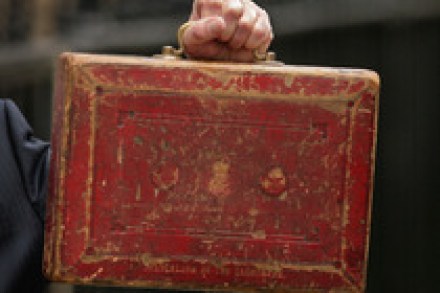
Sue Cameron’s Notebook in the FT is one of the best guides there is to the mood in Whitehall. The main focus of her column today is the discontent among the Mandarins about the fact that huge cuts will have to be made but they are getting no guidance from their current ministers as to where and how this is to be done. But the bit which stood out to me was how advanced Ed Balls plans for moving to the Treasury were. Cameron reports that: "Some in Whitehall have still not recovered from the reshuffle drama when schools secretary Ed Balls had his hopes of becoming chancellor dashed. 'It was Shakespearean,' says one onlooker. 'Ed had his finger on the crown. He’d even cleared his diary and said goodbye to his civil servants. He knew he was moving – then he didn’t.

A mutual decision?

There is an interesting little story tucked away in today’s Daily Mirror, the government might only sell off Northern Rock and Bradford and Bingley on condition that they are turned into mutually-owned societies. Jason Beattie reports that the idea of turning them back into building societies is being backed by John McFall, the chairman of the Treasury Select Committee, and 29 other Co-Operative party Labour MPs. I suspect that if Northern Rock and Bradford and Bingley are de-nationalised this side of the election, something that I suspect Brown would like to do, the price will be the key determinant.

Another goat goes

News is breaking that the Health Minister Lord Darzi is leaving the government. By my count, that means Lord West is the ony one of Gordon's goats still in post.

The tide turns on public spending

If further proof were needed that the public’s attitude to public spending has changed it comes in the latest Guardian / ICM poll. It finds that 64 percent of voters think that spending should be being reduced now as opposed to 28 percent who want it increased: the electorate is on the other side of Brown’s favourite dividing line. Even among Labour and Liberal Democrat supporters, a majority favour cuts. Amongst those who favour cuts, the Tories have a significant advantage. 46 percent of those who support cuts think Labour would cut too little with 21 percent saying it would cut too much. With the Tories, 30 percent worry they would cut too much and 22 percent that they would not cut enough.

The old gray lady on Cameron

Christopher Caldwell’s New York Times Magazine profile of David Cameron has finally been published; Caldwell first interviewed Cameron for it last year. I expect the Tories will see it as an important non-electoral milestone for them, a sign that the American establishment expects Cameron to be the next Prime Minister. The piece is, as you would expect with a Caldwell article, well written and, as it is written for an audience that knows little about Cameron, offers a good overview of the project. Caldwell proposes that there are two types of modernizers. “There are really two strands of modernizers in the Tory party. There are the green-friendly, diversity-oriented, welfare-state-defending ones — the ones who simply want to move the party to the left.

Media wars

David Cameron finds himself caught up in a war between two media tribes following the revelations  about the phone hacking at the News of the World during Andy Coulson’s editorship. On the one side, there’s The Guardian—whose scoop it was—and the BBC; for the BBC this episode is a chance to both make an ideological point against tabloid journalism and the Murdoch press as well as gain some revenge for the fun that The Sun and The Times had with the BBC’s expenses. On the other is News International with other newspapers that have used similar methods looking nervously on from the sidelines. I suspect that Andy Coulson’s position is safe for three reasons.

The benefit of the Lords

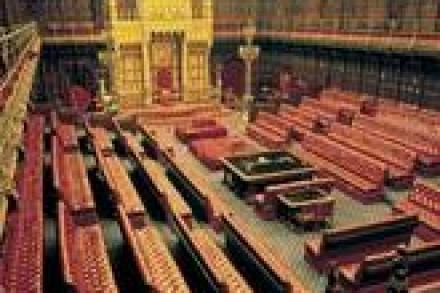
I disagree with Helena Kennedy on a whole host of issues, but her speech last night in the Lords debate on assisted suicide was fantastic. Here’s the opening section of it: “Although I am a great believer in individual liberty and in the autonomy of the individual, I also believe strongly in the symbolic nature of law. The laws of a nation say a great deal about who we are and what we value. One of the ways in which cultural shifts take place in a society is by changing law. Many of us who have argued that changes in attitude follow changes in law did so particularly around issues of discrimination. We made arguments for changes in the law on racism and other discrimination such as gender, sexuality and disability.

The Tories must be prepared to launch a reverse march through the institutions

Sir Hugh Orde, the new president of ACPO, has predictably come out against elected police chiefs. Andrew Sparrow  has the key extract from his speech: “If people seriously think some form of elected individual is better placed to oversee policing than the current structure, then I am very interested in the detail of how that is going to work – and happy to have that debate. Every professional bone in my body tells me it is a bad idea that could drive a coach and horses through the current model of accountability and add nothing but confusion.

Ecclestone gets some help from Mandy

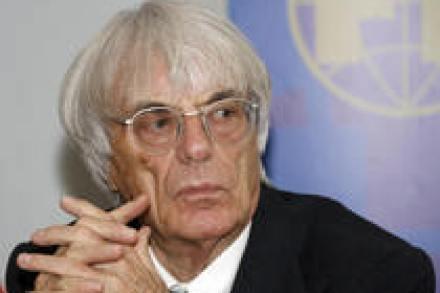
Last week, Bernie Ecclestone gave an incredibly stupid interview to The Times which was published on Saturday. He told Alice Thomson and Rachel Sylvester that democracy was over-rated and trotted out some crass cultural determinism. But the really damaging bit was this section: Does he have a favourite historical dictator — Stalin, perhaps, or Mussolini? “Maggie’s gone,” he says. Then he pauses and continues, thoughtfully: “In a lot of ways, terrible to say this I suppose, but apart from the fact that Hitler got taken away and persuaded to do things that I have no idea whether he wanted to do or not, he was in the way that he could command a lot of people able to get things done.” This, for obvious reasons, caused a lot of upset.

How important were all those initiatives the government kept announcing?

There was a time when the government seemed to be announcing new measures to get the economy and the banking sector in particular moving again on an almost daily basis. Today, the Wall Street Journal has done a rather good audit of these measures. For instance, in January “the British government created a guarantee program meant to revive the dormant market for asset-backed securities. The program aims to spur purchases of banks' asset-back securities, or bundled consumer loans, by guaranteeing them for buyers. The guarantees were made available in April, but since then, none of the major U.K. banks has issued a security with such a guarantee.” Also, only 13 firms have joined in the government’s £5 billion trade insurance programme.

The waning authority of the Iranian regime

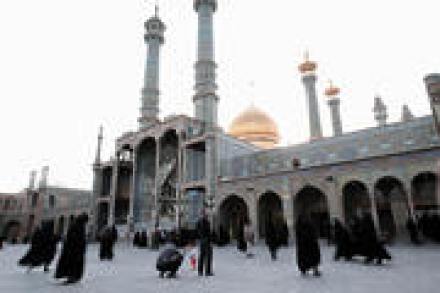
Reuel Marc Gerecht, a former CIA Middle East hand, has an interesting analysis of the huge news from Iran, the Association of Researchers and Teachers of Qum have declared the election invalid and the Ahamdinejad government illegitimate. What will happen next is crucial but unpredictable. Gerecht speculates that: “If Khamenei tries to crush Qom in the way that Khomeini crushed Grand Ayatollah Shariatmadari in Tabriz in 1979/80, he'll probably push Qom into open rebellion. If he tries using the Guards Corps as a vehicle of oppression against the clerical establishment, he would surely risk his office.

Lacking in boldness

David Miliband is right that political parties need to adapt if they are to survive. Membership of all the main parties are down and the number of activists they can call on in shrinking. His John Smith memorial lecture contains some worthwhile ideas on how to open up the Labour party. But, as so often, Miliband has not taken the opportunity to be truly bold. In the speech, Miliband speaks approvingly of open primaries. So, why not use an open primary for the post-election leadership contest? It would be a way of saying that post-defeat, Labour would look out not in. It would also guarantee that the contest attracts national attention, something that is often not the case with opposition leadership elections—remember just how little coverage the Tory contest in 2005 got.

Speaker tossed aside

Trevor Kavanagh’s column in The Sun today has a little story in it which shows how tense relations are between John Bercow and some MPs. ‘Thin-skinned new Commons Speaker John Bercow is a “tosser”. Not my choice of words, although it fairly describes a man who is fast becoming even more embarrassing than disgraced predecessor Michael Martin. The offensive term was used last week in an angry spat with Mr Bercow by an MP who has since apologised in writing-at Mr Bercow’s insistence. The MP is now absolved. Speaker Bercow remains a “tosser”.’ Now, I’ve no idea of the rights and wrongs of this argument and calling someone a tosser is hardly a mature way of resolving an argument.

Blair is right on climate change

Ahead of Tony Blair's launch of a report on climate change, he's given an interview to The Sunday Times. The interviewer Jonathan Leake is highly sceptical of Blair and takes particular issue with this statement from him: “The answer to climate change,” he says solemnly, “is the development of science and technology. Yes, we will get changes in the way we consume but we will be consuming differently, not necessarily less. People are not going to return to the 19th century. The critical thing is to use the technologies we have and to incentivise the development of new ones. That is the only practical way we will make this thing work.” But Blair's analysis is surely correct.

Massive development in Iran, Qum begins to turn against the regime

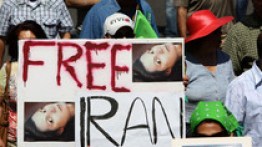
The situation in Iran might have been knocked off the front pages in recent days and the regime does seem to have regained control of the streets. But things are clearly not over yet. The New York Times today reports that the “most important group of religious leaders in Iran [Association of Researchers and Teachers of Qum] called the disputed presidential election and the new government illegitimate on Saturday”. This is the most important development since Iranians started to protest in numbers against the obvious rigging of the result. If Qum is turning against the regime, it is in real trouble. [I’m baffled that this story isn’t leading the news here].

The greatest edit in history

Seeing as it is the Fourth of July, I hope Coffee Housers will indulge me in a quick post on the Declaration of Independence. The document was, of course, drafted by Thomas Jefferson. But Ben Franklin ran his eye over Jefferson’s draft and made a few changes. One of them, can I think, lay claim to be the most felicitous edit in history. As Franklin’s biographer, Walter Isaacson, explains, Franklin took, "We hold these truths to be sacred and undeniable" and changed them to the words now enshrined in history: "We hold these truths to be self-evident." (The picture is of Franklin’s marks.) The Declaration of Independence remains an inspiring document, the highest expression of country party ideology. If you have a moment today, do re-read it.

Palin resigns. Pundits ask, what did she mean by that?

Sarah Palin’s decision to quit as governor of Alaska is perplexing. It is hard to see how she can be a credible presidential candidate when she failed to serve out even one term as governor. There has been little normal or orthodox about Palin’s political career and trying to assess why she is walking away now isn’t easy. One can make a credible case that she is doing so because she has had her fill of politics, certainly that what NBC News’ Andrea Mitchell has heard. (And whatever one thinks of Palin, some of the attacks on her family have been disgusting Or, you can argue, as Bill Kristol does, that by leaving Alaska she gives herself the time to build up a national campaign.

Brown’s U-turns analysed

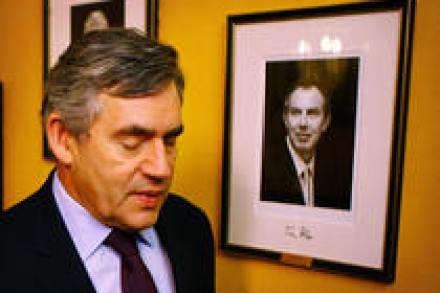
Steve Richards’ column in today’s Independent - analysing Brown’s u-turns on the Post Office, 42 days and the abolition of 10p tax rate - is superb. As Steve notes, all these u-turns have in common the question of where does Brown stand in relation to Blairism; is he break from it or its continuation? Steve’s conclusion sums this up brilliantly: “The U-turns show that Brown has never acquired a clear voice of his own as Prime Minister and has failed to break away from his complicated past. Perhaps an early election would have liberated him from the manacles. Instead, we are left with a trail of major reversals that convey the insecure mindset of a Prime Minister trying too hard to win a big tent of support when virtually the entire campsite has moved on.