James Forsyth

James Forsyth

James Forsyth is former political editor of The Spectator.

We await the beef

The Tories have been briefing heavily that this would be a policy heavy conference. Indeed, I’m told that every shadow Cabinet member will have at least one substantive announcement to make. But there is relatively little that is genuinely new in the Sunday newspapers. One explanation for this is that the Tories accept that Lisbon is going to crowd out any other story. One senior source told me on Friday that CCHQ thought that nothing other than Europe would have cut through until Sunday afternoon. So far, the Tory containment operation on Europe appears to be just about holding. There is, though, grumbling about Boris’s comments in the Sunday Times which are seem as being distinctly unhelpful and threaten to reignite the stories about tension between him and the leadership.

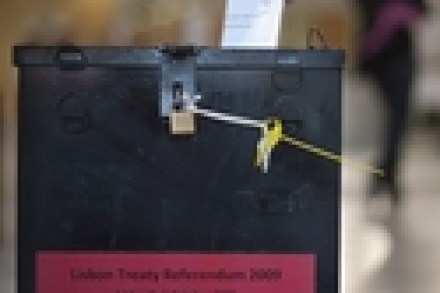
Tories try to hold the line on Europe

The pre-conference coverage today is dominated by a marginals poll which shows the Tories on course for a 70 seat majority down from 146 this time last year, a Tory proposal on elderly care and the likely Irish yes vote and interviews with Osborne and Hague. Osborne receives a thoroughly positive write-up from the Mail; though it does rather stretch credulity when he claims that he is not obsessed by politics. The most interesting section in the Hague interview with The Times is when he concedes that the Czechs are very unlikely to hold the ratification process up until the Conservatives are in power: “Ireland is not the end of the ratification process. It is just one important bit of it.

What the Tories will say after the Irish vote

That the Irish referendum result will be announced on Saturday afternoon is not, to put it mildly, ideal for the Tories. If as expected the Irish vote yes, it will be almost certain that the Lisbon treaty will be ratified by the time of the next election (the Czech delay is not expected to last much past December). This raises the question of what the Tories’ deliberately ambiguous commitment not to let matters rest there means. The Tories are keen for this question not to dominate the week. So, expect Cameron and Hague to do a lot of media on Saturday evening and Sunday in an attempt to deal with this issue. Word is that they will stress that the Czech challenge still might hold things up long enough and say that they won’t get into hypotheticals.

A conference that changed nothing

The red flag has been sung and the delegates are heading home. But no one I’ve spoken to believes that this conference has really changed anything. Labour is still heading for defeat at the next election.   Perhaps, the biggest thing to come out of this conference is that Labour’s relations with the media are rapidly heading back to where they were in the days of Neil Kinnock. The party is in a rage at both the BBC and Sky News and seems intent on picking a fight with News International. If Labour does carry on running against the media, the only winner will be the Tories. Labour is also falling into that other delusion that parties that are heading for defeat do: believing that no one would vote for the other lot if they knew what they were really like.

Is Miliband the elder up to the job afterall?

If there was an award for most improved conference speaker it would go to David Miliband. Last year his lacklustre effort helped put an end to his putative leadership challenge. This year he showed delegates why he might be up to the job of being Labour leader after the next election. He has dropped his voice making him sound more serious and cut out the gurning. His comments about military force which sounded so absurd last year carried more weight this time round. However, he’s far from presentationally perfect. He still managed to get ahead of his autocue and hit the microphone with his hand when trying to emphasise a point. But in the leadership stakes the bar was doing better than Ed Balls did yesterday and Miliband sailed over it.

Will Labour go to war with The Sun?

Tony Woodley of the Unite union just received a huge cheer for coming to the podium and ripping up a copy of The Sun while laying into ‘Australian Americans’ who come to this country and try and tell us how to do politics here. There’s no doubt that the feeling here in Brighton is that Labour should hit back at The Sun. Harriet Harman laid into the paper this morning and Peter Mandelson called The Sun ‘losers’ at a fringe event. (However, Labour is denying that its responsible for the Google ads that appeared today saying, "You can't trust The Sun. Wrong on Hillsborough, Wrong on Labour".) But the more Labour pick a fight with The Sun, the more hostile the paper is going to be to it.

Getting shirty with the media won’t do Labour any favours

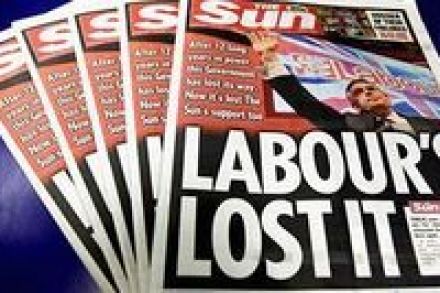
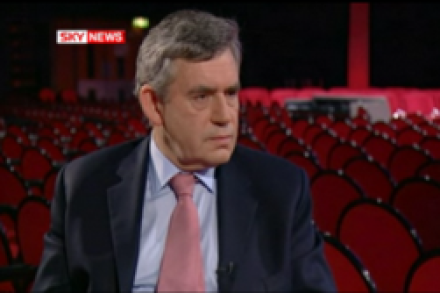
The news that the Sun was endorsing the Tories deflated the mood of conference last night. And Labour hang-overs can not have been improved by Brown’s performance on Sky today, which Pete referenced earlier. The Prime Minister was clearly irritated by Adam Boulton’s line of questioning, using the phrase ‘let me finish’ more than any other.  But watching it you couldn’t help wondering if this was a preview of the election campaign: a defensive Brown railing against the media. Andrew Marr asking that question and The Sun endorsing the Tories have bated Labour into running against the media. But there are two fundamental flaws with this strategy.  First, Labour does not have an alternative way of getting its message out.

Policy-lite

Labour always likes to contrast Gordon Brown’s substance to David Cameron’s shallowness. But the briefing note that is sitting in the press room to explain the policies announced in Brown’s speech is, shall we say, rather brief at just three pages.

Brown’s speech fails to convince Brighton

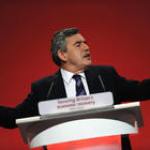
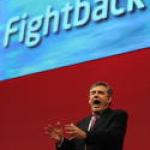
The mood here in Brighton is pretty flat. In contrast to last year, no one really believes that Gordon Brown’s speech has changed anything. I’m sure he’ll get a bit of a bump in the polls: a YouGov poll finds that 63 percent of viewers thought the speech was good or excellent. But Labour still lacks a coherent domestic policy message with which to go to the country. On a process point, I’m puzzled by why Labour had Brown speak today. They need to milk this conference for all it is worth and that means they should have had Brown speak on Thursday. They are going to find it far harder to get media coverage for the rest of the week now. The Tories I have spoken to about the speech are pretty satisfied, they’re confident there is no game changer in it.

Whatever you do in Brighton, don’t mention journalists

Labour activists don’t have much in common with Republican activists but they seem to agree on one thing: the media are loathsome. The hostility towards journalists from the delegates this week reminds me of being at Republican gatherings in 2008. When someone stood up at a fringe meeting yesterday and introduced themselves by saying ‘I am not a journalist’ they received a spontaneous and sustained round of applause. There is a perception that the media are biased and beneath contempt. Undoubtedly this is due in part to Andrew Marr’s inappropriate question to Brown on Sunday morning. But there is something deeper at work, a belief that the press are preventing the party from getting its message out.

An evening of two Milibands

Tonight offered the opportunity to compare and contrast the two Miliband brothers as they were interviewed one after the other by Steve Richards. Any comparison of their performances should recognise that Ed Miliband has the far easier brief. He gets to sound bold and green and the vast majority of Labour members agree with what he is trying to do. By contrast, David Miliband has to defend Iraq and Afghanistan. But having said that, Ed Miliband struck me as being far more impressive. He is more comfortable in his own skin and connects with the audience more. Indeed, watching Ed Miliband with a Labour audience is rather like watching David Cameron with a Tory audience: one senses that the oparty members instinctively trust his judgement.

Mandelson: If I can come back, we can come back

You would have got long odds on it in the 1990s, but Peter Mandelson is now a conference darling. His hugely hammy performance delighted the hall and earned him a prolonged standing ovation. Since he has returned to British politics, Mandelson has sought to deliver enough good lines to write his own story. He deliberately inverted Tony Blair’s quote about choosing the Labour party and rallied the audience by saying ‘If I can come back, we can come back.’ He flirted with conference before confirming that the car scrappage scheme would be extended before wrapping up with a string of attacks on the Tories and a declaration that “this election is up for grabs.

Darling’s speech: updates from the conference hall

1204: The hall is relatively full for Darling. He starts off by talking about the big choice that faces the country, saying we have learned in the last year what a difference a government can make. 1206: Darling is trying to do the populist banker bashing, but his delivery is not right for it. From the right speaker, this could have been a real crowd pleaser. 1209: Darling keeps paying tribute to Brown's global leadership. He says the UK economy will be growing again by the turn of the year. 1211: The usual litany of supposed Tory errors comes now.  Darling talks about the need for the anabling hand of government to go alongside the invisible hand of government. 1213: The clapping here is really poor.

Was Marr right to ask Brown that question?

Andrew Marr asking Gordon Brown if he was on anti-depressants was a real surprise. When I first heard that Marr had put this question to Brown, I thought there was a possibility that Labour aides had let it be known that the Prime Minister would like the chance to shoot down these rumours. But Brown’s reaction, suggests he wasn’t expecting the question. One can see why Marr asked the question: if Brown was on anti-depressants that could affect his judgement then the public has a right to know. It wasn’t in the public interest, as Andrew Marr seemed to acknowledge in his interview with George Osborne, that the BBC sat on the story of Charles Kennedy’s drinking. Also, one can argue that once the rumour is out there it needs to be dealt with.

Marr and Brown

I must admit that I'm taken aback that Andrew Marr asked Gordon Brown if he was on anti-depressants in his interview with him this morning. (For the record, Brown said that he wasn't). Do Coffee Housers think the question was appropriate?

Labour’s latest dividing line

Today’s papers give us an idea of what Labour’s new dividing line with the Tories is going to be. Labour will find money for eye-catching but not too costly initiatives such as the cancer pledge that the papers have reported on this morning. These pledges will be financed by taking money from the less sexy parts of departmental budgets. Labour will then ask, as Pete noted Ed Balls doing today, how the Tories can match this spending when they are committed to paying down the deficit faster than the government and to reversing several of Labour’s tax rises.

Tories plan Operation Tumbleweed for Labour conference 

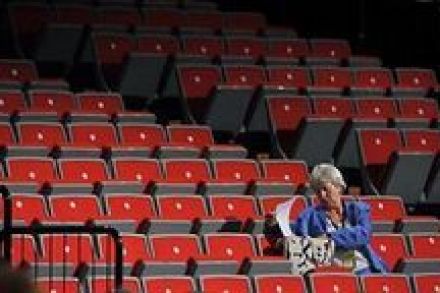
Throughout Labour conference, the Tories will be trying to promote the message that the conference shows Labour is on the way out. Expect the Tories to pump out lots of statistics about how the number of delegates attending is down, how there are fewer commercial stands, lobbyists and the like. The other thing the Tories plan to do is constantly contrast it to John Major’s last conference, a sweet form of revenge for all those in the Tory party who worked for it during the Major years—a group that includes Cameron and Osborne. Tory researchers have been reading Major’s 1996 conference speech ready to point out parallels between it and the one that Brown will deliver on Tuesday.

Parliamentarian of the Year | 26 September 2009

James Forsyth invites you to submit nominations for the Spectator Readers’ Representative in our Parliamentarian of the Year Awards ‘MP in Public Service Shock. Politician found to be honest and hard-working. Wife standing by him.’ As the MPs expenses scandal dominated the front pages for month after month, one half expected to see a headline like this. The reputation of MPs dropped further and further with every revelation about claims for duck houses, moat cleaning and phantom mortgage payments. By the end of the affair, 84 per cent of voters thought that MPs put their personal and their party interest ahead of the national interest. Restoring the public’s faith in parliament will require reversing these numbers.

US efforts to engage Iran appear to be over

New York The reaction of the Obama administration to the discovery of a secret, underground Iranian nuclear plant strongly suggests, as the Washington Post points out, that the administration has given up on engagement. Attempts to engage with the Iranian regime were always likely to be futile. But Washington had to show the international community, and the American public, that it had tried. The criticism you can make of the administration is that its effort took too long, nine months when the Iranian nuclear clock might have as little as 18 months left on it.  Now, the focus turns to sanctions. Can the UN pass sanctions that block gasoline imports, a vital first step in increasing the pressure on the regime? Russia appears to be taking a tougher line on Iran.

Mackay and the special relationship

The news that General Andrew Mackay has quit over the government's failure to properly equip the Afghan mission is significant. For one thing, it will have ramifications for the UK US military relationship. Mackay is the British general from whom General Petraeus feels he has learnt the most; Petraeus affectionately called him the "King of Scotland" in his Policy Exchange lecture the other week. Mackay's departure will increase the US military's concern about the war-fighting capabilities of the British military.