James Forsyth

James Forsyth

James Forsyth is former political editor of The Spectator.

Truss’s candidacy must stand

When the story of there being controversy over Liz Truss’s selection as the Tory candidate for South West Norfolk because she had once has an affair with a Tory MP arose last weekend, I dismissed it. My immediate reaction was that the media was just looking for a follow up story to the row over all-women shortlists. I imagined that no association would seriously be irritated by a candidate’s failure to bring up a personal matter that was already public knowledge. So I was shocked to hear that her selection has now been referred back to a meeting of the full association. It is now imperative that Truss’s candidacy stands. It would offend against natural justice for her to be deselected over something that was already known at the time of her selection.

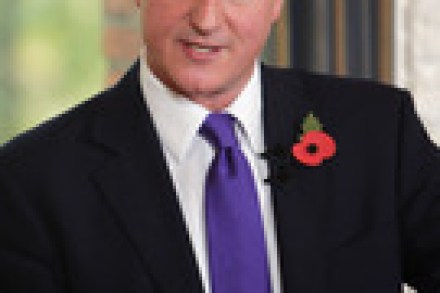
Cameron in front of the press

David Cameron was in confident form at his press conference this morning. Most of the questions were about the possibility of President Blair and Tory opposition to that. But three other things from the event were worth noting. First, Cameron’s announcement that the Tories will publish their top three or four priorities for each department shows the influence of the Institute for Government on Tory thinking. Michael Bichard, the director of the Institute, was David Blunkett’s permanent secretary at the Department for Education and Employment and Blunkett’s success in this job is largely credited to him and Bichard working out a few priorities and sticking to them. The Tories are now adopting this Bichard / Blunkett approach for every department.

My beef with Stern

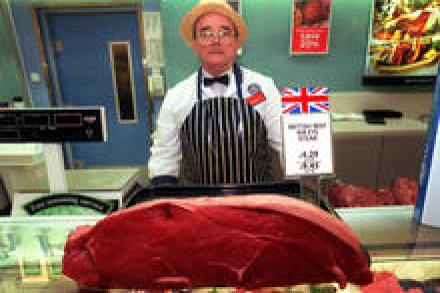
I must admit that I despaired this morning when I heard that Nick Stern was arguing that meat eating should become socially unacceptable because of climate change. Those of us who think that climate change is happening and that human activity is a part of it have a big enough case to make without people thinking that they won’t be able to have a Sunday roast or a reviving steak if the green lobby gets its way. People are, understandably, not going to accept being told that they can’t fly, eat meat or have the heating on. The solutions to the problems posed by climate-change have to be technologically led. A hair-shirt approach will simply not have public support and won’t be accepted by every country.

An untrumpeted change

John Rentoul rightly flags up the story in this morning’s FT that about 100,000 NHS patients have gone private and had the state pick up the tab, the private hospitals have had to agree to do the work at the NHS price. For those of us who would like to see the NHS move towards a model where the state pays for healthcare but it is provided by a whole panoply of providers, this is an encouraging step. This kind of consumer-focused reform is hard to reverse. The story, as John notes, hasn’t got as much coverage as it should. John blames this on the press’s lack of interest in policy stories. But it is also the case that the Brown government, which is currently slowing down if not reversing Blair’s NHS reforms, hasn’t chosen to trumpet this story.

A second round won’t solve all of Afghanistan’s election problems

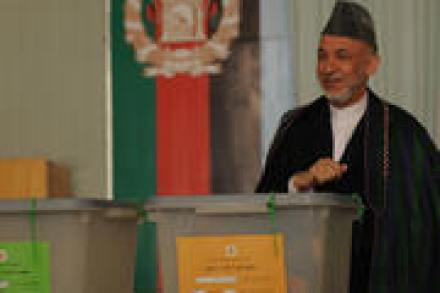
It is being hailed as a diplomatic triumph that Hamid Karzai has agreed to a run-off in Afghanistan’s presidential election. (Who is getting the credit for Karzai relenting is, as Daniel notes, fascinating). But as Dexter Filkins points out in The New York Times, the second round of the Afghan election could be as marred by fraud as the first one. It is hardly reassuring that the chairman of the supposedly independent election commission is already saying that “Karzai is going to win.” The question is how much Karzai is prepared to rein the levels of fraud in to try and maintain Western support. It has long been suggested that the solution to the legitimacy problem of the Afghan government is a post-election government of national unity.

Iran’s secret nuclear plant

With the recession and Afghanistan, Iran often drops off the new agenda but the nuclear issue hasn’t gone away. The Washington Post’s article today about the recently revealed nuclear facility at Qom shows that the plant was almost certainly part of a nuclear weapons programme. The paper reports that communication intercepts revealed that Iran only planned to place 3,000 centrifuges in the plant. It would take that number of centrifuges twenty years to produce enough low-enriched uranium for a civilian power plant. But 3,000 centrifuges would produce enough weapons-grade uranium for two to three bombs a year.

How David Cameron plans to tame the unions

James Forsyth reviews the week in politics. There is a reason why Tory excitement about returning to government is so tempered: it could be war. The simple, grim mission awaiting them is to impose the sharpest cuts attempted by any postwar government while radically reforming many public services. The trade unions can be expected to respond aggressively, thinking they can turn Cameron just as they did Heath. A bloody collision of the type the Cameroons for so long hoped to avoid now seems inevitable. Unsurprisingly, the Tories have little appetite for a Thatcher-style showdown with the brothers. And, quietly, they believe they have developed a strategy that will avert one. They calculate that the unions, while no friends of the Conservatives, respond rationally to threats and incentives.

Weekend listening

If you have any time spare this weekend, do listen to Peter Oborne’s ‘Conserving what?’ series on Conservatism for Radio 4. It is exceptionally good and this week’s episode, based around an interview with David Cameron, is absolutely fascinating for anyone interested in Conservative philosophy. It also gives some intriguing glimpses at what kind of Conservative David Cameron is and how he might govern as Prime Minister.

If anti-Semitism is the problem, then the Tories shouldn’t sit with the EPP either

No one has done more to make the Tories’ new European allies an issue than Jonathan Freedland. He has written about the subject with real passion and, so sources in the Jewish community tell me, played a crucial role in persuading the president of the Board of Deputies to write to David Cameron expressing concern about them.    This week, his column on the subject contained this point: ‘Just this month Oszkar Molnar, an MP from Hungary's main opposition party – on course to form the country's next government – told a TV interviewer that "global capital – Jewish capital, if you like – wants to devour the entire world, especially Hungary". His party leader said there was no need to discipline him because he'd broken no rules.

Why did the BBC let this be Griffin Time not Question Time?

We can debate the rights and wrongs of the BBC’s decision to invite Nick Griffin on Question Time. But having invited him on the BBC shouldn’t have devoted almost entirely the whole programme to the BNP’s agenda. This must have been the first Question Time ever where there was no discussion of the economy, health or education. Rather than a question on postal strike, we got a navel gazing one on whether Question Time was right to have Griffin on. The other thing that struck me as bizarre was that at 10.30 at night and on a programme with someone as vile as Nick Griffin on, the BBC felt obliged to beep some swear worlds. If the audience is grown up enough and mature enough to deal with Griffin, then it is able to handle a swear word or two.

Should MPs be able to employ their relatives?

The 1922 committee of Tory MPs is meeting now and the word is that there will be a concerted push to defend the right of MPs to employ their relatives; something that MPs on all sides fear the Kelly review will try to ban. In a Caesar’s wife must be above suspicion way, it is easy to say that MPs shouldn’t be able to employ family members. But there is no doubt that there are a lot of relatives, and spouses especially, who are working extremely hard for their salary. Given the hours MPs work and the fact that they have to be in two places, one can see why so many favour this arrangement. A possible compromise being kicked about here at Westminster is that MPs might be allowed to employ one relative each. This strikes me as a sensible move.

Hard-line Taliban are not ‘al Qaeda lite’

David Rohde’s account of being held hostage by the Taliban for seven months is a fantastic piece of journalism, I’d urge you to read the whole thing. One point in it struck me as particularly pertinent to the current debate about Afghanistan: “Over those months, I came to a simple realization. After seven years of reporting in the region, I did not fully understand how extreme many of the Taliban had become. Before the kidnapping, I viewed the organization as a form of “Al Qaeda lite,” a religiously motivated movement primarily focused on controlling Afghanistan. Living side by side with the Haqqanis’ followers, I learned that the goal of the hard-line Taliban was far more ambitious.

Using legal measures to keep Griffin off-air will only benefit their target

Any attempt to use legal measures to keep the BNP off Question Time will only have one winner: the BNP. The more of a fuss that is made about the BNP appearing on Question Time, the better for the BNP—it means that Griffin will get more publicity and if he is clever enough to disguise his vile views when on the programme then he could make some progress. Using the law is particularly foolish as it plays right into the BNP’s narrative that there is an establishment conspiracy to prevent any debate about immigration. The BBC, the political parties and the media have handled the BNP’s appearance on Question Time appallingly. The actions of all three groups have combined to create huge amounts of pre-publicity for this edition of Question Time.

The right way to repeal the hunting ban

Back in early September Coffee House reported that the Tories were considering including repeal of the hunting ban as part of a broader civil liberties bill. Nick Hebert seems to confirm that this is what the party is planning in his Sunday Telegraph piece. He writes that “the Act sits with ID cards, the attempt to introduce 42 day detention and the removal of trial by jury for fraud cases as an affront to civil liberties. It is but one of Labour's laws that have overridden individual rights and asserted the power of the State.” The Tories are right in both principled and political terms to offer parliamentary time for repeal of the ban. The ban was a small-minded piece of legislation which failed to look at the evidence.

Tarzan’s return

It makes senses that David Cameron should be considering bringing Lord Heseltine back. Cameron has long been an admirer of his. Francis Elliot and James Hanning report in their biography of Cameron that his idea that Heseltine should represent the Tories on Question Time caused eyebrows to be raised at Thatcher’s Central Office. But if Heseltine returns to the Cabinet, there will be a problem of balance. As Tim Montgomerie notes, the presence of Clarke and Heseltine in the Cabinet will make a robust approach to Europe almost impossible. Plus, the right would be irritated if the left is over-represented in Cameron’s cabinet which it would be if Clarke, Heseltine, Andrew Lansley and Sir George Young were all in it.

Who is copying who on taxing the banks?

Patrick Hennessy and Louise Amistead have the scoop on the government’s plans to get more tax revenue out of the banks in the Sunday Telegraph. One idea under discussion is that, “Banks could also be forced to pay more corporation tax by curbing the system that allows them to offset their losses against tax over a number of years.” As I wrote in the politics column the week of Tory conference, Osborne is considering this idea as well: “I understand that one change being floated is what would be, in effect, a windfall tax on financial institutions. It would be billed as an accountancy rule: any bank that has received state aid cannot write off old losses against tax.

The end of a convenient fiction

No one really thought that Vaclav Klaus would hold out against the Lisbon treaty until the British general election, but it was a convenient fiction for the Conservative party. It enabled both the leadeship and Eurosceptics to pretend that the current policy remained operative and that any questions about what would happen if the Lisbon treaty was ratified by the time of the next election were hypotheticals. So, as David notes, to hear Klaus conceding that he can't hold out until the election is a blow. The question now is what happens next. Domestically, I doubt that the party will have a big row about Europe—it is too disciplined, too eager for power for that. In European terms, the question is always put as does Cameron have the stomach for a battle with Brussels.

How the Tories plan to avoid a cultural beating

James Forsyth reviews the week in politics. Mud sticks. In politics everyone remembers the charge and not the denials — something Labour has exploited for years. Typically, it would denounce the Conservatives for being heartless, privileged bigots who care nothing for the poor, eat foxes and have no place in modern Britain. But that doesn’t work anymore, as people have stopped listening to Labour. So Labour has had to pin its hopes on independent left-leaning groups hurling accusations and making people think that the Tories are still the nasty party, whatever David Cameron says. This new lie of the land could be seen at Conservative conference where the most damaging blows to the party did not come from Labour but from two outside groups.

No one knows what happens if retiring MPs refuse to make their repayments

The MPs who are most likely to defy Legg are those who are standing down. They have little to lose in saying that they won’t abide by the retrospectively imposed caps on various things. The question of whether they could be compelled to pay this money back looks like it could turn into a major row. In an interview with Andrew Neil to be broadcast tomorrow Harriet Harman seems to have no concrete idea of how this process might actually work: Andrew Neil:  What would happen to an MP of any party, what would happen to an MP who decides that he or she is standing down at the next election and refuses to pay up? HH:  Well, I think that we haven’t got to that situation.  I think that... AN:  What would happen?

Cameron would intensify No. 10’s spin operation

One already hears grumblings from members of the Shadow Cabinet about how much power has been concentrated in Norman Shaw South, the suite of offices where Cameron and Osborne and their teams sit in Parliament. But judging by a report in The Times today the leadership is thinking about centralising power even more when in office. Jill Sherman writes that: 'Cabinet ministers have traditionally had two special advisers with another 25 in Downing Street. But Mr Maude is said to be thinking of giving ministers one each, supplemented by a separate pool of advisers, who would be based at No 10. Only advisers from the central pool would be authorised to speak to the media, “spinning” policy proposals and giving David Cameron control over the message going out to voters.