James Forsyth

James Forsyth

James Forsyth is former political editor of The Spectator.

The new power broker

Ed Llewellyn, David Cameron’s chief of staff, is going to be one of the most influential people in Downing Street these next few years. He has already played a crucial role in the negotiation between the Tories and the Lib Dems; having worked for Paddy Ashdown in Bosnia and being friends with Nick Clegg’s wife from his Brussels days he has good relations with the Lib Dems.   Llewellyn has extensive links across government and it is telling that Sir Peter Ricketts, who was appointed as the national security advisor this morning, has worked with Llewellyn twice. He was Hong Kong desk officer at the Foreign and Commonwealth Office when Llewellyn was in Chris Patten’s office in Hong Kong.
Who will be education secretary?

Doing the media rounds this morning, both David Laws and Michael Gove have said that they do not know which one of them will be education secretary in the Cameron Clegg government. But judging from what I'm hearing, last night's media reports that Gove would not be education secretary appear to have been premature.

Lib-Con deal in the bag

The Lib Dems are holding a meeting of both their MPs and the Federal Executive at 7.30pm. It is now widely expected that this meeting will approve a coalition deal with the Conservatives. Those who have taken the temperature of the Lib Dem Federal Executive say that approval is in the bag.

The obstacles to a Lib-Lab deal

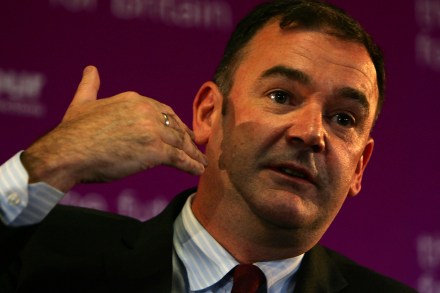
The main development of this morning has been Labour MPs throwing up obstacles to a Lib Lab deal. At the moment there are four main problems. First, David Blunkett and others arguing that Labour would be better off going into opposition and—this is implicit—letting the Tories and the Lib Dems make the cuts. One union fixer told me Labour couldn’t go into a coalition with a party committed to cuts to benefits and tax credits. Second, Jon Cruddas, a champion of party democracy, has demanded that the parliamentary party, the NEC and the unions be consulted on the terms of any deal. Third, there are lots of Labour MPs letting it be known that they’d vote against AV so the Lib Dems might not get the main thing they want from a coalition.

The Scottish angle

I am told that one of the Lib Dems groups most opposed to doing a deal with the Tories was its Scottish MPs. Their view was that Scotland had voted massively against the Tories and that any party seen as their representatives in Scotland would be massacred. This has set off chatter in Tory circles. There was already irritation that the party has a majority in England and Wales but was still having to compromise on issues that have been devolved to Scotland. But to not be able to make a coalition deal because of your unpopularity north of the border is to add insult to injury.

The best possible news for the Tories

Gordon Brown’s announcement that the Liberal Democrats have requested formal coalition talks is the best news that the Conservative party has had since the polls closed on Thursday. David Cameron can now say that his party has negotiated in good faith and that his broad, comprehensive, and open offer to the Lib Dems is on table and they can take it or leave it. If the Lib Dems do end up going into coalition with Labour they would completely discredit themselves and be slaughtered at any subsequent election, remember getting PR through the Lords would take at least a year. The markets would also not be impressed by a coalition that would not be able to take any tough decisions on the deficit.

The return of David Davis

The shadow Cabinet were gathering before their meeting at 2pm. One member told me ‘it is looking less like formal coalition now.’ But coalition remains the leadership’s preferred option. Talking to Tory MPs—old and new—this morning, there’s a sense that they would slightly prefer minority government. Though, no-one is planning to blow themselves up if the country does end up with a Tory-Lib Dem coalition. One other interesting development today is that there is a growing expectation that David Davis will be recalled to the colours. Certainly, his return would make Cameron’s top team more accurately reflect the ideological balance of the party.

The coalition nears

‘A government by this evening’ is what several Tory MPs have told me they expect. Those who have spoken to David Cameron say that he has no appetite for a second election within 12 months and that he wants the stability of a coalition. David Cameron is in the House of Commons. When I passed him earlier, he was without the entourage that so often accompanies him and was saying hello to those he passed. This might not sound like much but it does suggest that Cameron is adjusting to the new circumstances, that he is taking greater care to be nice to his parliamentary party than he has previously. Shadow Cabinet meets at 4pm and then the parliamentary party at 6. In both meetings, Cameron will be on stronger ground if he has a deal to present.

Guardian: Clegg setting a Monday night deadline for any deal with the Tories

Patrick Wintour reports in The Guardian tonight that Nick Clegg thinks that the talks between the Tories and the Lib Dems have only 24 hours to run before the public loses patience. This suggests that tomorrow night has become the unofficial deadline for a deal to be agreed. On the Tory side, David Cameron would be in a far stronger position if he arrived at the meeting of the Tory parliamentary party at 6pm on Monday night with a deal. If there’s a deal, I suspect that some MPs will pull their horns in. But if nothing has been agreed, MPs will express themselves more fully. One thing to watch tomorrow is how the markets react. Given everything else that is going on, it’ll be hard to isolate any hung parliament effect.

The Tory negotiating team

As the BBC reports that David Cameron has arrived at the negotiations between the Tories and the Lib Dems it is worth taking a look at the Tory negotiating team. It has been put together to try and maximise the prospects of a deal. Ed Llewellyn, who worked for Paddy Ashdown in Bosnia and is close friends with many Liberal Democrats, and Oliver Letwin are there to make the Lib Dems think that if these guys are Tories then a deal with them wouldn’t be so bad after all. Indeed, when I told one Tory that Llewellyn and Letwin were on the negotiating team, he shot back: ‘So  Llewellyn and Letwin  are negotiating for the Lib Dems. Whose doing the job for us?

The two meanings of No PR

When the leadership reassuresConservatives that there’ll be no PR, they mean that Britain will not end up with a different voting system. When senior MPs tell the leadership that PR is a red-line, they mean a referendum on PR is unacceptable. As I say in the Mail on Sunday, those close to the leadership are looking at the idea of a referendum on PR in two years time after a commission of inquiry chaired by someone who is not keen on PR. They think that this referendum could be won and is therefore worth risking if that’s the price of a deal with the Lib Dems. But if Cameron did agree this, then the internal Conservative coalition would be very shaky.

The Tory coalition

Talk of coalition between parties always reminds people that all political parties are internal coalitions. So all this speculation about Cabinet jobs for the Lib Dems, has set off some grumbling on the right of the Tory party. The right has long thought that shadow Cabinet is unbalanced. They point out that there are only about three pro-European wets left in the parliamentary party but that they are all in the shadow Cabinet. The view of several people on the right that I have spoken to today is that if there are to be three Lib Dems in the Cabinet then it must be MPs from the left of the party who make way for them, otherwise things would become even more unbalanced. We might well be getting ahead of ourselves here, there are still many obstacles to a Tory Lib Dem deal.

Now that the election is over, let the arguments and explosions begin

James Forsyth reviews the week in politics ‘He who controls the past, controls the future’ as George Orwell reminded us. This means that a battle breaks out in every party after every election to explain the result, to determine which policies helped and which policies hindered. Win or lose, the various factions inside parties race to establish a narrative that is helpful to their cause. Straight after Labour’s landslide win in 1997, it was declared that ‘we campaigned as New Labour and we will govern as New Labour’. The Blairites were so eager to establish this point that they even considered putting it into the Queen’s speech.

Where we are

Gordon Brown has done two smart things today. The first was to make public what his offer to the Lib Dems was, meaning that every Lib Dem MP knew what it was before their party meeting tomorrow morning. This increases the pressure on the leadership not to do a deal with the Conservatives that does not include the guarantee of a referendum on PR. The second was to say that he’ll give Cameron and Clegg as long as they want to try and strike a deal. The clever things about this is that it puts the onus on Cameron and Clegg to come out and say that they’ve reached a deal, something that will be tricky for Clegg to do given the internal dynamics of his party. Also, all the time that Cameron and Clegg are trying to find common ground, Brown is in Downing Street.

The Tories need to put the ball in Nick Clegg’s court

The Tories have come up short and even a deal with the DUP and Sinn Fein continuing not to take their seats would not give them a majority. So, we are now into proper hung parliament territory. So far, we haven’t heard from Cameron since his speech after being re-elected as MP for Witney. But at some point soon, he’ll have to come out and speak. I hear there are multiple meetings planned for this morning as Cameron’s inner team tries to work out what to do and how to bind the rest of the party into whatever strategy they adopt. In any statement he makes, Cameron needs to stress that Nick Clegg needs to tell Gordon Brown that his time is up. Clegg’s speech after his result was declared was clearly about trying to win him some time.

A last blast of polling

I have just been looking at the last wave of polling done for Euro RSCG, who have done much of the advertising for the Tories. The polling, done by one of the big polling firms, was carried out on Tuesday and Wednesday. It shows that 49% of those surveyed expect Cameron to be Prime Minister after the election, up from 46 percent in the last sample which ended on Saturday. Only 16 percent expect Brown to be PM post-election. The data also shows Lib Dem momentum slowing in the final days of the campaign and Labour picking up a bit.

Final polls provide some cheer for the Tories

All the polls tonight are in hung parliament territory. But judging from what I’m hearing tonight, it is the Tories who have been cheered by these polls. The first hurdle for Cameron to get over is having the most seats and votes. If they achieve that, then Clegg’s previous statements mean that the Tories would almost certainly get a chance to govern. These polls suggest that the Tories will make it over that hurdle.  In Tory circles, there is a feeling that when you add in that the Tories are doing better in the marginals and how much more certain Tory supporters are to vote then there are grounds to think that the Tories might get a majority or very close to it.

Translating polls into seats

There’s an odd disconnect at the moment. Pretty much everyone I’ve spoken to predicts that the Tories will win 300 seats plus (the one exception was someone on the Union side who thought that they could hold the Tories to 280) but the polls show them winning significantly less than that.   Now, this is partly because nobody is sure how you translate votes into seats in a three-way contest. People are also factoring in that the Tory vote is more certain to turn out and that the Tory operation is more confident that it knows where its voters are than the other parties. But it is a testament to how good people think the Tory field operation is that everyone has them getting more seats out of their voters than uniform national swing would suggest they would.

Polling suggests that Tories have momentum for the first time since the first debate

I’ve been passed some rather interesting polling. It’s been done for Euro RSCG, the Tories’ lead advertising agency, and is based on a sample size of 2,000 and is, what they call in the trade, momentum polling. The idea is that you ask people which party they think is gaining ground and which is losing ground and that gives you an idea of which party is likely to put on support in the coming days. This polling has been carried out before and after every debate. But I understand that the Tories have not seen it. Interestingly, it shows the Lib Dems doing well before the first debate—at that point they had a net momentum score of 23, eg the percentage of people thinking they were gaining ground minus those who thought they were losing ground was 23.