James Forsyth

James Forsyth

James Forsyth is former political editor of The Spectator.

It’s all over

From our UK edition

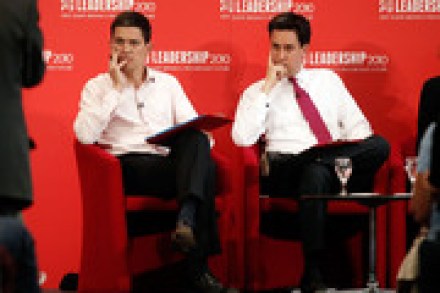
The word here in Westminster is that the result of the Labour leadership contest has been certified. The significance of this is that it means the result is not close enough for the party officials to think that there is any need for a recount.

Boris v Ken, round 2

From our UK edition

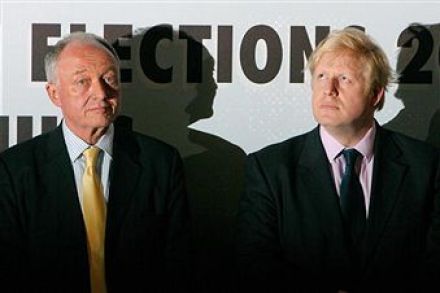
What we have long expected has now been confirmed: Ken Livingstone will be Labour’s candidate against Boris in 2012. From the moment he lost, Livingstone has been working out how to beat Boris in 2012. He is consumed by a desire to be London’s mayor when the Olympics open in 2012. Boris won the mayoralty in almost the best conditions possible for a Conservative candidate — the Tories in opposition, an unpopular Labour government and an economy in mess. He’ll be running for re-election in almost the worst — a Conservative led government making deep spending cuts.   But if any Conservative can win in these circumstances, it is Boris. The fact Ken is his opponent will also help Boris again turn out the outer Zones.

The coalition is out of touch on crime

From our UK edition

The coalition talks a lot about reducing the number of short criminal sentences. But this talk ignores just how liberal the sentencing regime already is. Just take this case reported on page 31 of the Evening Standard yesterday, a placement which suggests that it is far from unusual. 'At Finsbury Park station Ali, who had drunk a bottle of Jack Daniel's whiskey in Trafalgar Square with Jamil that night, aimed a punch at Mr Sanson over his girlfriend's shoulder. Miss Le Doussal turned around to ask what was going on, only for Ali to punch her in the face, leaving her with a black eye. Fellow passenger Daniel Hurley stepped in to remonstrate but as the argument spilled out onto the platform, Jamil punched him in the temple, knocking him to the floor.

Vince’s land tax land grab

From our UK edition

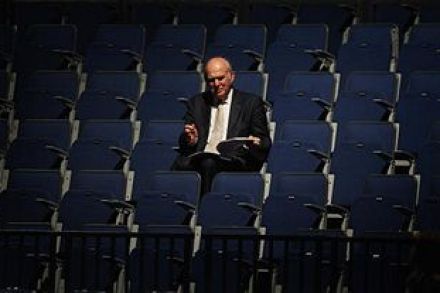
There was one notable bit of kite flying in Vince Cable’s speech earlier, an indication that he wants the next Liberal Democrat manifesto to contain a commitment to a land tax. This would give the party a distinctive policy going into the next election. With the proceeds of a land tax, they could abolish stamp duty and still have a lot of fiscal wriggle room allowing it to propose increasing the income tax threshold or spending more on certain public services. There's already work going on in Lib Dem circles on how to model a land tax and to find how much revenue it would raise.

Bonuses: a question of political economy

From our UK edition

There is a reason why the coalition has used the Lib Dem conference to step up its rhetoric about the bankers and their bonuses. The coalition believes, rightly, that balancing the budget is a matter of political economy. It is acutely aware, and has been for some time, that the sight of banks paying out huge bonuses later this year just as the public sector begins to lay people off and cut services would be disastrous. This view is shared by everyone in the coalition from Cable to Osborne. Bumper bonuses would increase calls for new punitive measures against the banks and produce precisely the kind of political atmosphere that the more aggressive trade union leaders want.

Lib Dem activists less than gleeful about the coalition

From our UK edition

Last night, Liberal Democrats gathered for their traditional conference glee club. It is a light-hearted occasion with lots of communal singing and jokes. But some of the gags did seem to vocalise a certain unease about the coalition.   There was a very lusty rendition of a song that went like this, to the tune of The Twelve Days of Christmas: On the first day of coalition The Tories gave to me A referendum on AV On the second day of merger The Tories gave to me Absolutely zilch And a referendum on AV On the third day of coalition The Tories gave to me Sweet FA Absolutely zilch And a referendum on AV The song continues in this vein until we reach the twelfth day.

Whither the Lib Dems?

From our UK edition

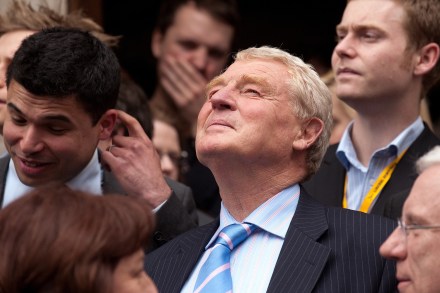
A striking aspect of the Liberal Democrat conference is how discussion of cooperation with Labour takes place in public while talk of any future work with their current coalition partner happens in private. Tonight, Paddy Ashdown told an Observer fringe meeting that the Liberal Democrats’ long-term goal should still be to become the dominant party of the centre-left in Britain. I must admit that I struggle to see how this is possible. The steps that the coalition needs to take to deal with what Nick Clegg calls the ‘invisible crisis’ of the deficit will alienate the party from the centre left. But then again, as one liberal Liberal Democrat said to me last night, of the party’s MPs only half a dozen are authentic liberals.

Keeping the flame alive | 21 September 2010

From our UK edition

In the early hours of this morning, Lib Dem conference looked like any other party conference. A throng of people—mostly men in suits—standing around outside the conference hotel having come from the various media parties. Indeed, it is surprisingly hard to tell the difference between Lib Dem conference and the others now. There are a large number of lobbyists here and a whole host of corporate types.   But there are some activists trying to keep the flame of the traditional Lib Dem conference alive.

A lot done – and a lot still to do – for Nick Clegg

From our UK edition

There’s always an after the Lord Mayor’s show feel at conference the today, after the leader’s speech. Adding to this feeling today is that the programme is relatively light; Simon Hughes and Chris Huhne are the star attractions.   Last night at the various parties one sensed a certain satisfaction among those close to Clegg at how the conference has gone. They feel they have got though it without any serious trouble and that the leader’s speech has warned the party of what is to come. But I do think that it is next year’s conference, when the cuts are biting, that will be the real test of what the membership is prepared to accept.

Clegg speaks to the hall

From our UK edition

Nick Clegg chose to speak to his party not the country today. His address was a justification of his decision to go into government with the Tories and a plea for his party to stick together over the next five, difficult years.   The crucial bit of the speech came when Clegg said of his party ‘maybe we got used to [being against every government that came along] ourselves’ but ‘imagine if we had turned away. How could we ever again have asked the voters to take us seriously?’ Clegg’s point was that opposition was not an option and ‘this country could not have borne five more years of Labour’. So, coalition with the Tories was the only option.

Clegg gets through his Q&A untroubled

From our UK edition

There were no explosions during Nick Clegg’s Q&A with Lib Dem members. Some unease with the dynamics of the coalition was expressed: a questioner who asked why the Liberal Democrats were getting the blame for the cuts and the Tories the credit for policies Lib Dems had brought to the coalition got huge applause, but there was nothing approaching a revolt.   Clegg expressed a lot of dissatisfaction with both the Labour party and the media, he even name-checked Polly Toynbee at one point. He accused Labour of being in "a near state of apoplexy and hysteria" and indulging in "a betrayal myth". He claimed that when it came to the cuts, Labour would have done "the vast bulk of what we are going to have to do".

Alexander’s arguments

From our UK edition

Danny Alexander’s announcement of a £900 million clampdown on tax avoidance, evasion and fraud is designed to reassure Lib Dems that the coalition’s policies are fair, that it isn’t balancing the budget on the backs of the poor. In a deliberate echo of George Osborne’s comments about welfare, Alexander said that the years when people could treat tax avoidance and evasion as a "lifestyle choice" were over. This Alexander announcement is a preview of what we’re going to see at this conference, a series of sweetners to show the party that the Liberal Democrats are influencing government policy.

Votes and jokes at the Lib Dem conference

From our UK edition

The pro AV rally at Lib Dem conference demonstrated the problem with the AV campaign: they don’t think it is the best system. Pam Giddy, chair of Yes! To Fairer Votes, described it as "a small but important upgrade to our electoral system"; hardly the most inspiring campaign slogan. The Lib Dem MP Jo Swinson declared that "in an ideal world … there’d be a majority for STV". Nick Clegg received a standing ovation and his speech went down well. He joked that one benefit of being in coalition with the Tories was "that he could no longer be accused of being the poshest man in the room" and that "Eric Pickles was the only Cabinet minister you can see on Google Earth." His serious message was that they were making the country "fairer, freer, greener.

The coalition must make its case

From our UK edition

The Lib Dems’ week in the sun has started and Nick Clegg has marked the occasion by giving a series of interviews. David has already noted the one in The Independent, but Clegg’s one with The Sun where he talks about playing tennis with Cameron at Chequers and assembling IKEA furniture together is perhaps more revealing of where his heart lies. But this coalition is going to be made or broken by whether it can persuade the public that dealing with the structural deficit and reforming the four great public services are the right things to do and that the coalition is doing them competently. As Charles Moore says in a magisterial column in the Telegraph today, the coalition needs to explain itself. Too often it is leaving a vacuum that its opponents are filling.

To govern is to choose: it’s a lesson the Lib Dems are learning the hard way

From our UK edition

James Forsyth reviews the week in politics ‘Go back to your constituencies and prepare for government,’ David Steel told the Liberal Assembly in 1981. Twenty-nine years, six leaders and a merger with the Social Democrats later, the party is at last in government, but not in the way it had hoped. The Liberal Democrats have historically prescribed higher spending as the cure for most government problems. Yet today, in coalition with the Conservatives, they are proposing the largest public spending cuts since the 1920s (the last Lib-Con government). So far, the Liberal Democrats have held it together. Not a single parliamentarian has defected. Only a few councillors have quit. But the same cannot be said for the party’s supporters.

The Labour leadership contest, all over bar the voting

From our UK edition

The Labour leadership hustings are over, tonight’s one on Question Time was the last one. As has been the case at so many previous hustings, Ed Balls was the most intellectually forceful of the contenders. Whatever you think of his arguments on the economy (and I disagree with them), he puts them across with a clarity and directness that none of the other candidates can match. It was revealing how when Ed Balls took issue with Andy Burnham’s accurate statement that there would have been ‘significant job loses’ under Labour, the others all backed away.

Andrew Mitchell recasts DfiD’s role

From our UK edition

Andrew Mitchell’s speech today at the Royal College of Defence Studies confirms me in my view that Mitchell is one of the most impressive members of the current government. Mitchell, a former soldier, is moving the Department for International Development away from being the government wing of Oxfam and into a department that plays its part in delivering Britain’s foreign policy objectives. The main theme of his speech today was that DfID and the Ministry of Defence have to work more closely together in post-conflict environments. For instance, Mitchell has cut aid to middle income countries to redirect it to Afghanistan, where it can play a role in trying to help secure the gains made by the military operation there.

Harman’s last hurrah

From our UK edition

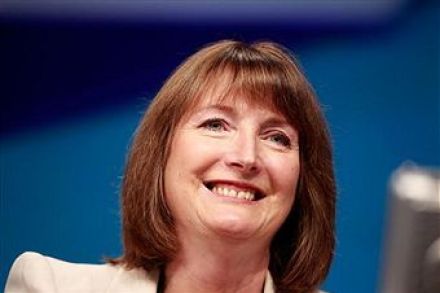
Today is Harriet Harman’s last PMQs as acting Labour leader. I suspect that Harman, who has performed far better than people expected she would, might well go on the story in The Times this morning about how the coalition is cutting a review into how rape cases are handled to save money. Immediately after the coalition was formed, Harman had considerable success at PMQs pressing David Cameron on the coalition agreement’s commitment to granting anonymity to rape suspects, something that had made it into the coalition agreement by mistake. If Harman went with the shelving of the rape review today, she would again put Cameron on the back foot. This cut also plays into Labour’s alarmist rhetoric about how the cuts are dangerous and will put people at risk.

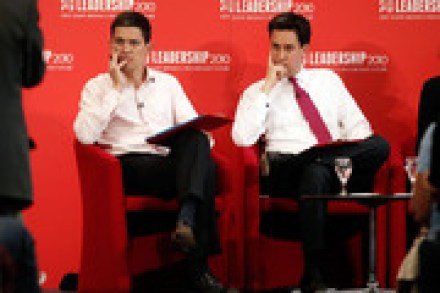
The Pope might be coming but the Milibands are still Topic A at Westminster

From our UK edition

Parliament is busy preparing to receive the Pope, the red carpet has been put down in Westminster Hall and the Commons authorities have announced that they are closing all the bars down from 2pm on Friday. But it is earthly matters that are still preoccupying people here. As you walk through the gothic arches, you see little clumps of people gathering together trying to work out which Miliband will be the next leader of the Labour party. At the moment, the race really does seem too close to call. But it is just worth reflecting for a second how crucial the new leader’s first few weeks will be. 3 days after the result is announced, the leader will need to give the leader’s speech at conference.

Are the Labour leadership polls telling the whole story?

From our UK edition

This weekend’s YouGov poll showing Ed Miliband ahead in the Labour leadership contest is the talk of Westminster today. One David Miliband backer told me that he thought it was flawed as it assumed that MPs' second preferences would split evenly between the two brothers when David had the advantage. I was told that nearly all Andy Burnham’s parliamentary backers would put David second, that most of Balls’ would do the same and that Ed Miliband could only rely on Diane Abbott’s parliamentary backers' second preferences. But Ed Miliband’s supporters dispute this. They believe that they are making progress everywhere.