James Forsyth

James Forsyth

James Forsyth is former political editor of The Spectator.

What Fox can learn from IDS

From our UK edition

The Ministry of Defence’s -7.5 percent budget settlement is a better deal than it appeared the MoD would get back in the summer. Tim Montgomerie hails it as a triumph for Fox and his full-on campaign against the deeper cuts that the Treasury wanted. But No 10 is keen for it not to been seen like this. They don’t want ministers to think next time round that the way to get a good deal is to kick up a fuss and enlist the papers on your behalf. There is so much anger with Fox in Downing Street, even those who are usually sympatheticto him are exasperated with him at the moment, that he’ll have a difficult next few months.

Liberal Democrat ministers are discovering the Conservative facts of life

From our UK edition

The evening before the government was formed, I walked back from the television tent city on College Green to the House of Commons with a man who was about to become a cabinet minister. The evening before the government was formed, I walked back from the television tent city on College Green to the House of Commons with a man who was about to become a cabinet minister. Conversation turned, predictably, to the forthcoming coalition. He argued that one of the major advantages of it for the Conservatives was that it would drag the Liberal Democrats rightwards, tipping the balance in the party in favour of its liberal wing and against its social democratic one. His rationale was simple: the reality of government takes politicians to the right.

The cuts are almost settled

From our UK edition

We are entering the end game of the spending review. The Department of Education settled this morning, according to both Tory and Lib Dem sources. Although there is confusion about whether the money for the pupil premium is coming from inside or outside the education budget – Clegg’s speech suggested outside but other Whitehall sources are not so sure. Liam Fox has told friends that he knows the final number for the defence budget and that it is a lot better than expected over the summer. Fox has played a blinder in terms of defending his budget but this has come at a huge personal cost for him. Even supporters say that they don’t think his relationship with Downing Street will ever fully recover.

The coalition’s liberal approach to sentencing could be the final straw for the middle class

From our UK edition

Today brings another couple of reminders of the coalition’s potential political problem with the middle class. In the Telegraph, Peter Oborne attacks Cameron and Osborne for a “morally disgusting” policy of targeting the middle class for an outsize share of the fiscal pain. While the Mail’s front page screams ‘What does get you locked up?’ as it details how 2,700 criminals who have more than fifty convictions were not sent to prison. Now, this is, obviously, the result of the last government’s sentencing policies. But, as the Mail points out repreatedly, this is a regime that Ken Clarke wants to make more liberal. In other words, even fewer people would be put away for the crimes they commit.

Obama 2.0

From our UK edition

The piece in the New York Times magazine this weekend on the Obama presidency illustrates how far he has fallen. A large chunk of it is devoted to whether or not he can win re-election, something that most of his supporters used to take for granted.  Significantly, the Obama White House itself is admitting that things could have been done better: “While proud of his record, Obama has already begun thinking about what went wrong — and what he needs to do to change course for the next two years. He has spent what one aide called “a lot of time talking about Obama 2.0” with his new interim chief of staff, Pete Rouse, and his deputy chief of staff, Jim Messina.

Miliband starts with a bang

From our UK edition

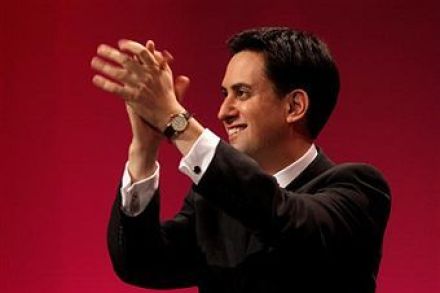
Score the first round to Ed Miliband. In his debut PMQs performance, Miliband comfortably got the better of David Cameron, forcing him onto the defensive for most of the session. Miliband’s first question was a long and worthy one about the death of Linda Norgrove, the UK aid worker, in Afghanistan last week. Then, he moved to the proposed child benefit changes, asking Cameron to justify the anomaly where a single earner family on £45,000 a year would lose it while a two earner household on £80,000 would keep it. Cameron’s problem was that nine days after the policy was announced, he still has no answer to his point. (Although, I suspect that the number of households that fall into this category is fairly small).

Winning over the squeezed middle

From our UK edition

Politically, one of the key questions about Lord Browne’s suggestion that tuition fees should be raised is how the tribunes of the middle classes react. Will a rise in fees be seen as another burden on those who work hard, play by the rules and are already bearing more than their fair share of the costs of the state? If the argument is to be won, the coalition will have to show that students will now get more out of their university experience. There’ll have to be an emphasis on how these changes will make universities improve the quality of the teaching that they offer. It’ll be worth watching to see if the question of who can increase the interest rate flares up over the next few weeks.

Green refuses to name names

From our UK edition

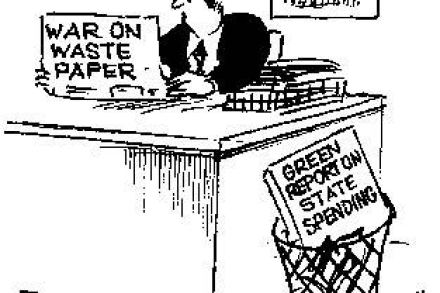
In the government’s grid for the week, Sir Philip Green’s report into how to make the public sector more efficient was meant to be the top story today. For an obvious — and tragic — reason it is not. Politically, the report was meant to help the government make its case that the cuts can be done without throwing Britain back into some Hobbesian state of nature. Indeed, Sir Philip suggests to Robert Peston that a very large chunk of the £83 billion cuts that are needed can be made through savings on the government’s £191bn  property and procurement costs. But as Pete notes, identifying government waste is far easier than actually dealing with it.

The consequences of the child benefit row

From our UK edition

"You only get cut through when there’s a row," one Tory observed to me on Friday as we discussed the anger that had followed George Osborne’s announcement on child benefit. So in one way, the Tories are not unhappy with the fact that this story is still rumbling on. It is imprinting on the public mind that the Tories have hit the well-off. This is in advance of a spending review that is bound to hit hardest those people and regions that are most dependent on the state. Following the media coverage of the child benefit row, it will be much harder for Labour to make the charge that the cuts are socially divisive stick. It really does appear that "we are all in this together."   But there are two things that do worry the Tories about the row.

A question of motive

From our UK edition

Charles Moore’s column in the Telegraph today is one of the best articles you’ll read this year. The nub of his argument is that: “Mr Cameron finds himself the heir both to Blair and to Thatcher. To Blair, because he has had to take his party away from its preferred territory and pay attention instead to what actual voters worry about. To Thatcher, because he confronts a crisis of the public finances even more severe than the one she faced. He also leads a coalition. So, unlike Mrs Thatcher, he wants to woo and to warn, please and prophesy at the same time. Can it be done, as she implied that it could not? It has to be.

Politics: If Cameron is heir to Blair, Osborne is heir to Brown

From our UK edition

In many ways, Gordon Brown and George Osborne are opposites. In many ways, Gordon Brown and George Osborne are opposites. When Brown became chancellor, he moved into the smallest, dingiest office on the Treasury’s ministerial corridor — eschewing the grand office that had been used by his predecessors. He also made great play of turning down Dorneywood, which was left to John Prescott. Osborne has restored the natural order of things. He has moved into the best office in the corridor and sent one of his advisers to work in Brown’s old room. He has asserted his claim to Dorneywood, leaving William Hague and Nick Clegg to country-house share. Indeed, Osborne is so keen on his grace-and-favour estate that he went there late last week to work on his conference speech.

Jonathan Powell: Blair felt physically threatened by Brown

From our UK edition

Jonathan Powell, Tony Blair’s chief of staff, is the latest veteran of the Brown Blair era to have his say and he is even more vicious about Gordon Brown than Peter Mandelson was. In his memoirs, which are being serialised in The Guardian tomorrow, he says that Blair ‘felt physically threatened’ when Brown leaned over his desk and demanded a departure date in 2001. But the charge which is sure to most infuriate the Brownites is Powell’s allegation that in the aftermath of 9/11: "The only time I saw him [Brown] appear to cheer up during that period was when the war cabinet was told there was a specific terrorist threat to Tony's life.

Cooper tops the shadow Cabinet poll as Healey comes second

From our UK edition

The shadow Cabinet results threw up some surprises. The most unexpected failure was that of Peter Hain. As a key Ed Miliband backer, it was widely expected he would make it on. Diane Abbott not making the cut was widely expected, she’s not popular with her parliamentary colleagues. But few would have predicted how well Tessa Jowell, who finished 9th, and Caroline Flint, 10th, did. As predicted, Yvette Cooper topped the poll by a margin—getting 232 votes. John Healey, the housing minister, came in a strong second with 192 votes and Ed Balls was third. At the other end of the table, Liam Byrne secured 19th place with 100 votes Positive discrimination did the job that it was intended to. Eight women were elected.

Osborne has a laid a trap

From our UK edition

One of the most intriguing questions about the decision to take child benefit away from households with a higher rate taxpayer in them is whether it marks the beginning of the end for universal benefits. The quotes today from Michael Fallon, the Tory vice-chairman, certainly suggest that it does. Fallon ridicules Ed Miliband with the line: “He wants to tax the poor to give benefits to the better off.” Now, if you accept that the poor are currently being taxed to provide child benefits for the rich (a slight exaggeration given that higher rate taxpayers contribute far more than they take out in services) then this argument applies with equal force to all other universal benefits.

A solution to the immigration cap puzzle

From our UK edition

The coalition’s immigration cap is, as several Conservative Cabinet ministers have pointed out privately, flawed. It threatens to cap the kind of immigration that bothers almost nobody, high skilled foreign workers coming to this country to do a specific job. As Ken Clarke has told colleagues, the problem is that Labour — albeit right at the end of their time in office — stopped non-EU low-skilled immigration. So all there was left to cap was high-skilled immigration.   But there is a potential solution that would enable the cap — a Conservative manifesto promise — to remain in place, but also deal with Vince Cable and businesses’ objections http://www.thisislondon.co.

Cameron would be advised to talk about people power

From our UK edition

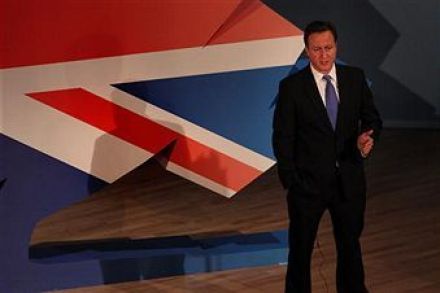
David Cameron was speaking in odd circumstances today. He was talking to a party that was back in power after more than a decade in opposition. But unlike Tony Blair in 1997 he couldn’t devote his speech to a celebration of that both because his party did not win a majority and because of the situation the country is in. To compound this, Cameron was speaking a fortnight before the spending review; further tying his hands in terms of what he could say.   Politically, the principal argument that Cameron wanted to make was about fairness. He was trying to move fairness from being purely about redistribution to one about reciprocity, about people deserving the help that they are given.

The government’s strategy has kept the child benefit story running

From our UK edition

We have heard much since the coalition was formed about how Cabinet government has been restored. The child benefit flap reveals how limited this restoration is. There was no Cabinet approval of the decision and, as Andrew Grice confirms this morning, Iain Duncan-Smith was unaware of the change until the morning of the announcement. The other thing that strikes me, as someone who supports the idea and thinks it is potentially good politics, is the very odd approach to spinning this story.

This is not a 10p tax moment

From our UK edition

Last night, one minister came up to me nervously and asked, ‘is this our 10p tax moment?’ He was talking, obviously, about the decision to take child benefit away from households with a higher rate taxpayer in them.   My answer was no. The comparisons with Brown’s removal of the 10p tax rate miss a crucial point: Brown tried to hide what he was doing. In his final Budget statement to the Commons, the abolition of the 10p rate wasn’t even mentioned. Instead Brown boasted about a 2p reduction in the basic rate, to huge cheers from the Labour benches.   By contrast, the Tories have been upfront about the fact that there are losers from this change.

Taxing issues

From our UK edition

Today was a reminder of the tax change that would give Tory re-election chances a massive boost, raising the threshold at which the higher rate kicks in. Indeed, electorally dealing with this is far more important than the abolition of the 50p rate and has been made more so by the decision to link the withdrawal of child benefit to the higher rate. During Gordon Brown’s time at the Treasury, the number of people paying the higher rate almost doubled - principally because of fiscal drag, Brown didn’t link the threshold to earnings. This means there are a whole slew of people paying higher rate tax who are comfortably off but are not members of the super rich by a long stretch.

Withdrawing child benefit at 16 would be the wrong call

From our UK edition

In the last few weeks, there has been much speculation that child benefit would be stopped when a child reaches 16. Today’s announcement suggests that this is not going to happen, although the Tories are refusing to rule it out. If there are to be changes to child benefit — and given the financial situation there need to be — then removing it from households with a higher rate taxpayer is a better move than stopping it at 16. Child benefit ending at 16 would send out a message that at 16 a child should start earning its way in the world. This would, for obvious reasons, have a negative impact on social mobility as it would likely lead to fewer children staying on at school post 16.