James Forsyth

James Forsyth

James Forsyth is former political editor of The Spectator.

Who is behind Nick Boles’ proposed electoral pact?

From our UK edition

Nick Boles proposed electoral pact (£) between the coalition partners would have a clear benefit for the Conservatives, it would make a deal between Labour and the Liberal Democrats after the next election impossible. That is quite a prize for the Conservatives. It would mean that David Cameron would continue as PM as long as the two parties between them held a majority of seats in the Commons. It is less clear what the Liberal Democrats would gain from it. Yes, it would help more of their MPs survive, but it would tie their hands ahead of another hung parliament and massively reduce their ability to claim that they are a distinct political party rather than just an adjunct to the Conservatives.
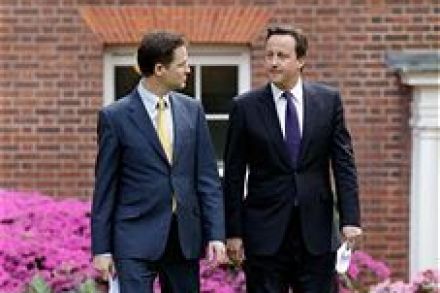
The Downing Street hole that Cameron needs to fill

From our UK edition

The coalition is about to face a lot more pressure. From September the 25th, there’ll be a new Labour leader orchestrating the attacks on it. Then, on October 20th the coalition will have to spell out cuts the like of which we haven’t seen in Britain for generations. If the coalition is to get through this period, it’ll need its own operation to be fighting fit. As I say in the Mail on Sunday, there’s a need for someone in Downing Street to tie the whole operation together, to see round political corners for the coalition. The coalition’s Downing Street is, compared to most political operations, a fairly harmonious place. But it is very siloed: there’s little communication between the policy and press sides.

Ed is closing the Miligap

From our UK edition

The Press Association is reporting that a YouGov poll for the Sunday Times has Ed Miliband leading his brother 51 49 among Labour members and trade unionist once second preferences have been taken into account. Now given David Miliband’s advantage among MP and MEPs, the other part of Labour’s electoral-college, the elder Miliband should still have enough to get over the line. (The Press Association’s headline—‘Poll points to Ed Miliband victory’—strikes me as a bit off for this reason). But this poll will give the Ed Miliband camp a massive boost going into the final full week of campaigning. One of the things Ed needed was a sense that he really could win and this poll helps him get that.

Who is for AV on its own merits?

From our UK edition

AV is a funny electoral system. It is neither first past the post nor proportional. The country is being offered a vote on it because it is a little better for the Liberal Democrats without being too bad for the Conservatives. However, the pro-AV side needs to keep this sentiment under wraps. So it is interesting that the 6 member steering committee for the putative yes campaign does not contain, as Sunder Katwala points out, a single person who is actually for AV on its own merits. Rather, they all view it as a stepping stone to proper PR. I suspect that in every debate during the referendum campaign, the first past the post side will demand to know if their opponent thinks AV is the best possible electoral system.

The coalition needs a clear message for Middle England

From our UK edition

James Forsyth reviews the week in politics The coalition has a problem communicating with the middle classes. As 20 October and the spending review approaches, the government’s message to other groups in society is easy to understand. The vulnerable will be protected from the cuts. Low earners will be allowed to keep more of the money that they make. But what about Middle England? It is much harder to discern what the coalition wants to say to them. Politically, this is a dangerous vacuum. It is easy to see why anxious bourgeois voters — and there are many of them — might think that the coalition is going to attempt to balance the budget by lumping an unbearable fiscal burden on their backs.

Boris for a second term

From our UK edition

Boris’s decision to announce today that he is to run again for Mayor of London is intriguing. Many in government circles expected Boris to wait until London’s settlement in the CSR had been finalised before announcing, his candidacy was the best card he had in the negotiation. So his declaration has sparked speculation that Boris and George Osborne have come to a deal. If Boris wins, and he starts as favourite, then what he does in his second term will be fascinating and the best guide to his future plans. If we see Boris becoming an increasingly national figure and championing causes dear to the right—free enterprise, low taxes and Euro-scepticism — it will suggest that he is at some danger of being decapitated by a Frisbee.

How Humphrys got it wrong

From our UK edition

The 8.10 Today programme slot this morning went to Nick Clegg. The programme wanted to discuss with the deputy PM the BBC’s finding that those areas most dependent on the state would be hit hardest by the coming cuts, for some reason this statement of the obvious is regarded as news. But John Humphrys, in his haste to interrupt the deputy PM, made some statements deserving of further scrutiny.   First, Humphrys suggested that the cuts will take place before Christmas. They won’t. Unlike the cuts announced in the immediate aftermath of the election, these are not in-year cuts.   Next, Humphrys claimed that the economy is at ‘stall-speed.’ But growth in the second quarter was 1.

The coalition’s shifting horizons

From our UK edition

Nick Clegg’s speech today is meant to be one of a pair with David Cameron giving the other tomorrow. The speeches mark an attempt to set out an agenda for the government that goes beyond deficit reduction. The idea is that Clegg’s speech called ‘horizon shift’, which is all about making government policy more long term, goes hand in hand with Cameron’s speech tomorrow on ‘power shift’, the government’s plan to devolve power down. This twin-pronged approach came out of the political Cabinet at Chequers at the end of the last parliamentary term and a recognition that the coalition must be seen to be doing more than just reducing the deficit. In terms of political strategy, the next few weeks are crucial for the coalition.

David Cameron’s father has died

From our UK edition

Sad news today, Ian Cameron has died. The Prime Minister was with his father at the end, having flown out to France with his brother and sister from City airport this morning. His father’s cheerfulness and determination in the face of his disability has long been cited by friends of Cameron as one of the key influences on his character.   In a sign of how quickly the Cameron family has experienced the joy of new life and the sadness of the end of a life, Ian Cameron had not met his latest granddaughter when he died.   Here is the Downing Street statement: "It is with deep regret we can confirm that Ian Cameron died earlier this afternoon.

Straw fails to improve

From our UK edition

Jack Straw did not improve on his previous PMQs performance today. He used up all six questions on Coulson and they were all too long-winded. Clegg got through it without too many problems, regularly using the operational independence of the police as a shield, as the Home Secretary did on Monday. The deputy PM also had the moment of the session when he informed the house that the first person to call Mr Coulson after he had resigned was Gordon Brown who had wished him well for the future. But at the very end of session, Labour got what they needed to keep this Coulson story going for yet another day. The Speaker has ruled that phone hacking is covered by privilege and so Chris Bryant is entitled to a debate on it tomorrow morning.

Clegg versus Straw – the re-match

From our UK edition

David Cameron’s father has suffered a stroke on holiday in France and so the PM is, understandably, travelling out there to be with him. This means that Nick Clegg will be standing in for him at PMQs. At the risk of sounding Jo Mooreish, this shift in PMQs personnel has political implications. Labour was always planning to use today to try and associate Cameron personally with Coulson and the whole voicemail interception story. That, obviously, can’t happen now. But Labour could ask Nick Clegg a series of awkward questions on this, has the deputy prime minister sought personal assurances from the director of communications about what he knew of phone hacking at the News of the World while he was editor and the like.

Labour’s fighting instincts flourishing in opposition

From our UK edition

Keith Vaz’s sleight of hand to get Yates of the Yard before his committee today and to confirm that his officers will soon be talking to Andy Coulson is yet another reminder that Labour today has a lot more fight in it than the Tories did in 1997. Yates’ comments don’t come as a surprise; the government was making clear yesterday that Coulson was happy to talk to the cops. But they have pushed the story back up the news agenda — the 24 hour news channels are covering it live — just when it finally appeared to be dying down: mission accomplished for Vaz and Labour.

May’s straight-bat technique

From our UK edition

Theresa May channeled Chris Tavaré today, every question on this phone tapping scandal was met with a solid defensive answer. She was helped by the number of Labour MPs who overreached — one compared it to Watergate while Dennis Skinner, who is nowhere near the Commons performer he once was, produced an ill-judged demand that Cameron come to the Commons and sack Coulson. Those MPs who were most effective were the ones who kept their cool. The personal testimony of Chris Bryant was particularly powerful.   Perhaps, the most noteworthy element of the proceedings was how a particularly glum looking Ming Campbell and Simon Hughes kept whispering to each other with concerned expressions on their faces. Neither man appeared to be happy with May’s answers.

Blair pulls out of book launch

From our UK edition

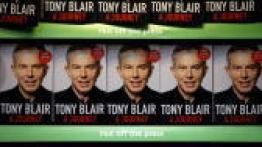
It is profoundly depressing that Tony Blair has had to pull out of his London book signing. Whatever you think of Blair, he is a man who led his party to three general elections victories and is the second longest serving Prime Minister of the post-war era. There is something very wrong if he feels he has to cancel an appearance at a book shop because of the threat of disruption from protesters whose intentions do not appear to be entirely peaceful. One other thing that should be noted is that the polling suggests that Blair is nowhere near as unpopular in this country as much of the coverage of his book suggests. A YouGov poll, timed to coincide with the book’s launch, found that a plurality, albeit narrow, of voters believe Blair was a good Prime Minister.

The coalition’s vulnerability on crime

From our UK edition

Parliament has that beginning of term feel today, lots of people discussing what they did on their summer holidays. After the holidays, the main topic of conversation is this whole phone tapping business. Everyone is wondering how long the BBC will keep playing it as the top story; it even devoted two thirds of the One O’Clock news to it. Given how reluctant the papers are to touch it, the story will burn out if the BBC stops fanning the flames. But one thing that I feel is being overlooked is Tony Blair’s attack on the coalition as soft on crime. If David Miliband wins the Labour leadership, I expect the Labour party will hammer the coalition on crime. There’s a real danger that the coalition’s policies could create a whole bunch of Willie Hortons.

Rebels ‘owe’ David Cameron their support

From our UK edition

I bumped into a Tory MP earlier who one might have expected to be rebelling tonight. But he told me he was, reluctantly voting for the AV bill, because “I owe him [David Cameron] this.” His logic was that Cameron had come to the parliamentary party and told them he was going to offer the Lib Dems this so the party was honour-bound to vote it through. This argument has resonance with Tory MPs. The only thing that limits its appeal is a feeling that Cameron might not have been entirely straight with them about why he had to offer the Lib Dems AV. I expect tonight’s rebellion to be relatively small, 10 to 12 according to those on the backbenches who should know. But the real drama will start in the committee stage when all sorts of amendments are put down.

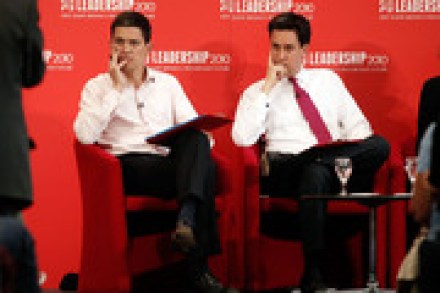
David Miliband has the best of it as the Labour leadership candidates debate

From our UK edition

David Miliband’s performance in Sky News’ Labour leadership hustings will have calmed the nerved of his supporters. In the run-off between him and his brother, David came out on top. His answers were generally sharper and he managed to parry away Ed’s criticisms on tuition fees and foreign policy. (In a pointed remark, Ed said that the Labour government’s foreign policy had been based on ‘old ideas’.) Indeed, Ed Miliband only seemed to get going in his closing statement which was pitch-perfect David’s best moment came when the contenders were asked to pick between Blair and Brown. Ed Balls opted for Brown, Diane Abbott said that Brown ‘was the better man’ and then it was the elder Miliband’s turn.

Gove to introduce baccalaureate for 16 year-olds

From our UK edition

Fixing the education system in Britain is absolutely crucial to promoting social mobility, the principal domestic social policy aim of the coalition. So Michael Gove’s announcement on the Andrew Marr show this morning that the government plans to introduce an English baccalaureate is to be welcomed. The baccalaureate programme will end at 16, still allowing specialisation at A-Level—one of the things that allows undergraduate education in this country to be far more intellectually rigorous than in the States, and will require pupils to do English, maths, science, a foreign or ancient language and a humanity. This should help stop the drift to softer subjects at GCSE and place pressure on all schools to enter all their pupils in all these subjects.

Miliband D tries to break out of the Blairite box

From our UK edition

With ballot papers out, the Labour leadership contest is entering its most critical phase. It is striking that David Miliband has taken this moment to co-author an essay with his most significant left-wing supporter, Jon Cruddas. Indeed, a casual observer looking at the piece would assume that the two men were running on a joint ticket. The language in the article is very Cruddas, it talks of a ‘new covenant’ (one of Cruddas’ favourite phrases) with Britain. The intellectual heart of the piece is an attempt to break away from the left right arguments within the party by proclaiming that Labour in government was “too hands-off with the market and too hands-on with the state.

First free schools will open next September

From our UK edition

Tomorrow’s Guardian front page says Michael Gove dealt fresh blow as only 20 'free schools' approved. But this is actually not a bad rate of progress. The 20 refers only to the new schools that will open in September 2011, more will open in 2012 and 2013 and so on. One would expect the numbers to increase as momentum behind the programme builds. As soon as parents see what these schools can do, there’ll be greater demand for them. Ed Balls is out tonight with a typically pugnacious statement claiming that this proves that parents don’t want free schools. But it is worth remembering that Tony Blair, a man who knows a thing or two about what the public want, goes out of his way to praise Tory school plans in his autobiography.