James Forsyth

James Forsyth

James Forsyth is former political editor of The Spectator.

Boris v Dave, this time it’s serious

From our UK edition

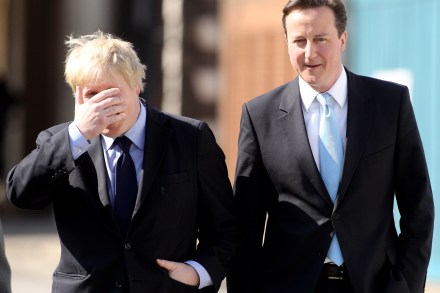
Make no mistake about it, Boris Johnson’s rhetorical assault on the coalition’s housing benefit plan is a direct challenge to David Cameron’s authority. The two best-known Conservatives in the country are now involved in a battle that only one of them can win.   Boris told BBC London this morning: "What we will not see and we will not accept any kind of Kosovo-style social cleansing of London. "On my watch, you are not going to see thousands of families evicted from the place where they have been living and have put down roots." What is infuriating the Tory machine is not only Boris’s criticisms, but the language that he is used—which makes Labour’s talk of social cleansing sound positively moderate.
The new fairness battleground

From our UK edition

The f word, fairness, got another outing today at PMQs as David Cameron attempted to defend the coalition’s proposed housing benefit changes from attack by Ed Miliband. Cameron’s argument was that it isn’t fair for people to be subsiding people on housing benefit to live in houses that they couldn’t afford to live in themselves. On this, I strongly suspect that most people in the country agree with him. If Labour wants to turn housing benefit into a big issue, the wedge will work to the Conservatives’ advantage. However, what should be worrying the coalition is that the changes to housing benefit will have to be implemented by local authorities, many of which strongly disagree with the policy.

A double boost for the coalition’s economic strategy

From our UK edition

Perhaps, the most important thing about the 0.8 percent growth figure for the third quarter announced this morning is that all but 0.1 percent of it came from the private sector. The strength of the private sector in this quarter suggests that the coalition is right to think that the private sector can more than make up for the jobs that will be lost in the public sector over the coming months. In another piece of good economic news for the coalition, Standard and Poor have taken Britain’s triple A credit rating off negative outlook and returned it to stable. This should help keep the yield that the government has to pay on its gilts down.  The coalition has taken a bold, and I believe correct, judgment on the economy.

Too many of today’s MPs would have been on the wrong side at Marston-Moor

From our UK edition

We are about to find out how many coalition MPs are lobby fodder. In half-an-hour or so, the House of Commons is going to vote on whether any reduction in the number of MPs should be matched by an equivalent reduction in the number of ministers. If this measure is defeated, the power of the executive will be increased, the payroll vote will be a larger proportion of the House than it is today. Sadly, it looks as if the executive will defeat Charles Walker’s amendment. Tory MPs admit that there is absolutely no intellectual defence for the government’s view that the number of MPs can be reduced by 10 percent but the number of ministers must stay the same, but they are still going to vote against the amendment out of a mixture of loyalty and self-interest.

Reading between Laws’ lines

From our UK edition

In The Guardian today, David Laws argues for increasing funding for the pupil premium to £5 billion in the next parliament. But, revealingly, rather than talking about achieving this through the Liberal Democrat manifesto, Laws want to secure the increase this side of the next election and so writes about how it relies on persuading George Osborne of the premiums’ worth. Laws appears to be putting down a marker that increased funding for the premium needs to be part of Osborne’s pre-election spending review which should be in autumn 2014. If everything goes according to the coalition’s economic plan, the coalition will be able to announce plans to cut taxes and increase spending in the months before the next election.

Why a LibCon coalition might last beyond 2015

From our UK edition

May 2015 is an age away in political terms. But the question of what happens to the coalition after the next election is too politically interesting to be able to resist speculating on; even if this speculation is almost certainly going to be overtaken by events. Over at ConservativeHome, Paul Goodman asks if Cameron and Osborne share Francis Maude’s view that the coalition should continue after the next election even if the Tories win an outright majority. My impression is that they do. If the Tories won a majority of between 10 and 30, I’d be surprised if Cameron didn’t try and keep the coalition going. There are four main reasons why I think the Tory leadership would want to keep the Liberal Democrats in the government in these circumstances.

The loyalty of the Lib Dem left this week bodes well for the coalition

From our UK edition

Sometimes it is the dog that doesn’t bark that matters and this week the Liberal Democrat left has failed to bark. We have not had any prolonged public outbursts against the spending review from the left of the Lib Dem parliamentary party. Sure, they may be trouble over individual welfare measures but the Simon Hughses and Tim Farrons of this world seem broadly happy with the package. Indeed, Simon Hughes’ press release on the spending review is entitled, ‘Necessary reductions in public spending are as fair as possible’. Add to this the fact that the Lib Dem revolt on higher education funding is not gathering steam at present and we appear to have a Lib Dem parliamentary party that is broadly happy with coalition.

Politics: After the cuts, a growth strategy – this is an electoral as well as economic plan

From our UK edition

On Monday night, all new Conservative MPs were summoned to a meeting with the chief whip in Portcullis House. On Monday night, all new Conservative MPs were summoned to a meeting with the chief whip in Portcullis House. The chief, a former miner who couldn’t be more different from the gilded youth of David Cameron’s A list, impressed on them the line for the week: the Conservatives do not want to be making these cuts — they are a matter of regrettable necessity. This reminder was largely unnecessary. The new MPs know the script. It is not the whole truth, though. Talk to almost any Conservative MP and they’ll tell you that the cuts will, ultimately, be good for the economy, that they will spur higher growth.

George Osborne is making the going

From our UK edition

There are several interesting columns on George Osborne in the papers today. In The Times, Tony Blair’s former speechwriter Phil Collins warns Labour to stop underestimating the Chancellor, who is defining the political battle on his terms at the moment. Peter Oborne, by contrast, is highly critical of Osborne in his Telegraph column, warning that Osborne’s partisan presentation of the cuts risks undermining support for the whole project. For once, I find myself disagreeing with Peter. I think Osborne is doing some of the political heavy-lifting that Cameron could not do without undermining his standing as a national leader; Osborne’s praise for the 2004 Republican campaign is instructive in trying to understand what is going on here.

Osborne’s inoculation strategy has worked

From our UK edition

Several of tomorrow’s newspapers lead on the IFS’ conclusion that those on the lowest income will suffer most from the cuts. This charge is problematic for the conclusion but far less problematic than it would have been if we hadn’t spent so much of the last few weeks discussing George Osborne’s decision to remove child benefit from families with a higher rate taxpayer in them. That change, however unpopular it may have been with normally Tory voters, inoculated the coalition against the charge that it was trying to balance the budget on the backs of the poor. Osborne’s preparation of the ground has not, though, stopped the Lib Dems slipping down to 10 percent in the polls.

The Tory response to Osborne’s Spending Review

From our UK edition

George Osborne was well received by the 1922 committee of Tory backbenchers when he addressed them on the spending review earlier. There was much thumping of desks, the traditional sign of approval at meetings of the ‘22.   Talking to Tory MPs this afternoon, they are pretty happy with the package. They are glad that the money being taken out of the welfare budget means that the departmental cuts are less than expected. Overall, they think the package is politically sellable and has denied Labour that many targets.   One concern is about how local councils, including Conservative ones, might react to a 28 percent cut in their funding from central government.

Not as deep as expected

From our UK edition

The cuts are not as bad as expected because the government has managed to make AME, annually managed expenditure, take much of the strain. The coalition is finding another £7bn from welfare to go with the £10bn of savings announced in the Budget. There is also another £3.5bn coming out of other bits of AME, more than half of which comes from the planned changes to public sector pensions. The child benefit change is also raising significantly more revenue than originally announced. This is because at the time of the announcement at Tory conference the coalition was planning to end child benefit at 16. This is now not happening.

Osborne vows to play straight

From our UK edition

George Osborne’s statement is, I hear, about 40 minutes long. I also hear that there is no obfuscation in it about what is being cut. The coalition is determined that no one can accuse them of trying to disguise what they are up to. Given what we have learned from pre-briefing, the cuts must be just massive in the departments we haven’t heard anything about yet. There is word this morning that the legal aid budget is going to be being reduced by far more than was expected even at the weekend. It appears that legal aid is one of the things that took the hit as the Treasury tried to find some other money to make the numbers for the fairness premium and the defence review add up.

Generous settlements mean gigantic cuts elsewhere

From our UK edition

I hear that the Department of Transport’s settlement is another one that is not as bad as expected. The capital statement is, apparently, positively reasonable. George Osborne’s commitment to infrastructure spending has meant that a good number of transport projects have been saved. On rail fares, I hear they will indeed go up significantly. But not by as much as the doomsday 30 to 40 percent scenario reported in the Sunday papers. Nearly all the settlements we have heard about so far have been less bad than expected. There must be, given that Osborne is sticking to the cuts schedule set out in the budget, some departments that are going to have to absorb absolutely massive cuts.

Cameron reveals the scale of defence cuts

From our UK edition

David Cameron delivered his statement on the Strategic Defence and Security Review with few rhetorical flourishes. He had two main messages: i) the mission in Afghanistan would be spared from the 8 percent cuts in this Parliament’s defence budget, and ii) the problems the review is trying to deal with stem from the fact that “the last government got it badly wrong.”   The appalling legacy that Labour has left the coalition on defence rather hamstrung Ed Miliband in his response. The most memorable line in it was a gag about how he had advance sight of the statement in ‘today’s papers, Monday’s papers, Sunday’s papers.

Not fit for purpose

From our UK edition

John Reid famously declared that ‘the Home Office was not fit for purpose’. But judging by the fudge over the carriers this epithet would have been better applied to one of his previous departments, the Ministry of Defence. Something has gone very wrong when it would cost more not to build something than to build it. How the MoD got into this position over the carriers needs to be the subject of an urgent and thorough investigation. Those responsible for this absurd situation need to be held to account. It is also ridiculous that there will be several years when there’ll be no carrier from which helicopters can be launched and that there’ll be a gap in carrier strike capability.

Fox in the dock?

From our UK edition

Split-stories have their own momentum. As soon as you know that a certain secretary of state is in the dog house with Downing Street, you start seeing things through that prism. So when I saw that the press release on the government’s new national security strategy contained quotes from the PM, the Foreign Secretary, the Home Secretary and the Development Secretary, but not the Defence Secretary, I immediately regarded it – and perhaps wrongly – as part of the Westminster Fox hunt.   Liam Fox’s appearance on the Politics Show on Sunday was ill-advised.

Laws helps Gove

From our UK edition

Michael Gove has just been explaining in the Commons where the £7 billion for the fairness premium that Nick Clegg announced on Friday will come from. Revealingly, David Laws was present as Gove answered this urgent question. I understand that Laws was crucial to both the pupil premium being implemented at a decent level and the real-terms increase in the schools Budget.   Laws himself told John Pienaar’s show last night that “obviously I've talked to him [Nick Clegg] about some of the things that I've been associated with in the past, like the schools funding issue... because I was the schools spokesman in the last parliament”.

A test of Cameron’s commitment to the new politics

From our UK edition

In opposition, nearly every politician talks about the dangers of an over-mighty executive. But office has a habit of changing peoples’ views on this subject. Charles Walker’s amendment (which he discusses over at ConservativeHome, here) to match any reduction in the number of MPs with an equivalent reduction in the number of ministers, so that the proportional size of the payroll vote remains the same, is an early test of whether office has begun to erode Cameron’s commitment to a proper balance between the executive and the legislature.   If a reduction in the number of MPs is not matched by a reduction in the number of ministers, then the executive will become more powerful and the House more of a creature of it.

Osborne gets behind infrastructure

From our UK edition

One of the most significant things we have seen today is George Osborne’s announcement that Crossrail, Mersey Gateway, the big science project Diamond synchrotron and universal broadband would all go ahead. Osborne has decided that it is worth cutting deeper now in other areas to protect the kind of investments that will make Britain a more attractive place to do business down the line. As I said after the Budget, Osborne’s desire to protect this kind of capital spending is a key part of his plan – along with his reductions in corporation tax – to boost the private sector in Britain as the public sector is downsized. The Crossrail announcement is also a big boost to Boris Johnson’s re-election bid.