James Forsyth

James Forsyth

James Forsyth is former political editor of The Spectator.

Are two Eds better than one?

From our UK edition

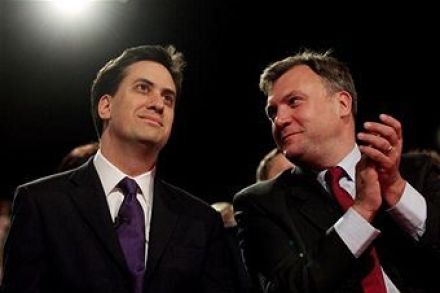
This was the question raised by today’s joint Balls Miliband press conference. The two Eds are very different in both body language and temperament. Balls is the far more pugilistic politician, always looking to dispute the premises of a question and happy to use aggressive language. While Miliband is far more of a conciliator, looking to find consensus and using only gentle humour. They even stand at the lectern in different ways: Balls hunched over his, leaning into the fight. Miliband hanging back from his, and taking a gentle step towards it when answering a question. The danger for Miliband is that Balls appears to be the alpha male, the one taking the fight to Labour’s enemies.

Clegg’s cure for the tuition fee trauma

From our UK edition

The Liberal Democrats are still traumatised by what happened over tuition fees. Nearly every fringe meeting contained a long discussion of the issue and how the party could have handled it better. Clegg’s plan to heal the wound is to show that the new system will go hand in hand with a broadening of access to the best universities. The deputy prime minister seems to be straining for a fight on this issue. In his speech, he laid into those at Oxbridge ‘who shrug their shoulders and say: That’s just the way things are’ about how dominated these institutions are by the children of the well-off. He demanded, ‘fair access now.’ But the problem is that access can only be as fair as the schools system allows.

Clegg’s pitch for the middle

From our UK edition

‘Governing from the middle for the middle’ was the message of Nick Clegg’s unapologetic speech to Lib Dem conference. His effort to redefine the Liberal Democrats continued as he tried to move the party away from its traditional yoghurt-weaving concerns and instead focus on appealing to ‘alarm clock Britain.’ Clegg’s view is that the left wing protest votes that the party used to get are gone for the foreseeable future, repulsed by coalition, and that the Lib Dems need to reach out to new voters. The calculation is that Labour is seen as being for those on benefits and the Tories for the rich, so the Liberal Democrats should try and seize the middle.

Clegg urges his party to face reality

From our UK edition

The cultural change Nick Clegg is trying to bring to the Liberal Democrats was summed up by one exchange during his Q&A with party delegates. One delegate, a member of the Federal Policy Committee, got up and said how conference had "sent the government a message" with its decision to amend the coalition’s health reform plans. To which a visibly exasperated Clegg replied, "you’re part of the government."   Clegg was uncompromising in his message that the party has to accept the realities of coalition government. After he had dismissed a series of questions about whether he was too close to Cameron, Clegg said — only half-jokingly — to the hall "who else would like some of that?

The Lib Dems vote to amend Lansley’s NHS reforms

From our UK edition

Lib Dem conference has just overwhelmingly voted to amend Lansley's NHS bill. In the end, the Lib Dem leadership simply accepted the amendments because it was so clear they were going to pass. Evan Harris, the former Lib Dem MP, warned that the party would not accept the leadership simply ignoring these amendments. He said "we expect Liberal Democrats in government to follow what we overwhelmingly vote for." Harris predicted that if they went along with Lansley's bill, the Lib Dems would be associating themselves with the "retoxification of the Tory brand".

Politics: Is Cameron having a Jimmy Carter moment?

From our UK edition

The government is struggling to retain its reputation for competence. The government is struggling to retain its reputation for competence. Ministerial ineptitude has become a dangerously large part of the major news stories in recent weeks, from the Libyan crisis to the scandal surrounding Prince Andrew. This should worry the coalition, because the public will not support government cuts or reforms to public services if people believe it is incapable of carrying them out. Appearing competent is a prerequisite for successful government. The government will only get credit for what goes right if it is seen to be in charge. The team in No.

In protest at the Lib Dems

From our UK edition

The Liberal Democrats have, as Clegg’s team like to joke, gone from being the party of protest to the party people protest. Here in Sheffield, at Lib Dem spring conference, there’s a growing group of demonstrators standing just outside the secure zone. They are keeping up a steady chant of ‘Lib Dem scum, Lib Dem scum.’ The authorities are clearly nervous about trouble this weekend. There are a huge number of police out on the streets, a number more akin to a full party conference rather than one of these smaller spring affairs. There is a 10,000 strong demo planned for tomorrow. If there is going to be trouble, it will likely be a spill-over from this.

Clegg’s unedifying slip reveals an underlying truth

From our UK edition

Project Merlin, the deal between the government and the banks, was meant to turn the page on banker bashing. But the deputy prime minister is still stuck on the previous page, telling Radio Sheffield today ‘I want to wring the neck of these wretched people’ the bankers.   The language isn’t very statesmanlike and is sure to infuriate many of his coalition colleagues (it is also hardly sensible for the deputy prime minister to be using language which appears to condone violence ahead of a conference where the police are preparing to deal with a riot). But it does reflect a political reality: the banks remain public enemy number one.

Without intervention, Gaddafi will triumph in Libya

From our UK edition

The tragic truth is that in Libya Colonel Gaddafi appears to be on the way to regaining control. As the US director of national intelligence said today The tragic truth is that in Libya Colonel Gaddafi appears to be on the way to regaining control. As the US director of national intelligence said today, the regime’s superior military strength makes it likely that “over longer term, that the regime will prevail." Realistically, the only way to stop this from happening is through intervention of some sort—with the most plausible option still a no-fly zone which would deny the regime air superiority. Without this, the regime’s all out-war tactics—as declared by Saif Gaddafi today—will prevail.

The British Bill of Rights stalls

From our UK edition

A British Bill of Rights has long been the Tory leadership’s sticking plaster solution to the problems posed by the ECHR. The idea is that a British Bill of Rights would give this country a greater margin of appreciation in interpreting the convention. But this morning this plan is in tatters.   The long-awaited commission on the British Bill of Rights is clearly going nowhere.  Any commission which includes Lord Lester and Helena Kennedy, two of the Lib Dem appointees to it, isn’t going to improve the situation.   The failure of this commission even before it has started is a reminder that this problem isn’t going to be solved in coalition.

A reminder that the Iranian threat hasn’t gone away

From our UK edition

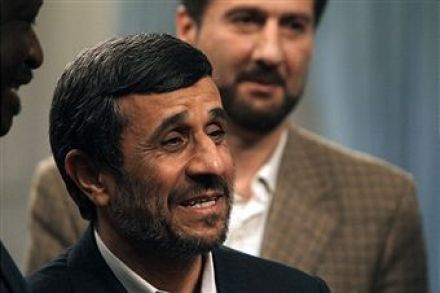
Today’s news that Nato has intercepted an Iranian weapons shipment to the Taliban shows the threat Iran poses to international order and just how dangerous it would be for this regime to develop a nuclear capability. The shipment means that the regime, or at least part of it, wishes to assist those who want to kill Western troops and will back the forces of instability in the world. William Hague has released a statement calling Iran’s behaviour ‘completely unacceptable.’ But it is not clear what options Nato has beyond complaining about Iran’s actions. Any attempts to disrupt these supply routes on the other side of the border would be extremely dangerous in several ways.

Cameron’s threadbare praetorian guard

From our UK edition

One of the worst kept secrets of David Cameron’s leadership is that some in the inner circle don’t think much of the members of the shadow Cabinet who are now in Cabinet. What is far more dangerous is when the leader himself lets slip his low opinion of some of his colleagues, as Ben Brogan reports he has been doing lately. This is the kind of behaviour that is bound to cause resentment as this criticism always get back to the objects of it.   At the moment, Cameron can get away with this. He is still seen as the Tories’ primary electoral asset and there is no obvious, or even viable, alternative to him. But when Cameron gets into trouble, this will matter.

A princely problem

From our UK edition

Tonight’s Six o’clock news had a long package on Prince Andrew that ended with Laura Kuenssberg reporting from Downing Street on the government’s attitude to the prince. The fact that the government is now so much part of this story is due to an unforced error on its part.   It was the briefing yesterday about how if more came out then Andrew would have to resign as trade envoy that pushed the government right into the middle of this sorry story. This set journalistic hares running and had everyone demanding to know what the government’s position was. The government, which had got involved in this story more through cock-up than anything else, quickly rowed back on Sunday's lines.

Hague statement does little to clear up SAS mystery

From our UK edition

William Hague’s statement to the Commons this afternoon did little to clear up the mystery behind how a bunch of SAS soldiers ended up being detained by the Libyan opposition. Hague’s explanation was that they were accompanying diplomats trying to make contact with the opposition and it is a dangerous neighbourhood. But if that was the case, then why didn’t they just make contact with the transitional council based at the courthouse and why were the soldiers carrying multiple passports and explosives rather than just normal weapons?

SpAd Wars

From our UK edition

Downing Street’s briefing that under-performing special advisors will soon be sacked has created a storm in the Westminster tea-cup. One SpAd pointed out to me the complete hypocrisy of a Number 10 that constantly stresses that briefing against colleagues is a sackable offence doing exactly that. Sacking under-performing SpAds will not be as easy as you’d think it should be. These advisors have, in most cases, been hand-picked by the Secretary of State who will be reluctant to give them up without a fight. SpAds in the rest of Whitehall also argue that the Downing Street operation itself is far from perfect.

Cameron hugs his party

From our UK edition

David Cameron’s speech to the Conservative Spring Forum was one of the most Conservative speeches he has given in a long time. It was an address that was meant to reassure the party during what looks set to to be this government’s most difficult year. The Tory leader opened with a list of policy pledges delivered and they were all distinctively Conservative policies: making work pay, the EU referendum lock, teaching British history in schools, freezing council tax, capping immigration and doubling the operational allowance. There was further crowd pleasing material in a substantial section of the speech which attacked AV.

Osborne’s political economy

From our UK edition

George Osborne’s speech to the Tory spring conference today showed the classic left-right way in which he wants to frame the political debate about the economy ahead of the Budget on the 23rd of March.  In a move straight out of the election-winning centre-right playbook of the 80s, he attacked Balls and Miliband as “Two left-wing politicians who don't understand anyone who wants to get up and get on, anyone who want a better life for their family, anyone who want to create wealth, and start a business, and create jobs, and leave something to their children.

Duncan warns of oil price rise and King of future financial crisis

From our UK edition

There are two important political interviews in today’s papers, Alan Duncan in The Times and Mervyn King in the Telegraph. Duncan, the international development minister, echoes Chris Huhne’s warning of ever higher oil prices. He also makes a rather glib remark about how “I don’t think we want to take military action so women can drive in Saudi Arabia.” King’s interview with Charles Moore is fascinating reading. The governor fears  that there could be another banking crisis. He warns, ‘The problem is still there’.

Politics: Cameron is good in a crisis – but bad at avoiding them

From our UK edition

David Cameron was two years old when Muammar Muhammad al-Gaddafi seized power in Libya. David Cameron was two years old when Muammar Muhammad al-Gaddafi seized power in Libya. Forty-one years later, he finds himself the eighth British Prime Minister wondering what to do about the Mad Dog of the Middle East. How Cameron approaches this question tells us much about his approach to leadership. Admirers of the Prime Minister often boast that he is ‘at his best in a crisis’. This is true. But what is also true is that things too often have to reach crisis point before the Cameron machine fully engages. This is why, after less than six years on the political frontline, he has three times had to give a speech to save his career.

A night that will not be quickly forgotten

From our UK edition

Last night’s by-election result in Barnsley is embarrassing for both Clegg and Cameron. For Clegg, it is obviously humiliating to come sixth. Fourth would have been bad enough but sixth is an even worse result than the Lib Dems feared. The fact the Lib Dems also lost their deposit just adds insult to injury. The result will certainly make activists heading to Sheffield next week for their spring conference jumpy. I also suspect that we’ll see some enterprising newspaper doing a poll in Clegg’s Sheffield constituency before next weekend.  On the Conservative side, coming third behind UKIP is going to lend weight to those who argue that the party has conceded too much to its coalition partners.