James Forsyth

James Forsyth

James Forsyth is former political editor of The Spectator.

Alexander identifies Labour’s problem

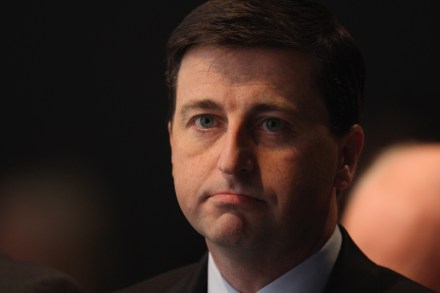
Douglas Alexander may sometimes hide the meaning of what he says under a layer of jargon but he remains one of the more interesting political strategists on the Labour side. Alexander, a Brown long-marcher turned Blairite, saw before many of his colleagues the need for Labour to level with the public on cuts. He privately thought that Gordon Brown’s attempt to fight the last election on a reprise of the investment versus cuts strategy of ’01 and ’05 was a mistake. So, it is no surprise that Alexander, now shadow Foreign Secretary, is trying to use the opportunity created by Ed Balls’ acceptance of the need for a public sector pay freeze to try and move Labour into a better fiscal place.

Politics: Why a double dip won’t save Ed Miliband

It wasn’t meant to be this way. The Tories used to joke that after a year and a half in office they would be the most unpopular government in history. Instead, they find themselves five points ahead in the polls. To their surprise, and Labour’s consternation, they are in a far stronger position now than they were at the last election. To understand what’s going on, look no further than this week’s vote on welfare reform. It epitomised three of the most important trends in British politics: the addition of a harder edge to the Tory modernising agenda, the strategic confusion afflicting Labour, and the disconnect between the Lib Dem leaders and their party. Together, these trends help explain why the Tories are ahead even as the economy is contracting.

When one euro is worth more than another

Faisal Islam has a very interesting report from Davos on how at least one bank no longer believes that a euro from Ireland, say, is worth the same as one from Holland or Germany. He writes that: ‘A leading European bank has begun to account for euros differentially, by nation state. That is to say, they are differentiating a risk to euros that originate in a potentially defaulting country from that of a euro-cert. They, in effect, have invented the concept of a German, Greek and Irish euro. Now we accept that government debts from these nations are different. The idea that a bank treats cash differentially, is an incredible development.

Abbott quits abortion talks, but will her contributions be missed?

Diane Abbott has, the BBC reports, walked away from the all-party talks on abortion because of the government’s proposals on counselling services. But others involved in the talks claim that Labour’s public health spokeswoman was not a particularly active participant. Abbott, who is not always the easiest of people to work with, had already irritated some of those involved in these talks. In the first meeting she, allegedly, took the opportunity to rest her eyes. She then apparently turned up half an hour late for the second meeting before missing the third one completely. When I put these claims to Abbott’s office, they said that they doubted they were true but they would check with the MP. But so far, there’s been no word back.

Both leaders left smiling after PMQs

Today was one of those PMQs when you sensed that both sides were fairly happy with how it had gone. Ed Miliband turned in one of his stronger performances, cleverly splitting his questions and so allowing himself to have a go at both the economy and the coalition’s troubled NHS reforms. Cameron, for his part, got through what was always going to be a difficult session for him after this morning’s negative growth numbers.   Strikingly, there were four planted Tory questions on the benefits cap. The Tories know that Labour’s vote against it compounds one of their biggest vulnerabilities, the sense they are the party for people on benefits and not those in work.

Europe gives Osborne the context he needs

The political implications of today’s growth numbers are complex. On one level, a contraction in the economy should provide Miliband and Balls with an opportunity to make their economic case against the government. Indeed, Balls is already out with a statement calling the GDP figures a ‘damning indictment of David Cameron and George Osborne’s failed economic plan’. I suspect that Miliband is also looking forward to PMQs rather more than normal.   But on the other hand, as long as Cameron and Osborne enjoy a big lead on the economy — 18 points in the last ICM survey — bad economic news will reinforce voters’ tendency to stick close to nurse for fear of something worse.

Salmond’s dangerous strategy

Cartoonists like to portray Alex Salmond as a modern-day Braveheart preparing to charge the English enemy. But, in truth, Salmond’s strategy is far more subtle — and dangerous — than that.   The SNP leader’s piece in The Guardian today — a preview of the Hugo Young lecture he’s delivering tonight — downplays what a dramatic step independence would be. At times the article reads like an argument for ‘devo max’, not independence. He bemoans that devolution ‘left Scotland with fewer powers than the German Länder, most American states, parts of Spain or, within these islands, the Isle of Man’.   Salmond also wants to suggest that not that much would change after independence.

A defeat that delights the Tories

Rarely can a government have been so pleased to have been defeated. The Tories are, privately, delighted that the Lords have voted to water down the benefit cap, removing child benefit from it. The longer this attempt to cap benefit for non-working households at £26,000 stays in the news, the better it is for the government. It demonstrates to the electorate that they are trying to do something about the injustices of the something for nothing culture. The matter will now returns to the Commons where the coalition is confident it can be reversed. I understand that Nick Clegg remains solid on the issue, despite the fact that Ashdown and Shirley Williams led the Lib Dem rebellion in the Lords on this amendment.

A Chris Huhne prediction that didn’t come true

Chris Huhne attacked David Cameron for the EU veto in Cabinet back in December. At the time, one Cabinet minister told me that part of Huhne’s critique was that Cameron had scuppered the chances of a Liberal Democrat MEP, Sharon Bowles, being reelected as chair of the European Parliament’s Economic and Monetary Affairs Committee, which deals with financial services.   But Bowles has been reelected. In a Lib Dem press release welcoming this, Nick Clegg declares that: ‘As party leader, I am proud that we have a leading Liberal Democrat in such a prominent and powerful position on the international scene. As UK Deputy Prime Minister, I am delighted and relieved to know that the EU financial services brief is in such expert hands.

Benefitting the Tories

The longer the row over the benefit cap goes on, the better it will be for the Tories. The cap chimes with the public’s sense of fairness. Polls show massive public support for capping benefits at £26,000 a year for non-working households (the cap won’t apply to the disabled or war widows), and if Labour oppose it, they’ll be handing the Tories a stick with which to beat them. Chris Grayling has already declared that tonight’s vote in the Lords is ‘a test of Ed Miliband’s leadership’. Those who argue that the cap isn’t fair because it will force people to move out of their house are missing the point.

Labour’s confusion is the Tories’ advantage

Today’s polls make grim reading for Labour. Even three months ago senior Labour or Tory people wouldn’t have thought that the Tories would be five points ahead at this point in the cycle. Part of Labour’s problem is that its positions require too much explanation. As one Number 10 source jokes, ‘Ed Miliband can do a Rubik's cube in less time than it takes him to explain his position on the cuts.’ A prime example of these overly complicated policy positions is Labour’s approach to the benefit cap. The leadership says that it is in favour of a cap in principle but against this one in practice.

What does it say about our society that abortion will now be advertised on TV?

The news that for-profit abortion providers are soon to be allowed to advertise on television suggests there is something very wrong with our society. Abortion may well at times be the least worst option. But even those of us who accept this should feel deeply uncomfortable with it being actively promoted on television. The fact that these providers want to advertise on television is revealing of a certain lack of moral seriousness about the work they do. This news is also revealing of how far we have come since the Abortion Act 1967. I doubt that the parliamentarians who voted that legislation through envisaged that 45 years later, what are euphemistically called, ‘post-conception advisory services’ would be being promoted during the commercial break.

Politics: Is Britain ready for an optimistic Prime Minister?

David Cameron is a sunny-side-up politician. At his first party conference as leader, he declared, ‘Let optimism beat pessimism. Let sunshine win the day.’ This attitude infused his approach to policy as well as politics. His economic doctrine was all about ‘sharing the proceeds of growth’. George Osborne, Cameron’s chief strategist, liked to stress that it was imperative that the Conservatives didn’t ‘sound like the old man on the park bench who says things were better in 1985, or 1955, or 1855. We have got to be the party that embraces the future.’ Then came the financial crisis. With banks collapsing, sunny rhetoric would have been horribly out of place. Cameron had to change both his course and his tone.

 Reshuffle chatter

Today’s Huhne news, which Pete blogged earllier, has set off all sorts of reshuffle chatter. At the moment, the expectation is that if a reshuffle was required it would be a limited, Lib Dem only one—their version of the one that followed Liam Fox’s departure. The current favourite to replace Huhne is Ed Davey, Vince Cable’s Lib Dem junior minister in the business department. In terms of a more general reshuffle, I’m hearing that we might have to wait until after Olympics. There is a growing view among those close to the Prime Minister, I’m told, that it would be better to leave ministers in place until then and then do a wide-ranging reshuffle.

How Cameron sees the economy

Today’s speech by David Cameron is one of those ones that give you a real insight into how he sees the world. Cameron said that he wanted to see an ‘insurgent economy, where we support the new, the innovative and the bold’. He talked about the need to ‘encourage the adventurous spirits who challenge the status quo and declared that he admires ‘more than almost anything the bravery of those who turn their back on the security of a regular wage to follow their dreams and start a company’. This reveals something important both about Cameron personally and how he sees the economy. The people that Cameron respects are not the CEOs of established companies but the entrepreneurs who are creating dynamic, new companies.

Boris puts on a performance for the 1922 Committee

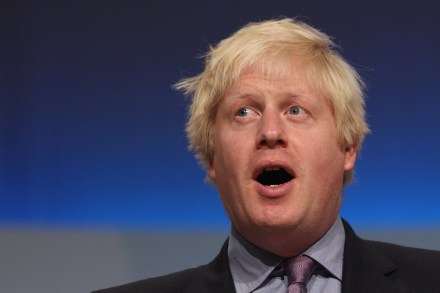
Boris Johnson was very well behaved this evening when he appeared before the 1922 Committee of Tory MPs. He stayed off the topics of Europe and tax and instead confined his remarks to London, saying that he wanted the capital to be an example of ‘cost-cutting, one nation Conservatism’. Those MPs inside the room say the performance was classic Boris, as one put it ‘he left no erogenous zone unstroked’.   Afterwards, Mark Reckless, a north Kent MP, asked the Mayor a sceptical question about his plan for a new airport in Kent. In the questions, I understand that Boris also took the chance to express his support for Rebecca Harris’s daylight saving times bill.   Interestingly, the turn-out for Boris was decent but not massive.

Cameron endures his monthly unemployment grilling

Downing Street is painfully aware that one PMQs in four is going to be about unemployment. Today, with the monthly figures having come out this morning, Miliband led on the subject. The Cameron-Miliband exchanges were not particularly enlightening. Miliband said ‘it really is back to the 1980s’ and Cameron mocked Miliband for being ‘so incompetent, he can’t even do a U-turn properly’. In the backbench questions, Cameron wasn’t put under much pressure. The news of the session came when he said in response to a question from Andrew Rosindell that the National Security Council had devoted a whole session to the Falklands yesterday.

Miliband tells the unions ‘tough’

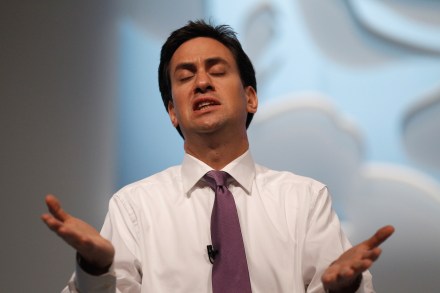
Ed Miliband has just done a TV clip full of the kind of quotes that politicians love using. In an interview with Nick Robinson (above), the Labour leader declared that ‘I’m leading this party and making the difficult decisions. And if people don't like it, I’m afraid it's tough, because that is the way I’ve got to lead this party’. It seems that Miliband has decided to pivot off the attack on him by the Unite and GMB unions, to use them to try and show the electorate that he’s his own man and is fiscally credible. The worry among some Labour supporters is that Unite, Labour’s biggest financial backer, walks away from the party in disgust at its support for the public sector pay freeze.

What will Miliband do now?

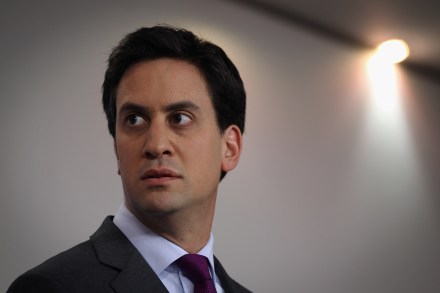
The Labour leader Ed Miliband has been determined not to define himself by picking fights against his own side. He didn’t want to do a Blair or a Cameron and triangulate his way to power. Rather, his model was, in one respect, Thatcher. His team were struck by how she managed to move the political centre from opposition. But Miliband now finds his own side picking fights against him. As Pete blogged earlier, Unite’s Len McCluskey has launched an intemperate attack on him in The Guardian. McCluskey claims that Miliband’s recognition that Labour’s starting point has to be that the cuts will be reality by 2015 has ‘undermined his leadership’.

Gove’s Royal yacht proposal in full

This morning’s Guardian scoop about Michael Gove’s suggestion that the nation should present the Queen with a new Royal yacht for the Jubilee is the talk of Westminster. But the full correspondence indicates that Gove was not proposing any taxpayer funding for a new Britannia.   Gove refers to ‘David Willetts’s excellent suggestion for a Royal Yacht’. This proposal was made in a letter from Willetts to the Prime Minister on the 5th September, which was copied to various colleagues. Willetts writes that Rear Admiral Bawtree sees The Future Ship Project for the 21st Century ‘as a potential replacement for the Royal Yacht Britannia’.