James Forsyth

James Forsyth

James Forsyth is former political editor of The Spectator.

Downing St plans to boost construction

In the last few months, there’s been a distinct change in the attitude of the Tories at the heart of government. They are now far more cognisant of just how difficult it is to drive change through the government machine. It is no longer just Steve Hilton and Michael Gove complaining about this, but Osborne and Cameron too. The Chancellor’s particular frustration at the moment is over the pace of planning reform. Osborne and his brains trust believe that simplifying the planning rules is one of the things that they could do to both give the economy a short term stimulus, by encouraging more construction, and improve its long term prospects. But the coalition is making slower progress on the matter than Osborne would like.

Osborne’s economic and political reasons for local pay rates

George Osborne has just fired the first shot in the fight over the 2012 Budget. His decision to introduce local pay for the 160,000 civil servants coming off the public sector pay freeze is, as is often the case with Chancellor Osborne, both an economic and a political move. The economic case for local pay is straightforward. National pay rates mean that public sector workers are relatively underpaid in prosperous areas of the country and relatively overpaid in deprived areas. Pay that reflected local conditions would make for a more balanced economy, helping the private sector in those parts of the country where the public sector is currently dominant. But there’s also a lot of politics involved.

Politics: Taking back the cities

When the Prime Minister’s chief adviser, Steve Hilton, quits Downing Street in May, he’ll leave behind what he believes to be a mechanism to solve the Conservatives’ biggest electoral problem, which is their failure to win urban seats. On 3 May, ten of England’s largest cities will vote on whether to join London in having a directly elected mayor. These mayoralties will, if the Conservatives play their cards right, provide a platform from which the party can rebuild its metropolitan appeal. Directly elected mayors could provide the accountability that local politics has so lacked in the postwar era. For the first time in generations, people might know who is running their city.

Labour miss out the details

Labour's launch of its new youth jobs policy has been rather overshadowed by Harriet Harman's inability to explain the costing behind the policy on the Daily Politics earlier: not a good look for a party trying to show that it is fiscally credible. But more interesting than the number behind the policy is how it marks an attempt by Labour to toughen up its position on welfare. Those young workers who have been out of work for a year will have to take one of these minimum wage jobs or have their benefits docked.


 On the Labour front, the interview with Ed Miliband in the Times today is also worthy of comment.

How mayoral elections can strengthen the Tories

The most important political changes are those that will not be reversed. I think that both directly elected mayors and police commissioners fit this mould. I can’t imagine voters choosing to cede the ability to hold power to account that these positions will give them. Tellingly, more people in London now favour independence for the capital than want to scrap the office of mayor. Police commissioners and mayors also provide the Conservatives with a massive opportunity to rebuild the party in urban Britain, as I argue in my column this week. The Conservatives have little chance of gaining overall control of the council in, say, Leeds. But they could win a mayoral poll there.

The significance of Clegg’s PMQs win

Nick Clegg’s assertive performance at PMQs today was a demonstration of the fact that he now feels more confident than he has since his failure in the AV referendum. The deputy Prime Minister doesn’t crouch defensively at the despatch box anymore, and he brushed off some rather good one-liners from Harriet Harman. She joked that the only thing the deputy Prime Minister stands up for these days is the PM entering the room.   Clegg and his team feel that things are looking up for them, that they are setting the agenda. Even the Lib Dem’s lowly poll rating isn’t dampening their mood.   So, what does this change mean for the coalition? Senior Tories claim to be delighted that Clegg is happier, claiming it makes him easier to deal with.

Cameron lands in America

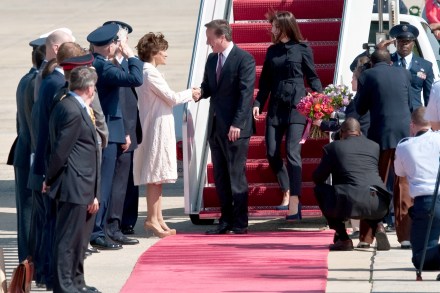
David Cameron’s plane has just landed in Washington. The next few days should provide him with a set of images that will portray him as a significant figure on the global stage. The Obama administration is giving Cameron the full works: a huge event on the White House lawn and the kind of banquet that is normally reserved for heads of state. This is an arrangement that benefits both sides. The Obama re-election campaign wants to foster the sense that the President is friends with a Conservative British Prime Minister given that their Republican opponent in the fall will accuse him of being a left-wing radical. I suspect, though, that Downing Street will be rather worried that the arrests of Charlie and Rebekah Brooks could overshadow the opening day of the visit.

Cameron’s Human Rights quandry

The combination of the European Court of Human Rights and the European Convention on Human Rights is, I predict, going to give David Cameron an increasing number of headaches in the coming months. As Fraser wrote yesterday, Michael Pinto-Duschinsky’s principled resignation from the coalition’s Commission on the British Bill of Rights has revealed that this body was never really serious about dealing with the problem. The exposure of this Commission as merely a holding device will add to the pressure on the Prime Minister to clarify what he actually intends to do about the problem.

Clegg previews the Lib Dems’ election pitch

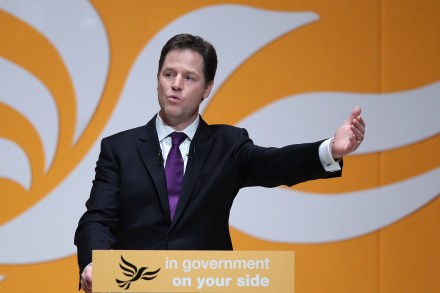
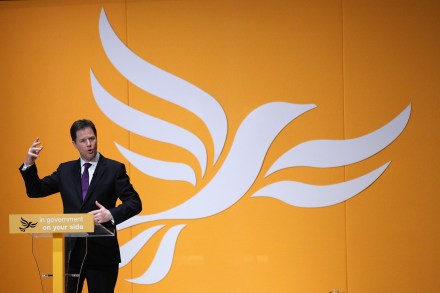
Nick Clegg’s speech today was a preview of what the Liberal Democrat argument will be in 2015: coalitions work and we’re the ‘one nation’ party who will ensure that the government is fiscally credible but fair. This strategy is the leadership’s best hope for the next election. But it is reliant on coalition government being seen to work, something which isn’t going to be the case if the coalition partners continue to wash their dirty linen in public. In terms of the coalition, there were a few interesting lines in the speech. Clegg said that the Budget ‘must offer concrete help to hard-pressed, hard-working families: a big increase in the income tax threshold, further and faster towards £10,000.

The Lib Dems vote ambiguously on the Health Bill

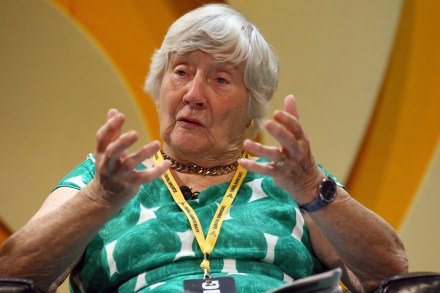
The motion passed by Liberal Democrat conference this morning means that the party is neither supporting nor opposing the Health Bill. The rebels having lost the vote on whether or not to debate their ‘Drop the Bill’ motion, but managed to amend the so-called Shirley Williams’ motion to remove the line calling on their peers to vote for it. This is a blow to the leadership who were confident last night of winning the vote this morning. But it is nowhere near as bad as the conference — which, remember, still has the power to make party policy — deciding that the bill should be dropped. It is, though, another sign of how deeply this bill has divided the Liberal Democrats.

Vince puts his aggressive hat on

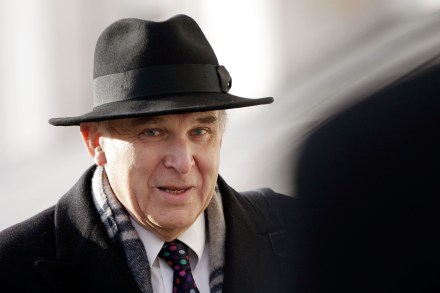
Ever since Chris Huhne’s departure from government, Vince Cable has become a more and more aggressive coalition figure. His deliberately provocative interview with The Guardian in which this Keynesian, corporatist lambasts the idea that deregulation is key to growth as "ridiculous and bizarre" has drawn a heated Tory reaction. One source told me earlier that “BIS [Cable’s department] imposes ten stupid expensive things on business for every one they’re forced to drop. BIS is mired in useless committees that churn out red tape because Vince loves the EU and hasn’t a clue about small business.’ Just how irritated some Tory Cabinet Ministers are with Cable spilled out into the open last night on Any Questions.

Clegg reassures his party about the Health Bill

Lib Dem Spring conference is turning out as the leadership would have wished. The support of Shirley Williams for the Health Bill seems to have been enough to reassure delegates that they should back the bill in its amended form; they’ve already voted to debate the leadership friendly motion tomorrow morning not the ‘Drop the Bill’ one. In a question and answer session with activists just now, Clegg — to huge applause — urged the party to side with Shirley Williams not Andy Burnham. This appeal to Lib Dem tribalism seems to be winning the day on the health issue. Clegg, as he always does at conference, used the Q&A session to take a lot of shots at Labour.

The role of Baroness Ashton

Recent reports have suggested that David Cameron is interested in swapping Cathy Ashton’s job as the EU’s high representative for foreign affairs and security policy for another commission post. But sources close to Number 10 tell me this ain’t happening. Supposedly, Cameron was interested in swapping Ashton’s current role for the post of commissioner for the internal market, currently held by the Frenchman Michel Barnier. But, in reality, this was never on the cards for a whole host of reasons. Foremost of these was that Nicolas Sarkozy was never going to give up the French claim to this job just weeks away from a French presidential election.

Politics: A struggle for the Tory soul

Walking back to the Palace of Westminster the other day, I bumped into a new Tory MP. He was eager to tell me what the Chancellor should do in the Budget: abolish the 50p rate, scrap labour market protections for young workers and announce the building of another airport. But by the time we had reached the entrance to the Commons, this enthusiasm had given way to melancholy. It wasn’t the Liberal Democrats, though, who were spoiling his mood. It was the leadership of his own party. As we arrived at the entrance to the Commons, his voice dropped as he recalled a presentation from the Prime Minister and his political team to all Tory MPs last month. ‘It was all this modernising stuff,’ he said, disdainfully.

Clegg rallies his party

Nick Clegg pushed his members to ‘stop lamenting what might have been and start celebrating what is’ in his rally speech to the Liberal Democrat spring conference. He told them ‘now is the time to move on, to stop justifying being in government and start advertising being in government’. The debate over the Health Bill, though, threatens to dominate the conference. Clegg in his speech went out of his way to pay tribute to Shirley Williams, who is now on the leadership’s side on this issue, lauding the ‘outstanding work Shirley is doing in the House of Lords to protect our NHS’.  This was met with warm applause. But it was not rapturous, suggesting that the conference remains divided on the issue.

The Lib Dems could kick up a storm over the NHS Bill

Lib Dem spring conference is, perhaps, the most potent reminder of the cultural differences between the two coalition partners. In the Tory party pretty much the only thing that members get a real vote on is who the candidate in their constituency should be and who they want as party leader, even then that choice has been whittled down to two options by the MPs first. By contrast, the Lib Dems grassroots still get to determine the detail of party policy. The Health Bill’s problems really began at the last Lib Dem spring conference. It was a vote there that led to Nick Clegg seeking a whole host of changes which then led to the pause. As they say, the rest is history.   This Sunday’s vote on the Health Bill could be equally significant.

Nervous times for Clegg ahead of the Lib Dem spring conference

This weekend’s Lib Dem spring conference is the next big political hurdle for the Health Bill. If the conference votes against the Bill, then it will create a huge political headache for the government and be a severe embarrassment to Nick Clegg. Talking to Liberal Democrats ahead of the vote on Sunday morning, I’ve been struck by how worried some Clegg supporters are that the vote might be lost. Now, this could well be expectations management. But there are more than a thousand Lib Dem members who have signed the Lib Dem petition against the bill. On balance, I think it is more likely than not that the leadership escapes a defeat.

Osborne eager to act on 50p

The debate on the 50p tax rate is moving fast. I was told by one Downing Street source today that ‘it is now more likely than not that it goes in the Budget.’ Now, obviously, there is a big caveat here. The Budget is not yet agreed: this is all subject to change. But I understand that the Chancellor is pushing hard to at least set out the roadmap to its abolition on the 21st March. I also hear that the Prime Minister is nervous about quite how determined Osborne is to do this. Cameron’s worry is that a Budget that tackles the 50p rate will be remembered solely for that — which would risk reinforcing the Tories’ reputation as the party of the rich.

Afghanistan tragedy overshadows PMQs

I have rarely heard the House of Commons as quiet as it was at the start of PMQs today. The sad news from Afghanistan was, rightly, weighing on MPs’ minds. The initial Cameron Miliband exchanges were on the conflict there with the two leaders agreeing with each other. In some ways, though, I wonder whether the country would not benefit more from some forensic debate about the strategic aims of the mission. However the volume level in the House increased when Joan Ruddock asked the PM if he was ‘truly proud’ of taking benefits away from disabled children.

Osborne backs the Beecroft proposals

In a speech tonight, George Osborne calls on businesses to respond en masse to the government’s consultation on whether to exempt small businesses from unfair dismissal claims. The Chancellor will say: ‘And now we’re beginning a call for evidence on the case for a new compensated no-fault dismissal for our smallest businesses. Plenty of trade unions and others will be submitting their evidence for why we shouldn’t do this. If you think we should, and it will increase employment, then don’t wait for someone else to send in the evidence. Send it in yourself.’ The fact that Osborne is personally throwing his weight behind the Beecroft agenda is striking.