James Forsyth

James Forsyth

James Forsyth is former political editor of The Spectator.

The election result that everyone expects – and no one wants

From our UK edition

To form a coalition, David Cameron had to give up the Prime Ministerial prerogative to determine when the election was called. But it is hard to imagine that, given the choice, he would have gone to the Palace any earlier than Monday. The Tories have merely drawn level with Labour in recent weeks and there hasn’t been a poll yet which points to him winning a majority. This will be the most polled campaign in British history. On the day it started, depending on your choice of pollster, the Tories were four points ahead of Labour, four points behind or dead level. But one clear theme is emerging from this cacophony of data: a hung parliament is the most likely election result. The polls suggested a hung parliament for most of the 2010 campaign. But they were not taken seriously.
Will there be a late swing to the Tories?

From our UK edition

Perhaps, the biggest question of this campaign is whether the Tories will gain support in the next five and a bit weeks. If they don't, Cameron will almost certainly lose and Ed Miliband will become Prime Minister. In his column today, Danny Finkelstein looks at polling data produced by Andrew Cooper of Populus to see what the chances are of a late surge. Cooper looked at those who prefer Cameron to Miliband as Prime Minister and also think that the Tories would manage the economy better than Labour but are currently not saying they’ll vote Tory. In Cooper’s poll of 10,000 voters, conducted in five waves, this group made up 18% of those likely to vote.

Can Natalie Bennett exceed expectations on Thursday night?

From our UK edition

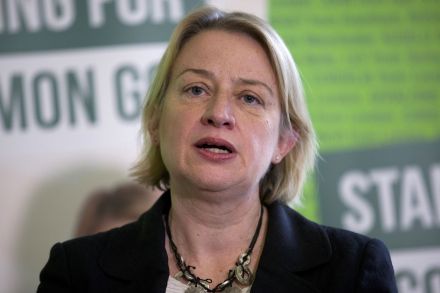
Few politicians can have gone into a debate with lower expectations than Natalie Bennett. After her ‘brain fade’ on LBC, the Green leader has been roundly written off. There have been murmurings that the decent thing for her to do would be to stand down in favour of Caroline Lucas, the party’s first MP and a far more accomplished media performer. But the one consolation for Bennett in all this is that it is very easy for her to beat expectations on Thursday night. She won’t have to do much to get the media to take a second look at her. If Bennett can unloose a zinger or two, she’ll have comfortably exceeded expectations.

Cameron: It is me or Miliband

From our UK edition

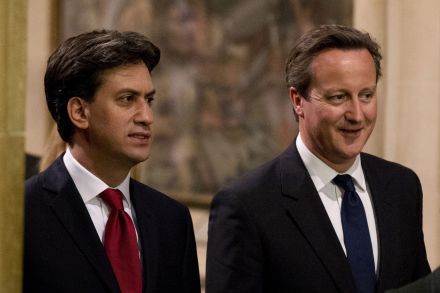
It is rare for politicians to mention their opponents by name - don’t give them the publicity is the normal approach. But standing in Downing Street just now to announce the start of the election campaign, David Cameron pointed at the door of Number 10 and said ‘The next Prime Minister walking through that door will be me or Ed Miliband’. There’s a method to the Tory approach. They believe that one of their trump cards in this election is that the public just can’t see Ed Miliband as Prime Minister. They want to force voters to confront the choice that one of Miliband or Cameron will be Prime Minister after the election and that the only way to make sure it isn’t Miliband is to vote Tory.

Stakes raised ahead of Thursday night’s debate

From our UK edition

The stakes have been raised, at least psychologically, for Thursday night’s debate. Today’s YouGov poll has Labour four points ahead, in contrast to a two point Tory lead in their last survey. This is being seen in Westminster as a Paxman bounce for Miliband. If this Labour leads is still in place at the end of the Easter weekend, Tory nerves will begin to fray. Thursday’s debate will be a crowded affair with seven leaders on stage. Despite it being a two hour debate, there’ll only be time for four questions. As I say in the Mail On Sunday, the debate will almost certainly turn into Cameron versus the rest as they all try and go after the sitting Prime Minister.

David Cameron: ‘This is a high stakes, high risk election’

From our UK edition

The Tories want to frame this election as a straight choice between David Cameron and Ed Miliband. So, today Cameron delivered some of his most direct attacks on Miliband yet. Anticipating criticism, he said, ‘Some might say “don’t make this personal” but when it comes to who’s Prime Minister, the personal is national.’ Cameron warned that Labour could reverse everything that has been achieved in this parliament, the ‘painstaking work of the last 5 years – they could undo in just 5 months.’ He attacked Labour as ‘the welfare party’ and derided Miliband as a ‘Hampstead Socialist’.

Despite Cameron’s win, Labour will be happy with Ed Miliband’s Q&A performance

From our UK edition

David Cameron won tonight’s TV head to head with Ed Miliband according to an instant ICM poll. The poll for the Guardian gives the evening to Cameron 54-46. Though, it is worth noting that this 8 point margin is smaller than Cameron’s usual lead on the leadership question. Cameron started with a grilling from Jeremy Paxman, who pinned the Tory leader to the crease with a series of fast, hostile deliveries. Cameron just about kept the ball out. But he was visibly uncomfortable at points. However, there was no killer moment. Cameron was more comfortable with the questions from the audience and with them he repeatedly pivoted to the Tories’ key campaign message that you can only have more spending on public services with a strong economy.

Revealed: David Cameron’s secret conversations about the next coalition

From our UK edition

David Cameron is keen to demonstrate his willingness to give straight answers to straight questions at the moment. But there is a limit to his candour. Anyone who asks him about whether he’s preparing for another hung parliament will be told that he’s not thinking about, that he’s going all out for a majority. However, the Spectator knows of two conversations that David Cameron has had about what he would do in a hung parliament in recent weeks. In both of these, his message was the same: he would rather do another coalition than attempt to run a minority government. For this reason, Cameron won’t—as Boris Johnson suggested he should this week—rule out another coalition.

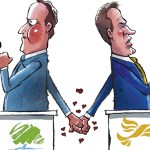
He’ll never admit it, but David Cameron is already plotting another deal with Nick Clegg

From our UK edition

David Cameron is honest to a fault — or so he told us this week. While cooking lunch in the kitchen of his Oxfordshire home, he was asked, in terms, whether this is the last election he’ll fight as party leader. Yes, he said, it was. He was then kind enough to name three potential successors. And when shortly afterwards broadcast journalists grew greatly excited by this, he said he had done nothing more than give a ‘very straight answer to a very straight question’. But there is another question to which he will not give a straight answer: is he preparing for another coalition? The Prime Minister knows the official response: of course not, he’s fighting for a majority.

David Cameron tells Tory MPs: Defend our record on the NHS and fighting poverty

From our UK edition

David Cameron has just addressed the last meeting of the 1922 Committee of Tory backbenchers in this parliament. He was given the traditional desk banging reception. Indeed, the loyal, pre-election tone of the meeting was set when John Baron, for a long time viewed as Ukip defection risk by senior Tories, announced that he had put money on a Tory majority. After paying tribute to the Tory MPs who are stepping down at this election, Cameron began his pre-election rallying call. He told the MPs, don’t let people forget the mess that he inherited. He then, to the surprise of some in the room, talked about the health service in great detail, urging his MPs not to let Labour’s attacks go unanswered.

PMQs: Miliband jumps straight into Cameron’s final trap

From our UK edition

In the final PMQs of this session, David Cameron scored his most comprehensive victory. Challenged by Ed Miliband to rule out raising VAT, Cameron got to his feet and simply said ‘yes’. At that point, Miliband’s fox was shot. Cameron then moved from defence to attack, repeatedly challenging Miliband to rule out an increase in National Insurance contributions something that Miliband was not prepared to do. By the end of the exchanges, the Labour benches looked glum and the Tory ones jubilant. In truth, the Labour leader had been set up. The Tories had been planning to rule out raising VAT for some time and had been busy calculating when doing so would have the maximum political impact.

When will voters really tune into the election campaign?

From our UK edition

With just over six weeks to go to polling day, the mood of the parties is now largely determined by the opinion polls. This morning’s crop are a mixed bunch. Survation for the Mail on Sunday has a 4 point Labour lead, YouGov has Labour two ahead but Opinium has the Tories on 36% and ahead by three. What seems clear is that the Budget hasn’t had a decisive impact on the polls. Yet most Tory MPs, including those who’ve been highly critical of Osborne in the past, are happy with it. One senior backbencher told me, ‘Burnishing a reputation for responsibility is more valuable than anything else. Glitzy giveaways wouldn’t have worked.

Debate deal finally reached

From our UK edition

After months of negotiations, a final deal on debates has now been reached. There will be no head to head debate between Cameron and Miliband. Instead, there will be one seven way debate on April 2nd broadcast on ITV. There will also be an opposition leaders’ debate on the 16th of April on the BBC featuring Labour, the SNP, UKIP, the Greens and Plaid Cymru. On top of these debates, David Cameron and Ed Miliband will both do separate interviews, taking questions from a studio audience on Thursday for a Channel 4 / Sky programme. Then, on 3oth of April, Cameron, Miliband and Nick Clegg will appear separately on a special edition of Question Time.

The Boris approach

From our UK edition

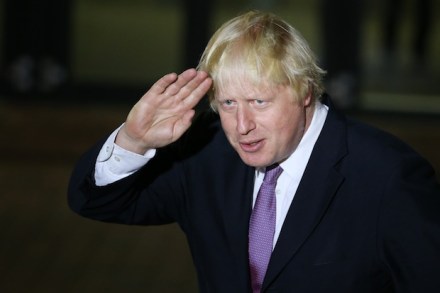
It is sometimes easy to forget that Boris is more than just a personality, that he has policy views too. In interviews with The Mail and The Times this morning, Boris sets out his own philosophy. It is, as you would expect from someone who voted for Ken Clarke in the 2001 leadership contest, a broadly one nation platform. Johnson argues that the Tories should not ‘simply shrug their shoulders’ about inequality and backs Iain Duncan Smith’s plan to extend the right to buy to housing association properties. He also talks about immigration far more positively than Cameron does, saying that ‘Politicians need to point out that immigration is a positive symbol of something happening in the economy’.

The Lib Dems’ alternative budget showed the difficulties of a Lib/Lab coalition

From our UK edition

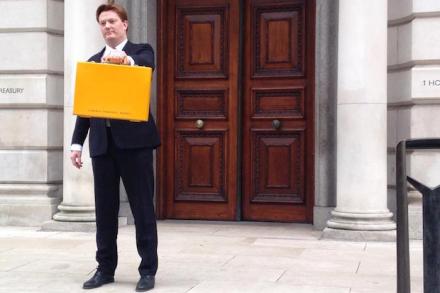
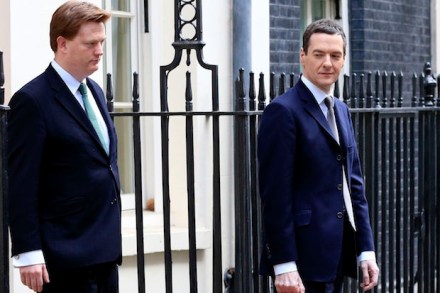
The Tories described the Liberal Democrats’ alternative Budget statement today as ‘part of price they had to pay to have a Budget.’ But the Liberal Democrats, oddly, didn’t seem to take their own statement particularly seriously. When Danny Alexander got to his feet there were only six Liberal Democrat backbenchers present. Two of the Liberal Democrats’ Secretaries of States didn’t bother to turn up either and Nick Clegg left long before the end of it. This lack of Lib Dems’ strength in numbers was a particular mistake as Labour predictably barracked the statement very aggressively; Andrew Gwynne even stood up and shoved a copy of the Treasury Red Book at Alexander.

A typical coalition Budget – designed to put the Tories back in power

From our UK edition

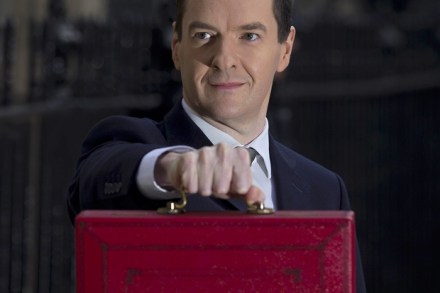
George Osborne usually tells his aides to prepare for each Budget as if it were his last. This time round, the Chancellor and those around him needed no reminding of what is at stake. They knew that this statement had to boost the Tory election campaign and define the choice facing voters in May, otherwise it really will be the last Budget he gives. As one Tory MP put it, ‘The Budget’s got to deliver some political momentum or we’re done for.’ Osborne has long been aware of the importance of this Budget for his career. If David Cameron returns to No. 10 after the election, Osborne will take the applause. His stock will rise in the party; recollections of his disastrous 2012 Budget will be put aside. He will be hailed as the pilot who weathered the storm.

A typical coalition Budget – designed to put the Tories back in power | 18 March 2015

From our UK edition

Here is a preview of James Forsyth's political column from this week's Spectator, out tomorrow George Osborne usually tells his aides to prepare for each Budget as if it were his last. This time round, the Chancellor and those around him needed no reminding of what is at stake. They knew that this statement had to boost the Tory election campaign and define the choice facing voters in May, otherwise it really will be the last Budget he gives. As one Tory MP put it, ‘The Budget’s got to deliver some political momentum or we’re done for.’ Osborne has long been aware of the importance of this Budget for his career. If David Cameron returns to No. 10 after the election, Osborne will take the applause.

Exclusive: Tories agree to TV debate offer

From our UK edition

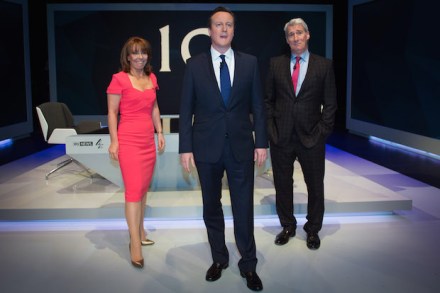
Downing Street has agreed to an offer from the broadcasters for one seven-way election debate on 2 April. The Tories felt that it was close enough to their final offer of one multi-party debate in the week starting 23 March to be acceptable. However, Labour has yet to agree. A Labour source said, ‘We’ve accepted the proposal from the broadcasters for three debates. There is no other proposal from the broadcasters.’ As well as this one seven-way debate, there would also be several election specials involving the various party leaders under this scheme. On 26 March, Cameron and Miliband would be interviewed by Jeremy Paxman and then questioned by a studio audience in a Sky / Channel 4 special.

Ed Miliband rules out a formal coalition with the SNP — but a deal could still be on the cards

From our UK edition

Ed Miliband has today ruled out a formal coalition between Labour and the SNP. Labour hope that this will draw the sting from Tory claims that if you vote Labour, you’ll get SNP and put pressure on Cameron to rule out any deal with Ukip. But, as Nicola Sturgeon has been quick to point out, the SNP weren’t keen on a formal coalition. Rather, what has been talked about is something more akin to a confidence and supply deal with the SNP agreeing to vote for Miliband’s Queen Speech and Budget in return for specific concessions.  This is something that Miliband, for the obvious reason that he might need it in the event of a hung parliament, doesn’t want to rule out. So, expect the Tory attacks to keep on coming.

Nick Clegg: The Liberal Democrats are the continuity choice at the election

From our UK edition

The Liberal Democrats sense an opportunity in all this speculation about who the Tories and Labour would do deals with in the event of a hung parliament. They believe that they can position themselves as the responsible party that will keep the country in the centre ground in contrast to the other smaller parties. Today, in his speech to the party’s spring conference, Clegg ruled out joining any coalition that involved the SNP or Ukip. He also tried to use the moment to reinforce voters’ worries about either main party governing on their own. He argued that the Tories would cut needlessly—‘Cows moo. Dogs bark. And Tories cut.