James Forsyth

James Forsyth

James Forsyth is former political editor of The Spectator.

Why Ed Miliband is taking part in tonight’s TV debate

From our UK edition

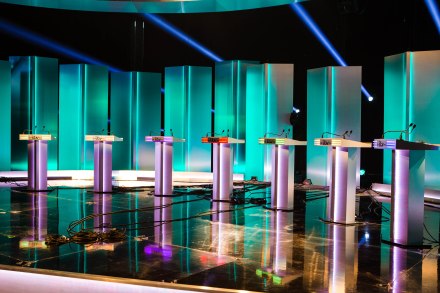
Tonight Ed Miliband takes one of the big risks of the campaign. He debates with Nicola Sturgeon, Nigel Farage, Leanne Wood and Natalie Bennett. All of these leaders will be aiming to score points off Miliband. Those close to the Labour leader give several reasons for why he is taking part tonight. They argue that he does well whenever he’s given the chance to speak to voters directly. But the main reason for Miliband’s doing this debate is the Scottish situation. Labour feared that without Miliband present, this debate would have turned into a clash between Sturgeon and Farage — which would have benefitted the SNP north of the border.

Tories and Labour keeping policies up their sleeves

From our UK edition

Three weeks from now, people will be voting and the parties will just be getting a sense of how this election is shaking out. But in a sign of how both the Tories and Labour are expecting this contest to go to the wire, I understand that they have both held policies back from their manifesto so that they can use them in the final days of the campaign. The thinking is that by keeping some things back they can use these policies to grab the initiative in the campaign at crucial points. At the moment, the polls show no sign of breaking either way. What does seem to have happened, though, is that the Tories have steadied themselves after their mini-wobble last week.

Cameron must show he’s not too posh to push

From our UK edition

At 5.45 a.m. Lynton Crosby holds the first meeting of the day at Conservative campaign HQ. The aim is to work out what threats need to be neutralised that day and what opportunities should be capitalised upon. The early start isn’t macho posturing but a reflection of the modern media environment. The news now moves at such pace that a lie can go all the way round the worldwide web before the truth even has its boots on. The political weather is rarely more changeable than in a close election campaign. In this environment, the trick is to work out what actually matters: what might determine the election. But after the past week one thing is clear: the Tories have survived a wobble that could have turned into a death spiral.

Clegg’s offer to voters: I’ll be the Tories’ heart and Labour’s brain

From our UK edition

The Lib Dem manifesto launch was typically Liberal Democrat. Nick Clegg offered a robust defence of the coalition declaring simply that it ‘worked’. He argued that it had proved the superiority of multi-party government and said that in any future coalition the Lib Dems would be the Tories’ heart and Labour’s brain. This was a rather more pointed version of his refrain that the Liberal Democrats will be the Tories’ heart and Labour’s head.

David Cameron reveals his hawkish side

From our UK edition

Security is the watchword of this Tory election campaign. But today the Tories put just as much of an emphasis on national security as economic security. The message was, to put it crudely: it is a dangerous world out there with threats at home and abroad, so who do you want on that wall—Cameron or Miliband? This new emphasis began with Theresa May introducing David Cameron. She talked about the threat from Islamist extremism and how the Tories would combat it. Cameron continued this theme in his speech, declaring in some of the punchiest language of the campaign from him that: ‘We also need to assert the British values of democracy, freedom and the rule of law – and assert them proudly.

Cameron declares that the Tories are the ‘party of working people’ as he pledges to extend right to buy

From our UK edition

Tomorrow’s Tory manifesto will contain the boldest policy proposal of this campaign so far. The party will promise to extend the right to buy to 1.3 million families living in housing association properties. This policy has the potential to create a new group of homeowners and to start the reversal of the decline in home ownership; even critics of the plan think that more than 150,000 families might take advantage of it. It helps to keep alive the idea of a property owning democracy which has been so crucial to the success of the centre-right in this country.

Nick Clegg sets out red lines for coalition negotiations with Labour and the Tories

From our UK edition

Nick Clegg produced Lib Dem red lines for any coalition with either Labour or the Tories in an interview with Evan Davis this evening. Clegg said that he wouldn’t go into Coalition with the Tories if they insisted on making £12 billion of cuts to welfare in the next two years. But he said that he also couldn’t recommend going into coalition with Labour until they were clearer about how they planned to deal with the deficit, making clear that what Labour said today was not sufficient. As Fraser says, this was an assured performance from Clegg who offered a robust defence of the government’s record. The Liberal Democrats would be in a better position to claim credit for the recovery if they had always been this unequivocal.

Music to the SNP’s ears: Vote Labour, get more austerity

From our UK edition

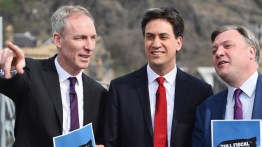
As Jim Murphy tries to turn back the SNP surge, he has been arguing that a Labour government wouldn’t result in endless austerity. He has repeatedly cited the Institute for Fiscal Studies’ finding that Labour couldn’t meet its deficit reduction target with no cuts at all after 2015-16. Now, Ed Balls and Ed Miliband have today been clear that Labour will bring in cuts post 2016. But they have avoided contradicting Murphy by name. Chuka Umunna, however, showed no such restraint earlier today. Under questioning from Andrew Neil, he declared: ‘The leader of the Scottish Labour party will not be in charge of the UK Budget.

Why Labour’s bold manifesto move won’t work

From our UK edition

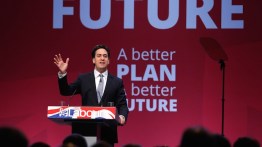
Labour’s manifesto is the most daring move of this campaign so far. The party has decided to try and address one of its biggest weaknesses on page 1 of the document. The decision to make Labour’s fiscal locks, its attempt to show that it is fiscally credible, the major story of the manifesto is a risk. It means that Labour is playing on Tory turf. The party’s hope is that these fiscal locks can reassure voters that Labour wouldn’t spend and borrow too much, removing one of the main obstacles to supporting them. Indeed, with Ed Miliband doing a far better job than expected of assuaging voters’ doubts about his capacity to lead, you can see what Labour are thinking: if they can address their other big negative, then they would be on course for a clear win.

This week, the Tories must seize the initiative

From our UK edition

Even Tory insiders admit that while they broadly had the better of the first week of the campaign, Labour had the better of the week just gone.  This makes it imperative for their hopes of re-election that the Tories wrest back the initiative this week. As I say in the Mail on Sunday, if they don’t, Tory discipline—which is already beginning to fray a bit—will crack, and Ed Miliband will have the keys to Number 10 within his grasp. The Tories have made a decent start to this task. Labour has been unsure of how to respond to the Tories’ commitment to give £8 billion more to the NHS.

Tories try to use their lead on the economy to bolster their position on the NHS

From our UK edition

The Tories believe that their record in government and their lead on economic competence means that they can set out spending commitments without having to set out precisely how they would pay for them. George Osborne’s interview on Marr this morning was a demonstration of this strategy. Challenged repeatedly over where the £8 billion for the NHS that he and Cameron pledged yesterday would come from, Osborne simply pointed out that they have managed to increase the amount of money going into the health service every year over the last five years despite having to make significant spending cuts. However much it infuriates their opponents, I suspect that this Tory tactic is quite effective.

What’s going on in Scotland

From our UK edition

If the election in England is the political equivalent of trench warfare with Labour and the Tories inching forwards and then back, what’s going on in Scotland is a rout with the SNP driving all before it. What is remarkable is how the Nationalists are even in with a chance of winning seats such as Edinburgh South West that voted No by a more than twenty point margin. At the moment, everything their opponents throw at it seems to bounce off the SNP. The so-called Sturgeon memo, which claimed that she had told the French Ambassador that—contrary to all her public protestations—she would prefer Cameron to Miliband as Prime Minister, was the big story this time last week. But now, it is an irrelevance.

A Scottish revolution is coming, and everyone’s losing their heads

From our UK edition

[audioplayer src="http://rss.acast.com/viewfrom22/edcouldstillwin/media.mp3" title="James Forsyth and James Forsyth discuss the current state of Scottish politics" startat=866] Listen [/audioplayer]Normally, if a candidate whose party came fourth in a constituency last time tells you they’re going to win, you put it down to election derangement syndrome. But in post-referendum Scotland the normal political rules don’t apply. When Joanna Cherry, the SNP candidate for Edinburgh South West, says she’s headed for Westminster — despite the SNP picking up just 12 per cent of the vote here in 2010 — she is probably right.

The referendum is still defining Scottish politics

From our UK edition

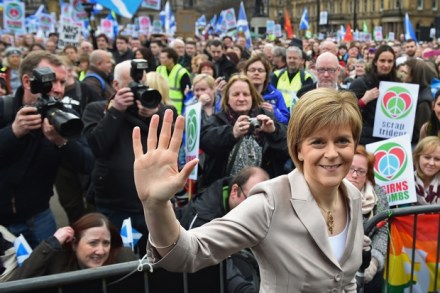
One of the most striking things about Scotland is how the referendum still dominates politics here. I’ve seen more Yes posters and stickers than I’ve seen posters for any political party. The referendum also goes a long way to explaining the SNP surge. In Edinburgh East, for instance, 17 thousand people voted Labour in 2010, giving the party a nine thousand majority. Considering that the seat has been Labour since 1935, you’d expect that to be enough for the party to hold on easily. But as the SNP candidate for the seat Tommy Sheppard pointed out to me, 27 thousand people in this seat voted Yes last autumn. If he can get two thirds of them to turn out and vote SNP, then he’ll win.

Three ways the Scottish leaders’ debate will affect the UK general election campaign ​

From our UK edition

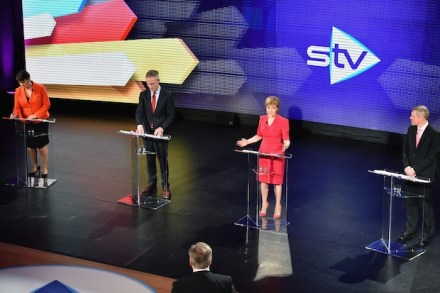
Tonight’s Scottish debate isn’t going to fundamentally alter the dynamics of this general election campaign in Scotland. But it will reverberate through the UK-wide general election campaign. Both Ed Miliband and David Cameron have been left with questions to answer by their Scottish leaders while Nicola Sturgeon has made clear the price she intends to try and extract for supporting a Labour government. In heated exchanges with Sturgeon about the economy, Jim Murphy pointed out that the Institute for Fiscal Studies says that Labour would not need to cut further after 2016. Now, the Labour leadership in London has studiously avoided endorsing this idea. But Miliband and Ed Balls can now expect to be put on the spot about it after Murphy’s comments.

The Scottish TV debates offer Labour one final chance to hold back the SNP advance

From our UK edition

Tonight’s Scottish leaders’ debate in Edinburgh is as important to the general election campaign as last week’s debate featuring Cameron, Miliband et al in Manchester. Both this debate and the second Scottish one tomorrow offer Labour a final opportunity to reverse the SNP advance. The polls indicate that the SNP are on course to take 28 Scottish seats off Labour in May. This would make it the largest Scottish party at Westminster. It would also make it impossible for Ed Miliband to win a majority. At the moment, nothing seems capable of halting the Nationalists’ momentum. The dramatic fall in the oil price, which has upset many of the calculations in the independence white paper, hasn’t dented their support.

Why all this talk of a hung parliament could be a self-fulfilling prophecy

From our UK edition

In a close campaign, you would normally expect the smaller parties to get squeezed as voters decided that is really a choice between Labour and the Tories. But this time, thing might be different. Why, because the general expectation is that there will be another hung parliament and the coverage of the campaign is being reflected through that prism. This emphasis on the likelihood of a hung parliament could change how people actually vote. As I write in the current issue of the magazine, the British Election Study shows that among voters who expect another hung parliament support for both Labour and the Tories is radically lower with the minor parties doing that much better. Among those who expect one party to win outright, Labour and the Tories poll at 39 and 38 percent respectively.

Tories convinced ‘moment of maximum danger’ has passed

From our UK edition

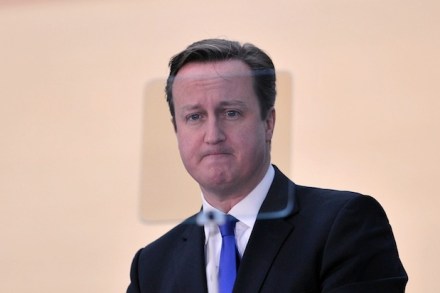
On Thursday night, David Cameron didn’t eviscerate the competition. But nor did he suffer any damage and that, to Tory high command, meant that it was job done. The Tory leadership didn’t want any debates at all, they’d rather not have taken the risk. So, to get through this one debate with the dynamics of the campaign unchanged was, to their mind, a result. As Cameron enjoyed a late night drink with Samantha Cameron, George Osborne and his key aides on Thursday, he reflected on how much better he felt than he did after the first debate five years ago when he knew that he had not only underperformed but that he had two more to get through. This time round he’d done fine and was done with debates.

Britain might want a holiday from history, but we’re not going to get one

From our UK edition

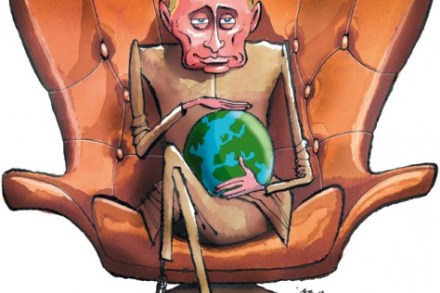
The more I think about the debate on Thursday night, the more I think it was a disgrace that there was no question on either defence or Britain’s role in the world. This country might want a holiday from history. But, sadly, we don’t look like getting one on. On Europe’s Eastern border, the Russians are behaving in an increasingly aggressive fashion. The Times' account of a recent meeting between ex-intelligence officials from Russia and the US shows just how bellicose Putin is and reveal that Britain might well soon have to decide whether to honour its Nato Article 5 obligations to the Baltic states. On Europe’s Southern border, Islamic State is a threat to the civilised order.

Five things to watch for during tonight’s debate

From our UK edition

1) Can Natalie Bennett do enough to spark another Green surge? After Natalie Bennett’s infamous ‘brain fade’ the Green surge faded away. The media stopped giving the Greens the attention they had been and without the oxygen of publicity, support for the party fell away; this morning’s YouGov poll has the Greens on 4%, their lowest score since October. But tonight offers Bennett a chance to get her party back into the election frame. If she can deliver a few good answers and the odd zinger, that would be enough to get the media—and, then, the voters—to take a second look at her and the Greens. 2) Will Leanne Wood attack Miliband over the state of the NHS in Labour-run Wales?