James Forsyth

James Forsyth

James Forsyth is former political editor of The Spectator.

How bad are things for the Liberal Democrats?

From our UK edition

One of the most remarkable things about this parliament is how the Liberal Democrats have continued to hold their nerve in the face of truly dire poll ratings. Now, partly this is because the Lib Dems are a cussed lot and don’t want to give the media the satisfaction of seeing them squeal. But it is also because their own extensive seat polling, they’ve spent £350 thousand on it in the last couple of years, makes them confident that they will do better than anyone thinks they will. Party figures familiar with the polling, present numbers that show them to be competitive in, for example, Cardiff Central; a seat that most people think they have no chance of holding on to.

If Greece leaves the euro could others follow?

From our UK edition

Germany wants nothing less than an unconditional surrender from the new Greek government. It is hard to draw any other conclusion from Berlin’s decision to reject Greece’s proposal for a six month extension of the current bailout, which counted as an almost total climb-down by the Syriza-led government. But it seems that the Germans—with an eye on the Spanish elections later this year —want to show that voting for radical, anti-austerity parties gets you absolutely nothing. However, the Germans may well have miscalculated. The Greek Finance Minister wants Greece to leave the euro but, because the vast majority of Greeks wants to stay in the single currency, he has had to stop agitating for that.

Why the Lib Dems aren’t scared of this election (and why they should be)

From our UK edition

[audioplayer src="http://traffic.libsyn.com/spectator/Viewfrom22-19Feb2015.mp3" title="James Forsyth and Isabel Hardman discuss the disappearing Lib Dems" startat=937] Listen [/audioplayer]One of the most remarkable features of this parliament has been the sangfroid of the Liberal Democrats. Nothing seems to shake them. The mood of the two main parties is often dictated by the latest opinion polls, but the Liberal Democrats simply laugh off each record low. They weren’t even rattled by the British Election Study, which claimed that on its current performance the party will only win one seat. What explains this calmness under fire? First, the Lib Dems are determined not to give the media the pleasure of seeing them squeal.

Not everyone on the right will agree with this new Conservative agenda

From our UK edition

No party knows how to break out of the war of attrition that is British politics at the moment. Neither the Tories nor Labour are expecting to hit 40 percent in May. Instead, they are both trying to work out how to win with a vote share in the 30s. The Good Right, Tim Montgomerie and Stefan Shakespeare’s latest political project, is an attempt to craft a Conservatism which can appeal far beyond the party’s current limits. They want a Conservatism that is focused as much on providing the best social ambulance service possible as it is on social mobility. In their mini-manifesto, they propose a higher minimum wage, state supported house building and higher council tax bands for expensive properties to reduce council tax on more modest homes.

Why Islamic State will be defeated more easily than al Qaeda

From our UK edition

One consequence of Islamic State’s barbarity is that we know relatively little about it. This is what makes Graeme Wood’s piece about it in the Atlantic, based on extensive conversations with its theological supporters, so interesting. The mind-set of Islamic State is well illustrated by this discussion from its official magazine that Wood cites: 'In October, Dabiq, the magazine of the Islamic State, published “The Revival of Slavery Before the Hour,” an article that took up the question of whether Yazidis (the members of an ancient Kurdish sect that borrows elements of Islam, and had come under attack from Islamic State forces in northern Iraq) are lapsed Muslims, and therefore marked for death, or merely pagans and therefore fair game for enslavement.

The danger for Miliband in his tax triumph

From our UK edition

Last week was Labour’s best of the campaign so far and the Tories’ worst. The row over tax avoidance and Lord Fink’s comments reinforced the damaging perception that the Tories are the party of the rich. It also raised Labour morale, frontbenchers who used to be pessimistic about the party’s electoral prospects are now bullish. But there is a danger that this tactical victory could turn into a strategic defeat. For Miliband by denouncing tax avoidance—which is legal—and setting himself up as a moral arbiter on the issue, has made his tax affairs and those of his shadow Cabinet, MPs and donors a legitimate subject of public interest. They no longer just have to be legal and fully declared, they also have to pass the higher Miliband bar.

Will Labour rule out a deal with the SNP?

From our UK edition

Who ends up governing Britain after the election may well be determined by what happens in the Scottish seats. If the SNP take a slew of seats from Labour, it becomes far more likely that the Tories will be the largest party nationally. Add to that the fact that Cameron is the incumbent Prime Minister and he would, in these circumstances, probably be able to put together a deal that sees him carry on as Prime Minister. Labour is acutely aware of this and is busy warning Scots ‘Vote SNP, Get Tory.’ But in this anti-politics era, these squeeze messages don’t work as well as they used to—as the Tories are finding out with their ‘Vote Ukip, Get Miliband’ warnings.

Is this back to basics for financial affairs?

From our UK edition

This morning, there was much Westminster chatter about whether Ed Miliband would repeat his accusation made at PMQs yesterday about the ‘tax avoidance activities of Lord Fink’. But shortly before Miliband spoke, Fink himself gave an interview to The Standard in which he said, ‘I didn’t object to his use of the word "tax avoidance". Because you are right: tax avoidance, everyone does it.' Instead, Fink claimed that his objection was to the implication that he was one of the ‘dodgy donors’ that Miliband was talking about. Now, Fink’s letter of complaint to Miliband yesterday didn’t mention the word ‘dodgy’. After his speech today, Miliband tellingly refused to call Fink ‘dodgy’.

A bold idea that might just help the Tories win a majority

From our UK edition

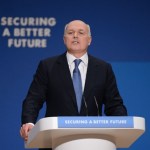
Iain Duncan Smith has come up with a bold idea that might just enable the Tories to break out of the inch by inch, trench warfare of current British politics. The Work and Pensions Secretary wants to see the right to buy extended to those living in Housing Association properties. At present, housing association tenants are offered very limited discounts and can only buy properties that their association has acquired since 1997. An even more radical version of this scheme would see all housing association tenants who have been in work for a year given their homes. When these properties were sold, the state would take a significant chunk in tax which would then be invested in building more social housing.

The Tories are coming to believe in David Cameron’s election hunch

From our UK edition

‘You did this,’ David Cameron repeatedly declared to Tory donors as he reeled off a list of the government’s achievements at the Black and White ball on Monday night. Three months before the general election, the atmosphere at this lavish fundraiser at the Grosvenor House Hotel was self-congratulatory and more upbeat than perhaps it should have been, considering the polls. As guests made ever larger bids in the fundraising auction, the mood was one of confidence that the Tories would be in office again after May. By the end of the evening, there was heady talk of a Tory majority. But it is not the donor class who will determine whether the Tories have the seats to govern alone.

One area where Labour and the Tories have started agreeing

From our UK edition

With less than three months to go to the election, politics is pretty partisan at Westminster at the moment as PMQs today demonstrated. But there is one area where there is, despite the proximity of polling day, a bi-partisan consensus emerging: civil service reform. This morning, both Francis Maude, the Cabinet Office minister, and his opposite number Lucy Powell, who is also in day to day charge of the Labour campaign, appeared at the conference of Govern Up, a new think tank on civil service reform headed up by the former Tory Minister Nick Herbert and the ex-Labour frontbencher John Healey.

Miliband’s attacks fell flat at PMQs

From our UK edition

The stage was set for Ed Miliband at PMQs today. Just before the session, The Guardian revealed the names of various Tony donors who allegedly had accounts with HSBC’s Swiss bank. Miliband duly went for Cameron over the matter with some of his most personal attacks yet, accusing Cameron of being a ‘dodgy Prime Minister’ and ‘something rotten’ at the heart of the Tory party. But the attack failed to hit home in the Chamber.

Why this election campaign makes me fear for the future of the United Kingdom

From our UK edition

After the Scottish referendum campaign, the Union could probably have done with a period of calm. But it is not going to get it. Who gets to form a government at Westminster after the next election could turn on what happens in Scotland and how many seats the SNP wins. This fact is making both Labour and the Tories behave in ways that are damaging to the Union. Jim Murphy, the new leader of Scottish Labour, has decided to try and show that he is prepared to pick fights with London too, in the hope that will take some of the wind out of the Nationalists’ sales. Hence his deliberately provocative boast that via the mansion tax Labour would ‘tax houses in London and the South East to pay for 1,000 new nurses in the Scottish NHS. It’s a real win-win for Scotland.

Will anyone be able to govern Britain after the next election?

From our UK edition

With every week that goes by, the more likely it is that the next election could result in a stalemate with neither Labour nor the Tories able to put together a deal that gives them a majority in the Commons. One Downing Street source, who has crunched the numbers, predicted to me last week that, because of what is going on in Scotland, the Tories will be the largest party on 280-odd seats. But if the Tories have only 280-odd seats, even deals with both the Liberal Democrats and the Democratic Unionists wouldn’t give them a majority. But Labour wouldn’t be able to stich one together either. For, as I report in the Mail on Sunday, the Lib Dem leadership would not put Ed Miliband into Downing Street if he came second in terms of seats and votes.

The Burnham message

From our UK edition

Andy Burnham’s interview in The Times today lays down several markers. He praises Len McCluskey, declares that trade union funding is best for Labour, slates Alan Milburn, criticises Peter Mandelson for being relaxed about people getting filthy rich and distances himself from the Blairite mantra that ‘what matters is what works.’ It will, to put it mildly, do nothing to discourage speculation that he is preparing to run for the leadership on a left-wing ticket if Labour loses the election. To be fair, Burnham is frank in this interview that he has changed his mind on various subjects. As he puts it, 'There was a period in the 80s and 90s and the first decade of this century when people said the market has the answer to everything and I honestly don’t think it has .

One of Gove’s most important education reforms is in danger

From our UK edition

One of this week’s most important stories is tucked away in the Times’ Higher Education supplement today. It appears that one of Michael Gove’s most important reforms, putting universities—not Whitehall—in charge of A-levels, is being reversed. The article reports that the A Level Content Advisory Board (ALCAB), which was meant to check on A-levels annually, ‘is to be registered as a dormant company after it was informed by the Department for Education that it would not receive any more substantive work until at least 2017, when the first students will sit the reformed A-levels.’ Now, the Department for Education is claiming that the ALCAB has simply completed its work for the moment.

How Labour lost Scotland (and could lose the Union)

From our UK edition

[audioplayer src="http://traffic.libsyn.com/spectator/TheViewFrom22_5_Feb_2015_v4.mp3" title="James Forsyth and Alex Massie discuss Labour's problems north of the border" startat=1118] Listen [/audioplayer]Just four months ago Scotland was the scene of great cross-party co-operation — unprecedented in peace-time politics. Gordon Brown was offering advice on David Cameron’s speeches, Douglas Alexander and the Scottish Tory leader Ruth Davidson turned themselves into a formidable debating duo, and Charles Kennedy was being hailed by Labour strategists as the man who would save the Union. Even George Galloway got in on the act.

Rotherham urgently needs a chance to recalibrate its moral compass

From our UK edition

One would have thought that it was impossible for the Rotherham sex abuse story to become even more depressing. But it has. The Times, which has led the way in exposing this scandal, alleges that a police office and two councillors have been accused of having sex with the victims of this terrible scandal. The newspaper claims that one of the councillors involved is still serving. If this was not grim enough, the Casey report into Rotherham Council, published today, reveals a council that still won’t accept what has happened. Casey warns Rotherham Council is: ‘In denial. They denied that there had been a problem, or if there had been, that it was as big as was said. If there was a problem they certainly were not told – it was someone else’s job.

PMQs: Spouses are now considered fair game

From our UK edition

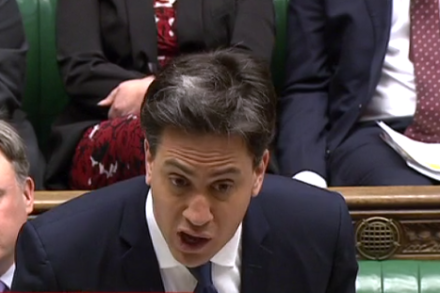
David Cameron didn’t answer the question today at PMQs despite Ed Miliband repeating it five times. But in a rowdy chamber, it didn’t seem to matter as Tory MPs roared their approval at Cameron’s one liners. Cameron, in reference to Ed Balls’ disastrous slip on Newsnight last night, quipped ‘Bill Somebody is not a person, it’s Labour policy’. Miliband wasn’t helped by how technical the question he was asking was. It, according to Labour sources, related to something called Schedule 19 which governs the taxation of share purchases made by hedge funds through investment banks. Now, Labour will argue that it illustrates their general point that the Tories are the party of ‘Mayfair hedge funds and Monaco tax avoiders’.

Is fear of Mandelson holding Labour back on tuition fees?

From our UK edition

Patrick Wintour has a fascinating piece in The Guardian on Labour’s dilemma on tuition fees. Particularly striking is that Ed Balls is deeply concerned about how Peter Mandelson might react to any new policy. Wintour writes: ‘Ed Balls, the shadow chancellor, also knows there are serious figures in the party, including the former business secretary Lord Mandelson, who will voice their concerns if a half-baked policy emerges that might damage the status of UK’s world-class universities. Mandelson made a technical criticism of the plans for a mansion tax, but supported the concept of a wealth tax. He will be less restrained if he thinks the revised tuition fees policy damages the skills base of the UK economy.’ Now, all parties have their internal coalitions to manage.