James Forsyth

James Forsyth

James Forsyth is former political editor of The Spectator.

Tory backbenchers increasingly reconciled to another coalition

From our UK edition

Speaking to various senior Conservative backbenchers in the past 24 hours, I’ve been struck by how much support there is for the formation of another coalition. There is a recognition that if the Tories have around 290 seats on Friday morning—which is at the optimistic end of the election projections, it is simply not realistic for them to try and run any kind of minority government. The view among those I have spoken to is that Cameron should be given a decent amount of flexibility to negotiate a deal with the Liberal Democrats as that is the most likely way for the Tories to be able to begin to put together a majority in the Commons.

Comedian Brand u-turns and urges people to vote

From our UK edition

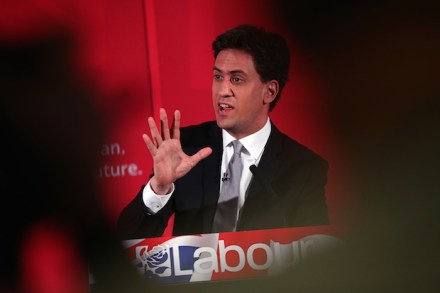
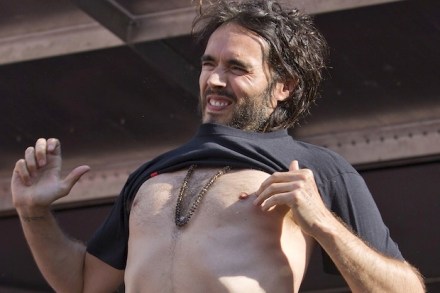
There’ll be satisfaction in the Labour leader’s office today as Russell Brand has done a reverse-ferret and urged his voters to vote and vote Labour. Or, to be more precise, to vote Labour in England—with the exception of Brighton where he wants them to vote Green. He seems to be implicitly urging a vote for the SNP in Scotland. To win Brand over, Miliband channelled his former US grassroots adviser Arnie Graf and talked about community politics and how the idea of a living wage came not from a policy seminar but activists in the US talking to low-paid workers. But Brand’s endorsement is of limited value given that it comes long after the deadline for registering to vote.

Will there be a late surge to the Tories?

From our UK edition

So, here we are. In 100 hours time, we’ll be half-way through election-day. But at the moment, the polls still remain deadlocked. Yet, there remains a sense that there’ll be some kind of late shift towards the Tories. Is there any grounds for this? Well, I argue in the Mail on Sunday that there are a few things that point towards this. David Cameron has finally hit his stride. His performances have improved markedly and the public appear to have concluded that he clearly won last Thursday’s Question Time, YouGov have the public giving it to him 42% to Miliband’s 26%. As Tim Shipman points out, Cameron’s lead as preferred Prime Minister has risen from 7% two weeks ago to 14% today. Ed Miliband had one on his weakest outings of the campaign on Thursday night.

Ed Miliband’s refusal to admit that Labour overspent could cost him dear

From our UK edition

Tonight’s Question Time special with Cameron, Miliband and Clegg provided the best television of this campaign so far. A well-informed audience relentlessly pressed the three leaders on their weakest points. At the end of the evening, an ICM poll for the Guardian gave the evening to Cameron by 44 per cent to Miliband’s 38 per cent with Clegg garnering 19 per cent support. Miliband’s didn’t have a great night and his most awkward moment came on the record of the last Labour government. The audience were audibly irritated by his repeated refusal to concede that the last Labour government had spent too much money. Under questioning from the audience, Miliband also went further than he previously has in ruling out a deal with the SNP.

Cameron needs to keep the momentum going in tonight’s Question Time

From our UK edition

Tonight’s Question Time is, probably, the most important TV event of the campaign. The fact that it is on BBC1 in prime time means that it is likely to attract a bigger audience than the previous debates. That it is on the BBC also means that any newsworthy moments will be pumped out across the BBC’s entire network from local radio to the world wide web. But what really makes tonight so important is how many undecided voters there still are. Today’s Mail poll has 40% of those going to vote saying that they are either undecided or might yet change their mind. The parties seem to agree that around 1 in 5 voters are genuinely undecided. Which way these voters end up going will determine the result of this election. So, the question is: who can appeal to them tonight?

Andy Burnham still can’t answer questions on Mid Staffs

From our UK edition

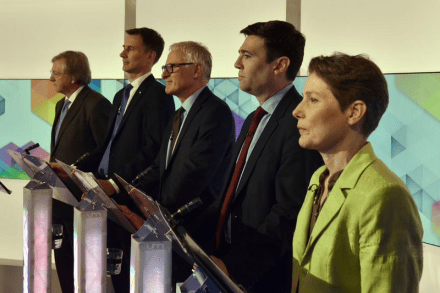
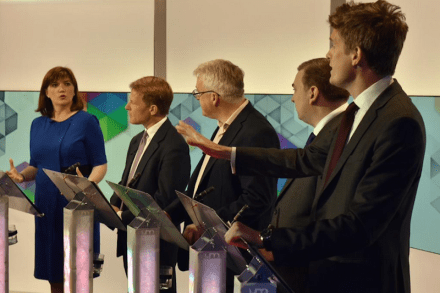
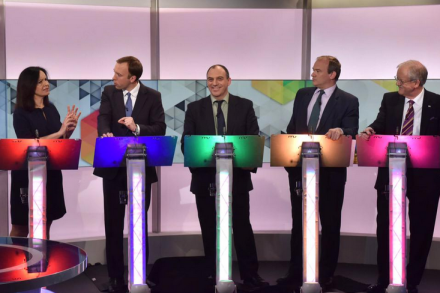
Today’s health election debate on the BBC just now was one of the feistiest we have seen in this campaign. Andy Burnham, Jeremy Hunt and Norman Lamb clashed repeatedly — and passionately — over Mid Staffs and the appropriate role for the private sector in the NHS. Burnham was on hectoring form throughout the debate. But he struggled so badly to answer Andrew Neil’s questions about Mid Staffs that one was left feeling he’ll never be able to win a Labour leadership contest until he has a proper answer to these questions.

Note from Mandelson’s firm warns that SNP will drag Labour to the left

From our UK edition

Peter Mandelson and Ed Miliband appeared to have been undergoing a certain rapprochement during this campaign. Mandelson declared recently that Miliband has 'way exceeded my expectations'. But a briefing note from Global Counsel, of which Mandelson is chairman, is bound to be seized on by the Tories. The note is entitled ‘Why the SNP will win whatever happens on May 7th’ and goes on to discuss what might happen if the Nationalists end up holding the balance of power in a hung parliament. It warns that ‘English dissatisfaction is likely to grow over time with the consequences of Labour government being sustained in power by the SNP’. It also predicts that the SNP will 'pull the Labour party to the left, away from the centre ground of English politics.

Cameron’s answer to the passion question

From our UK edition

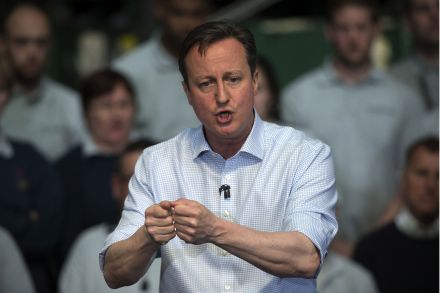
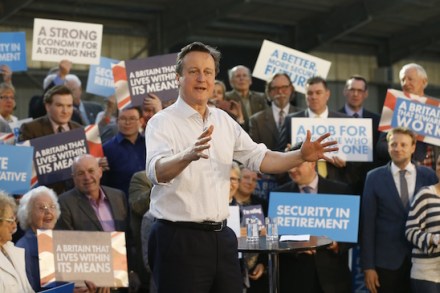
David Cameron has been bugged in this campaign by the question of whether he’s passionate enough, of whether he really wants it. When Fraser and I asked him about why so many people aren’t sure of whether he has the passion for it a few days back, he replied, ‘I don’t know. There is something about me—I always manage to portray a calm smoothness or something.’ He then went on to explain why as a Conservative he wants to know what the plan is, not just what the passion is. As he quipped, ‘plan plus carrying out a plan equals dream. Dream plus rhetoric equals chaos.’ But in a speech in Yeovil today, Cameron gave his best answer yet to this passion question. listen to ‘'We can do it!

This election will be decided by the undecideds

From our UK edition

The polls could hardly be closer than they are at the moment and the parliamentary arithmetic looks like it is going to be remarkably tight, there’ll be only a few seats in it as to whether it’ll be Cameron or Miliband as Prime Minister. Yet, campaign aides on both sides have been struck by one thing: the large number of undecideds. One recent poll suggested that as many as one in five of those who intend to vote are still undecided. How this group breaks will determine the result. As one close Miliband ally put it to me, ‘The defining moment of this campaign hasn’t happened yet’. The Tory hope is that an unrelenting focus on the economy and the threat it that any Labour SNP arrangement would pose, will nudge these undecideds into their column.

Miliband avoids the Scottish question

From our UK edition

On the Andrew Marr show this morning, Ed Miliband fended off questions about any post-election deal with the Scottish National Party. He had two lines of defence. First, he said he wasn’t going to pre-empt the election result and that he was fighting to win the election everywhere including Scotland. Second, he was adamant that ‘I’m not doing deals with the Scottish National Party’. But there was no explanation of how he would pilot legislation through the Commons without their support. listen to ‘Ed Miliband on the Andrew Marr Show’ on audioBoom When it came to the economy, Miliband refused to admit that the last Labour government spent too much, saying the financial crisis had caused the deficit not the other way round.

The Greek crisis is back, and this time it’s more serious than before

From our UK edition

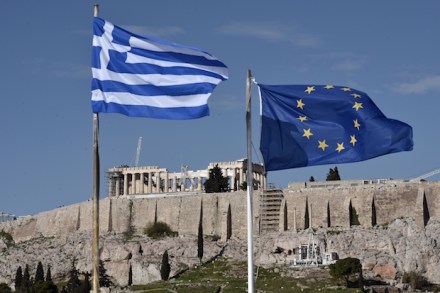
Amidst the hullabaloo of the general election campaign, one thing that has generally gone unnoticed in Britain’s political discourse is the worsening Greek situation. You now have European finance ministers openly talking about the possibility of a Greek default. What has changed is that there is now no goodwill and very little trust between Greece and the rest of the Eurozone. The rest of the Eurozone think that the Greeks are obfuscating and not providing the details needed. While the Syriza-led Greek government feel that the rest of the Eurozone is not providing them with the political cover they need to make a deal. They feel that the Eurozone’s insistence that Athens runs a Budget surplus even before debt repayments have been taken into account is unreasonable.

Tristram Hunt: Education Secretaries can send their kids private

From our UK edition

In the Daily Politics education debate just now on the BBC, Tristram Hunt declared that it was acceptable for an Education Secretary to send their own child to private school. Under questioning from Andrew Neil, Hunt said that it was fine in ‘certain circumstances.’ The other members of the panel—including Nicky Morgan and David Laws—then agreed with Hunt’s statement. Is it acceptable for an education secretary to send their child to a private school @afneil asks his #bbcdp panel? https://t.co/A5VI9mnHlz — DailySunday Politics (@daily_politics) April 23, 2015 Hunt’s remarks are politically brave.

The polls could decide the fate of the Lib Dems

From our UK edition

A Lib Dem West Country MP told me at the start of the year that he thought his party would keep his seat if the Tories were broadly ahead in the national polls on polling day but lose it if they were level or behind. His thinking was that if it looked like Cameron was going to continue as Prime Minister his constituents would both feel it was safe to vote for a local champion and would want some protection against the Tories cutting public services too far. But if the Tories were behind, he feared that these swing voters would feel that they had to vote Tory to try and stop Labour. This is what makes the current polls particularly concerning for the Lib Dems. If they don’t move, then they could face a bigger squeeze than expected in their Tory facing seats.

Cautious Miliband doesn’t want to talk about borrowing

From our UK edition

Labour is proposing to balance the current not the overall budget. This is presumably because they think that borrowing to spend money on capital projects is a sensible policy. But you wouldn’t have known that from watching Ed Miliband on BBC1 just now. In response to questions from Evan Davis, Miliband was determined not to say that Labour would borrow to invest. In a highly disciplined performance, Miliband would also not engage with Davis’ questions about inequality and whether it was a good thing if everyone got richer even if the gap between rich and poor widened. Indeed, Miliband was so cautious that you began to wonder if he’s started to think that this is now his election to lose.

The tension in Labour’s energy policy between prices and decarbonisation

From our UK edition

There has always been a tension in Ed Miliband’s energy policy between its aim to get prices down via the price freeze and its desire to decarbonise the electricity market. That tension was on full display in the BBC Daily Politics Environment Debate this afternoon, the first of a series of policy debates chaired by Andrew Neil. Flint had to clarify that the Labour manifesto wasn’t proposing the 100 per cent decarbonisation of the electricity market. She then had to dodge around the question of whether the green levies on energy bills would have to rise to make this happen. Matthew Hancock, the Tory spokesman for the debate, claimed that the Labour position would lead to a £96 increase in energy bills.

John Major to enter the electoral fray this week

From our UK edition

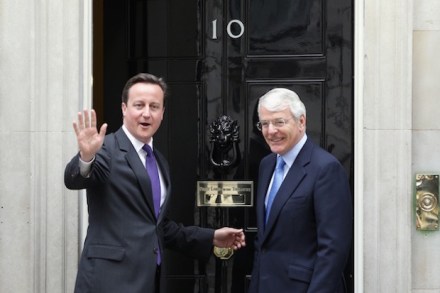
David Cameron’s inner circle are always keen to talk up the parallels between this campaign and 1992. This week, the winner of that election will enter the fray on their behalf. As I report in the Mail on Sunday, John Major will give a speech warning of the dangers to the Union itself if the United Kingdom ends up with a Labour government propped up by the SNP. The Tories hope that Major’s intervention will elevate this point above the usual party political knockabout. They also believe that a former Prime Minister speaking out will make voters pay attention; they were much struck by how much coverage Tony Blair’s speech on the dangers of an EU referendum received a few weeks back. That the Tories have asked Major to get involved is telling.

Angela Eagle: Labour would speak to other parties to get a Queen’s Speech through

From our UK edition

On the Sunday Politics just now, Angela Eagle shifted Labour’s position on what it would do in the event of a hung parliament. Previously, Labour has insisted that if it was a minority government it would simply propose a Queen’s Speech and dare the other parties, and in particular the SNP to vote it down. listen to ‘Angela Eagle: we'd speak to any party to get a Queen's speech through’ on audioBoom But Eagle told Andrew Neil that in the event of a hung parliament Labour 'would speak to any party that has got representation in the House of Commons in order to try to build a majority for a Queen's Speech that the country desperately needs'. What makes Eagle’s comments so significant is that she is the shadow Leader of the House of Commons.

Feisty Cameron warns English voters of the ‘frightening prospect’ of the SNP propping up a Labour government

From our UK edition

David Cameron has just delivered his feistiest performance of the election campaign yet. In a combative interview with Andrew Marr, the Tory leader repeatedly described the prospect of a Labour government propped up by the SNP as ‘frightening’, telling English voters that the SNP wouldn’t ‘care’ about them and their needs. He implicitly warned that SNP MPs supporting a Labour government would result in less money for English constituencies. He had been given this opening by Nicola Sturgeon, who in her interview had made clear how the SNP would use the fixed term parliament act to give them maximum influence on a Labour government.

The coming battle for legitimacy

From our UK edition

Jonathan Freedland has written a compelling column on the challenge that Ed Miliband will face to establish his legitimacy if he becomes Prime Minister despite Labour not having won the most seats or votes. But I suspect that whoever becomes the government after May the 8th will have difficulty in persuading everyone that they have a right to govern. The Tory-Liberal Democrat coalition could claim that 59 per cent of voters had backed its constituent parts. It also had a comfortable majority in the House of Commons with 364 out of 650 seats. Now, unless something dramatic happens, no governing combination is likely to have anything like that kind of support this time round.

Ed Miliband’s gamble paid off but the Scottish question still haunts him

From our UK edition

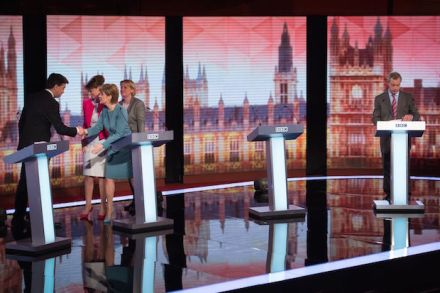
Ed Miliband took a risk by turning up to this debate and until the last question it looked like it had definitely paid off. Miliband avoided conceding too much to the anti-austerity alliance to his left of Nicola Sturgeon, Natalie Bennett and Leanne Wood and parried Nigel Farage’s attacks on Labour pretty effectively. On Trident, he sounded statesmanlike as he explained why in an uncertain world, Britain needed to renew its nuclear deterrent. All the while, he got in regular attacks on David Cameron both for his record in government and not being at the debate. But the last question was about hung parliaments and it is this which caused Miliband some problems. He stuck to his line about Labour wanting an overall majority and warned about the risks of voting SNP.