James Forsyth

James Forsyth

James Forsyth is former political editor of The Spectator.

This referendum has shown us the real Cameron

From our UK edition

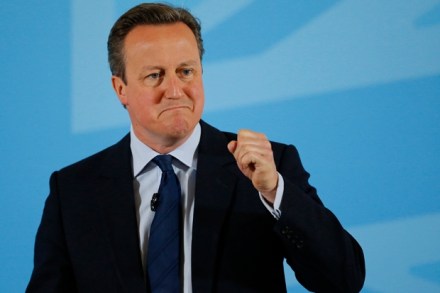
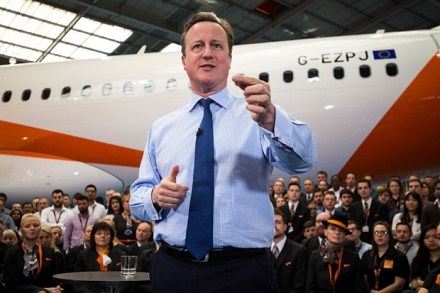
Westminster has a tendency to get ahead of itself. MPs want to discuss the aftermath of an event long before it has happened. They play never-ending games of ‘What if?’ At the moment, the political class cannot stop discussing, in great detail, what the post-EU referendum political landscape will look like. The speculation is, in and of itself, part of the political process. Much of the talk of the post-vote challenges facing David Cameron is intended to persuade him to pull his punches in the final weeks of the campaign. What no one disputes is that the Prime Minister will find governing even harder after 23 June. His majority is already thin and he has had to U-turn on a host of policies since the election.
PMQs: After a strong start, Angela Eagle lost her way

From our UK edition

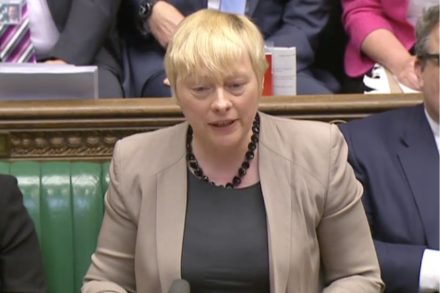
It was George Osborne v Angela Eagle at PMQs today, with David Cameron at the G7 in Japan. Eagle, who is a far better despatch box performer than Jeremy Corbyn, started off by contrasting Osborne’s handling of Google’s tax affairs with the French authorities raiding the company’s Paris office. She then went on to do what Jeremy Corbyn won’t, or can’t do, exploiting Tory divisions over the EU referendum. She asked Osborne if he agreed with Priti Patel or Len McCluskey on the EU and workers’ rights. But after this Eagle lost her way, her questions turned into mini-speeches and Osborne batted them away with increasing ease. By the end of their exchanges, the Chancellor had the upper hand.

Hilton: Brexit would be the crowning achievement of Tory modernisation

From our UK edition

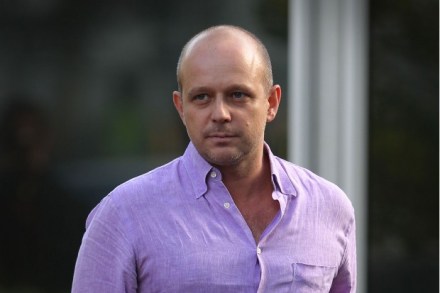
In a speech to Policy Exchange today, Steve Hilton—David Cameron’s former senior adviser—will make the case that ‘any intellectual rigorous examination makes it impossible for a Tory moderniser to support staying in the EU’. He argues that Tory modernisation was about trusting people, and that the EU does not; that modernisation was about localism, and that the EU is inherently centralising; and that the EU helps the rich and not the rest. I think there’s much to be said for Hilton’s analysis. (Though, of course, it should be recognised that there are Tory modernisers on both sides of the argument.) But where Hilton is surely right is that the EU is not the future, it is an idea of its time—the late 20th century.

There are Tory modernisers supporting Brexit — just ask Steve Hilton

From our UK edition

Steve Hilton coming out so strongly for Brexit is important for two reasons. First, it is a reminder that the idea that, within the Tory party, this referendum is the modernisers versus the right is far too crude. There are Tory modernisers on both sides of this argument. Indeed, given the importance of localism to Tory modernisation and its appreciation that there’s a difference between being pro-big business and pro-market, there are thoroughly modernising reasons for wanting the United Kingdom to leave the European Union. Hilton also details how it was the experience of government that tipped many Tories into backing Brexit. It was the discovery of just how much the European Union limited what they could do in office that made them believe that the UK should leave.

The Boris, Cameron ruck over EU

From our UK edition

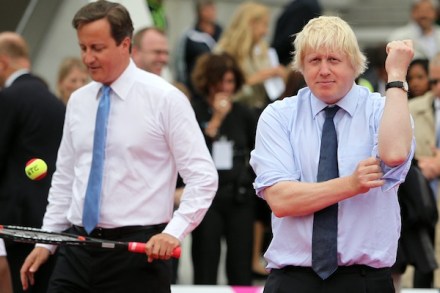
David Cameron and Boris Johnson are the two biggest beasts in the Tory jungle. But they are currently involved in an increasingly undignified scrap over Brexit. As I say in The Sun today, it is hard to see how it ends well for both of them or the Tory party.  As one Cabinet Minister lamented to me recently, ‘it is a personal fight’ between Cameron and Boris and that ‘the Conservative party is on a hiding to nothing.’ Boris and Brexit is the itch that Cameron can’t resist scratching. When Iain Dale asked him about Boris going Out, Cameron—in effect—accused the former Mayor of putting his personal ambition ahead of the national interest which is about the most serious charge you can make of a politician.

Why a second EU referendum is already looking likely

From our UK edition

David Cameron wants a ‘definitive’ victory in this referendum, one that will settle the question of Britain’s EU membership for a generation. But, increasingly, I doubt whether this referendum will resolve things for that long. A second referendum within a decade now looks likely, as I argue in the magazine this week. So, why do I think a second referendum looks likely if In wins? Well, leaving the EU used to be a relatively fringe position in British politics. Most Eurosceptics said that they wanted reform rather than for Britain to leave outright and there was no one in the Cabinet who openly backed getting out. But that has now changed. There are more than 130 Tory MPs campaigning for Brexit, including five cabinet ministers.

Don’t rule out a second referendum

From our UK edition

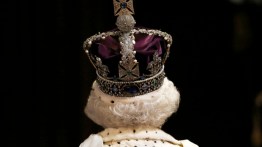
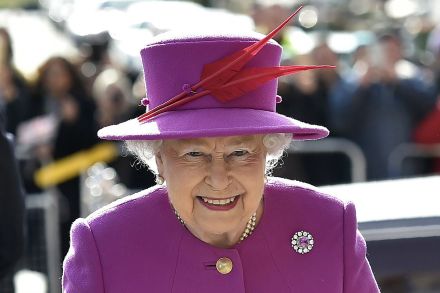
As the Queen read out her government’s agenda on Wednesday morning, David Cameron could have been forgiven for thinking about his place in history. What will he be remembered for, other than having held the office? The so-called ‘life chances’ strategy is intended to be a central plank of his legacy. He wants to be able to say that he made Britain more ‘socially just’. Indeed, this is his principal reason for wanting to stay in No. 10 for a few more years. Cameron loyalists hope he’ll be remembered as the leader who made the Tories the natural party of government again. The man who moved them on from Thatcherism to a modern version of one-nation politics; who confronted the deficit in a fair (if leisurely) manner.

A deal has been reached in the junior doctors dispute

From our UK edition

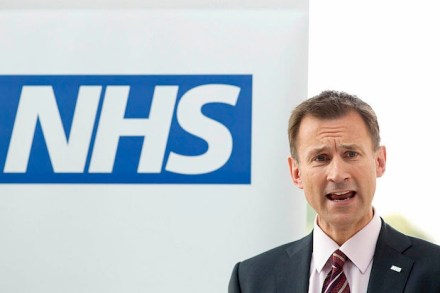
A deal has been reached between the government and the BMA on the new junior doctors contract. The deal now needs to be approved by a BMA ballot. Details of the deal are still emerging, but I understand that rather than junior doctors working the 11 Saturdays a year that the government wanted them to, they will now work 6 weekends a year. The marginal cost for a hospital of employing a junior doctor will fall by roughly a third if this deal goes through. The government has given some ground elsewhere. Doctors returning from maternity leave will be entitled to catch up on the skills training that they have missed out on while away and once they have done so, they will be entitled to a skills based pay rise as if they hadn’t taken leave.

Corbyn could have done wonders for his reputation, if he’d only made today’s speech shorter

From our UK edition

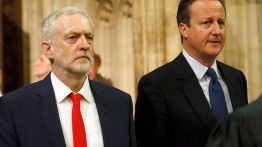
The speeches in the Commons which follow the Queen’s Speech blend together humour with some serious points. They are the Commons as its most clubbable, with lots of in jokes and the like. So, there was a fair amount of chatter about how Jeremy Corbyn – who is not the clubbable sort – would deal with the occasion. At first, the answer was surprisingly well. He was funny, and generous, about the proposer, Caroline Spelman, and the second, Philip Lee. The House was laughing with him, and even Cameron couldn’t help but chuckle at some rather good jokes including those at his own party’s expense. But then Corbyn turned serious, and it all went wrong. Corbyn simply went on and on and, to the fury of the Tory benches, he wouldn’t take any interventions.

The Queen’s Speech contained some post-referendum salve

From our UK edition

The Queen’s Speech today provides the agenda which David Cameron will turn to post-referendum to try and unite the Tory party. The social reforms proposed are important. Cameron hopes that they will be a central plank of his legacy, which is why he wants to stay in Number 10 for a few more years yet. In terms of post-referendum unity, it is helpful that prison reform is at the centre of this social reform programme—as Michael Gove, the most prominent Cabinet outer, is the man in charge of it. A lot of this agenda is about, as the speech put it, helping the ‘hardest to reach’ in society. As one Cameron loyalist points out, the Children and Social Work Bill will help children in care by making it easier for them to be adopted.

Has Boris Johnson’s defection to ‘Out’ scuppered the sovereignty bill?

From our UK edition

Back in the days when Boris Johnson was still deciding which way to go on the EU, Number 10 were very keen on a sovereignty bill. This Bill was meant to limit the powers of the European Court of Justice and assure voters that Parliament was supreme. But it was also meant to reassure Boris, he was particularly worried about the influence of the ECJ, and get him on the side. The plan was that this proposed bill would be unveiled in parliament once Cameron came back from Brussels with his deal. But since Boris came out for Out, we have seen head nor hide of this bill. The Sun reveals this morning that it won’t be in the Queen’s Speech today, which indicates that it will never see the light of day.

Which polls are you going to believe?

From our UK edition

Today’s ICM phone and online polls are a reminder that the polls aren’t going to offer much certainty about the result of the EU referendum. ICM’s traditional phone poll has IN ahead 47 to 39, and with the don’t knows excluded up 55% to 45%. This would suggest that IN is on course for a fairly comfortable victory. But its online poll has Out up 47 to 43, and with the don’t knows excluded ahead 52% to 48%. Phone polls are generally regarded as slightly superior to online ones, they are certainly more expensive. So, I suspect that most people in Westminster will take these polls as a sign that IN is probably ahead. Interestingly, Number 10 briefed out some of its own thinking on the current polls to the Sunday papers.

Why the Queen won’t be the centre of political attention next week

From our UK edition

In normal times, the government clears the decks ahead of the Queen’s Speech. It wants to ensure maximum publicity for its legislative agenda. But these are not normal times: there’s an EU referendum campaign raging. Number 10 are being quite clear, as I write in The Sun today, that with less than six weeks to go to polling day, there won’t be a campaign ceasefire this week. ‘It is too close now’ one senior source tells me. So, why is the Queen’s Speech taking place at all? One IN supporting Minister complains that it is ‘moronic’ to be having it now, as it means that the measures announced it are likely to get caught up in the referendum cross fire.

Plaid Cymru’s Leanne Wood has created drama in Wales

From our UK edition

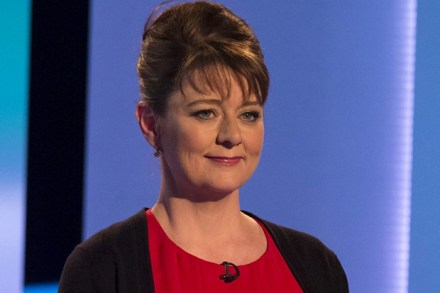
A dramatic day in Wales today. The vote for First Minister ended in a tie between Labour’s Carwyn Jones and Plaid Cymru’s Leanne Wood. Labour, despite only having 29 out of 60 seats in the Assembly, had not done a deal with any of the other parties to ensure Jones’ election. Plaid then nominated its own leader, who was backed by the Tory and Ukip AMs as well as the Plaid ones, The Assembly has now adjourned. The Assembly has until 2 June, to decide on a First Minister. If it cannot vote someone in, then the Secretary of State for Wales can call fresh elections. Plaid are now saying, according to the BBC, that they are ‘surprised other parties supported them’ and ‘did not want to give Labour a bloody nose’.

These results have made Labour’s problems worse

From our UK edition

As the dust settles on Thursday’s election, it becomes ever clearer that—with the exception of London—these were awful results for Labour. They were bad enough to suggest that the party is on course for a third successive general election defeat. But, as I say in The Sun, not disastrous enough to persuade the Labour membership that they need to dump Corbyn. One Tory Minister remarked to me yesterday, ‘Labour have done well enough to keep Corbyn. I can live with that.’ Before adding, ‘Corbyn’s survival is the single most important thing for 2020’. The result that should worry Labour most, though, is the Scottish one.

Sadiq Khan wins the London mayoral race

From our UK edition

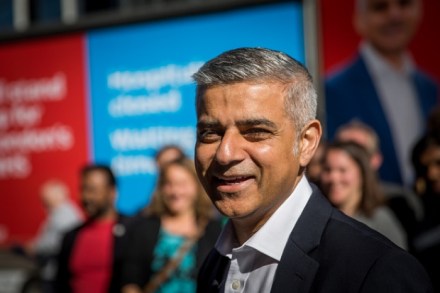
Sadiq Khan is the new Mayor of London. After what seemed like an eternal wait, withs second preferences counted, he claimed 57pc of the vote to Zac Goldsmith's 43pc - a comfortable margin of 14pc. So after eight years of Tory control, Labour has retaken City Hall.  Khan’s result is Labour’s best of this election cycle. He has won a decisive victory in a contest which has seen turnout go up, and by a wider margin than Boris's 2012 victory. There’ll be much criticism of Goldsmith’s campaign in the next few days, but it is worth noting just how relentless Khan was. He hit his key messages endlessly, never missing an opportunity to remind voters that he was the son of a bus driver.

The SNP’s decline has finally begun

From our UK edition

We are past peak SNP. The party has won a third successive Scottish Parliamentary election, an achievement that is not to be sniffed at, but it has lost its overall majority. There are signs that the normal rules of political gravity are beginning to apply in Scotland again. Equally telling is that the SNP is out of big ideas. Its manifesto was a thoroughly managerialist document. It also now seems highly unlikely that there will be another independence referendum before 2021, and the next Scottish Parliament elections. The SNP now faces a challenge of how to use the extensive powers that are coming the Scottish Parliament’s way. If it doesn’t use them, people will begin to ask what the point of the SNP is.

Enter Boris, eyes on the prize

From our UK edition

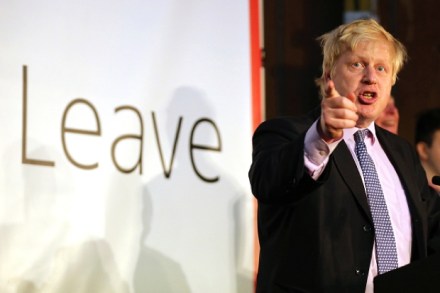
[audioplayer src="http://feeds.soundcloud.com/stream/262486539-the-spectator-podcast-erdogans-europe.mp3" title="James Forsyth, Fraser Nelson and Isabel Hardman discuss Boris" startat=552] Listen [/audioplayer] After an eight-year detour into municipal government, Boris Johnson has now returned to national politics. The former mayor of London will mark this moment by going on the stump for the Leave campaign. He has some catching up to do: while never far from the public eye, he was absent from the Commons for seven years. Even when back in Parliament after the general election, Boris felt he could not take the cabinet job that was offered to him. But his time at City Hall hasn’t dented his ambitions; quite the opposite.

PMQs: David Cameron says Gary Lineker should keep his pants promise

From our UK edition

It was gloves off time at PMQs today. With elections taking place across the UK tomorrow, David Cameron went for Jeremy Corbyn repeatedly. He kept attacking Corbyn for having referred to Hezbollah and Hamas as ‘friends’ and called on him to withdraw the remark. He argued that Sadiq Khan’s willingness to share platforms with extremists was one of the reasons why Labour had a problem with anti-Semitism. It was bare-knuckle politics, and a preview of how the Tories would try and monster Corbyn in any general election campaign. Corbyn responded by complaining about the Tories ‘smearing’ Sadiq Khan and by claiming that Suliman Gani, the preacher at the centre of this platform controversy, was a Tory.

Diane Abbott says it is smear to say Labour has a problem with anti-Semitism

From our UK edition

Labour might have hoped that the announcement of an independent inquiry into the issue of anti-Semitism in the party would have drawn a line under the matter, and let the party get back to its election message ahead of polling day on Thursday. But comments by senior Labour figures are ensuring that this row continues. This morning, Diane Abbott went on the Marr show and said that ‘It is a smear to say that Labour has a problem with anti-Semitism’—which makes you wonder why Jeremy Corbyn has set up an inquiry into the issue. If this was not enough, Unite leader Len McCluskey declared on the radio that ‘The idea that there is an anti-Semitic crisis in the Labour party is absolutely offensive. But it’s being used to challenge Jeremy Corbyn.