James Forsyth

James Forsyth

James Forsyth is former political editor of The Spectator.

PMQs unifies Tory MPs and weakens Jeremy Corbyn

From our UK edition

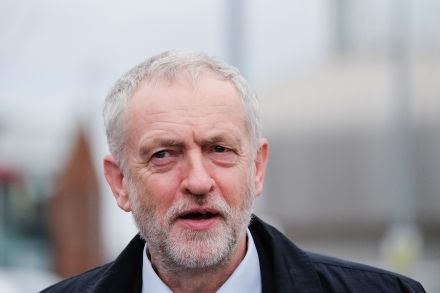
On Sunday at noon, few would have predicted that Tory MPs would have come out of PMQs cheered and unified. But thanks to The Times’ Sam Coates revealing this morning that the Labour leader’s office have ranked their MPs from core group to hostile, David Cameron won this session hands down and cheered up Tory MPs in the process. Jeremy Corbyn had plenty of material of his own to work with, Iain Duncan Smith’s resignation letter should be a rich seam for Labour. But when Cameron started quoting the rankings at every turn, Corbyn — remarkably, given that his team had had all morning to come up with one — had no comeback. He was reduced to, rather pathetically, telling Cameron to leave the theatre. The Tory benches meanwhile were loving it.

The Conservative crack-up

From our UK edition

No one does political violence quite like the Tories. The fall of Margaret Thatcher in 1990 unleashed a cycle of reprisals that lasted until David Cameron became leader in 2005. During that time, Tories specialised in factionalism: wets vs dries, Europhiles vs Eurosceptics, modernisers vs traditionalists. Cameron’s great achievement was to unite the party in pursuit of power. Now that unity is coming undone. You can blame Jeremy Corbyn’s leadership of Labour for the latest Conservative breakdown. The Tory wars of the mid-1990s were fuelled by a sense that defeat was inevitable: since the Conservatives weren’t going to beat Tony Blair, they felt they might as well fight each other.

George Osborne starts a fight in the Commons and comes out unscathed

From our UK edition

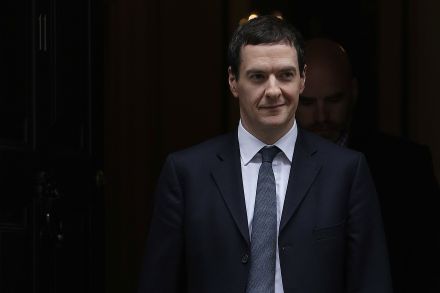
George Osborne turned up in the Commons chamber with a clear plan to get through this Budget debate: turn it into a partisan slug fest. His aim was to make it a straight Labour/Tory fight and by doing that, rally the Tory benches to him. With some help from the whips and the PPSs, he largely succeeded in doing that. Crucially for him, he got through the speech without incurring any further damage. As soon as Osborne began talking about the Budget, Labour started trying to intervene on him. Chris Leslie was first up, demanding an apology for the proposed PIP cuts. Osborne, in a response that set the tone for the rest of the speech, demanded that Labour apologise for the financial crisis.

Iain Duncan Smith warns government in danger of ‘dividing society’

From our UK edition

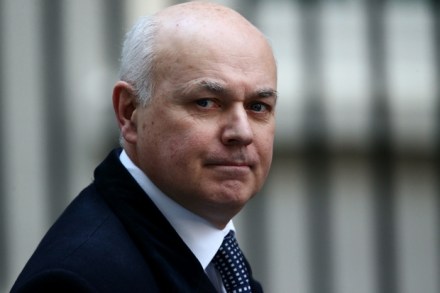
In one of the most extraordinary political interviews of recent times, Iain Duncan Smith has warned that the government ‘is in danger of drifting in a direction which divides society rather than unites it.’ He repeatedly, and pointedly, argued that in drawing up policy the Tories have to have a care for those who don’t, and will never, vote for them—a remark that everyone in Westminster that will see as being directed against George Osborne. Explaining his resignation, IDS that he was ‘semi-detached’ from decisions taken in government, and that his department was being forced to find savings because of the welfare cap which had been ‘arbitrarily’ lowered by the Treasury.

George Osborne should have gone to the Foreign Office after the election

From our UK edition

Imagine how different politics would be now if George Osborne had moved to the Foreign Office after the election. He would have left the Treasury with his economic and political strategy vindicated by the election result and wouldn’t be involved in this deeply damaging row with Iain Duncan Smith. For Osborne to have a former leader, and one of the most respected figures among the party activists, attacking his whole approach to deficit reduction and his conception of fairness is politically disastrous, to put it mildly. The problem for Osborne is that with no fiscal wriggle room and his opponents on the Tory benches determined to cause him trouble at every opportunity, there is no sign of the pressure on him letting up.

New YouGov poll puts Labour ahead

From our UK edition

When an ICM phone poll this week had Labour level with the Tories for the first time since Jeremy Corbyn became leader, even the pollster cast doubt on the finding. But today, YouGov has Labour ahead by a point—34% to 33%. YouGov’s Anthony Wells says that this suggests ‘something is genuinely afoot’. Now, as the election reminded us polls are not all seeing. It is also doubtful what the value of a poll is this far out from a general election: Ed Miliband was regularly ahead by large margins during the last parliament and still went on to lose the election.

Budget brings the focus back to Britain

From our UK edition

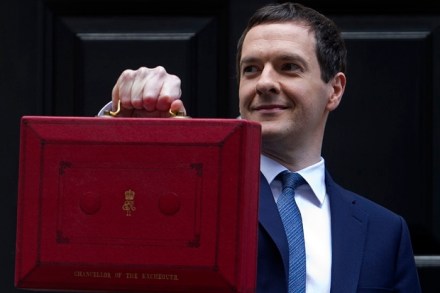
[audioplayer src="http://rss.acast.com/viewfrom22/thespectatorpodcast-politicalcorrectness-budget2016andraves/media.mp3" title="The Spectator Podcast: Osborne's Budget" startat=594] Listen [/audioplayer]George Osborne used to tell his aides to prepare every budget as if it were their last: to throw in all of their best and boldest ideas. But this week, the Chancellor has opted for political as well as fiscal retrenchment. This was a cautious budget. Its emphasis on infrastructure was as laudable as it was uncontroversial. There were few hostages to parliamentary fortune, which is sensible given the Tories’ small majority and the way in which the EU referendum is challenging party discipline. British government is on hold.

The Amber express

From our UK edition

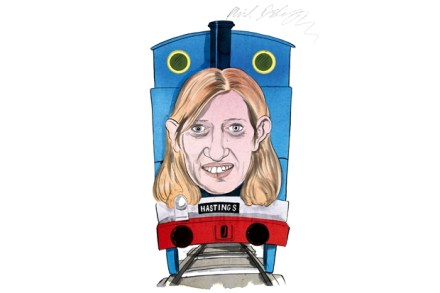
Amber Rudd isn’t a flashy politician; her office at the Department for Energy and Climate Change has almost no personal touches. She has a poster on the wall for the new Edinburgh tram (she was a student there). Her one concession to vanity is a framed ‘Minister of the Year’ award from this magazine: awarded for uprooting the legacy of the Liberal Democrat energy policy and being (in the words of the commendation) the ‘slayer of windmills’. It was, perhaps, an exaggeration: she hasn’t brought down any of Britain’s 5,215 onshore wind turbines. But she has been busy pruning back the green subsidies that her department had become used to doling out.

Budget 2016: George Osborne played a difficult hand well

From our UK edition

[audioplayer src="http://rss.acast.com/spectatorpolitics/georgeosbornesbudget-2016/media.mp3" title="Fraser Nelson, Isabel Hardman and James Forsyth discuss today's Budget"] Listen [/audioplayer]George Osborne played a difficult hand well in this Budget. Hemmed in by the worsening fiscal forecasts and the political limitations that the EU Referendum imposes on the government, he delivered a Budget that included some clever politics even if it won’t live long in the memory. The biggest story of the day is the OBR’s view that the productive potential of the UK economy is significantly lower than it previously thought. If that judgement is correct, it will have serious, long term implications for the country and the public finances.

Don’t expect Budget fireworks from George Osborne

From our UK edition

Don’t expect ‘fireworks’ from the Budget one of Osborne’s closest political allies told me this week. Ahead of the Budget on Wednesday the Chancellor finds himself hemmed in by the EU referendum, fraying Tory discipline and the worsening global economic situation, I say in my Sun column this week. A Budget four years out from a general election is normally when a government takes some risks. But I doubt Osborne will be doing much of that on Wednesday. First, he doesn’t want to do anything to make the EU referendum more difficult for the government to win—the intensity with which David Cameron is campaigning reveals how worried he is about losing it. Second, Cameron and Osborne know that they can’t rely on Tory MPs at the moment.

Osborne can still see off Boris

From our UK edition

[audioplayer src="http://rss.acast.com/viewfrom22/thedeportationgame/media.mp3" title="James Forsyth and Fraser Nelson discuss whether George Osborne could still become Tory leader" startat=917] Listen [/audioplayer]When George Osborne last stood up to deliver a budget, he had reached his post-election apotheosis. His economic (and political) strategy had been amply vindicated by the election result. He was, for the first time, regarded as David Cameron’s most likely successor. By the time the Chancellor sat down that status had been confirmed: his announcement of a National Living Wage had shown he was serious about the Tories’ claim to be the new workers’ party.

PMQs has lost its sense of occasion, thanks to Jeremy Corbyn

From our UK edition

Jeremy Corbyn’s delivery at PMQs today was far more passionate than usual. But his questions were still far too scattergun. Cameron batted them away with almost embarrassing ease. Corbyn’s ineptitude is draining PMQs of its sense of occasion. It is also particularly maddening as there are plenty of things to pick the government up on at the moment — Sunday trading, the EU-Turkey deal, Hinkley Point to name just a few. But the prize for the worse Labour question of the session didn’t go to Corbyn, but his City Minister Richard Burgon who asked Cameron if he would resign if he lost the EU referendum. Predictably, Cameron simply said no. But the question served to unify the Tory benches rather than divide them.

Can Boris do as effective a job for Out as Cameron is doing for In?

From our UK edition

Pro-Brexit Tory Cabinet Minister would, I suspect, not be complaining about the government’s referendum campaign tactics if they didn’t fear that they were effective. Whatever you think about how he has done it, David Cameron has driven the risks of leaving the EU up the agenda this week. He has pushed the Out campaign onto the back foot. This is what makes Boris Johnson’s appearance on Marr tomorrow morning so important, I argue in my Sun column this week. Out need Boris to drive their agenda as successfully as Cameron is pushing IN’s. The interview is a big moment for Boris too.

Will Cameron pull his punches to help the Tories reunite?

From our UK edition

[audioplayer src="http://rss.acast.com/viewfrom22/donaldtrumpsangryamerica/media.mp3" title="James Forsyth, Fraser Nelson & Isabel Hardman discuss the opening skirmishes of the EU referendum campaign" startat=540] Listen [/audioplayer] If Downing Street’s calculations are correct, next week will see politics begin to return to normal. We’ll all move on from talking about Boris Johnson and Brexit and instead start fretting about the budget and pensions: the first phase of this four-month referendum campaign will be over. The two sides will regroup and try to work out what they can take from these initial skirmishes. One lesson from the first weeks of the campaign is that the ‘in’ side have the advantage when the debate is on the economy.

Head of the IN campaign says wages will go up if we leave the EU

From our UK edition

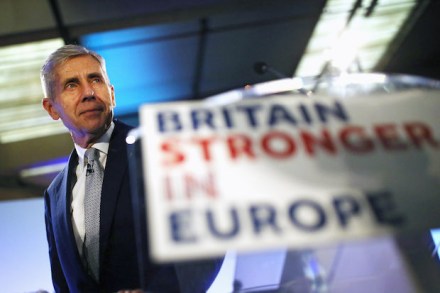
[audioplayer src="http://rss.acast.com/viewfrom22/donaldtrumpsangryamerica/media.mp3" title="James Forsyth, Fraser Nelson & Isabel Hardman discuss the opening skirmishes of the EU referendum campaign" startat=540] Listen [/audioplayer] Stuart Rose will have to be added to the long list of British businessmen who have struggled to make the transition to politics. Rose, the Chairman of Britain in Europe, didn’t get off to the best of starts in this campaign when he told The Times that ‘“Nothing is going to happen if we come out of Europe in the first five years, probably. There will be absolutely no change’ a quote that was seized upon by the Out campaign who said it disproved all the dire warnings about the immediate consequences of leaving.

PMQs: Why won’t Corbyn address the Tory EU divide?

From our UK edition

David Cameron coasted through another PMQs today. Jeremy Corbyn asked about childcare but his questions were too long and unfocused to trouble the Prime Minister. It does seem odd that Corbyn doesn’t even dare approach the Tory split over the EU. He could surely have made something of IDS calling the government’s paper on the alternatives to EU membership a ‘dodgy dossier’? David Davis asked Cameron, after Bernard Jenkin failed to turn up, whether he would get the HMRC to publish its figures showing how many NI numbers issued to EU nationals are active. This would show whether the official immigration figures are significantly undercounting the number of EU migrants coming to Britain to work.

How the migrant crisis could get much worse

From our UK edition

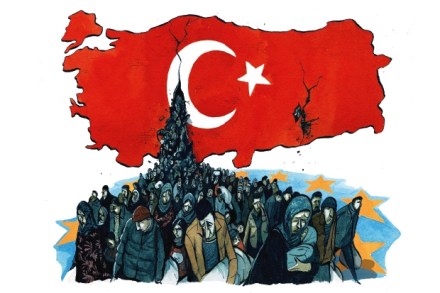
Angela Merkel gave a defiant interview last night in which she defended her handling of the refugee crisis. She declared, ‘I have no Plan B’—worryingly, I suspect this is true. But how much worse the refugee crisis could become worse is made clear in leaked minutes of a meeting between the President of Turkey Recep Tayyip Erdogan and Donald Tusk and Jean-Claude Juncker. As Bloomberg columnist Marc Champion points out, Erdogan is determined to get far more out of the EU than the 3 billion Euros it is currently offering. He tells them that if the offer is for only 3 billion, the conversation might as well end there: "We can open the doors to Greece and Bulgaria anytime and we can put the refugees on buses.

Can Cameron and Boris keep a lid on it?

From our UK edition

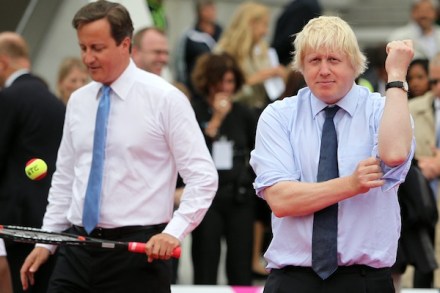
David Cameron’s slap down of Boris Johnson on Monday was one of the most brutal, and personal, that I’ve seen in six and a half years of reporting on parliament. But, as I report in my Sun column today, Number 10 are now keen to calm things down. Indeed, even some of Cameron’s closest allies now concede that the tone he took with Boris on Monday was a mistake. I’m told that Cameron and Boris have been in contact and are now exchanging, dread word, ‘bantery’ texts. One well-placed source is clear that the ‘PM’s tone will be much more emollient from now on’.

The Tory dogfight

From our UK edition

  [audioplayer src="http://rss.acast.com/viewfrom22/insidethetorieseudogfight/media.mp3" title="James Forsyth, Fraser Nelson and Isabel Hardman discuss the Tory dogfight over Europe"] Listen [/audioplayer] Many Tories had doubts about David Cameron’s EU renegotiation, but only Boris Johnson was promised a piece of legislation to assuage his particular concerns. It was quite a compliment. The so-called Sovereignty Bill was, in effect, the Get Boris Onside Act. It was designed to deal with the Mayor of London’s fears about the relationship between the British parliament and courts and the EU. It was also mooted that Boris would be offered a top cabinet job — perhaps Foreign Secretary.

PMQs: Cameron delivers a knockout blow to a struggling Corbyn

From our UK edition

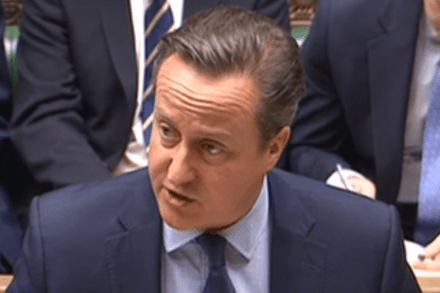
This could have been a tricky PMQs for David Cameron. Instead, it will be remembered for Cameron ventriloquising his mother and telling Corbyn 'put on a proper suit, do up your tie and sing the national anthem'. What gave this jibe its potency, is that it sums up what a lot of voters think of the Labour leader. It was not quite as Flashmanesque as it sounds. For it came in response to a Labour front bench heckle asking what Cameron’s mother would say about cuts in Oxfordshire. Even before Cameron floored Corbyn with that line, the Labour leader was struggling. He chose to go on the NHS and the junior doctors’ strike. But even on this subject, he couldn’t make any headway. Worryingly for Labour. Corbyn’s PMQs performances are—if anything—getting worse.