James Forsyth

James Forsyth

James Forsyth is former political editor of The Spectator.

Cameron’s appointment with fear

From our UK edition

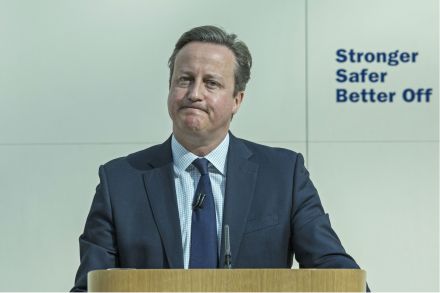
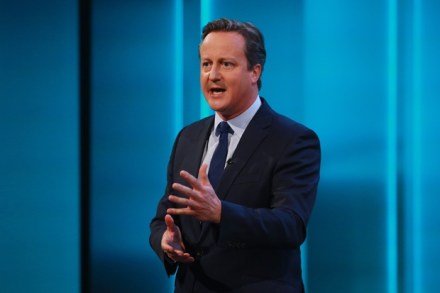
The best thing that can be said for David Cameron’s current predicament is that he has been here before. His career has been punctuated by moments when the polls and the pundits have said he was done for. In 2007, with the new Prime Minister Gordon Brown enjoying a honey-moon and considering a snap election, this magazine pictured him on the cover with a noose and the headline ‘Get out of this, Dave’. He did. At times, even he has thought his leadership was over. On election day last year, he spent the early evening rehearsing his resignation speech to his closest aides. Hours later, he was hailing the ‘sweetest victory of all’. It was the Scottish referendum two years ago that caused Cameron the most worry.
Gove wouldn’t support Osborne’s ‘punishment Budget’

From our UK edition

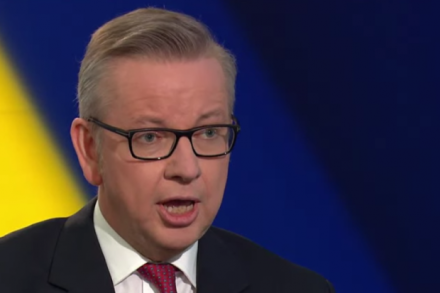
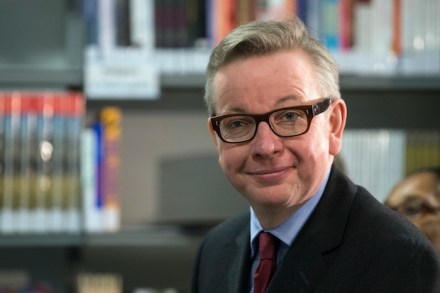
One consequence of David Cameron’s refusal to take part in any ‘Blue on Blue’ debates is that he and Michael Gove are appearing several days apart on BBC Question Time. Tonight, it was Gove’s turn to face the studio audience. In reply to the first question, Gove made clear that—in the event of Britain voting to leave—he wouldn’t support the so-called ‘punishment Budget’ that George Osborne set out today. Gove said that the Remain campaign were ‘turning it up to 11’ on the scare stories as polling day approached. Though, interestingly, he studiously avoided any personal criticism of Osborne. With the polls tightening the Remainers are getting more passionate, and Gove faced some fairly hostile questions from the audience.

Corbyn fails to give Cameron a helping hand at final PMQs before referendum

From our UK edition

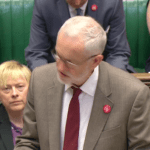
The last PMQS before the EU referendum will not live long in the memory, the Commons did not rise to the occasion. David Cameron was determined to try and keep his broad Remain coalition together. But Jeremy Corbyn was less than helpful to Cameron. Corbyn said that Labour would oppose any post-Brexit austerity Budget, rather undermining George Osborne and Alistair Darling’s message. Then, he said that the problems fishermen in this country are experiencing is not down to the Common Fisheries Policy but decisions taken by the Cameron government. Cameron, though, received more help from the SNP’s Angus Robertson who asked Cameron to spell out just how this austerity Budget would hit Scotland. Some Labour MPs also offered Cameron more assistance than their leader had.

Osborne’s dead cat Budget

From our UK edition

The In campaign believe that they win when the referendum debate is focused on the economy. So, today George Osborne and Alistair Darling are outlining a deliberately provocative post-Brexit emergency Budget. It is stuffed full of horrors: a 2p rise in the basic rate of income tax, a 3p rise in the higher rate and cuts to the NHS budget to name but a few. The plan is clear, to get the economy and the supposed effects on the public finances of Brexit to the top of the agenda. Now, as Fraser and Jonathan Portes have pointed out these aren’t the kind of measures that a government would actually enact in the case of Brexit. But this move is designed to help get the Remain campaign over the line, and nothing else. Brexit backing Tory MPs are furious about this.

Going for Boris just makes the Remain side look rattled

From our UK edition

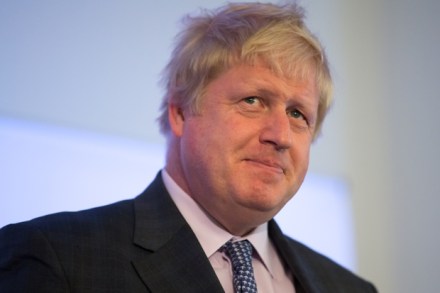
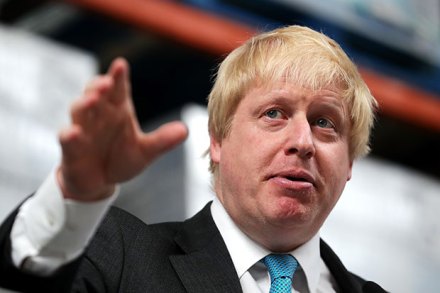
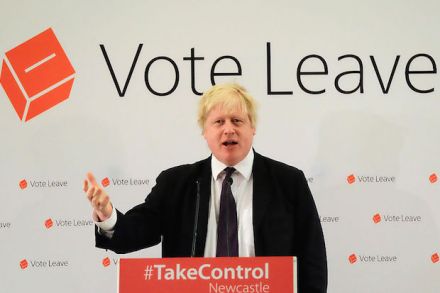
All sides of the Remain campaign are turning their fire on Boris Johnson at the moment. But these attacks are, I argue in The Sun today, a mistake by the Remainers. First, it makes Boris, the most popular politician in the country, the face of the Out campaign when the IN campaign’s strategic aim is to make voters think that Nigel Farage embodies the Out case. Second, it means that the whole referendum is seen through the prism of the Tory leadership. This is not only bad for Tory party unity post-referendum, but also makes it harder for IN campaign to get the support of Labour party voters as it drowns out Labour’s own message. Senior figures in the Remain campaign think that the attacks on Boris work because, they claim, he is seen as being out for himself and a hypocrite.

The Andrew Neil Interviews: Nigel Farage tones it down

From our UK edition

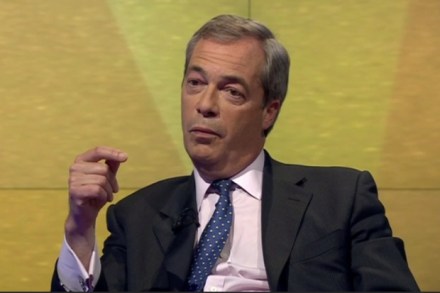
Sometimes you sense that Nigel Farage is keen to create controversy, to stir things up. But tonight in his interview with Andrew Neil, Farage seemed keen to do the opposite; turning in a restrained performance. When Andrew Neil asked what net migration would be post-Brexit, Farage replied that ‘it would be up to us’. He said that the two sides in this campaign shouldn’t be putting forward manifesto-style promises, as the question is really about who governs not what they do. The subtext of this seemed to be that it wouldn’t be him deciding the policy. Under further questioning from Andrew Neil, Farage said he would like to get net migration down to 50,000 or so.

Brexit: the first 100 days

From our UK edition

The Spectator Podcast Christopher Meyer, James Forsyth and Isabel Hardman discuss the first 100 days of Brexit At 5.15 a.m. on Friday 24 June 2016, David Cameron calls Michael Gove and concedes defeat in the EU referendum. The conversation is brief. With nearly all the results in, it is clear that Remain cannot overturn Leave’s advantage. Downing Street announces that Cameron will address the country before the markets open. Up to now, this scenario has just been a worst nightmare for the Remain campaign and the wildest dream of the Brexiteers. Even now, the political class is almost unanimous that ‘in’ will win. But there is little psephological evidence for their certainty.

The Andrew Neil Interviews: George Osborne tried to deal with the Turkish question

From our UK edition

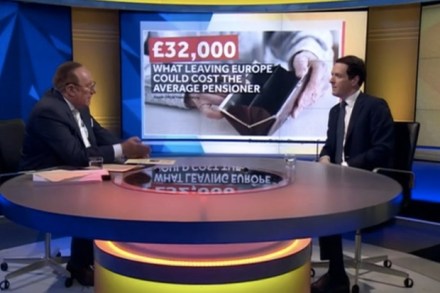
PODCAST: Listen to James Forsyth and Isabel Hardman discuss George Osborne's performance: In a feisty interview with Andrew Neil, George Osborne has just declared that Turkey is not going to become a member of the EU. Osborne said that ‘Turkey has gone backwards’ since 2010 when David Cameron voiced his enthusiastic support for it joining the EU. He then went on to say, ‘Is it going to be a member of the European Union? No, it is not’. I suspect that Osborne’s intervention won’t end the Turkish issue in this referendum campaign. It is, after all, still official government policy that Turkey should join the EU at some point.

PMQs: Corbyn highlights Tory divisions, but Cameron knows he needs Labour

From our UK edition

With the EU referendum just weeks away, Jeremy Corbyn is now trying to exploit Tory divisions over the issue. At PMQs today, he invited Cameron to attack both Priti Patel and Michael Gove. The Labour leader also criticised the whole decision to suspend collective responsibility. Cameron, aware of how much he needs Labour’s help between now and June 23rd, didn’t reply by highlighting Labour divisions over Trident or any other issue. However, as one listened to Cameron pointing out where his government had gone beyond the EU minimum on workers’ rights, one was reminded that the idea there’ll be no paid holiday if we leave the EU is just nonsense. Cameron faced a fair amount of blue on blue fire in the session from Tory outers.

The Andrew Neil Interviews: Hilary Benn dragged out Remain’s immigration agony

From our UK edition

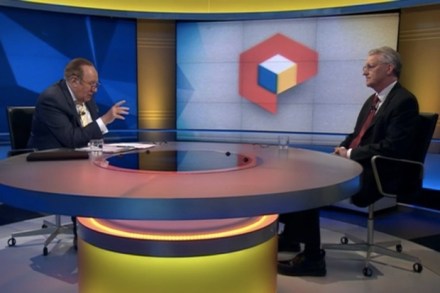
The first of the BBC’s series of prime-time EU referendum events took place this evening, with Andrew Neil interviewing Hilary Benn. The programme highlighted both the uneasy relationship between Benn and his leader Jeremy Corbyn and the Remain campaign’s difficulty in dealing with the immigration issue. Andrew Neil began by putting to Hilary Benn a very Eurosceptic quote from Jeremy Corbyn about the EU from the Maastricht debate of the 1990s and asking Benn what Corbyn got wrong. To which Benn replied, rather uncomfortably, that the ‘Jeremy of today’ supports Britain staying in the EU.

Vote Leave has brought out its Turkish weapon

From our UK edition

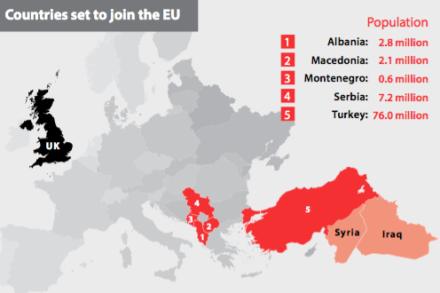
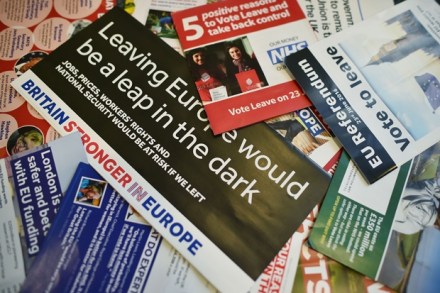
Vote Leave feel that they now have the momentum in this campaign. The three polls out today all have them ahead. Inside the Leave camp, they think that it is their focus on the possibility of Turkey becoming an EU member that is, in part, responsible for this apparent shift in their favour. So, in their official referendum address, which will go to 40 million people, Vote Leave is going big on the question of Turkish accession. The leaflet — which you can see here — has a map on the back showing how if Turkey joins, the EU would border both Syria and Iraq. Now, I can already hear David Cameron rebutting this by saying that there’s no chance of Turkey becoming an EU member anytime soon and that they won’t be in the EU before the year 3,000.

Could the Vote Leave strategy work?

From our UK edition

The Leave campaign have had their best week of the campaign this week. After months of being battered by the Whitehall machine, they’ve taken advantage of purdah silencing government departments to get themselves onto the front foot. As I write in The Sun this morning, even IN supporting Cabinet Ministers admit that Leave have had a good week. But they argue that they won’t be able to ride the immigration issue to victory on June 23rd. One argues that you can’t focus on immigration week after week, or ‘By week four, you end up sounding like Nigel Farage’. But Vote Leave think their trump card is the link between immigration and people’s pay packets. That is the economic argument they are confident they will win.

Gove asks the British public to trust themselves

From our UK edition

It was Michael Gove’s turn in the Sky hot-seat tonight and he came determined to make the democratic case for Brexit. In the initial exchanges, Faisal Islam went after Gove hard on the question of how many economists, international institutions and countries back Britain leaving the EU. Islam pushed Gove to name 11 economists who back Brexit, Gove declined to do so. Islam then asked Gove why the British public should trust him, to which Gove replied that he was asking the British public to trust themselves. But the bigger challenge for Gove was always going to be dealing with the audience questions, which he is far less used to doing than David Cameron.

Cameron keeps calm under immigration fire in first EU referendum show

From our UK edition

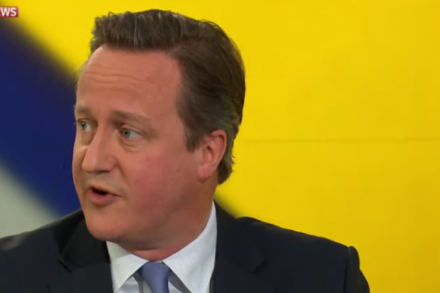
In a feisty interview with Faisal Islam, David Cameron defended his pledge to cut immigration to the tens of thousands but wouldn’t put a date on when he would achieve it. Cameron argued that when the Eurozone economy recovered, he might be able to meet it. Now, this isn’t realistic. The problems with the Eurozone economy are structural and it is impossible to see how net migration could be reduced to the tens of thousands inside the EU; not that getting it down to the tens of thousands outside the EU would be easy—or even desirable. After the interview, came a series of questions from the audience. Cameron kept his cool under some hostile questioning and gave no hostages to fortune.

The right question at the wrong time

From our UK edition

Complaining about the EU referendum campaign has become an integral part of the referendum; even Delia Smith has got in on the act. But politicians on both sides who pretend that the choice is simple, despite having agonised over it themselves for years, are only partly to blame for the dire state of the debate. The bigger problem is that the referendum is taking place at the wrong time. It was meant to take place once the eurozone had decided how to address its own problems. The British public could then decide whether they wanted to remain in or leave the European Union armed with this knowledge. But the question is still unresolved.

Why the opinion polls still matter

From our UK edition

This EU referendum is a particularly difficult contest to poll and after the general election we all should be wary of treating them as gospel. But there’s no getting away from the fact that the mood in Westminster—and on the two campaigns—is heavily influenced by the polls. The recent good numbers for Leave have put a string in its step. They have also ensured that Vote Leave’s focus on immigration in the last few days isn’t seen as the last roll of the dice but as an attempt to focus on one of its strongest areas. Interestingly, influential figures on the Remain side privately accept that the referendum appears to have tightened up in the past few days.

How Vote Leave plan to persuade the electorate that there are real risks to staying in the EU

From our UK edition

The IN campaign’s plan for victory in this EU referendum is relatively simple.  ‘Do you want the status quo or the riskt alternative?’, is how one Cameron ally sums it up. To date, Remain—aided by the various government dossiers—have been pretty effective at pushing this message. That is why they are ahead in the polls. So, Vote Leave know that they need to push the risks of staying in, up the agenda. I write in The Sun this morning that their message in the coming weeks will be that ‘wages will be lower and taxes will be higher if stay in the EU’. Their argument will be that the continuing troubles in the Eurozone will hit the UK in two ways.

Vote Leave’s £50 million question

From our UK edition

If you ask most people if they wanted to win £50 million, the answer would be: where do I sign up? That’s why Vote Leave has launched a competition this morning (here’ the link to enter) offering £50 million to anyone who can correctly predict the result of every game in this summer’s European football championship, if no-one scoops the whole prize,£50,000 will go the person who came closest. Why is the prize £50 million? Because that’s what Vote Leave say the UK sends to the European Union each day. Vote Leave hope that this competition will get one of its key messages, the cost of EU membership, out to a non-politically involved audience. So, what’s in this £50 million competition for Vote Leave? Put simply, data.

Immigration dominates first BBC EU debate

From our UK edition

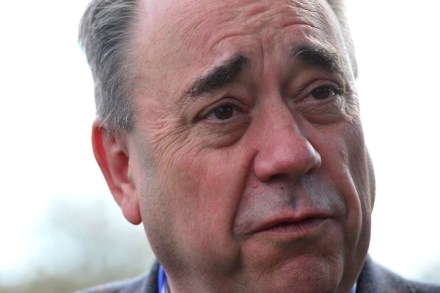
The Lincoln-Douglas debate it was not, but we have just had the first prime time TV debate of this EU referendum. With Alex Salmond and Alan Johnson for In and Liam Fox and the UKIP MEP Diane James for Out speaking to an audience of 18 to 29 year olds in Glasgow. Many in the audience wanted to complain about the tit for tat tactics of the two sides in this referendum campaign or to condemn the scaremongering by both sides; interestingly, they seemed very sceptical of the Treasury’s forecasts of economic pain if the UK left the EU. One audience member, though, seemed to object to the idea that he would have to think about the issue at all.

Cameron’s biggest challenge will come after the EU referendum

From our UK edition

The one thing that can be said with certainty about what will happen at Westminster post-referendum is that David Cameron will find governing even harder than he does now. His majority is already the thinnest of blue lines and opposition from Tory backbenchers has already forced the government to u-turn on a host of policies. This problem will get even worse after the referendum. There are bound to be some irreconcilable Tory MPs who will take every attempt they can to thwart Cameron and Osborne’s legislative agenda. The result: ‘a zombie parliament', in the words of one member of the payroll vote, with hardly any bills being passed. Cameron will, to all intents and purposes, be running a minority government over the next few years.