James Delingpole

James Delingpole

James Delingpole reviews television for The Spectator.

If you want to avoid intrusive anachronisms on TV, you have to go foreign

The iron law of TV these days is that if you want to avoid series that are suffocatingly right-on the only way to go is foreign. Any TV emanating from the Anglosphere is guaranteed to be chock-full of intrusive anachronisms. Bridgerton,which reinvents Regency England as a melting pot of diversity, is an extreme example of this, but even previously immune series have been infected. Season five of The Last Kingdom now has a resident black monk, whose ethnicity no one notices, though such a phenomenon, you might think, would have been considered quite remarkable in 10th-century Wessex. Vikings, too, I gather, has allowed its shield wall to collapse and has been overrun by the forces of skinny soy latte.

Enthralling and unusual – even if you don’t care about Kanye: Netflix’s Jeen-yuhs: A Kanye Trilogy reviewed

The most disappointing pop performance I’ve ever seen – and in the course of my 15-odd years as a music critic I saw an awful lot – was Kanye West at Glastonbury in 2015. Perhaps he was making some kind of ironic statement on the nature of celebrity and fan expectation: blinding lights all focused on himself; no attempts to engage with the crowd; relentless, mechanical rapping but with most of the amusing samples and catchy hooks removed, the better to punish us all by ordeal with loud, righteous verbiage.

Amusing and entertaining – though not very taxing: Amazon Prime’s Reacher reviewed

Jack Reacher is back on the screen and aficionados of the hugely successful Lee Child airport thrillers in which he appears must be hugely relieved. This time he is played not by pint-sized Tom Cruise but by someone much closer to his 6ft 5ins height: a musclebound giant called Alan Ritchson. Not having read any of Child’s 100 million-selling oeuvre (probably because I’m bitterly envious: he’s a Midlands-born ex-media type, like me, but has a slightly larger bank balance), I can’t tell you how true to the original Ritchson is. But he plays him as if he’s on the autistic spectrum — a loner uncomfortable with too much dialogue or human emotion of any kind, who just wants to get the job done. That job is killing all the baddies.

Horrifying but gripping: Netflix’s The Puppet Master: Hunting the Ultimate Conman reviewed

It’s 1993 and you’re studying at a top agricultural college with a bright future ahead of you, perhaps in farming or land management, when a chance conversation with a barman all but ruins your life. The barman tells you that he is an agent working for MI5, spying on an IRA cell in college, one of whose members happens to be your flatmate. You might be sceptical but the agent is very persuasive; and besides, someone from your college has indeed just been arrested for supplying bomb-making equipment to the IRA. When the agent warns you that you and your flatmates are in serious danger and must go on the run, you’re inclined to take him seriously.

A dog’s breakfast but I’m rather enjoying it: Sky Atlantic’s Yellowjackets reviewed

It has taken me a while to watch Yellowjackets because I found the premise so offputting: in 1996 a plane carrying a New Jersey girls’ school soccer team crashes in the mountain wilderness, stranding the survivors for nearly two years. Through flashbacks, we learn that the girls went through some kind of Lord of the Flies horror scenario, perhaps including cannibalism and ritualistic tribal sacrifice. All of which might explain why the forty-something women we meet today are so raddled, bitter, secretive, paranoid and messed up.

Vital, damning docudrama about the Sacklers: Disney+’s Dopesick reviewed

One of my first jobs in journalism was as the arts correspondent of the Daily Telegraph. I’d hop on my motorbike in my greasy leathers (which I used to wear around the office, much to my then editor Max Hastings’s consternation) and zoom off to all manner of exhibition and gallery openings, many of them somehow related to the name Sackler. The Sackler family at the time were the world’s greatest arts philanthropists, with galleries and museums and rooms named after them from New York, London and Paris to the Far East. Like almost everyone, I had no idea of the source of their apparently limitless wealth. But I knew for sure that the Sacklers were a good thing, for art is beautiful and philanthropy admirable, right? That, though, was another time and another world.

Around the World In Eighty Days is the worst TV this Christmas

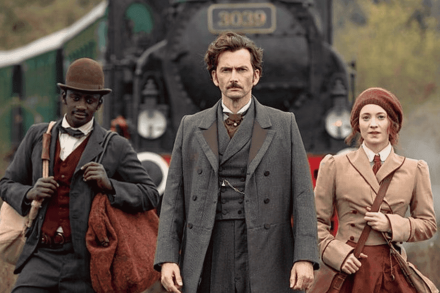
'In many ways, Phileas Fogg represents everything that's alarming and peculiar about that old sense of British Empire. Potentially, it's a story about an England that should elicit very little sympathy,' says David Tennant, explaining, better than any review ever could, exactly why every fraction of a second's time spent watching him in Around the World In 80 Days (BBC1) is life spent utterly squandered. Truly if David Tennant had been offered the role of a giant, steaming dog turd, he could hardly have approached it with less enthusiasm than he gives to his sour, bloodless, joyless impersonation of Jules Verne's upper class English adventurer.

The Spectator’s best TV shows of 2021

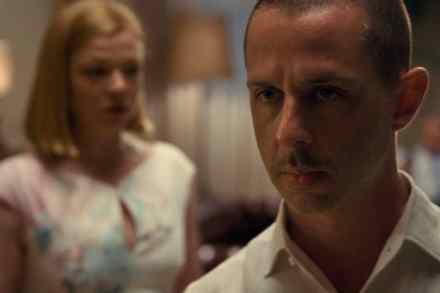
The White Lotus https://www.youtube.com/watch?v=xkLeP3rLJdk Every now and then, you see a new series — Succession, say, or Chernobyl or To the Lake — which reminds you why you watch TV. The latest such joy is The White Lotus (Sky Atlantic), a darkly comic satirical drama created, written and directed by Mike White. It starts with an enticing hook: Shane (Jake Lacy), a handsome, moneyed, basic, mummy’s boy jock in a Cornell baseball cap is in a departure lounge being quizzed by a nosy couple about what we gather was the honeymoon from hell. Meanwhile, a cardboard box marked ‘human remains’ is being loaded into the hold of the aircraft. And where exactly is Shane’s bride?

If you watch one thing this Christmas, make it The Witcher

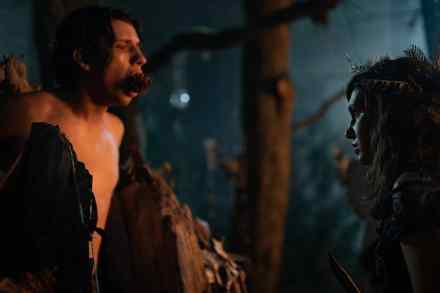
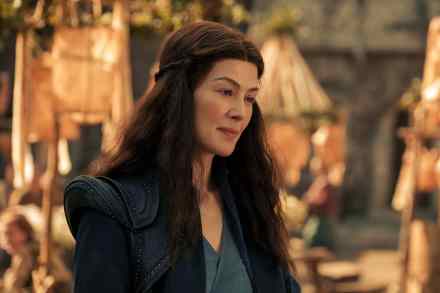
If you only watch one thing on TV this Christmas, make it The Witcher (Netflix). It’s by turns funny, exciting, scary, moving, dark, exhilarating; the special effects and battle sequences and fantastical walled cities are convincing; the casting and acting are pleasing; the storylines are a perfect balance between the intimate and the epic. I’m completely hooked. But what makes it so vastly superior to, say, the other big sword and sorcery series currently on TV, Amazon’s The Wheel of Time ? What it boils down to, I think, is congruence. The Witcher (being based mainly on a popular video game) knows what its preposterousnesses are and inhabits them like well-fitting armour. It knows its audience and wants to delight them.

Even worse than the book: Amazon Prime’s The Wheel of Time reviewed

A couple of years ago, in that near-forgotten era when we could travel almost freely, I canvassed social media as to what should be my relaxing but involving holiday read during a fortnight in Greece. One suggestion — and this is why you should never trust the literary advice of random strangers — was Robert Jordan’s The Wheel of Time series. I started the first book full of bright hope. It would be my new Tolkien-meets-Game of Thrones. Besides the strong personal recommendation and the slew of five-star reviews on Amazon, what persuaded me was the fact that the late author had served two heavily decorated tours of duty as a helicopter door gunner in Vietnam. Then he went on to do a physics degree and worked for the US Navy as a nuclear engineer.

More mesmerising than it should be – Disney+’s The Beatles: Get Back reviewed

My late friend Alexander Nekrassov loathed the Beatles, which I used to think was a wantonly contrary position akin to hating kittens or blue skies or Christmas carols. What could there possibly be not to like, love and admire about the band that gave us ‘Eleanor Rigby’, ‘A Day In the Life’ and ‘Strawberry Fields Forever’? Since then I’ve encountered so many Beatles sceptics that it has given me pause for thought.

Eddie Izzard is so bad I’m hoping he gets dismembered: Sky’s The Lost Symbol reviewed

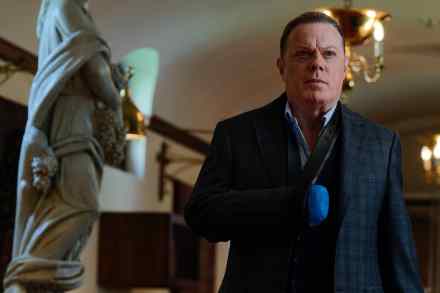
If it weren’t for this job I sometimes wonder whether I’d even bother watching TV at all. This mood strikes me particularly in those weeks when I find myself casting round for anything new and vaguely interesting to watch and I end up in front of something as epically dire as Sky’s new Dan Brown adaptation The Lost Symbol. Brown’s hero Robert Langdon, whom we first met on screen in the The Da Vinci Code, is like Indiana Jones with a charisma bypass. Remember that wonderful scene in the first Indie movie where hunky Harrison Ford is giving a lecture to some besotted female archeology students, and one girl closes her eyes to reveal that she has written ‘Love’ on one eyelid and ‘You’ on another?

Profound and original and unashamedly religious: Midnight Mass reviewed

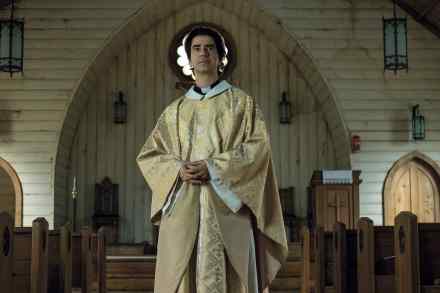
I was turned on to Midnight Mass by Ricky Gervais who raved about it in one of his social media chats: ‘I absolutely loved it, and it got better and better. It’s like all the themes like love and death, regret, second chances, but it’s about good and evil in a biblical sense.’ Yes. Midnight Mass is very unusual in that (so far, at least; I’m only two and a bit episodes in) it seems to take Christianity at its own estimation. God is real, miracles do happen, even (or especially) the most miserable sinners can find redemption through repentance. Watching it is quite unsettling because you keep expecting the rug to be pulled from under your feet and, say, the hero priest Father Paul Hill (Hamish Linklater) suddenly to be revealed as a secret agent of Satan.

Grimy, echt and gripping: Netflix’s The Forgotten Battle reviewed

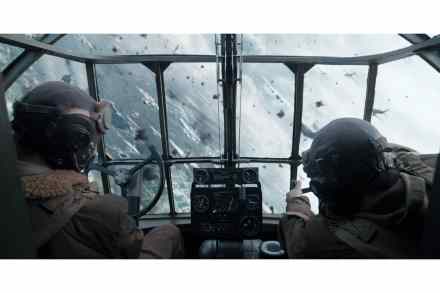
The Forgotten Battle is a Dutch feature film commemorating the desperate and relatively little-known Allied assault on the Scheldt estuary in October and November 1944. When I went to the battlefield decades later with veterans of 47 RM Commando, they told me it was worse than D-Day because the Germans knew they were coming and had prepared stronger defences. Nearly 13,000 Allied soldiers were killed or wounded (about the same as the German casualties), half of them Canadians. It has been a long time since I watched a half-decent second world war movie, mostly because they hardly bother making them any more.

Lurking beneath the gore are moments of wit and sensitivity: Squid Game reviewed

Should we be worried that Squid Game is the most popular show in Netflix’s history? If it’s a case of art imitating life, then the prognosis for our civilisation is not good: most of us will die, horribly, sooner rather than later, but for the very few who survive there will be untold riches to enjoy in the company of the cruel and capricious controlling super-elite. Squid Game is a Korean update of the Japanese cult classic Battle Royale (2000) which spawned — or revived; let’s not forget Rollerball (1975) — the genre known as ‘death games’. These films take place in a dystopian future where ordinary, desperate folk compete in a series of gladiatorial to-the-death contests for the amusement of the ruling oligarchy.

Delivers in spades: The Many Saints of Newark reviewed

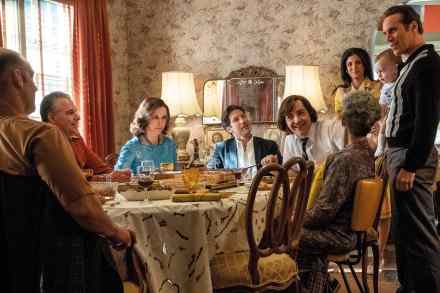
So how exactly did Tony Soprano become a New Jersey mob boss? It’s 1967 and young Anthony is struggling to find meaning and purpose in his life. Luckily, his doting uncle Dickie Moltisanti (Alessandro Nivola) offers the love and support his feckless parents are incapable of giving. Unluckily, Moltisanti is not quite the role model he’d like to be. Dickie complains about this on a visit to his uncle, Aldo ‘Hollywood Dick’ Moltisanti (Ray Liotta), who is languishing in jail for having killed a made man.

What’s the point of Awards Shows like the Emmys?

Most Brits will be aware of the Emmys, if at all, as the event that this year generated lots of social media outrage because apparently all the celebrities should have worn masks but didn't. But few will have any idea who won or who was even nominated: unlike the Golden Globes or the Oscars, they too often seem to feature shows we've never heard of on American TV networks with lots of acronyms.

Amateurish and implausible: BBC1’s Vigil reviewed

Tense, claustrophobic, gripping, thrilling, realistic: just some of the adjectives no one is using to describe BBC1’s Sunday night submarine drama Vigil. Were one of Britain’s four Vanguard nuclear subs to launch retaliatory strikes on Broadcasting House and the show’s producer World Productions, I think it would be entirely reasonable and proportionate. It’s so amateurish and implausible it makes even the dreadful Sky One remake of Das Boot look classy by comparison. Which is a shame because its screenwriter, Tom Edge, has done some good stuff in the past. Besides writing for The Crown and on the likeable J.K.

Up there with Succession and Chernobyl: The White Lotus, Sky Atlantic, reviewed

Every now and then, you see a new series — Succession, say, or Chernobyl or To the Lake — which reminds you why you watch TV. The latest such joy is The White Lotus (Sky Atlantic), a darkly comic satirical drama created, written and directed by Mike White. White seems to be a curious and engaging character with lots of hinterland. His father used to be a speechwriter for ‘religious right’ preachers Jerry Falwell and Pat Robertson (and later came out as gay). He wrote the charming comedy School of Rock because, though not himself a rock fan, his friend Jack Black wanted an excuse to perform all his favourite songs. He was runner-up in the competitive reality TV show Survivor: David vs. Goliath.

Apocalypse, Seventies-style: BritBox’s Survivors reviewed

When the apocalypse comes, I want it to be scripted by a 1970s screenwriter. That’s my conclusion after watching the first few episodes of Terry Nation’s landmark 1975 ‘cosy catastrophe’ series Survivors on BritBox. Everything was so much more innocent and charming back then, including the end of the world. Survivors establishes its MacGuffin in the opening credits: a montage which begins with a masked, enigmatic oriental man in a laboratory where he accidentally smashes a vial; we then see clips of him in a suit travelling through various airports, with passport stamps (New York, London, etc) taunting us from the past with just how easy it was back then to be a jet-setting international traveller.