James Delingpole

James Delingpole

James Delingpole reviews television for The Spectator.

More mesmerising than it should be – Disney+’s The Beatles: Get Back reviewed

From our UK edition

My late friend Alexander Nekrassov loathed the Beatles, which I used to think was a wantonly contrary position akin to hating kittens or blue skies or Christmas carols. What could there possibly be not to like, love and admire about the band that gave us ‘Eleanor Rigby’, ‘A Day In the Life’ and ‘Strawberry Fields Forever’? Since then I’ve encountered so many Beatles sceptics that it has given me pause for thought.

Eddie Izzard is so bad I’m hoping he gets dismembered: Sky’s The Lost Symbol reviewed

From our UK edition

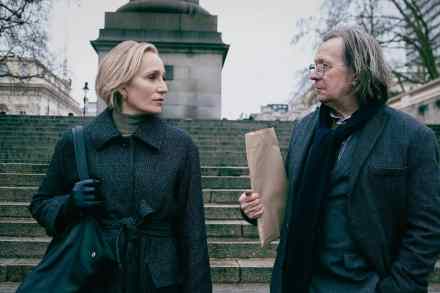
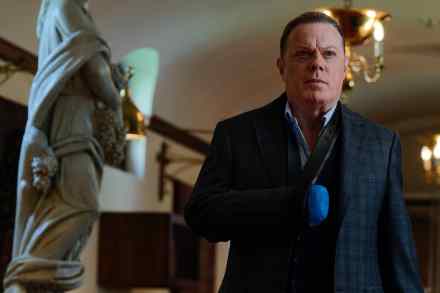
If it weren’t for this job I sometimes wonder whether I’d even bother watching TV at all. This mood strikes me particularly in those weeks when I find myself casting round for anything new and vaguely interesting to watch and I end up in front of something as epically dire as Sky’s new Dan Brown adaptation The Lost Symbol. Brown’s hero Robert Langdon, whom we first met on screen in the The Da Vinci Code, is like Indiana Jones with a charisma bypass. Remember that wonderful scene in the first Indie movie where hunky Harrison Ford is giving a lecture to some besotted female archeology students, and one girl closes her eyes to reveal that she has written ‘Love’ on one eyelid and ‘You’ on another?

Profound and original and unashamedly religious: Midnight Mass reviewed

From our UK edition

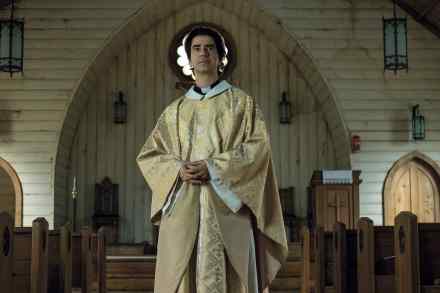
I was turned on to Midnight Mass by Ricky Gervais who raved about it in one of his social media chats: ‘I absolutely loved it, and it got better and better. It’s like all the themes like love and death, regret, second chances, but it’s about good and evil in a biblical sense.’ Yes. Midnight Mass is very unusual in that (so far, at least; I’m only two and a bit episodes in) it seems to take Christianity at its own estimation. God is real, miracles do happen, even (or especially) the most miserable sinners can find redemption through repentance. Watching it is quite unsettling because you keep expecting the rug to be pulled from under your feet and, say, the hero priest Father Paul Hill (Hamish Linklater) suddenly to be revealed as a secret agent of Satan.

Grimy, echt and gripping: Netflix’s The Forgotten Battle reviewed

From our UK edition

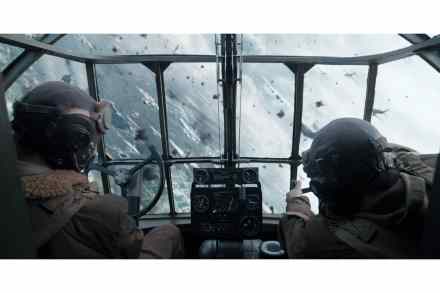
The Forgotten Battle is a Dutch feature film commemorating the desperate and relatively little-known Allied assault on the Scheldt estuary in October and November 1944. When I went to the battlefield decades later with veterans of 47 RM Commando, they told me it was worse than D-Day because the Germans knew they were coming and had prepared stronger defences. Nearly 13,000 Allied soldiers were killed or wounded (about the same as the German casualties), half of them Canadians. It has been a long time since I watched a half-decent second world war movie, mostly because they hardly bother making them any more.

Lurking beneath the gore are moments of wit and sensitivity: Squid Game reviewed

From our UK edition

Should we be worried that Squid Game is the most popular show in Netflix’s history? If it’s a case of art imitating life, then the prognosis for our civilisation is not good: most of us will die, horribly, sooner rather than later, but for the very few who survive there will be untold riches to enjoy in the company of the cruel and capricious controlling super-elite. Squid Game is a Korean update of the Japanese cult classic Battle Royale (2000) which spawned — or revived; let’s not forget Rollerball (1975) — the genre known as ‘death games’. These films take place in a dystopian future where ordinary, desperate folk compete in a series of gladiatorial to-the-death contests for the amusement of the ruling oligarchy.

Delivers in spades: The Many Saints of Newark reviewed

From our UK edition

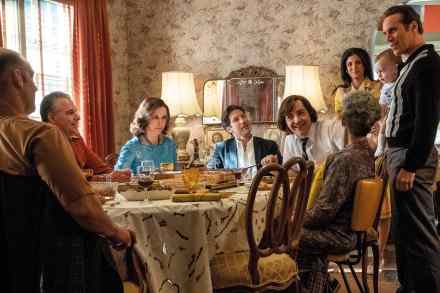
So how exactly did Tony Soprano become a New Jersey mob boss? It’s 1967 and young Anthony is struggling to find meaning and purpose in his life. Luckily, his doting uncle Dickie Moltisanti (Alessandro Nivola) offers the love and support his feckless parents are incapable of giving. Unluckily, Moltisanti is not quite the role model he’d like to be. Dickie complains about this on a visit to his uncle, Aldo ‘Hollywood Dick’ Moltisanti (Ray Liotta), who is languishing in jail for having killed a made man.

What’s the point of Awards Shows like the Emmys?

From our UK edition

Most Brits will be aware of the Emmys, if at all, as the event that this year generated lots of social media outrage because apparently all the celebrities should have worn masks but didn't. But few will have any idea who won or who was even nominated: unlike the Golden Globes or the Oscars, they too often seem to feature shows we've never heard of on American TV networks with lots of acronyms.

Amateurish and implausible: BBC1’s Vigil reviewed

From our UK edition

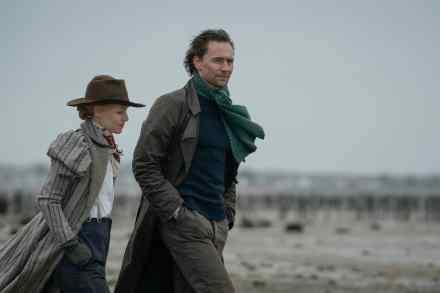
Tense, claustrophobic, gripping, thrilling, realistic: just some of the adjectives no one is using to describe BBC1’s Sunday night submarine drama Vigil. Were one of Britain’s four Vanguard nuclear subs to launch retaliatory strikes on Broadcasting House and the show’s producer World Productions, I think it would be entirely reasonable and proportionate. It’s so amateurish and implausible it makes even the dreadful Sky One remake of Das Boot look classy by comparison. Which is a shame because its screenwriter, Tom Edge, has done some good stuff in the past. Besides writing for The Crown and on the likeable J.K.

Up there with Succession and Chernobyl: The White Lotus, Sky Atlantic, reviewed

From our UK edition

Every now and then, you see a new series — Succession, say, or Chernobyl or To the Lake — which reminds you why you watch TV. The latest such joy is The White Lotus (Sky Atlantic), a darkly comic satirical drama created, written and directed by Mike White. White seems to be a curious and engaging character with lots of hinterland. His father used to be a speechwriter for ‘religious right’ preachers Jerry Falwell and Pat Robertson (and later came out as gay). He wrote the charming comedy School of Rock because, though not himself a rock fan, his friend Jack Black wanted an excuse to perform all his favourite songs. He was runner-up in the competitive reality TV show Survivor: David vs. Goliath.

Apocalypse, Seventies-style: BritBox’s Survivors reviewed

From our UK edition

When the apocalypse comes, I want it to be scripted by a 1970s screenwriter. That’s my conclusion after watching the first few episodes of Terry Nation’s landmark 1975 ‘cosy catastrophe’ series Survivors on BritBox. Everything was so much more innocent and charming back then, including the end of the world. Survivors establishes its MacGuffin in the opening credits: a montage which begins with a masked, enigmatic oriental man in a laboratory where he accidentally smashes a vial; we then see clips of him in a suit travelling through various airports, with passport stamps (New York, London, etc) taunting us from the past with just how easy it was back then to be a jet-setting international traveller.

Switch over to Eurosport: BBC’s Olympic coverage reviewed

From our UK edition

I’ve not been allowed anywhere near the TV remote control this week because of some kind of infernal sporting event taking place in Japan. You may gather that I have mixed feelings about the Olympics: on the one hand, I like most of the competitors, who are so much more affable and modest (those delightful Gadirova twins!) than the overpaid, overindulged prima donnas who recently took part in the Euros. Also, it’s impossible not to get sucked into the drama of individual stories such as that of Beth Schriever, the humble, underfunded former teaching assistant who took gold in the women’s BMX.

The techniques of totalitarianism are still fully in play today

From our UK edition

How to Become a Tyrant (Netflix) is ideal history TV for Generation No Attention Span. Presented in six bite-sized chunks by Peter Dinklage, aka the ‘Imp’ Tyrion Lannister from Game of Thrones, it tells you most of the things you need to know about Hitler, Stalin, Mao, Gaddafi, Kim Il-Sung, Idi Amin and Saddam Hussein, without obliging you to think or grapple with any tedious detail. Instead of examining the dictators individually, it explores their careers thematically, looking for the ingredients they have in common.

tyrant

The techniques of totalitarianism are still fully in play today

How to Become a Tyrant (Netflix) is ideal history TV for Generation No Attention Span. Presented in six bite-sized chunks by Peter Dinklage, aka the ‘Imp’ Tyrion Lannister from Game of Thrones, it tells you most of the things you need to know about Hitler, Stalin, Mao, Gaddafi, Kim Il-Sung, Idi Amin and Saddam Hussein, without obliging you to think or grapple with any tedious detail. Instead of examining the dictators individually, it explores their careers thematically, looking for the ingredients they have in common. It’s split into half-hour episodes — ‘Seize Power’, ‘Crush Your Rivals’, ‘Reign Through Terror’, ‘Control the Truth’, ‘Create a New Society’, ‘Rule Forever’ — which mix contemporary film footage with attractive animation.

The best thing on TV ever: Rick and Morty, Season 5, reviewed

From our UK edition

I’ve been trying to avoid the house TV room as much as possible recently because it tends to be occupied by family members watching Wimbledon and the Euros. My adamantine principles prevent me looking at either: I won’t watch Wimbledon because of the masks and socially distanced interviews and I refuse to watch any sport where the players all kneel before the match in homage to race-baiting Marxist separatists. So it came as a huge relief when Boy, finally home from uni, switched over to Rick and Morty. My immediate response was: ‘What is this noisy, in-your-face, in-joke young person’s crap you are inflicting on me, hateful progeny of mine.

First-rate TV: Clarkson’s Farm on Amazon Prime reviewed

From our UK edition

I was at a party the other day when who should accost me but Jeremy Clarkson. There were lots more famous and interesting people in the room, including the surviving half of Wham!. But Clarkson was itching to talk to me about, of all things, a review I’d written of a BBC reality series called This Is My House. He was genuinely mystified as to why I’d given such tosh a favourable critique. Having just watched his new series, Clarkson’s Farm, I now understand his puzzlement. Since late 2019, Clarkson has been playing at being a farmer on his 1,000-acre Oxfordshire estate.

Why I love Israeli TV

From our UK edition

Tragically it wasn’t my turn to review when Channel 5’s groundbreaking Anne Boleyn came out so you’ll never find out what my totally unpredictable critique might have said. As you know, I have previously been mad for all things Israeli and one of my plans had been to go there with my brother Dick and make a fun documentary where we train with the IDF, practise in one of those urban-warfare shooting ranges, learn krav maga, eat lots of Ottolenghi-type food, wallow in the Dead Sea, etc. But I’m afraid I’ve rather gone off Netanyahu’s vax tyranny and just can’t root for Israel in the way I once did. Still, this doesn’t seem to have put me off its TV shows, yet.

Latest proof that western civilisation is over: Sky Atlantic’s Domina reviewed

From our UK edition

I’ve been looking at the reviews so far of Sky’s new Romans series Domina and none seems to have noticed the most salient point: it’s crap. This is almost more depressing than the fact that the series got made in the first place, for what it suggests is this: our culture is now so debased that even our arbiters of taste can no longer tell the difference between quality and mediocrity. Domina follows the story of Julius Caesar’s great-nephew Octavian, from when he was a member of the triumvirate to his apotheosis as Caesar Augustus. You’d think you couldn’t possibly go wrong with such fascinating historical material, rich with gore, scheming, politicking, backstabbing and will to power. But Domina says: ‘Hold my cervisia!

Honest, faithful and fantastically enjoyable: BBC1’s The Pursuit of Love reviewed

From our UK edition

I had been expecting the BBC to make a dreadful hash of The Pursuit of Love, especially when I read that they’d spiced it up with hints of lesbianism and punk rock. But actually, I think what writer/director Emily Mortimer has done here is play a very clever trick — the equivalent of releasing a cloud of aluminium chaff from your fighter aircraft to distract the enemy’s missiles. So while everyone is cooing about how refreshing it is that lesbianism has finally got a look-in (see also: every other drama and comedy series on TV from Killing Eve to Call My Agent), Mortimer can get on with the deeply subversive business of slipping under the BBC radar an honest, old-fashioned, faithful and fantastically enjoyable Nancy Mitford adaptation.

Audiences don’t want woke: comic-book writer Mark Millar interviewed

From our UK edition

Mark Millar has a raging hangover but he couldn’t be more chirpy or enthusiastic. ‘People say they get worse as you get older but I get reverse hangovers where I feel amazing. I wake up at four or five and I’m ready to go!’ I’ve caught him on a Sunday morning, on his way to Mass, after an exhausting three weeks in which he has been doing up to 45 interviews a day to promote Jupiter’s Legacy, his blockbuster superhero series for Netflix. He ought to be nervous: this is his first big project off the blocks since (in 2017) the studio bought up his publishing company Millarworld for a reported $50-100 million. Instead, as ever, he’s fizzing with energy, enthusiasm and optimism. The reason, he explains, is that he was born with a kind of superpower.

This Is My House has rekindled my love for the BBC

From our UK edition

Here’s a thought that will make you feel old. Or worried. Or both. The poke-fun-at-celebrity-houses series Through the Keyhole — originally presented by Loyd Grossman — was first broadcast as a segment on TV-am in February 1983. That means that we are now as far away in time from Through the Keyhole’s first episode as its debut was from the end of the second world war. It has endured almost till the present (I actually preferred the Keith Lemon version to the stilted and slightly turgid original) because it’s such an addictive format. Most of us fancy ourselves as amateur psychologist sleuths, picking up on those telling details missed by others less blessed with our perspicacity.