James Delingpole

James Delingpole

James Delingpole reviews television for The Spectator.

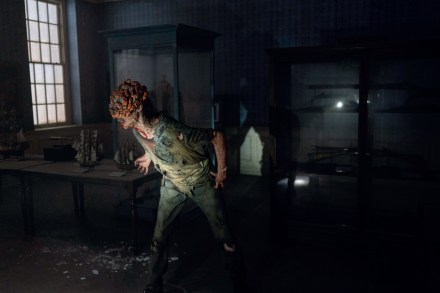
Classy but constrained by its video game origins: Sky’s The Last of Us reviewed

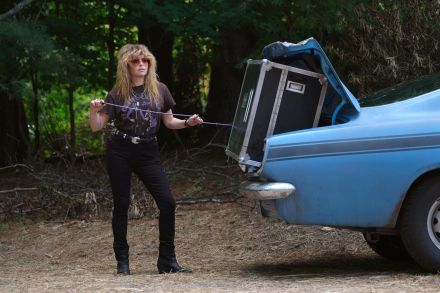
The Last of Us is widely being hailed as the best video game adaptation ever. Maybe. But it’s still a video game adaptation. On one of the early levels, for example, you have to escape from a zombie apocalypse that has broken out in Houston, with your truck and your guns, being careful also to avoid the military authorities who will shoot you on sight. Later, your mission is to climb through some sewers, up a ladder and into the hidden entrance of an apartment complex to retrieve the car battery you need to effect your escape from the dystopian hellhole that is post-apocalypse Boston. Instead of a virus, the deadly, world-changing threat is a fungus.

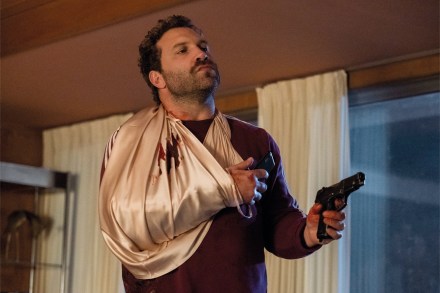
Heist drama with a novelty spin that isn’t very novel: Netflix’s Kaleidoscope reviewed

Kaleidoscope is a fairly routine eight-part heist drama with a supposed novelty spin: apart from the beginning and the end, you can view the episodes in any order, meaning that each viewer has a slightly different experience. If I sound mildly sceptical, it’s because the novelty isn’t actually that novel. B.S. Johnson got there 54 years earlier with his 1969 novel-in-a-box The Unfortunates, an account of a football match in which the chapters were loose bound so that they could be shuffled and read in whatever order you wished. A few years ago, I bought a rare first edition from Simon Finch which I thought would become very valuable but hasn’t because price is subject to demand and frankly there isn’t much demand for experimental 1960s novelists of whom hardly anyone has heard.

A Turkish dystopia that eludes western censors: Netflix’s Hot Skull reviewed

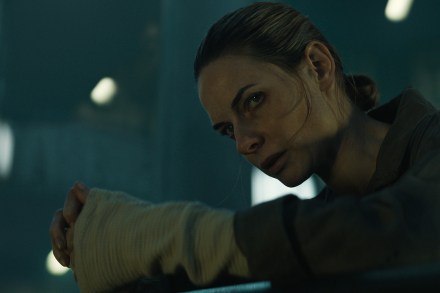
A strange new virus has infected half the world but the cure is worse than the disease: authoritarian tyranny, in which the populace lose most of their freedoms, are subject to endless testing and are corralled into gated communities. I’m talking, of course, about the wildly implausible plot of a dystopian sci-fi thriller called Hot Skull. On the downside, it’s a bit depressing, with relentlessly grey cityscapes so bleak it makes Blade Runner look like Pleasantville. On the upside, it’s Turkish which means that – as with the brilliant Russian post-apocalyptic drama To the Lake – you get a completely different, original and perhaps more honest satirical slant on the crazy world we’re living in.

The Spectator’s best TV shows of the year

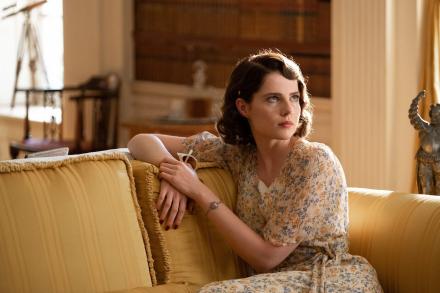
The Offer (Paramount Plus) https://www.youtube.com/watch?v=iowLzO9-aew Even when you know the ending, this ten-part drama about the making of The Godfather, seen from the perspective of novice producer Albert S. Ruddy (Miles Teller), is outrageously gripping, gorgeously evocative of louche, cocktail-drenched late 1960s Hollywood, wittily scripted and superbly acted. Matthew Goode is especially watchable as superproducer Robert Evans. And this mostly true story has so many eye-popping moments – often involving the real mafia who at first resisted, then supported the movie – it feels more like the raciest and most implausible fiction. Reacher (Amazon) https://www.youtube.com/watch?

Detectorists Christmas Special is a triumph

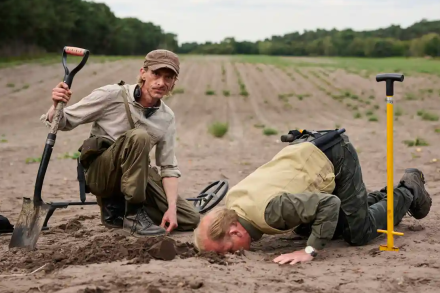
They’re tricky things to get right, Christmas specials. Ideally, they should capture in one perfectly judged episode the very essence of everything you found wonderful about your favourite classic sitcom, be it The Royle Family, Father Ted or Peep Show, all dusted with the lightest sprinkle of tinsel, icing sugar and nostalgia. But if they get the mix wrong – usually by overdoing the saccharine and mawkishness – it takes you straight down to Christmas hell and tarnishes your memories forever. For example, I will never, ever be able to watch Only Fools And Horses again, not even the actually funny episode where the chandelier falls down, because of an emetic, late-period Christmas special involving Del Boy, his unnecessary wife and – ugh – their new born baby.

The Recruit might be the worst show on Netflix

The Top Gun series received generous support from the US Navy because it was such an effective recruitment tool. I wonder if something similar went on between the CIA and Netflix’s new series The Recruit, this time as an exercise in reputation management. 'There’s nothing sinister or threatening about the Company,' this bizarre, horribly ill-judged and tasteless comedy/thriller series squeals at every turn. 'We’re just a bunch of lovable, kooky misfits doing our bit to defend your freedoms.' If you think I’m exaggerating, consider that one of the biggest baddies in the series – right up there with the evil Russians – is the Senate oversight committee responsible for holding the CIA to account. R-i-g-h-t.

Fascinating, plausible ideas undermined by Netflix: Ancient Apocalypse reviewed

Graham Hancock’s Ancient Apocalypse has been described by the Guardian as ‘the most dangerous show on Netflix’. What? More dangerous than the undigested, neo-Malthusian eco-propaganda that it serves up in its collaborations with Sir David Attenborough? More dangerous than its notorious movie Cuties, whose portrayal of hypersexualised children prompted a worldwide ‘Cancel Netflix’ campaign? https://www.youtube.com/watch?v=DgvaXros3MY The Guardian’s main beef is that by flirting with speculations outside mainstream archaeology – Atlantis, giants, the survivors of the great flood and so on – the show ‘whispers to the conspiracy theorist in all of us’. But oddly enough, I found the opposite to be true.

Repellent: Paramount+’s Tulsa King reviewed

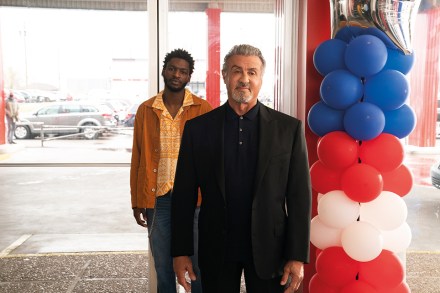
TV currently abounds with ‘I thought they were dead’ revival projects: series in which your favourite 1980s movie stars are given a new lease of life and you are reminded – with luck – how much you loved them. Kevin Costner is doing very well in Yellowstone; Ralph Macchio is milking the Karate Kid legacy for all it’s worth in Cobra Kai; Jeff Bridges and John Lithgow had a decent run in The Old Man. Now it’s the turn of Sylvester Stallone in Tulsa King. https://www.youtube.com/watch?v=aaQSScwZPbA But I shan’t be hanging around for the second episode. My main problem with it is the flawed premise. Stallone’s character –Dwight ‘The General’ Manfredi – is a New York mafiosi who has just done 25 years in prison.

Riveting: Netflix’s The Bastard Son & The Devil Himself reviewed

Gratingly edgy soundtrack, stomach-churning gore, torture, witchcraft, sadism and an indigestible title. The Bastard Son & The Devil Himself sounds exactly the sort of series most of us would wish to avoid. It’s aimed at young adults (based on a trilogy by Sally Green called Half Bad) and the only reason I was keen to give it a try was that it has been freely adapted by Joe Barton. For my money, Barton is – along with Jesse Succession Armstrong – the most exciting and original screenwriter currently working in TV.

A Soviet version of Martin Parr: Adam Curtis’s Russia 1985-1999 –TraumaZone reviewed

Russia 1985-1999: TraumaZone – even the title makes you want to scream – is Adam Curtis’s Metal Machine Music: the one where he frightens off his fans by abandoning the trademark flourishes that made him so entertaining and instead goes all pared-down and raw and grim. If you don’t know or remember what those trademark flourishes were, let me refer you to a cruelly funny pastiche which you can easily find on YouTube called The Loving Trap. This sends up poor Adam as a pioneer of the collage-umentary, a genre resembling ‘a drunken late-night Wikipedia binge with pretence to narrative coherence’ which ‘vomits grainy library footage onto the screen to a soundtrack of Brian Eno and Nine Inch Nails.

How to see Costa Rica’s true colours

If you’re going to visit Costa Rica, my advice is to steer clear of all the stuff that looks most exciting in the brochure: the zip-wires, the thermal springs and the white-water rafting. I’m not saying you won’t enjoy it. Nor realistically – especially if you’ve kids in tow – are you likely to be able to avoid it. Just be aware, though, that the best bits, as always, are the ones most tourists don’t see. Corcovado National Park in the remote south-west, for example. Well, I say ‘remote’. But actually, oddly enough for a country swathed in rainforest, hardly anywhere is truly inaccessible because of the remarkably good roads and the even more impressive local airline.

An enjoyable new Ageing Dad drama: Disney+’s The Old Man reviewed

We men all think we’ve still got it, even when we’re well past 50 and young women look straight through us and every time we get up or sit down or lift something off a shelf we sigh or grunt with the effort. But sure, if push came to shove and we had to defend our loved ones, we’d definitely be able to fight off our attackers with our bare hands, no problem. It’s for people like us that The Old Man was created. It belongs to that venerable tradition of Ageing Dad movies which stretches from Taken (featuring Liam Neeson and his particular set of skills) through to James Bond (Daniel Craig is now 54) and the Mission Impossible series (Tom Cruise is now 60).

Does House of the Dragon hate its male viewers?

Mark Millar, creator of series including Netflix’s forthcoming American Jesus, has a theory that movie and TV fashions work in 11-year cycles and that we’re just starting a new one now. If he’s right – and I think he is – then it would explain a lot about the second-most disappointing series currently on TV, House of the Dragon.Up till now, I have been giving huge quantities of benefit-of-the-doubt to House of the Dragon. But having endured episode six, I think my patience is finally exhausted. Any TV episode that begins with a protracted and graphic childbirth scene is going to sorely challenge the interest of at least half of its potential audience: most blokes can’t even stomach the thought of watching their own children being born, let alone someone else’s.

The makers of Fauda have another hit on their hands: Sky Atlantic’s Munich Games reviewed

You’d have to pay me an awful lot more than I get for this column to review Monster: The Jeffrey Dahmer Story. As I write, it’s the number one trending show on Netflix, but the most I’m prepared to stomach is that snatch of footage you get forced to watch (because of Netflix’s impertinent and intrusive automatic play function) if you linger over the title image for too long. It shows two cops at an interview desk gradually revealing to Dahmer’s increasingly aghast dad (Richard Jenkins) that his son Jeffrey might not be quite the straight upstanding citizen he imagined. https://www.youtube.com/watch?

House of the Dragon: so far, so rubbish

The good news – apparently; I haven’t seen it yet so this may just be a false rumour – is that House of the Dragon episode 6 is really exciting, full of incident and drama and intriguing, well-drawn characters. But the bad news, as I can personally testify, is that in order to reach that point you have to wade through five whole hours’ worth of ball-breaking tedium. Admittedly, even the original Game of Thrones used to do this a bit on occasion: episode after episode of characters talking to apparently little purpose, then suddenly the Red Wedding. But the difference was, you never doubted that the story was going somewhere, and that the whole was underpinned by the mighty creative vision of an obsessive world-builder who had mulled over every detail for eons.

The fatal problem with The Rings of Power

Three episodes in I think I’ve worked out the thing that’s most annoying about The Rings of Power. It isn’t the gratuitously diverse casting. It isn’t the saccharine tweeness of the hobbity Harfoots. It isn’t the ‘You go girl!’ tediousness of the relentless female character heroics. It’s that the entire series appears to have been constructed with all the charm, flair, character, originality and artistry of an Ikea wardrobe. Take the scene where Galadriel (Morfydd Clark) and her fellow shipwreck victim Halbrand arrive – looking ludicrously healthy for a duo who till recently spent days clinging desperately to a raft of the Medusa – in the city state of Numenor.

Amazon’s The Rings of Power is a betrayal of Tolkien’s vision

I had been so looking forward to seeing The Rings of Power. For all the wrong reasons, of course. In the months leading up to its release on Amazon, it had been hailed – largely on the basis of rumours and trailers – as an epic disaster, perhaps the most cherishably dreadful travesty in the history of screen fantasy. Sadly, in this, as in so many other areas, The Rings of Power is a massive disappointment. For example, if you were hoping to see the world’s least funny comedian Lenny Henry die a death as the Tolkien realm’s first ever black hobbit, you’re going to feel cheated: his acting is perfectly OK and anyway you’re so distracted by his Irish accent you don’t really notice the gratuitous diversity casting.

Shaping up nicely for some truly epic bloodletting: House of the Dragon reviewed

House of the Dragon got off to a pretty uninspirational start, I thought: no major characters brought to a shocking and premature end; no bone-chilling spookiness like that White Walker opening scene in the frozen woods; far too much dreary, half-inaudible talking round long tables in ill-lit halls. If this hadn’t been the long-awaited prequel to Game of Thrones, I doubt I would have bothered watching the second episode. But I did and guess what? More dank, chiaroscuro interiors; more old men out of Shakespeare history plays mumbling into their beards; more complicated, almost-impossible-to-follow-unless-you’ve-read-the-books disquisition on inheritance, lineage and succession.

House of the Dragon: So far, so unexciting

About halfway through the first episode of House of the Dragon I found myself squirming in my chair, covering my eyes and muttering ‘Why the hell am I watching this vile schlock?’ I think this is probably a good sign. One of the main attractions of its predecessor Game of Thrones was that it kept taking you to places you didn’t want to go – incest, crippled children, mass murders at weddings, sacrificial daughters, lead characters culled long before their time – and on this score at least, House of the Dragon looks unlikely to disappoint. But I’m less sure, so far, about the court intrigue.

Identity politics is in retreat in Hollywood

‘Diversity is woven into the very soul of the story.’ If those words of praise from a rave review in a left-leaning journal sound to you about as inviting as a cup of cold sick, then my advice would be to stay well clear of The Sandman. Neil Gaiman’s epic graphic novel series (launched in 1989), set in the world of dreams, was relentlessly inclusive long before it became the norm. ‘I wanted to change hearts and minds,’ Gaiman has said in an interview. ‘I had trans friends and still do, and it seemed to me that no one was putting trans characters into comics. And I had a comic.’ If this TV version had been made five years ago, it would probably have been considered very cutting edge.