Ismene Brown

What happened to virtuosity in dance?

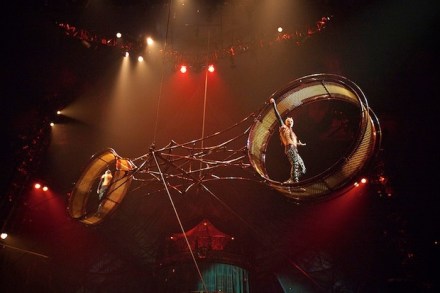
I was watching the Cirque du Soleil’s Kooza at the Royal Albert Hall last week, thinking how much base, uncomplicated enjoyment can be had away from dance. Such relief to watch contortionists, trapezists, high-wire cyclists and crazed men skipping on the Wheel of Death, such relief just to be amazed. If they didn’t make my palms pour sweat with fear, my jaw drop with disbelief, I’d feel dreadfully let down. I wonder what happened to being amazed in dance. I was talking with a friend last week about the lack of amazement offered by the bulk of ballerinas in current productions of the 19th-century warhorses Don Quixote (Royal Ballet) and Swan Lake (English National Ballet).
ENB’s Swan Lake: the rights and wrongs of ballet thighs

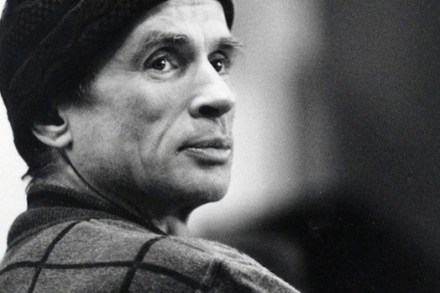
There’s been heated disagreement over the past week about what’s right and wrong. Is the rocket-propelled ex-Bolshoi enfant terrible Ivan Vasiliev ‘right’ for Swan Lake? Is English National Ballet right to accept such huge thighs in this of all classics, when the sizeist cohorts of the Russian establishment always said nyet to the sturdy, forceful Belarussian? That peculiar balletic categorisation ‘emploi’ has been invoked even by British critics. Emploi means ‘rightness’ as a ‘type’ for a role. Emploi was what drove Mikhail Baryshnikov, another short man condemned at home by his build to demi-caractère parts, to quit Russia and its narrowmindedness and redefine himself as danseur noble in the West.

The cook, the critic, the composer and the love child

Michael Kennedy, who died on New Year’s Eve, was the Sunday Telegraph’s music critic when I was for a while assistant arts editor there about 20 years ago. He was of course musically knowledgeable beyond reproach, but his writing had the compulsive readability of a man who was always a journalist, a storyteller. He was elitist in his taste but populist in his communicative instincts, something that I rapidly absorbed as I subedited his copy. Critics are usually obsessively protective of their work, often wounded by disagreement rather than stimulated. Kennedy was an exception, robustly open to the possibility of others improving and developing work he could get nowhere with.

An American in Paris: a zingy new Wheeldon dance-musical that you won’t want to miss

A new year must start with hope and resolution, and if you’re very rich, with influence in the highest places, I’d urge you to resolve to dust off the private jet and get to Paris quick this weekend hoping to find a ticket somehow for the last Châtelet performances of An American in Paris, Christopher Wheeldon’s s’wonderful, s’marvellous new staging of the Gershwin/Minnelli musical film. Or book for New York in March when the show moves to its second home on Broadway. But surely there must be a UK run soon. It’s the first big dance-musical of the Royal Ballet’s favourite son, which is why we should pay attention. The secret of Christopher Wheeldon’s current status at 41 as blue-eyed boy of the Western ballet world is his geniality.

Ismene Brown’s best of dance in 2014

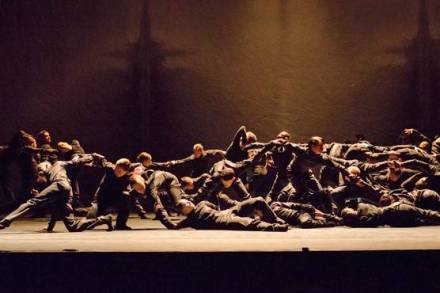
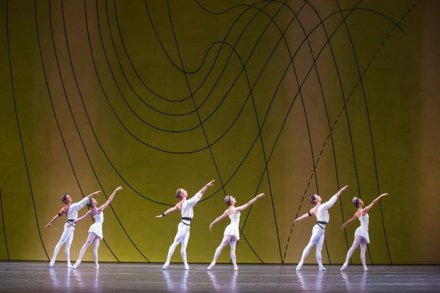
As the revels of the year end, here are my best memories. I think new was the word: new names, and new directions from familiar names. Stories rushed back into fashion. There was big emotion and bold movement, and untraditional means: collaborations with composers and communities thinking large on tiny budgets. Here are my highlights - what are yours? 1. Crystal Pite’s mesmerising abstract mass ensemble, Polaris, in Thomas Adès’s one-off music and dance evening at Sadler’s Wells (see picture above) 2. Matthew Bourne and Scott Ambler’s gutwrenching community dance creation, Lord of the Flies 3. English National Ballet’s ambitious, satisfying night of war-inspired premieres, especially Akram Khan’s Dust 4.

The best (and worst) of ballet and dance over Christmas

The Nutcracker, English National Ballet, until 4 Jan *** The Little Match Girl, Lilian Baylis Studio, until 4 Jan ***** Edward Scissorhands, Sadler’s Wells, until 11 Jan *** Alice’s Adventures in Wonderland, Royal Ballet, until 16 Jan ** The Mad Hatter’s Tea Party, Linbury Studio Theatre, until 17 Jan ** Amazing, the change in the dance weather this Christmas. Where usually there is snow, fairies, tinkly celestas, a glut of Nutcrackers, traditions have turned topsy-turvy. At the Royal Ballet the sun has broken out (if mildly) in its Don Quixote, as I reported last week, and only the dependable English National Ballet is serving up a trad Nutcracker over Christmas, at the Coliseum.

Royal Ballet’s Don Quixote: Carlos Acosta is too brainy with this no-brain ballet

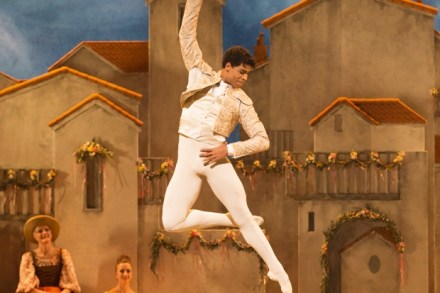
One feels the pang of impending failure whenever the Royal Ballet ventures like a deluded Don Quixote into a periodic quest to stage that delightful old ballet named after him. Twice in recent years has it tilted at the windmill and flopped back, dazed and bruised. It never remembers, though, and here it goes a third time. A Spanish romp in the sun, with brilliant dancing, silly comedy and a happy ending, makes a perfect change from the usual Christmas Nutcracker, does it not? And nowadays, with such a substantial cohort of Cuban, Argentinian, Brazilian and Spanish dancers the Royal should be able to scorch the floor in required style, shouldn’t it?

Sacred Monsters, Sadler’s Wells: Sylvie Guillem and Akram Kham’s captivating final boogie

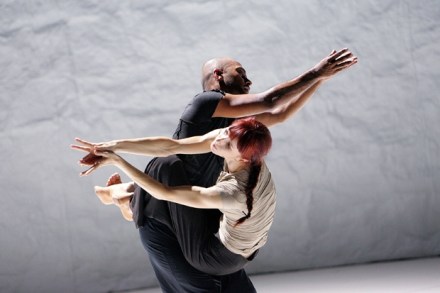
I’m dashing between dance theatres at the moment and there’s just so much to tell you about. I could linger on Sacred Monsters, the captivating conversation-piece at Sadler’s Wells for Sylvie Guillem and Akram Khan — conversational being the word, for these genius dancers also talk to us, which is rather like Garbo laughing. Guillem’s voice is a delightful discovery: it’s a soprano timbre, bubbling Frenchly with dropped aitches and baroque flexibility. She tells us cute stories about Charlie Brown’s sister ‘Sall-ee’ and her wish always to be ‘émerveillée’in life, while Khan confides his anxiety about balding.

English National Ballet’s star ballerina infuriates fans

Which would you rather dance in: Milton Keynes or Moscow’s Bolshoi? It’s that age-old dilemma for a star ballerina like Alina Cojocaru, who last week decided not to fulfil a matinee performance with English National Ballet in Bucks in order to fly to Russia to save a Bolshoi show. It left fans fuming. The Bolshoi are presently fielding La Dame aux camélias by the distinguished American choreographer John Neumeier, from which their ballerina Olga Smirnova had to withdraw because of injury. No other dancer, it is said, were available in Moscow to cover. The tiny, sweet-faced Cojocaru is one of Neumeier’s favourites. ENB’s star freed herself from her scheduled Swan Lake on Saturday 16 November in Milton Keynes and dashed off to Russia.

Thomas Ades’s Polaris at Sadler’s Wells: the dance premiere of the year

This has been an extraordinarily exciting fortnight, on and off stage. Premieres in anything from ice-skating to classical ballet, charismatic soloists in flamenco and Indian kathak, the front-page news of Sylvie Guillem’s retirement, and, even more astonishingly, English National Ballet’s announcement of its new Giselle next year by Akram Khan. Consequently I have to short-change some of the highlights (note for next year’s diaries, folks — October is invariably the dance month of the year), including the liberation of ice-skating by the Canadians of Le Patin Libre, who made Alexandra Palace rink feel like a frozen field with their casual pyrotechnics (ice-o-technics?).

Sylvie Guillem interview: ‘A lot of people hate me. Bon. You can’t please everybody’

If you follow dance or music closely, make them part of your life, you look on certain performers as your daemon. These are the artists who become part of your inner landscape. They act as a tuning fork for your emotions and imagination. And you mark their progress with particular hope that you won’t be disappointed. When the 25-year-old Sylvie Guillem arrived in London in 1989 from Paris Opera Ballet, with a flaming reputation as Rudolf Nureyev’s prodigal daughter, one’s first reaction was wariness. She seemed so flashy in her incredible bodily gifts.

What happens to male ballet greats when they retire?

What happens when a torrent of exceptional male stars leave the stage and flood the jobs market? Especially in a world when classical ballet appears to be becoming less fashionable, eclipsed by contemporary fashions and nervousness about audiences? The titan of the Royal Ballet and Bolshoi, Irek Mukhamedov, was renowned at Covent Garden in the Nineties for his unique combination of muscle and gentlemanly manners, and if English National Ballet’s men are looking particularly refined on their winter tour of Swan Lake and Coppelia it may well be the result of his stellar coaching last month. ENB’s director Tamara Rojo invited him over from Slovenia, where he has been running the national ballet, to hand on some of his precious knowhow to her young team of new male soloists.

Birmingham Royal Ballet and the Royal Ballet battle for the heart of English dance

English ballet erupted out of the second world war in the hands of the rival choreographers Frederick Ashton and Robert Helpmann, colleagues but of different instincts, one for dance, the other for drama. The case is currently being made for each by the Royal Ballet and Birmingham Royal Ballet. But how to revive the sensations and imaginings of the 1940s? It was long before most of us were even born, and more than any other art form ballet is dependent on evoking memory, atmospheres, intangible associations. Ashton, who emerged as the creative giant of the Royal Ballet’s nurturing, has recently been as out of fashion as furs and cocktail parties.

Russians made the theatre space the most liberating imaginative device ever invented

You have to hand it to the Russians. They beat us into space, beat us to sexual equality, and a small display of early Soviet avant-garde theatre and film design, tucked away in the V&A’s ‘Performance’ area, proves that they beat us hollow in matters of the dressing-up box too. When you arrive (that is, if you arrive — it is a labyrinthine trek to find it) at Russian Avant-Garde Theatre, you should make straight for the little screen. It shows the amazing 1924 sci-fi film Aelita, in which an engineer living under ‘Military Communism’ builds a spaceship and flies to Mars where he falls for Aelita, Queen of Martians.

Maya Plisetskaya and Rodion Shchedrin: ‘The KGB put a microphone in our marriage bed’

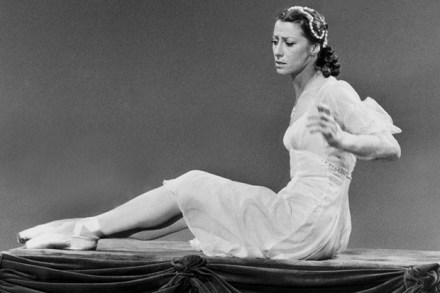
‘People in the West don’t understand nothing. Even the new Russian generation don’t understand anything at all. You don’t know, and it’s better you don’t.’ Maya Plisetskaya scrutinises me with her beautiful, kohl-rimmed, 88-year-old eyes, a gaze made wary in childhood, when her father was shot as an enemy of the Soviet people, her mother jailed, and her Jewish family broken by persecution. ‘Can anyone understand how if you took a single carrot from the collective farm, just one carrot, you could get ten years’ prison? Who could understand that?

Matthew Bourne’s Lord of the Flies: when boys turn feral

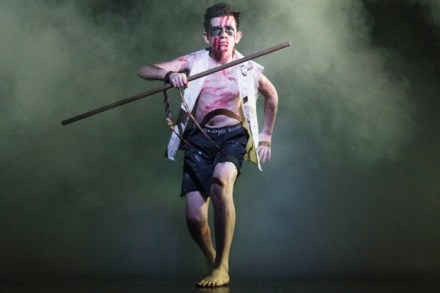
GCSE Eng Lit pupils are doing well from dance this season with two set books told in the medium of dance, Arthur Miller’s The Crucible and William Golding’s Lord of the Flies, and even Dylan Thomas gets a look in. As the two stories have similar dynamics and dramatic themes, it was fascinating to see both in a single week and witness how mightily one succeeded and the other did not. Matthew Bourne is so famed as a rewriter of classical ballets that one might underestimate the boldness of imagination that underlies them.

In praise of #WorldBalletDay, Ivan Vasiliev and beautiful butts

The Twittersphere never fails to surprise but it’s still hard to believe that last week #WorldBalletDay actually beat #HongKong and #Windows10 in the Twitter popularity stakes, on a day of barricades in the Chinese territory and Microsoft’s announcement of a new operating system. Twitter is a solid barometer of a vast and assertively 'engaged' segment of society whose demand to be noticed can sometimes be quite serious (see #HongKong).

Does a tart like Manon have a place in the Royal Ballet repertoire?

What can the Royal Opera House be insinuating about its target audience? No sooner had Anna Nicole closed than Manon opened the new ballet season. Kenneth MacMillan’s gold-digger turns 40 this year but her promiscuous allure shows no signs of failing punters with money to burn on sex thrills. I once took my partner to see Sylvie Guillem as Manon. His verdict was, ‘Too immoral’. I guess he got MacMillan’s point rather well. Manon has no heart at all, she is deliciously low. Since 1974 she has dodged bullets when powers-that-be proposed that a conscienceless tart had no place in the Royal repertoire.

We have a new dance critic – and she’s not happy with The Arts Council

Hello. I recognize some of you. We’ve bumped against each other in Sadler’s Wells or Covent Garden or the Birmingham Hippodrome. I look forward to meeting you below the line sometime. This is the second time I’ve returned to reviewing dance after a break. I’ve spent the past year doing a Russian MA to further a book I’m working on, and not going to much dance at all. But here I am again. Why do I keep coming back to dance? I’m a musician rather than a dance person, really, and there are very few musically alert and visually intelligent choreographers around, capable of adding dance to music and coming up with more than the sum of the parts.