Isabel Hardman

Isabel Hardman

Isabel Hardman is assistant editor of The Spectator and author of Why We Get the Wrong Politicians. She also presents Radio 4’s Week in Westminster.

It’s all about the blooms: eye-catching blossom to spot this spring

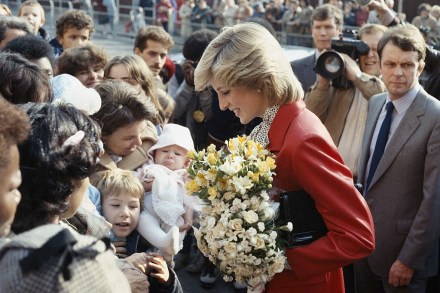
There is no finer sight in spring than a blossom tree. Planting one is, to my mind, a public service, as it will cheer generations of people plodding down your street, both with the blooms that appear on its branches, and with the confetti of petals thrown along the pavement. In the next few weeks, the streets are going to become incredibly well-dressed with blossom, and here are five to look out for in particular:  Mimosa, Acacia dealbata  This is already out in London, and my goodness, you can't miss it. It is the most vivid lemon yellow collection of little pompoms you can imagine, bursting out of beautiful ferny foliage.

Is Matt Hancock trying to spin a vaccine supply crisis?

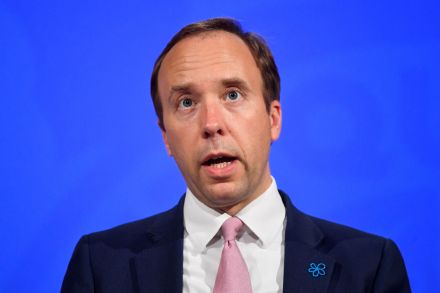
Matt Hancock was tremendously smiley when he led Wednesday's coronavirus press briefing. In between beaming, he managed to tell us about the 'fantastic news' that the vaccination programme has now reached more than 25 million people having had their first dose. He was very keen to sing the praises of this programme — and indeed of his involvement in it — saying: 'I've had the honour of playing my part, we've had the honour of playing our parts, it's been a huge team effort and I've got absolutely no doubt it's the best project I've ever been involved in.' He also rather pointedly talked about 'those of us who've been involved in it from the start'.

Starmer ends up on the back foot at PMQs

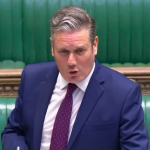
Prime Minister's Questions is usually a session where the PM defends his handling of one issue or another, under attack from the leader of the Opposition. But today's session involved an attempt by Sir Keir Starmer to defend his approach to the Police, Crime, Sentencing and Courts Bill. Labour knows it has an exposed flank on this because the legislation contains such a large mix of different policies, and because it adopted its position of opposing the Bill rather late on. The Labour leader devoted his questions to asking Johnson about how the government would respond to the aftermath of the murder of Sarah Everard, arguing that 'sometimes a tragedy is so shocking it demands both justice and change' and that 'this must also be a watershed moment'.

Is Boris being too soft on China?

11 min listen

Starting 'a new Cold War on China' would be 'a mistake', Boris Johnson said today as he set out the government's integrated defence review. The military reassessment - the biggest in decades - also outlined plans to lift the UK's cap on the number of nuclear warheads from 180 to 260. Why does the review matter, and is the PM being too soft on China? Isabel Hardman speaks to James Forsyth and Katy Balls.

Why the hospital money row is going to the wire

The row over the NHS pay rise is taking up most of the political attention when it comes to the health service at the moment. But it's not the only – or indeed the biggest – problem facing the politicians and officials involved. This morning Matt Hancock appeared before the Health Select Committee, and after being grilled on the proposed pay increase, found himself having to explain why, with just 16 days to go, hospitals still have no idea what their Covid-related funding is going to look like for the next six months and beyond. The NHS budget for 2021/22 still has not been signed off.

Labour’s awkward opposition to the policing bill

MPs will continue debating the second reading of the Police, Crime, Sentencing and Courts Bill today, with a vote later. Last night's debate gave us a pretty good idea of what the legislation's progress through the Commons is going to look like: it is going to be far more partisan and noisy than anything Parliament has seen in the past year. There was a battle of interventions from Conservative and Labour backbenchers as their own sides set out their positions on the bill. Tory MPs had clearly come primed to argue that voting against the legislation would be a mistake for Labour, while Opposition MPs were busy pointing out that it contained scant reference to protecting women.

Will Tories kickback on new police powers?

12 min listen

Metropolitan Police commissioner Cressida Dick is facing calls to resign after women were forcibly removed from Saturday's vigil for Sarah Everard. It comes as a bill that gives police more powers to crack down on protests will soon come before Parliament. How big will the backbench rebellion be? Katy Balls speaks to James Forsyth and Isabel Hardman.

Voting down the police bill could backfire on Keir Starmer

Labour has decided today that it will be opposing the Police, Crime, Sentencing and Courts Bill when it has its second reading in the Commons tomorrow. Some of the party’s MPs say they had been told they would be whipped to abstain on this stage of the Bill, but following the scenes on Clapham Common last night, shadow frontbenchers have rushed to say they will vote against. I understand that the party hadn’t reached a firm position on whipping until today, though there had been discussions within the PLP about what the position would be.

How will politicians respond to the policing of the Clapham vigil?

Late last night, politicians started scrambling to express their concern about the policing of a vigil held on Clapham Common in the memory of Sarah Everard. After images of police officers arresting women on the ground emerged, Home Secretary Priti Patel said she found some of the footage ‘upsetting’ and would be asking the Metropolitan Police for a ‘full report’. Labour leader Sir Keir Starmer called the scenes ‘disturbing’ and said, ‘this was not the way to police this protest’. The political implications of last night’s policing decisions are going to be very difficult for both Patel and Starmer. This week, the Police, Crime and Sentencing Bill has its second reading in the Commons.

In defence of Kew Gardens’ ‘woke’ signs

Forget statues: the latest victims of the colonialism culture war are racist plants. Ah yes, those menacing snowdrops with their overly white petals and dangerous daffodils. As Mr Steerpike reports, Kew Gardens has entered the fray with a promise to 'decolonise' its collections. Presumably the next step is for its sister site in Sussex to be renamed Wokehurst Place. The Royal Botanic Gardens' director Richard Deverell has said that 'We’re looking at our collections and how we bring new narratives'; while his organisation's recently-published 'manifesto for change' promises that by 2030, 'we will move quickly to 'de-colonise' our collections, re-examining them to acknowledge and address any exploitative or racist legacies, and develop new narratives around them'.

Voters still aren’t listening to Labour

Sir Keir Starmer has launched Labour's local elections campaign today, focusing on the need for a 'proper pay rise' for NHS staff. Of course, local government has nothing to do with the way NHS pay is set in England, but that's by the by if you're an opposition trying to turn every poll into a referendum on the government. Starmer's call for Boris Johnson to give nurses and other health service workers a 2 per cent pay rise is in keeping with the approach he has taken over the past few months which is to look for a government problem and hitch a ride on that, rather than go on the offensive with distinctive policy offers.

Sunak’s NHS pay rise headache

14 min listen

NHS chief Simon Stevens today confirmed that the health service budgeted for a 2.1 per cent pay rise this year (rather than the 1 per cent being recommended by the government), putting pressure on the Treasury to stump up more cash. What are their options, how are Tory backbenchers reacting, and can Starmer turn the issue into an effective political attack? Katy Balls speaks to James Forsyth and Isabel Hardman.

Rishi Sunak’s real opponent

Things are starting to get more awkward for Rishi Sunak — something the Chancellor has long been prepared for. He knew that the early months of the pandemic, in which he gave out billions in taxpayers' cash, would fade to the rather more difficult landscape he now faces: trying to rein that spending in — and stop ministers from eking more and more out of the Treasury for their own departments.  At this morning's Treasury questions, Sunak inevitably faced questions about the bombshell dropped by NHS chief Sir Simon Stevens in a select committee hearing that the NHS had been budgeting for a 2.1 per cent pay rise.

Is the Marble Arch mound a joke?

What better way to get shoppers back into London's West End than by, er, building a large hill in the middle of it? That's the latest plan from Westminster City Council, who hope that the Marble Arch Hill will lure people back to the area with the promise of stunning views around the city from its 25 metre high summit. The mound, designed by an architectural firm MVRDV, will boast a winding path with trees and plants, along with a hollow centre for exhibitions. It will tower over Marble Arch, and visitors could be charged a small fee for scaling its heights by Westminster City Council. The BID's chief executive Kay Buxton describes the hill as a 'clarion call to the recovery of London's hospitality and leisure sector, in an enduring, world-renowned destination'.

Will reopening schools set back Boris’s lockdown timetable?

Schools in England have gone back today, with pupils taking lateral flow tests and being asked to wear masks in order to keep the risk of infections as low as possible.  Today Boris Johnson held a special press conference to mark what he described as an 'emotional' moment in the exit from lockdown. He said that the 'overwhelming feeling is one of relief' and that the 'greater risk now is keeping them out of school for a day longer'.  There are rumblings about whether the current plan for lifting restrictions is sustainable He praised teachers for getting schools ready and for teaching throughout the lockdown period, and parents for homeschooling while trying to hold down their own jobs.

Will the government respond to Harry and Meghan interview?

13 min listen

The government has so far kept quiet about Harry and Meghan's shocking interview with Oprah, in which - among other revelations - the couple claimed that a member of the royal family made racist comments about their son Archie's skin colour. But with Boris Johnson set to host a government press conference at 4pm today, will he respond? Katy Balls speaks to James Forsyth and Isabel Hardman.

The pressure on the NHS is only just beginning

Is the row over the government's plan to award only a 1 per cent pay rise to NHS workers as politically toxic as some suggest? Labour has certainly seized on it, with Sir Keir Starmer saying 'Covid heroes' deserve a pay rise. But Boris Johnson today defended the raise, saying: 'What we've done is try to give them as much as we can at the present moment... We've tried to give the NHS as much as we possibly can.' He also pointed to wider government investment aimed at helping the health service cope with the pandemic.  The pay 'rise' might not be as much of a problem in isolation - but all the signs are that the health service is going to be in what most would see as a crisis for a number of years to come after this pandemic.

What the Budget is missing

If Daniel Defoe had been writing about modern budgets, he would have adapted his famous saying to include the certainty of death, taxes and an absence of a long-term plan for adult social care. Once again, the statement from the Chancellor had a yawning gap where the settlement for funding the beleaguered sector should be. There was no mention of social care in Rishi Sunak's speech or in the Budget Red Book, either. The government's answer to complaints about this is that ministers will publish a white paper on social care reform — but we've been hearing this line for years now. There was no mention of social care in Rishi Sunak's speech or in the Budget Red Book Indeed, we might be hearing this line for longer than we're being led to believe currently.

Boris’s aid cuts problem isn’t going away

Sir Keir Starmer will have spent far more time preparing his response to today's Budget which comes after Prime Minister's Questions, but he did also manage to highlight a problem that isn't going away for the government in his questions to Boris Johnson. The Labour leader chose to focus his stint on Yemen, criticising the British government's relationship with Saudi Arabia, and the decision to cut international aid money to the war-torn country. Johnson insisted that 'when it comes to the people of Yemen, we continue to step up to the plate'. The most instructive question was on whether MPs will get a vote on the cuts to aid. Starmer quoted concerns from the UN Secretary-General, as well as senior Conservative MPs including former International Development Secretary Andrew Mitchell.