Isabel Hardman

Isabel Hardman

Isabel Hardman is assistant editor of The Spectator and author of Why We Get the Wrong Politicians. She also presents Radio 4’s Week in Westminster.

How much vaccine coercion will Boris use?

11 min listen

It's the day after 'freedom' day and it's not entirely clear just how free we are, with the prime minister last night say that from September nightclub goers will have to prove their vaccination status or provide a negative test. But with just the threat of vaccine passports leading to record appointments booked in both Israel and France could this method get us to herd immunity? Katy Balls talks to James Forsyth and Isabel Hardman.
With Ella Al-Shamahi

43 min listen

Ella Al-Shamahi is a presenter, comedian, and an explorer recognised by National Geographic. On this episode, Ella talks to Lara Prendergast and Olivia Potts about her ill fated early days as a domestic house wife, her critiques of the paleo diet and the time she had to try turtle - not a fan.

Can Boris and his ministers agree on the point of the Covid app?

What is the point of the Covid-19 app? Ministers seem to be as in the dark about the answer to this question as the rest of us, with the government tying itself in knots over whether it means anything at all to get 'pinged' and told to self-isolate. Downing Street has contradicted Business Minister Paul Scully, who said this morning that there was no need to self-isolate if it was just the app that alerted you. He told Times Radio:  It seems that there is a genuine schism in Whitehall 'The app is there to give...to allow you to make informed decisions. And I think by backing out of mandating a lot of things, we're encouraging people to really get the data in their own hands to be able to make decisions on what's best for them, whether they're an employer or an employee.

Does it feel like Freedom Day?

13 min listen

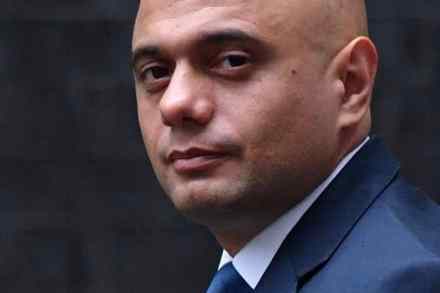
Yesterday in what was the quickest public turnaround in government history. The prime minister and the chancellor are now in isolation after getting pinged for being too close to the Covid ridden health secretary Sajid Javid. There is something a little ironic about the leaders of the country being locked up on what was initially billed as 'Freedom Day', but it is a keen reminder we are just one ping away from losing our new found liberation. Katy Balls speaks to James Forsyth and Isabel Hardman.
Ministers are compounding the Covid confusion

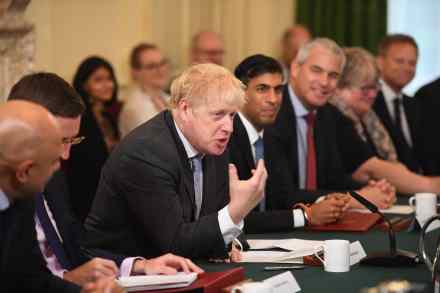
After several hours of rage that Boris Johnson and Rishi Sunak were going to be able to avoid self-isolation — despite being contacted by NHS Test and Trace — the pair have performed a screeching U-turn. They’ve now said they will ignore the pilot that they were a part of and stay at home like everyone else has to. Sunak was first out of the blocks, tweeting: https://twitter.com/RishiSunak/status/1416693412674297857?ref_src=twsrc%5Etfw Minutes later, Johnson followed suit, with a Downing Street spokesman saying:  The Prime Minister has been contacted by NHS Test and Trace to say he is a contact of someone with Covid. He was at Chequers when contacted by Test and Trace and will remain there to isolate. He will not be taking part in the testing pilot.

Is the NHS about to be privatised?

Is the NHS about to be privatised? That’s the charge from some campaigners as the Health and Care Bill starts its journey through parliament. Certain doctors, mainly on social media, are calling on MPs to scrap the Bill because they claim it will open up the NHS to more privatisation and allow private companies to skim profits off our healthcare system. It’s a big charge, albeit a familiar one, as it tends to pop up whenever there is legislation on the health service. But the strange thing is that it’s very hard to find the evidence for these social media claims in the actual legislation. In fact, these proposals are aimed at dampening much of the emphasis on competition introduced by Andrew Lansley’s controversial Health and Social Care Act in 2012.

What is the point of Starmer’s listening tour?

14 min listen

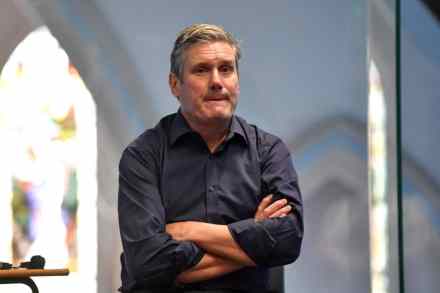
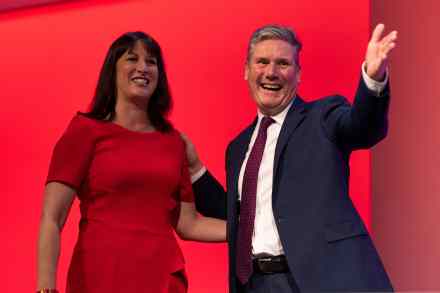
After a year and a half of Zoom speeches held in empty rooms, opposition leader Keir Starmer is heading out on a listening tour to connect with voters. That may be all well and good, but is anyone listening to him? And even if they are, does he have anything worth saying? James Forsyth talks to Isabel Hardman about the struggling Labour leader.

PMQs: Johnson strains over ‘gesture politics’

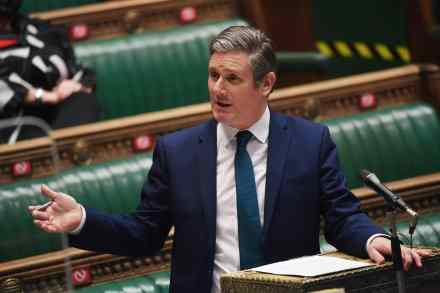
Boris Johnson's uncomfortable session at Prime Minister's Questions was largely of his own making rather than the work of Keir Starmer. As I wrote earlier, the Tories have tied themselves in knots over the question of taking the knee to the extent that they are now open to accusations that they don't really care about racism. The Labour leader did a reasonable job of prosecuting the various statements made by Johnson and others, including Priti Patel's comment that it was 'gesture politics'.  Prime Ministers don't tend to make a habit of carrying out of date by-election literature in their handbags That Johnson was nervous about the theme of the session became obvious when he brandished a leaflet from the Batley and Spen by-election which he demanded Labour retract.

Have Conservatives lost the culture wars?

12 min listen

The Prime Minister looked visibly uncomfortable at Prime Minister's Questions today, as Keir Starmer accused him of 'giving racism the green light' with the Conservative party's stance on footballers taking the knee. It comes after a week in which other Tories - notably Priti Patel - have been criticised by footballers and begs the question - did the Conservatives wade into a culture war they can't win? Cindy Yu talks to James Forsyth and Isabel Hardman. Isabel points out that the Tories were never going to win in a popularity contest: 'But really, it was obvious - and has long been obvious - that footballers are more popular than politicians. So to pick a fight with them...

How did the Tories get taking the knee so wrong?

Steve Baker's warning to his colleagues about the way they respond to footballers taking the knee has shaken like a snow globe the debate about the Conservative party and racism. Sir Keir Starmer chose to focus on the matter at Prime Minister's Questions, mentioning Baker's message to fellow Tory MPs. That message said: 'Much as we can't be associated with calls to defund the police, we urgently need to challenge our own attitude to people taking a knee. I fear we are in danger of misrepresenting our own heart for those who suffer injustice.'Baker has put his finger on a problem that his party has.

What does the foreign aid win mean for the government?

11 min listen

Boris Johnson and his government won the vote today to cut foreign aid spending, but there were rebels and some very prominent ones, including former Health Secretary Jeremy Hunt and former Prime Minister Theresa May. What should the government learn from this in order to win potentially even more contentious votes down the line? To discuss Isabel Hardman speak to James Forsyth.

Rishi Sunak tries to charm Tory rebels after the foreign aid cut

The government has won its vote on cutting international development spending from 0.7 per cent to 0.5 per cent of GDP. 333 MPs voted for the motion, with 290 MPs voting against. The debate on the cut featured a number of politely furious arguments from Tory rebels, from Andrew Mitchell, who spoke of ‘the Chancellor's silver tongue’ in trying to whittle down the numbers with a compromise, to David Davis, who called the cut ‘morally reprehensible’. Others, like Stephen Crabb, recalled the strenuous efforts that had gone into creating the target in the first place, telling colleagues that 0.7 per cent was still the right target to have. There were two striking things about this debate and the vote.

Will Theresa May’s speech affect the aid result?

Theresa May has just announced that she is going to, 'with regret', vote against the government today on aid spending. It will be the first time she has voted against a three-line whip (previously she has abstained on crunch votes). The former Prime Minister recalled with some force her own dealings with Conservative rebels when she was the first backbencher to speak in the debate on the cut from 0.7 per cent of gross national income to 0.5 per cent this afternoon. 'As Prime Minister, I suffered at the hands of rebels,' she said. But she was even more forceful on the way this government had broken its promise, on how this would mean, in her words, that 'more of the poorest people in the world will die' and that she didn't believe that the tests for restoring the spending commitment to 0.

The vote to cut foreign aid is looking tight

Things are looking tight this morning for the government’s vote on aid spending. Ministers were hoping that springing the vote on rebels at the last minute might help to peel away some softer MPs, and there's a list doing the rounds this morning of 14 backbenchers who’ve said they are supporting a compromise which would mean the government committing to restoring the 0.7 per cent target when economic conditions improve, using OBR forecasts to gauge when that is.

Johnson urges caution ahead of final easing

How different will life be after 19 July? Not very, if the Prime Minister’s press conference this evening was anything to go by. As with Sajid Javid’s statement in the Commons earlier confirming the final step of the road map, Boris Johnson’s emphasis seemed muted. He said he expected people to continue wearing masks, working from home and generally not making the full use of the freedoms they are being given next week. Johnson warned that ‘this is not the end of Covid’, that he didn’t want the public to be ‘demob happy’ and that we ‘must be cautious’ as we take the next step out of the restrictions.

Can social media stamp out racist comments?

14 min listen

The new Health Secretary Sajid Javid addresses the Commons this afternoon ahead of Boris Johnson's 5pm remarks about the lifting of restrictions on July 19. And in what was an already painful night for England it was made even grimmer by the horrific, racist abuse that Marcus Rashford, Jadon Sancho and Bukayo Saka received online from supposed England 'fans' after the final. James Forsyth talks to Isabel Hardman.

Are ministers prepared for ‘freedom day’?

Is the government having a wobble over ‘Freedom Day’ on 19 July? Well, for one thing you won’t hear ministers talking about ‘Freedom Day’ over the next week. Instead, they are preferring to focus on the need for people to be very cautious, given the soaring numbers of cases and hospitalisations. When he appeared on Times Radio this morning, vaccines minister Nadhim Zahawi talked far more about what would still be ‘expected’ of people after 19 July than about how the roadmap was working and how nice it was for life to be returning to normal. For him, this date seems to be more ‘Be very careful day’.

What does the NHS look like post pandemic?

16 min listen

James Forsyth talks to award winning journalist Isabel Hardman about her brand new Spectator podcast Building Back. In it first episode, out now, she looks at current state of the NHS and its ever expanding waiting list. James and Isabel discuss what the political fallout could be from not tackling this issue competently. Listen to Isabel's podcast here:https://spectator.

Will Sunak scrap the pensions triple lock?

11 min listen

State pensions may rise by 8pc this year due to the Conservative policy of the pensions triple lock. But can the government keep to it, given the extraordinary economic circumstances we are in? Cindy Yu talks to James Forsyth and Isabel Hardman.