Isabel Hardman

Isabel Hardman

Isabel Hardman is assistant editor of The Spectator and author of Why We Get the Wrong Politicians. She also presents Radio 4’s Week in Westminster.

The myth of the beautiful green belt

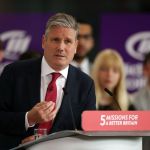
What a nonsense debate the fight over the green belt has become. Today Keir Starmer has been – rightly – stoking it up arguing that councils should be given the freedom to build on green belt land. The Labour leader told the Times: ‘It cannot be reduced to a simple discussion of will you or will you not build on the green belt. This is why it’s important for local areas to have the power to decide where housing is going to be.’ The green belt holds a special, if strange, place in the British psyche. Its primary function is to prevent urban sprawl, rather than safeguard particularly green and pleasant land. While some of it is beautiful, a lot of the green belt is just green in colour. Intensively-farmed agricultural land isn’t that green at all, for example.

Oliver Dowden’s textbook turn at PMQs

Oliver Dowden had 20 years and four Tory leaders to prepare him for his understudy moment at PMQs. He’s helped a series of leaders work out their attack lines, their defences and their jokes – so it’s unsurprising that his chance at the despatch box sparring with Angela Rayner was so textbook that he should probably offer it in a seminar on a Skills in Politics Course for aspiring Tory leaders. It was anatomically perfect: there was the opening joke about the opposition (‘I was, though, expecting to face the Labour leader’s choice for deputy prime minister if they win the election, so I'm surprised that the Lib Dem leader isn’t taking questions today’) and a compliment to his opponent about what a pleasure it was to be facing her.

Suella Braverman is making Rishi Sunak look weak

The National Conservatism conference is entering its third day in London, and has managed to grab more headlines than the official Conservative conference usually does. Tory party conferences have become so stage-managed that attendees often don’t bother going into the main hall – except for a quiet breather – because they know they won’t learn anything from the speakers. Last autumn, one of the Tory events included a minister and a guest speaker holding an ‘in conversation’ session that appeared to have been pre-written on a script. No wonder the NatCon event is making waves – and has been so attractive to Tory MPs and ministers, including the Home Secretary Suella Braverman, because it appears to be a genuine conference rather than a stage performance.

Why did Braverman’s immigration speech ruffle feathers?

14 min listen

Home Secretary Suella Braverman said that there is no good reason the UK can't train its own lorry drivers and fruit pickers in order to bring immigration rates down. Katy Balls speaks to James Heale and Isabel Hardman about why this has rubbed some up the wrong way and Keir Starmer's speech over the weekend, outlining Labour's vision for the future.

Watch: Speaker loses temper with Kemi Badenoch over EU law u-turn

The Speaker of the House of Commons has just given Kemi Badenoch a furious dressing down over the government's u-turn on repealing retained EU laws. Lindsay Hoyle criticised the minister for using a written ministerial statement to sneak out the admission that the government will only be reviewing or repealing 600 laws by the end of the year, rather than 2,400 as promised by Rishi Sunak in his leadership campaign. When Badenoch came to answer the question, she apologised rather dismissively 'that the method we chose was not to your satisfaction'. Hoyle exploded, insisting 'that is totally not acceptable: who do you think you're speaking to?

Sunak is right to scale back his axing of EU laws

Rishi Sunak has u-turned on his leadership campaign promise to repeal thousands of retained EU laws at a stroke. A written statement – always the preferred vehicle for awkward government news – from Kemi Badenoch this afternoon confirmed that the government will in fact only scrap around 600 laws in the Retained EU Law Bill by the end of this year. It has infuriated members of the European Research Group of Brexiteer Tory MPs. Former business secretary Jacob Rees-Mogg has also had a pop at the Prime Minister for an ‘admission of administrative failure, an inability of Whitehall to do the necessary work and an incapability of ministers to push this through their own departments’.

Sunak and Starmer’s pointless battle of soundbites at PMQs

We learned very little from Prime Minister's Questions today. Both Keir Starmer and Rishi Sunak used attack lines from previous weeks – ones that they will probably repeat until the next general election – and didn't stray into any new areas. The Leader of the Opposition wanted to mock the Tory performance in last week's local elections. Meanwhile, Sunak wanted to exploit Labour nerves that, despite Starmer's party doing well last week, it didn't seem to be out of a newfound enthusiasm for Labour among voters. It's going to be a very long and boring road if PMQs carries on like this Starmer told the chamber that the Prime Minister would have to give another update on employment numbers 'now he's cost 1,000 Tory councillors their jobs'.

Will Sunak’s pharmacy plan work?

The 8 a.m. rush for a GP appointment is one of the emblematic problems the NHS is facing. It’s something both Keir Starmer and Rishi Sunak like to talk about: the former because he wants to emphasise that he is more in touch than the Prime Minister, who admitted to using private healthcare for his family, while Sunak wants to remind people that his mother owned a pharmacy in Southampton. Sunak is in that city today to launch reforms which he says will make it easier for patients to get the treatment they need – and make that 8 a.m. rush a great deal calmer.

Labour’s coronation policing muddle

The political fallout from the coronation policing row shows us that if Labour does get into government after the next general election, it is going to have a hard time unpicking even reforms it has complained loudly about under the current administration. Though ministers are having to justify why the Metropolitan Police arrested 64 people, many of whom seem not to have been planning the sort of disruption that the Public Order Bill is supposed to focus on, the bigger difficulty today has been for Labour. Rishi Sunak did his usual thing of being as detached as possible from events, saying the police were operationally independent from the government and, anyway, he thought they were doing their best to make the coronation the success it had been.

The local elections: what’s happening?

15 min listen

Early results from the local elections are coming in. The Conservatives were expected to perform badly, and Labour to make gains, and that's certainly happened. But, if Labour were to replicate these results in a general election, would they win? And are the Liberal Democrats the ones really doing well?  Max Jeffery speaks to Katy Balls and Isabel Hardman. Produced by Max Jeffery.

PMQs was all about the local elections

Rishi Sunak and Keir Starmer were both present for Prime Minister’s Questions, but the session was largely Why You Should Vote For This Party In The Local Elections Tomorrow. Backbenchers on both sides used the half hour to air their grievances with local councils led by their rivals, or praise the important work of authorities where their own party had power. Both party leaders framed their exchanges around their own local messaging, too, but what was interesting was that Starmer chose to lead on home ownership and housebuilding.  The Labour leader used housing as the latest example of things Sunak likes to pretend are going absolutely fine even when they manifestly aren’t.

The NHS is still in trouble despite the pay agreement

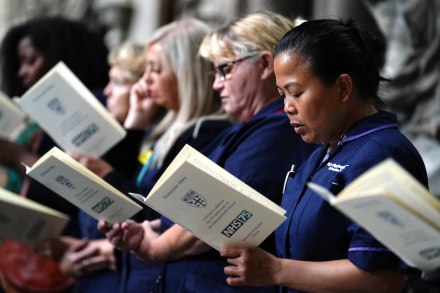
The decision by the NHS Staff Council to accept the government’s pay offer is not the end of the stand-off between ministers and some healthcare workers, obviously. But it does mark a step away from the general hostility over pay that has marked the autumn and winter months. Unite and the Royal College of Nursing are still threatening more strikes, even though they are on the council of 12 unions representing all NHS workers (save for doctors and dentists) in England. The vote at today's Council meeting means the pay rise of 5 per cent for 2022/23 and 2023/24 and a one-off payment of at least £1,655 will go to all workers, but Unite and the RCN plan to hold out for more money.

Sharp quits, what next?

11 min listen

Richard Sharp has quit as chairman of the BBC, following an investigation into whether he properly disclosed his role in enabling an £800,000 loan to Boris Johnson before his appointment. What will happen next?  Cindy Yu speaks to Katy Balls and Isabel Hardman.  Produced by Cindy Yu and Max Jeffery.

Could nurses still back Barclay’s pay offer?

11 min listen

A judge has ruled that strikes by the Royal College of Nursing be cut short by a day, because the six-month mandate for strike action will have passed. Two more unions are still to vote on Health Secretary Steve Barclay’s pay offer. If they support it, could the RCN change their mind on the deal?  James Heale speaks to Katy Balls and Isabel Hardman. Produced by Max Jeffery.

Steve Barclay’s battle against striking nurses is not over yet

The High Court has this afternoon blocked the second day of strikes by nurses after Health Secretary Steve Barclay took legal action against the Royal College of Nursing (RCN) to stop the walkouts. RCN members had planned a 48 hour strike between 8pm on 30 April and 8pm on 2 May, but today's ruling was that the second day was unlawful as it was outside the union's six-month mandate for industrial action. The case is pretty curious in lots of ways. The RCN didn't come into court and wasn't represented because it opposes the legislation used as the grounds for Barclay's legal challenge, the Trade Union Act 2016.

Tories show concern over Braverman’s migration plans

The Illegal Migration Bill has passed its final Commons stage before it goes up to the Lords – but not without a number of blows being dealt by Conservative MPs. The legislation, which ministers claim will help ‘stop the boats’ crossing the Channel, passed its third reading in the Commons 289 votes to 230. But ministers had a miserable time trying to defend it: not from attacks from the Labour benches, but from their own side. One climbdown on child detention means ministers will work with backbenchers on a ‘new timescale’ for the number of days unaccompanied children could be detained without court approval. This meant Tim Loughton did not push his specific amendment on this to a vote, though the timescale isn’t yet specified in the legislation.

Will Xi really bring peace to Ukraine?

11 min listen

Xi Jinping said he will send diplomats to help broker peace in Ukraine after he had a phone call with Volodymyr Zelensky. But are China’s aims really as noble as they seem? Fraser Nelson speaks to Isabel Hardman, Svitlana Morenets and Cindy Yu.

Sunak and Starmer turn nasty again at PMQs

Keir Starmer is very fond of giving 'deeply personal' interviews where he tries to bring some colour to his grey suited image. He is also increasingly keen on deeply personal attacks on Rishi Sunak at Prime Minister's Questions, as today's session showed.  The Labour leader ramped up his attacks on Sunak as a ludicrously rich, out-of-touch leader, telling the Commons the PM was 'clueless about life outside of his bubble', of regarding contactless cards as being something from Mars, and of 'smiling his way through the cost of living crisis'. He reminded MPs of the old video of a young Sunak boasting that he didn't know any working class people, and of the more recent clip of him telling voters in Tunbridge Wells that he'd diverted money from poorer areas to richer seats such as theirs.