Isabel Hardman

Isabel Hardman

Isabel Hardman is assistant editor of The Spectator and author of Why We Get the Wrong Politicians. She also presents Radio 4’s Week in Westminster.

Bookbenchers: Tim Farron | 2 September 2012

Liberal Democrat party president Tim Farron is on the books blog this evening sharing his favourite reads. He reveals which book he feels best sums up 'now' (which we hope for his sake says nothing about the state of his party), and says he'd most like to be a woman exploring outer space if he could choose to be a literary character.

GCSE row will rumble on

'If concerns are expressed, we look into them. We've done that.' When Glenys Stacey appeared on Sky News this evening after Ofqual finally published its initial report into the gradings of the GCSE English exams, she had an air of finality about her. What the chief executive of the regulator was trying to suggest, as she discussed the report's findings with the presenter, was that this was the end of the row. Even though Ofqual's report said the problem with last week's GCSE results was not that the papers taken in June had been marked too harshly, but that those sat in January were marked too generously, this is not the end of the row by any means. The unions continue to call for an independent inquiry.

Treasury: We did not leak the Budget

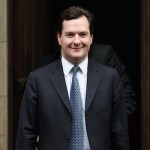
It's easy to forget that the Budget took place five long months ago when it is still being unpicked and argued over now. The Treasury Select Committee published the  responses from the government and the Office for Budget Responsibility to its report on that Budget today, and it includes a curious denial from the Treasury. Andrew Tyrie and his colleagues on the committee had criticised the amount of pre-briefing and leaking of the budget that took place in the weeks before George Osborne stood up in the Commons, arguing that 'coalition government is not a justification for budget leaks'.

GCSE reform details due in coming weeks

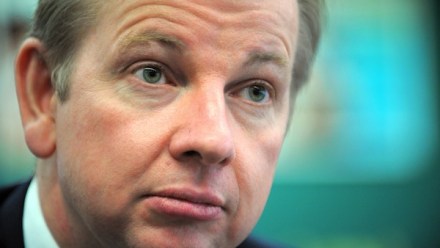
Exams regulator Ofqual is due to publish its findings on the gradings in the GCSE English paper today. The afternoon is yawning along, though, and there's still no sign of the report, so while you're all waiting with bated breath, here's an update on the wider picture on GCSE reform. Michael Gove rather shocked the rest of the coalition government earlier this summer when his plan to abolish GCSEs and replace them with a two-tier O level-style exam system appeared on the front page of the Daily Mail. Since then, he and his advisers have been deep in negotiation with the Liberal Democrats on what an acceptable reform might look like.

Lib Dem MPs are still remarkably loyal to Clegg

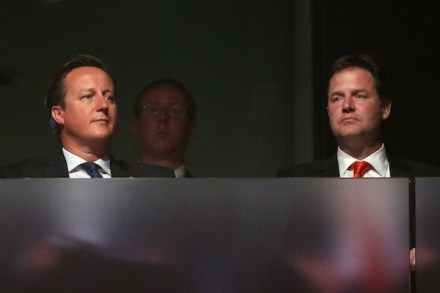
Nick Clegg may or may not be thrilled that Paddy Ashdown has urged party members to stand by their leader after Lord Oakeshott's rather vicious attack on him yesterday. It depends slightly on the Deputy Prime Minister's reading of history: as Tim Montgomerie observed last night, the endorsement of a former party leader can sometimes seem like a death knell. It is interesting, though, that it was Lord Oakeshott who launched the first public attack on Clegg's leadership (that is, if you discount the helpful suggestions from ex-MP Lembit Opik). Not surprising, of course: the party's former Treasury spokesman in the Lords is not known for delicacy when it comes to radio interviews.

A little bit more advice for George Osborne

George Osborne returned from his summer holidays this week to find a cacophony of advice for him on how to boost the economy, as well as advice that his boss David Cameron should sack him as Chancellor in his planned reshuffle. He quickly torpedoed one piece of wisdom generously offered by Nick Clegg, saying the Lib Dem leader's plans for a wealth tax could 'drive away the wealth creators and the businesses that are going to lead our economic recovery'. Anyone eagerly expecting Osborne to lose his job in the next few weeks will be disappointed, but the Chancellor will continue to come under pressure, and not just from those riding the Ed Balls bandwagon.

Tory MP: Cameron is a chambermaid to the Lib Dems

Yesterday David Cameron was a mouse, and today he's a chambermaid, according to another one of his imaginative backbench MPs. Brian Binley, the Conservative MP for Northampton South, has written a fierce blog in which he tells David Cameron that he doesn't need a reshuffle that will simply amount to 're-arranging the deck chairs on the Titanic': he needs a change in direction and a re-think. Binley attacks the way the Prime Minister relates to the Liberal Democrats in government, saying: My point is that Mr Cameron should never have hitched his star to any of the self-indulgent lunacy that has been characteristic of the unreasonable demands of his coalition partners. It was always going to fail, and has created unnecessary distance between him and the country.

Drop in workless households suggests welfare reform could be starting to work

Could we be starting to see the first fruits of the coalition's welfare reforms? The Office for National Statistics reported today that the number of workless households has fallen for the second year running. It found that just under 18 per cent of households have no adults in work, a fall of 0.8 percentage points from last year. Between April and June 2012 there were 3.7 million households in the UK where no-one was working, down 153,000. Garyling and his colleague in the Work and Pensions department Iain Duncan Smith will also be buoyed by the news that the number of households where no adult has ever worked also fell by 26,000 from last year to 265,000. The overall number including student households is now 340,000: a fall of 22,000 on last year.

Nick Clegg’s pre-conference salvo

This year more than ever, Nick Clegg is looking around for a policy to ensure he does not, to quote Nye Bevan, go naked into the conference hall when his party meets in Brighton. He does not have Lords reform to rouse his party ranks, the grassroots are nervous about the threat of an extra £10 billion in welfare cuts and there's a row brewing on airports that will at some stage move from grumpy sniping to something rather uglier. So in his interview with the Guardian, the Liberal Democrat leader decided to talk tax, calling for a 'time-limited contribution' from the wealthiest in society. That this was a pre-conference salvo to show Lib Dem members whose 'side' the party leadership is on was underlined by Baroness Kramer's confused interview on the Today programme.

Chris Grayling’s new unpaid work experience scheme

Buoyed by his department's recent success in squashing allegations of 'slave labour', Chris Grayling launched a new back-to-work scheme for unemployed young people in London today. The joint pilot with the Mayor of London will put 6,000 18-24 year-olds with little or no work experience into placements with charities, voluntary organisations and social enterprises in the community which last three months. If they refuse to take part, then they will not receive their benefits. Grayling is well aware that this sort of scheme will be controversial, because it could mean young people lose their benefits if they refuse to comply. In an article in the Evening Standard, the employment minister wrote: 'The usual suspects will cry "slave labour". They always do.

The cost of living and Cameron’s plans for victory in 2015

Conservative backbenchers are worried that the Prime Minister and his colleagues leading the Conservative party do not have a clear plan for winning the 2015 election. The Times reports today that they will try to corner David Cameron at a supper of the parliamentary party next week to ask him what his strategy is. They are also taking tips from Boris on how to win elections at a meeting of the 1922 committee. If Cameron does not divulge his strategy next Wednesday, he risks reading more hostile briefings against him in the papers from backbenchers panicked about their own job security. There are also growing concerns on the Tory benches that the government needs to show it is doing everything it can to tackle a key cause of voter desertion: the cost of living.

Downing Street rejects Yeo’s ‘man or mouse’ threat

Justine Greening will be relieved: Downing Street has just poured cold water on suggestions the government could U-turn on a third runway at Heathrow. At the morning lobby briefing, a Downing Street spokeswoman said: 'Their stance is as laid out in the Coalition Agreement: that's not changed. The coalition parties have made a pledge not to have a third runway and that is a pledge that we will keep.' She added that the government did not 'see an argument for a third runway' but that there was a need to 'look more broadly at aviation policy'. It was of course unlikely that Downing Street was going to turn round this morning and say 'we've listened to the concerns of Tim Yeo and we've decided to man up and change our policy'.

Justine Greening’s impossible job

It was difficult not to feel sorry for Transport Secretary Justine Greening this morning as she twisted and turned to avoid questions fired at her by Jim Naughtie on a third runway. Each time Greening thought she had escaped having to tell Radio 4 listeners whether she could remain in the Cabinet should the Prime Minister decide he is indeed a man rather than a mouse and U-turn on expanding Heathrow, Naughtie kept returning to the question: Naughtie: Let's be clear about the third runway: is your government open to argument about it, or not?

The planning war of words starts again

Autumn is nearly here, so it must be time for another good row about planning, mustn't it? Given the number of recent reports that ministers are considering relaxing green belt protection, it was only a matter of time before the Campaign to Protect Rural England lifted its head above the parapet. Today it warned the government it is at risk of 'destroying the countryside' if plans to develop 81,000 new homes over the next five years. Last autumn's row over the National Planning Policy Framework was ugly, not least because it engaged Conservative ministers in battle with the CPRE and the National Trust: two organisations with a traditionally Conservative membership.

Bookbenchers: Peter Wishart | 26 August 2012

Over on the books blog, SNP MP Pete Wishart shares his favourite books with Spectator readers. He reveals which tomes he'd save from a burning Scottish - rather than British- Library. There's plenty more Scots culture on offer, along with a tiger who came to tea, and the more practical reading material he'd set for his son now that he's a student.

May and Green put up the barricades on migration targets

David Cameron is already going to struggle to hit his target of taking net migration from 250,000 to the tens of thousands. But I understand that the Home Office is nervous that other Whitehall departments could undermine that target further, seeing immigration as one sinew that could be strained as they begin to panic about growth. Look closely, and you can see an inter-governmental battle being fought. Theresa May and Damian Green have been on manoeuvres today, highlighting the government's progress in cutting net migration. The Home Secretary has an op-ed in The Sun on Sunday, where she also lists some of the areas which have been tightened to 'make life in the UK much more uncomfortable' for illegal immigrants.

Cameron under pressure on Heathrow

David Cameron and his Liberal Democrat partners are coming under increasing pressure from Tory ministers and other senior party figures to U-turn on a third runway at Heathrow. Yesterday, in what appeared to be a bid to take over from Justine Greening as Transport Secretary, Grant Shapps became the first minister to call on the Prime Minister to drop the government's opposition to development at the airport. Today sees the first Cabinet minister to openly voice concerns: Owen Paterson, the Northern Ireland Secretary. The Sunday Telegraph reports that Paterson has urged colleagues in Cabinet meetings to re-consider the third runway, fearing that economic growth in Northern Ireland will suffer.

Ofqual to investigate GCSE results

Labour and the teachers' unions have had their way: there is going to be an official inquiry into the GCSE results. The exams regulator Ofqual is only investigating the English results, though, saying there are 'questions about how grade boundaries were set in a very small number of units across the year'. In a letter to the National Association of Head Teachers, Ofqual chief regulator Glenys Stacey wrote: 'We recognise the continuing concerns among students, parents and teachers about this year's GCSE English results. We will look closely at how the results were arrived at. We will do this quickly, but thoroughly, so that we ensure confidence is maintained in our examinations system.

Reshuffling the whips won’t solve Cameron’s rebel problem

One of the biggest problems that David Cameron faces at the moment is discipline within his own party. He was astonished by the size of the rebellion on the second reading of the House of Lords Reform Bill, which he had expected to be much smaller. He is now considering what to do with the many talented Conservative rebels as he approaches the September reshuffle: does he promote some more of those who revolted over Europe, but leave the Lords rebels languishing in career Coventry for a little longer? The Guardian carries a story by Nick Watt which suggests Cameron isn't just going to tackle bad behaviour by keeping rebellious spirits on side, though.

The IMF’s ‘too far, too fast’ warning

There is great excitement in some circles at a paper from the International Monetary Fund which has emerged in the past 24 hours. This piece of research warns that cutting government spending too quickly can weaken economies permanently and lead to even deeper recessions. It says: The analysis in this paper shows that withdrawing fiscal stimuli too quickly in economies where output is already contracting can prolong their recessions without generating the expected fiscal saving. This is particularly true if the consolidation is centred around cuts to public expenditure - likely reflecting the fact that reductions in public spending have powerful effects on the consumption of financially-constrained agents in the economy - and if the size of the consolidation is large.