Isabel Hardman

Isabel Hardman

Isabel Hardman is assistant editor of The Spectator and author of Why We Get the Wrong Politicians. She also presents Radio 4’s Week in Westminster.

MPs slam FSA’s ‘serious misjudgement’ on RBS

The Treasury Select Committee has published a stinging report this morning on the failings of the Financial Services Authority's oversight of RBS. The MPs on the committee was unimpressed, concluding that the FSA could and should have intervened in the bank's takeover of ABN Amro. Its members believe the regulator should have stopped the takeover, and they criticise the FSA for failing to investigate the failure. The report says: 'In December 2010 the FSA initially felt that a 298-word statement about RBS’s failure was explanation enough. This reflects serious flaws in the culture and governance of the regulator. It also reflects a fundamental misunderstanding of its duty to account for its actions to the public and Parliament.

Energy bills row: Cameron clarifies his surprise announcement

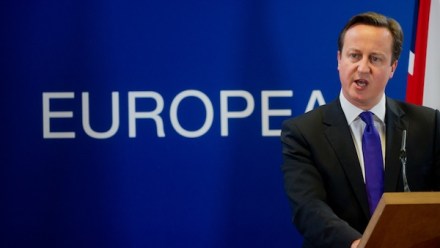
David Cameron has arrived in Brussels for a meeting of the European Council, and has offered further helpful clarification of what exactly he means to do about energy bills. The Prime Minister said: 'I want to be on the side of hard-pressed, hard-working families who often struggle to pay energy bills. That's what I said in the House of Commons yesterday. We're going to use the forthcoming legislation, the energy bill, coming up this year so that we make sure, we ensure that customers get the lowest tariffs. That's what we're going to do.' This is still different to what the Prime Minister said in the Commons yesterday.

Andrew Mitchell needs to worry about his own team, not Labour’s £1,000 fine threat

Determined to keep the Andrew Mitchell story alive for as long as possible, Labour confirmed this morning that next week's Opposition Day debate will follow the party's call for Andrew Mitchell to receive a £1,000 fine for his outburst by the gates of Downing Street and debate police cuts. The idea is to highlight the 'double standards' line that Ed Miliband pushed yesterday at PMQs: while swearing at a police officer would lead to 'a night in the cell for the yobs, it is a night at the Carlton Club for the Chief Whip'. As James reported last night, the 1922 Committee was largely warm towards the chief whip, with only five MPs speaking out against Mitchell in the end.

How David Cameron fluffed a key cost of living announcement on energy

The Conservatives are worried that voters are deserting them over the rising cost of living, yet their leader has managed to fluff an announcement designed to remedy that problem. Yesterday at Prime Minister's Questions, David Cameron surprised the whole chamber and the department concerned by announcing a brand new energy policy. In response to a question from Labour's Chris Williamson about what the government was doing to help people reduce their energy bills, Cameron said: 'We have encouraged people to switch, which is one of the best ways to get energy bills down.

Credit where credit’s due for Unite’s payday lender challenge

Coffee House isn't always the greatest friend of the trade unions, but one union made a striking announcement today which demonstrated the good that these bodies can do in society. Unite plans to set up a nationwide network of credit unions to try to divert struggling families away from legal loan sharks. Credit unions make small loans to members using deposits, and are a safe alternative to payday lenders such as Wonga, which charges a staggering 4,214 per cent APR on its loans. The Guardian quotes Unite's director of executive policy Steve Turner: 'We are in discussions to try to establish a UK-wide credit union that will give access to cheap finance and cheap credit to millions of people.

Andrew Mitchell revives Gategate at PMQs as whips worry his power is gone

Andrew Mitchell isn't going anywhere just yet, even if some of his ministerial colleagues are privately willing for him to face the high jump. But the story about him is still going somewhere because the chief whip apparently decided, quite unwisely, to intervene in the PMQs exchanges about him this lunchtime. But it's not just cabinet ministers who are grumpy: the other whips are worried too. Ed Miliband wisely started his questions with the unemployment figures, which meant Cameron's later accusations that the Labour leader wasn't interested in the real issues sounded weaker than they perhaps did as the Prime Minister planned them this morning. And he made a neat connection between the jobs and the Mitchell row by talking about cuts to police jobs.

Cleaning up the City cesspit

Good news from the City is something to cherish at the moment, and today RBS has confirmed that it will be withdrawing from the Asset Protection Scheme, through which the government gave the bank insurance cover against losses on its £282 billion toxic assets. Those assets have now fallen 63 per cent to £105 billion. This is good news in the 'cesspit', as Vince Cable called the City of London, because it marks the first step towards the bank returning to the private sector. One man determined to turn the focus away from the latest scandal to crawl out of the cesspit and towards a recovering City is new City Minister Greg Clark. He has given an interview to the Financial Times about his new job in the Treasury, which he took in September's reshuffle.

Briefing: What today’s extradition announcement means

As well as announcing that Gary McKinnon will not be extradited to the US on charges of computer hacking, the Home Secretary today announced a number of changes to the way extradition is handled in this country. These changes will mean: 1. The Home Secretary is introducing a 'forum bar', which allows a British court to prevent prosecution overseas if it believes a trial in Britain would be fairer. 2. Future Home Secretaries will not be able to exercise discretion on human rights grounds as Theresa May did today. May said the matter should be for the High Court, and that the government will introduce primary legislation to enable this change. 3.

Clegg rejects ‘cash-for-seats’ deal for boundaries

Deputy Prime Minister's questions is quite often a slightly grumpy affair, with Nick Clegg huffing and puffing at irritating questions from Peter Bone about what position he would take in the government if David Cameron were run over by a bus. This morning's session wasn't much different: it was even more bad-tempered as backbenchers were keen to pick at scabs on the failure of Lords reform. The Deputy Prime Minister continually defended the Liberal Democrats' decision to block the boundary reforms, criticising Labour for failing to support the programme motion for the House of Lords Reform Bill. It was like watching a couple who had broken up continue to bicker about whose fault it was.

Angela Merkel’s nerves about Britain’s future in the EU

The Prime Minister and Angela Merkel spoke last night on the phone to discuss the European Council meeting later this week. Downing Street said the pair 'agreed that further work is needed before agreement can be reached' on banking union, which is a coded acknowledgement that David Cameron is concerned the current proposals are not in Britain's interest and do not currently protect the single market and that he will push for greater compromise when leaders meet. This is all part of the Prime Minister's big Europe week. He has a Cabinet meeting this morning, and as its members are increasingly piling pressure on Cameron for a referendum on Britain's membership of the European Union, the topic may well come up.

Vince Cable continues public campaign for a mansion tax

Perhaps Vince Cable wasn't listening to the bit in George Osborne's speech at the Tory conference last week where the Chancellor ruled out a mansion tax. The Business Secretary has just sent an email out promoting the idea and calling for signatures on a petition for 'fairer tax'. The email, which is signed 'Thank you, Vince Cable MP', says: Our system of taxation is both unfair and inefficient. People on modest incomes are paying their fair share of tax while the super rich can too easily avoid paying their share. It is a particular scandal that some of the world’s wealthiest people who own property in the UK worth millions pay virtually the same council tax as owners of a modest family home.

The Home Office hokey-cokey on EU law and order opt-outs

Yvette Cooper was in a stern mood this afternoon when she responded to the Home Secretary's announcement about plans to opt-out of 130 European law and order measures and then re-adopt those which it fancies. Her main gripe was that she hadn't been sent Theresa May's statement about the plans until 45 minutes before it was delivered in the Commons, but she was also peeved about the content. The Shadow Home Secretary argued that ministers 'haven't actually told us anything today at all', arguing that the different limbs of the coalition were doing entirely different things on this matter. While David Cameron had spoken about an opt-out, Nick Clegg had said the government was 'minded' to opt out, and May had only given the 'current thinking, Cooper complained.

Andrew Mitchell lives to thrash his way through another day

Andrew Mitchell spent the whole of Home Office questions on the front bench, nodding sagely as both Damian Green and Theresa May were repeatedly asked to condemn his behaviour outside the Downing Street gates, which they repeatedly refused to do. He was joined in his nodding routine by Andrew Lansley, who knows a little about being hauled over coals by the opposition himself. Throughout the session, there was a low rumble of barracking from the benches. When the first question about the chief whip came from Catherine McKinnell - who asked what the impact was 'of a cabinet member verbally abusing a police officer at a time of record frontline cuts to police officers up and down the country' - one Labour MP shouted 'get the whips out!

David Cameron’s big European week

David Cameron's plan for this autumn was to largely avoid the topic of Europe at his party's conference, then to focus on the issue later in the year. It's only a few days since the Tories gathered in Birmingham, and the Prime Minister is already facing a big week on Europe. Home Secretary Theresa May will kick things off by announcing today that she wants Britain to opt out of more than 130 European Union measures on law and order, including the European Arrest Warrant. The opt-out itself, which the Home Secretary is expected to say Britain is 'minded' to do, is not the tricky bit: it's which measures to then opt back into.

Tories still hope for something to turn up on boundary changes

This is a story that's going to run and run until MPs walk through the lobbies next year in the vote approving the boundary reforms: senior Tories are plotting to buy the Lib Dems off from blocking changes to constituencies by offering them state funding of political parties. The latest plot has surfaced in today's Financial Times, with one Conservative minister telling the paper that the Lib Dems are 'basically out of money'. As expected, the Lib Dems are rejecting the story, arguing there is no way that the party would do a deal on party funding when their plan to vote down the boundary reforms is revenge for the Tory failure to support Lords reform.

Ten lessons from the Conservative party conference

The Conservative party conference has been short and sweet, and delegates are winding their ways back to constituencies and Westminster. Here are five important lessons to take away from Birmingham: 1. The government will pursue a further cuts to the welfare budget, but there's a fight ahead on how much money can be cut, with the Liberal Democrats rejecting the George Osborne and Iain Duncan Smith's plan for £10 billion of cuts. James examines how the relationship between Osborne and Vince Cable will be key to the negotiations over further cuts in his political column in tomorrow's Spectator. 2. David Cameron is keen to keep both compassionate Conservatism and the Big Society alive as key brands for the Conservative party.

Conservative conference: How David Cameron fought back against Ed Miliband

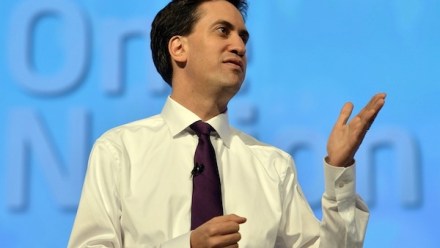
As the audience filed out of the Manchester Central conference hall after Ed Miliband's speech last week, the question repeated over and over again was 'well, what's David Cameron going to do now?' Though the Prime Minister's aides were dismissive of suggestions that he should try to beat Miliband by memorising his speech and walking around the stage while delivering it (Paul Waugh notes in his email memo this morning that one spinner said 'He’s Prime Minister, he doesn’t have days and days to practice and memorise a speech - like you do in Opposition'), the PM was clearly rattled enough to produce a speech which contained large sections of reaction.

Conservative conference: David Cameron to warn that Britain must ‘do or decline’

David Cameron's speech today to the Conservative party conference will be deeply personal, and deeply challenging. I understand that the Prime Minister is going to weave in stories from his own life: pushing his late son around in his wheelchair, and his late father's own story. He will say: 'It’s only when your dad’s gone that you realise – not just how much you really miss them – but how much you really owe them. My dad influenced me much more than I ever thought.' These this-is-who-I-am details will help the Prime Minister talk about his vision for the Conservative party, and his vision for the country too. It's not dissimilar to the approach Ed Miliband took in his own speech last week.

Conservative conference: Liam Fox on what voters want

As Liam Fox addressed a packed Carlton Club fringe this evening on a mezzanine floor in the ICC in Birmingham, a round of loud singing broke out on the floor below. The Prime Minister had appeared at another reception, and guests were cheerily singing 'happy birthday' to him. As the PM celebrated his birthday, his former defence secretary was dispensing advice just a few metres above his head on what the Conservative promise on Europe should be in 2015.