Isabel Hardman

Isabel Hardman

Isabel Hardman is assistant editor of The Spectator and author of Why We Get the Wrong Politicians. She also presents Radio 4’s Week in Westminster.

The fiscal nimbyism that still terrifies the Tories

If you're the tax personality of the year, as David Gauke is, the pressure's on when you give an interview to be as lively as possible. Gauke's interview with the House magazine today doesn't disappoint, with the Exchequer Secretary accusing those who oppose the child benefit cuts of 'fiscal nimbyism'. He says: 'I think there’s a lot of people who are in favour of reducing the deficit but then when it’s something that affects them there can be a degree of fiscal nimbyism. The reality is that every section of society is having to make a contribution. 'We can’t pretend that there can be sections of society which we can completely protect from deficit reduction.

Sir Howard Davies makes himself at home in the long grass

The chair of the government's airports commission was refreshingly honest about the purpose of his review when he appeared on the Today programme this morning. Sir Howard Davies said: 'I have reflected quite hard on the criticisms about long grass that the Mayor of London and Michael Heseltine say, that this is booted into the long grass. So how can you make best use of your time in the long grass? What I think we can do is do a lot of the preparatory work. I think we can do that so that when a new government comes into office in 2015 when they make a decision it will have a flying start. I aim to to be a really expert piece of work looking at how you think about airport capacity which I hope internationally will be leading edge.

The hardcore Tory rebels and their new friends

There is now a hardcore of rebels in the Conservative party who have defied the government on three key votes. The 37 MPs below have rebelled on the EU referendum vote, the House of Lords Reform Bill, and the EU budget. The question for the whips and the Prime Minister now is do they write these MPs off their Christmas card lists as forever-rebels, or do they launch a charm offensive that could melt even the steely heart of Peter Bone? I blogged yesterday about some of the problems that the Conservative leadership is creating for itself in terms of party loyalty, and while Bill Cash is hardly going to become chief whip, there may be others in this group who aren't beyond rescue.

Ministers ward off Tory revolt on crime compensation

The government has just managed to ward off another possible revolt in the House of Commons from Tory MPs. It failed earlier this autumn to get a revision of the Criminal Injuries Compensation Scheme through a delegated legislation committee when four Conservative MPs present refused to support it. The revised scheme will see half of all those seriously injured following a violent crime receiving no compensation at all and nearly 90 per cent of victims receiving less money. So John Redwood, Angie Bray, Jonathan Evans and Bob Blackman threatened to rebel, leading to Justice Minister Helen Grant withdrawing the legislation from the committee. Grant brought the legislation before committee again this morning, but this time there were different MPs considering the plans.

What next for the gutter press?

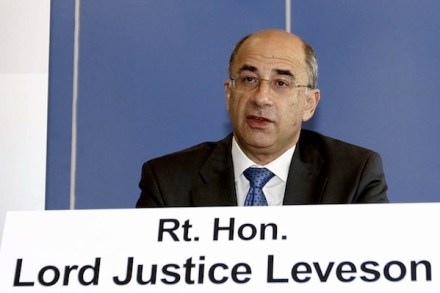
Lord Leveson will be publishing his recommendations for the future of press regulation very soon, and those on both sides of the debate are getting nervous. The Hacked Off campaign has a letter in today's Financial Times opposing plans for continued self-regulation of the industry that is signed by 26 professors in journalism, law and politics. The letter attacks proposals by Lord Hunt and Lord Black for self-regulation which would be underpinned by contracts between the regulator and the publisher which would be enforceable through civil law. It says: 'We do not believe these proposals to be in the best interests of journalists and journalism.

Nick Clegg: There is not a cigarette paper between me and the PM on EU budget

The morning after the government's defeat on the EU budget, Nick Clegg has offered his own advice on the British negotiating position. The Deputy Prime Minister gave a speech to Chatham House in which he said that pushing for a real-terms cut in the budget - which is what 307 MPs including 53 Conservative rebels voted for last night - is 'unrealistic'. Clegg framed his attack on this negotiating position by focusing on Labour rather than Tory MPs. He said: 'Yet it was Labour who agreed to the last long-term EU budget settlement, which saw a major jump in EU spending and lost part of the UK’s rebate in exchange for virtually no real EU spending reforms.

Don’t blame the whips for the EU budget revolt: the problem is higher up

What is striking about this evening's revolt on the EU budget is that it was organised at lightning speed by the rebel camp. Mark Reckless and Mark Pritchard only tabled their amendment on Monday morning, whereas the rebellion of the 81 over the backbench motion for an EU referendum took weeks of careful planning. This time round, in just three days, the shadow whipping operation managed to stir up 53 MPs prepared to troop through the 'yes' lobby in favour of the call for a real-terms cut. The whips themselves are already saying that they know the blame will land on Sir George Young's head when they believe it wasn't his fault. And even those who were the most enthusiastic signatories the Reckless/Pritchard amendment disagree that the whips should take the flak.

EU budget: Focus on Labour’s chutzpah

The opening exchanges of the Commons debate on the EU budget were, on the whole, rather good for the Prime Minister. They involved Greg Clark making a concerted attack on Labour's 'opportunist' decision to call for a real-terms cut and to support Mark Reckless' amendment calling for just that. Without irony, Chris Leslie then told the Chamber that Clark was being 'partisan' in his speech. This put Clark and the backbenchers sitting behind him on the defensive. The debate became about Labour rather than the government's own stance on the issue. Loyal MPs including Nadhim Zahawi pressed Leslie on whether he himself would back a veto at the budget summit if European leaders failed to agree a freeze or a cut. Clark asked him directly whether he would do so.

Government expects to lose EU budget vote

While the rebel whips are still rounding up Tory MPs to vote against the government on the EU budget motion, which starts in the Commons shortly, a senior government source tells me that they now expect to lose the vote. David Cameron's line at Prime Minister's Questions that 'at best we would like it cut, at worst frozen, and I'm quite prepared to use the veto if we don't get a deal that's good for Britain' may not have taken the sting out of the rebellion itself, but it might be easier for the government to now argue that losing a vote on an amendment which calls for a cut is less embarrassing when the Prime Minister himself says he would prefer a cut himself. The real damage may well be to the whips, who appear to have been completely wrong-footed by this amendment.

Tensions grow over government green policy

While the major tensions at today's Prime Minister's Questions were around the Tory party and Europe, another split within the government - this time between the two coalition parties - was visible too. Ed Miliband used his second set of questions to attack the Prime Minister on the Heseltine review, which he linked to John Hayes' comments about wind farms to the Mail and the Telegraph. Hayes had told journalists that 'enough is enough' on wind farms, adding that 'I can't single-handedly build a new Jerusalem but I can protect our green and pleasant land'.

Lord Heseltine blasts government’s growth strategy

Appointing Lord Heseltine to lead a review of the government's growth plan was a risky decision as not only was he always going to say exactly what he thought, but he was also going to say it from his own particular interventionist stance. It was originally a Steve Hilton idea, and the PM's guru must be enjoying reading what Heseltine has to say from the comfortable distance of a sabbatical in California. The report, No Stone Unturned in Pursuit of Growth, is as honest as ministers might have expected, pointing out that business believe that 'the UK does not have a strategy for growth and wealth creation', criticising an 'inertia' over airport policy, and warning that 'continuing as now is not an acceptable option. The world will not stand still - and nor must we'.

EU budget: MPs warned revolt ‘could undermine coalition’

It was inevitable that the new team of whips was going to be rather unsettled by tomorrow's vote on the EU budget: it's the first challenge the team has had to face. But what is surprising is quite how serious their palpitations are. I understand from a number of Conservative MPs that one of the key threats isn't you-won't-get-a-promotion-in-this-government, or we'll-reveal-the-truth-about-your-mistress, but that a big rebellion tomorrow will threaten the very stability of the coalition government. When I was first told this, I found it slightly incredible: this is a non-binding vote where the popular amendment calls for the Prime Minister to go further than he has promised in negotiations, rather than directly contradicting his stance.

Tory whips in a flap over EU budget rebellion deploy Rees-Mogg

At this morning's Cabinet meeting, ministers discussed tomorrow's debate on the EU budget, which is shaping up to be a big row. MPs I have spoken to who have either signed or are considering putting their names to the amendment calling for a real-terms cut in the budget have found their whips to be in quite a flap about the issue. Even though it might be convenient for the Prime Minister to use a vote in parliament calling for a cut as a weapon at the budget summit itself, the party leadership is clearly sufficiently nervous to have pushed for a rival amendment from Jacob Rees-Mogg and Peter Bone.

Battle of the Chancellors: We don’t need a Plan B

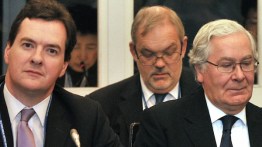
Nearly a third of the audience at last night's Spectator Battle of the Chancellors debate arrived not knowing whether George Osborne's plan was working or whether a plan B was in order. It was all to play for, and the six speakers attacked the task with quite some gusto. Former Labour Chancellor Alistair Darling kicked off the debate by looking back to his own time in the Treasury, telling the audience that this was a crisis of the banking system by using an alarming anecdote of a conversation with a senior banker in the midst of the 2008 crisis. 'He said, "I just want to give you some confidence, some reassurance: my board met last night and we agreed from now on we will only take risks we understand.

Tony Blair’s ‘Grand Bargain’ for Europe: elect a President

Tony Blair gave a speech today in which he proposed a 'Grand Bargain' to revive the European Union. One of the proposals in this grand bargain is - and Blair is clearly speaking entirely without self-interest - that there be an elected president of the European Commission or European Council. The former Prime Minister told the Council for the Future of Europe in Berlin: 'Let me make a few quick reflections. A Europe-wide election for the Presidency of the Commission or Council is the most direct way to involve the public. An election for a big post held by one person - this people can understand. The problem with the European Parliament is that though clearly democratically elected, my experience is people don't feel close to their MEPs.

The test of Ed Miliband’s One Nation brand

Labour has been pushing its One Nation branding campaign with quite some gusto in the past few days. Stephen Twigg announced at the weekend that 'One Nation Childcare' could include co-operative nurseries, and today Ed Miliband has given a speech on what One Nation means for mental health services, with the party launching a mental health taskforce. As well as trying to drop in as many mentions of the phrase as he could into his speech to the Royal College of Psychiatrists, Miliband continued to make direct links with One Nation's founder, Disraeli. He said: 'But just as Disraeli was right back in the nineteenth century that we could not build One Nation unless we addressed public health, so it is true today we cannot build One Nation unless we all speak out about mental health.

What today’s Trident announcement is really about

When Nick Harvey was sacked in September's reshuffle, leaving the Ministry of Defence without a Liberal Democrat minister, anti-nuclear campaigners and the SNP claimed the move put the future of the review into alternatives to the current Trident nuclear deterrent in doubt. To underline the review's security, the party announced at the start of its autumn conference two weeks later that Danny Alexander would lead it instead. But though the review may be continuing, it appears rather insecure in one crucial respect, which is whether anyone will actually pay it the blindest bit of attention. Today Philip Hammond announced a further £350 million of funding for the design of a new generation of nuclear-armed submarines.

Cameron outfoxed from right and left on EU budget

David Cameron now appears to have been outfoxed by his own backbench and the Labour party on the European budget. A Downing Street spokeswoman confirmed this morning that while the opposition and a group of rebellious MPs will campaign for a real-terms cut in the multi-annual budget, the Prime Minister remains committed to negotiating for a real-terms freeze. The spokeswoman said: 'His position is a real terms freeze: there has not been a real terms freeze in the multi-annual budget in recent years. That's what we are committed to negotiating for.' As I blogged earlier today, moves are afoot within the Conservative party to push for a real-terms cut, and there is now no backbench motion supporting the Prime Minister.