Isabel Hardman

Isabel Hardman

Isabel Hardman is assistant editor of The Spectator and author of Why We Get the Wrong Politicians. She also presents Radio 4’s Week in Westminster.

Fiscal cliff: what happens next?

Last night Congress agreed on a deal to avert the fiscal cliff. If you're a little hazy on the detail of what that cliff actually was, it's well worth reading Jonathan's excellent briefing, while below are the details of last night's drama, and what we can expect in the weeks and months ahead: What happened last night? Congress agreed on legislation which will avert the 'fiscal cliff', with a 257-167 vote just after 11pm in the House of Representatives. Out of 236 Republicans, 151, including Majority leader Eric Cantor, voted against the Bill. The Senate had approved the measure the night before by 89 votes to 8. The US Treasury has also confirmed that the government had hit its $16.4 trillion debt ceiling.

Now Nick Clegg turns on Labour ahead of mid-term review

Nick Clegg is in a pugnacious mood at the moment. First there was the very conveniently leaked memo in which Lib Dem strategists urged MPs to criticise their Tory Coalition partners publicly. Now he's gone on the attack against Labour's spending plans, or lack thereof. The Deputy Prime Minister writes in The Times: 'The Labour leadership continue to complain about the coalition's approach, but without providing any credible alternative. They're learning the tricks of opposition and finding their rhetorical refrains. But where are the numbers? Where are their sums? The country has undergone the biggest economic crisis in living memory, yet they offer no explanation of how they'd get us out of this mess, nor any admission of responsibility for their part in creating it.

Society is forgetting its elderly

During the 2010 general election, two grand politicians came to visit the teaching hospital where a doctor friend of mine worked. He had finished a 13 hour night shift, and, at a loose end, decided to track those two grand politicians' journey around the hospital. They visited the impressively equipped cardiology wards, stopped by at a premature baby unit (if you can't have a photo of you kissing a baby, you can at least get one next to an expensive incubator with an even tinier baby inside it), and moved on to the oncology wards to talk to patients battling cancer. My friend went home feeling rather disconsolate.

François Hollande: Ed Miliband’s embarrassing friend

Time was when Ed Miliband had plenty to say about François Hollande. When the new French President celebrated his victory in May, the Labour leader praised Hollande for his 'determination to help create a Europe of growth and jobs, in a way that is responsible and sustainable'. He added: 'This new leadership is sorely needed as Europe seeks to escape from austerity. And it matters to Britain.' Then, Miliband was keen to work together with his new friend Hollande. Just a few months down the line, though, Labour has a bit less to say about how the French president is a shining example of the centre-left showing leadership and hope in Europe. First there was the noisy exodus of top earners from France ahead of the introduction of Hollande's flagship 75 per cent tax.

A new EU membership for Britain: second-class or sensible?

Becoming a 'second-class' member of the European Union doesn't sound awfully appealing on first glance at today's Times story. But the 'associate membership' being considered by the Union of European Federalists would see Britain remain in the single market but lose its commissioner in Brussels and eventually its MEPs, too. Those drawing up this version of the new treaty also envisage that there would continue to be a seat at the Court of Justice for Britain.

Realism and optimism: David Cameron’s New Year message

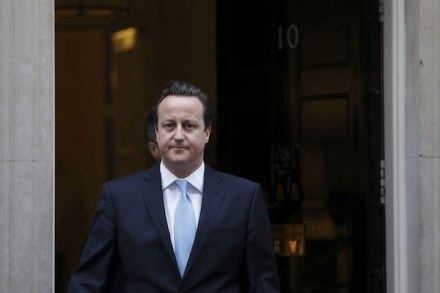
David Cameron's New Year message is a rather sober one, but it's not downbeat. The theme is 'realism and optimism' and the Tory leader's aim is to demonstrate to voters that his policies are putting the country on the right track, and to that end he makes some strong points on deficit reduction, unemployment, education, welfare, tax and pensions. Encouraging optimism about Britain's trajectory is important because 2013 is going to be a difficult year, not just for the Conservative party internally on issues such as Europe and gay marriage, but for the Coalition, as new cuts come in and critics call on the government to change tack. Ed Miliband's Dickensian pre-Christmas PMQs offered a little taster of that.

Ed Miliband and Nick Clegg make their new year pitch to voters

According to a spuriously scientific study, today is the day when festive excess gets the better of us, with one in two Brits opting to stay on the sofa with the curtains closed fretting about bills and weight gain. So how fortunate it is that Nick Clegg and Ed Miliband have chosen to rouse a hungover nation today with their stirring new year messages. Ed Miliband promises that he will be setting out 'concrete steps' on how One Nation Labour will work, citing business, education and welfare as examples. He does add that he doesn't 'offer easy answers and I'm not going to offer false promises either'. But it's difficult to see how the Labour leader can make any promises at all on areas such as welfare without talking about money.

The winter fuel payment silliness continues

On the subject of welfare, while the Lords debates whether a disabled person who can walk further than the length of a cricket pitch is allowed help with their transport costs, a minister has rather neatly highlighted the mess another part of the welfare state has ended up in. Nick Hurd told the Telegraph that he would 'congratulate' pensioners who donated their winter fuel payment to charity. He said: 'The government is going to stick to its commitments. But if people take their own decisions that they want to use [the money] for good, of course, as minister for charity, I would support, congratulate and encourage them.

Government could face another welfare rebellion in the Lords

Remember those rebellions in the Lords on welfare earlier this year? Well, the fight hasn't disappeared entirely from the Upper Chamber. Secondary legislation filling in the detail of the Welfare Reform Act is the new battleground, and I understand another uprising could be on the cards over regulations affecting disabled people. Baroness Thomas of Winchester, who regularly cropped up on the Naughty List last year when peers revolted on the welfare reform primary legislation, is calling on the Government to think again about its regulations for the mobility component of the Personal Independence Payment, the benefit replacing the Disability Living Allowance.

David Cameron needn’t fear renegotiating Britain’s relationship with the EU

Nick Clegg has made a not-so-startling intervention in the debate about Britain's relationship with Europe today, warning that Britain must avoid selling itself short in a renegotiation. His interview with the Guardian is a necessary piece of positioning ahead of David Cameron's Big Europe Speech in mid-January, and this kind of differentiation is something the Tories are more than happy for the Lib Dem leader to continue doing. So in some ways, Clegg warning Cameron not to overdo it on Europe isn't at all significant. But the Deputy Prime Minister makes an important observation in his interview about Britain's bargaining power.

High Court judge: Gay marriage is ‘wrong policy’

Sir Paul Coleridge's intervention in today's Times (£) on gay marriage has ensured the debate won't go quiet after various angry Christmas Day sermons. The High Court Judge tells the paper that introducing weddings for same-sex couples is the 'wrong policy', adding: 'So much energy and time has been put into this debate for 0.1 per cent of the population, when we have a crisis of family breakdown. 'It's gratifying that marriage in any context is centre stage… but it [gay marriage] is a minority issue. We need a much more focused position by the Government on the importance of marriage.

Banking Commission to force Chancellor’s hand on reform

As is becoming increasingly clear to David Cameron, the problem with answering calls for an inquiry into a scandal in one industry or another is that at some point that Inquiry will report back with a bunch of recommendations which may or may not be politically expedient to implement. The Parliamentary Commission on Banking Standards came up with proposals last week for an electrified ring fence, which the Treasury politely said it would look at, and Vince Cable rather more bluntly said the government should ignore, preferring instead that ministers get a move on with implementing the Vickers proposals, rather than opening up the whole debate again.

Tory MP mulls boundaries rebellion

In spite of the best efforts of its ministers in the Lords, it looks as though the government is going to face a vote on the dreaded boundaries legislation early next year, with the Electoral Registration and Administration Bill returning to the Upper Chamber in January. The big story is that the Lib Dems will be able to kick the reforms away until 2018 using an amendment, but it isn't just the members of the smaller Coalition party who will be rebelling against government policy. Tory MP Glyn Davies has now come out as an opponent of the reforms, too. On his blog, he writes that he is 'contemplating voting against my government for the first time' for a number of reasons.

The party of little tykes

Whose fault is it that the Tory party is so rebellious? Some think it's the beastly backbenchers, while others argue it's the Tory leadership. I was amused to watch a beaming Brian Binley lead David Cameron into the 1922 committee on Wednesday, given the backbencher was only recently penning an angry letter to the press about how the Prime Minister was ruining everything. There will always be people like Binley in every party, and Downing Street has made very clear that it would answer his desire for a move to the right by staying firmly in the centre ground. But are there really are so many other Conservative MPs who started out as thorns in the flesh from their first day in Parliament?

An electric fence to keep the City of London’s light from dimming

The Parliamentary Commission on Banking Standards was conceived in those tumultuous days following the first Libor revelations. At the time, some hoped that its report would lay the blame squarely at the feet of a certain former city minister. But the cross-party committee of peers and MPs has produced a sober report this morning which makes for relatively comfortable reading for those Labour politicians whose regulatory system saw the birth of Libor rigging as it does not name them. It is slightly less comfortable for the Coalition, which now has to consider whether to beef up its existing plans for banking reform. It doesn't contradict the spirit of the Vickers reforms, but it does go further, calling for an 'electrified' ring fence between the retail and investment arms of the banks.

Iain Duncan Smith doesn’t support a welfare cash card

Those nasty Tories, they're at it again. Now they're trying to stigmatise benefit claimants by giving them special welfare cash cards so they can't buy booze or cigarettes with their child benefit. That Dickensian Iain Duncan Smith was talking about the value of such a card on the lunchtime news, and has caused a bit of an uproar. Except they're not planning to do anything of the sort. I've just spoken to a source close to the Work and Pensions Secretary, who has completely refuted the idea that he's going to bring a card in. The only hint he was making was that some vulnerable claimants such as people struggling with drug addictions might be better helped by a card, not every benefit claimant. The source says: 'This is not something that is being considered, it is not in the pipeline.

Why the Tories aren’t worried about the benefit wars

The government has just published the Welfare Benefits Up-rating Bill, and everyone's pointing to polls which underline their own point about whether limiting the rise in benefits payments to 1 per cent is going to play well with voters. Labour types are brandishing the Independent/ComRes poll, which says 'a surprising high 43 per cent disagree' that the government is right to cap the rise at 1 per cent. What they aren't mentioning, of course, is that 49 per cent think the government is right: so hardly a resounding rejection of the policy. On the right, there's a Populus poll for the Conservative party which tests Labour's argument that support for the Bill drains away when voters hear it includes in-work benefits. Respondents were asked to agree or disagree with a series of statements.

Francis Maude strikes conciliatory note in stand-off over senior civil servants

Francis Maude's latest plan to get the civil service working more effectively sounds very sensible: so sensible, in fact, that it's a wonder it has taken so long. The problem is that he currently can't be as sensible as he'd hoped when it comes to appointing senior civil servants. The headline announcement is that the government has published the personal objectives of 15 permanent secretaries, along with those for Sir Bob Kerslake and Sir Jeremy Heywood. The worst performing 10 per cent of those civil servants will be identified and put into a programme of performance management. Ministers will also have more involvement in assessing their permanent secretaries' performance. All very sensible. There's some interesting detail in the individual plans that's worth looking at.

Mitchell row could make MPs think again before criticising a colleague in trouble

Tory MPs - and the occasional Lib Dem, too - were flocking around Andrew Mitchell in the Commons yesterday to show their support for the former chief whip. He is enjoying a new wave of support in his party, rather than languishing as persona non grata on the backbench. But the picture is still not clear. Mitchell himself admitted that he swore during the exchange with the police: less politically toxic, perhaps, than 'pleb', but swearing at a police officer is still something that can land you with a fine in a Magistrates Court. And there are two other police officers who claim the chief whip said both words. Another person who has not emerged unscathed from this row is Sir Jeremy Heywood. He reviewed the CCTV footage himself, but seems not to have noticed that there were no witnesses.

David Cameron promises Tory MPs strong 2015 offer on Europe

David Cameron's appearance before the 1922 committee was designed to reassure his party, and he tried to do this by promising them that the Conservative party would be strong on Europe in 2015. It has been a hard term, and today's PMQs was savage, so the Prime Minister decided to start his speech by telling them to think about the Conservative party's record in government. He touched on welfare, on schools, on the NHS - in particular mixed sex wards and waiting times - and income tax. He is clearly looking forward to the next election, too, as he mentioned the appointment of Lynton Crosby, to cheers from those listening, as well as attacking the Labour party. He also told the MPs about the importance of a strong and united Conservative party.