Isabel Hardman

Isabel Hardman

Isabel Hardman is assistant editor of The Spectator and author of Why We Get the Wrong Politicians. She also presents Radio 4’s Week in Westminster.

Tory opponents of gay marriage meet as whipping plans upset backbenchers

Tory MPs opposed to gay marriage are holding a meeting in the next hour to discuss next Tuesday's second reading of the Bill, I understand. The meeting is being co-ordinated by, among others, David Burrowes, who has been a vocal opponent of the reforms. One of the things that is particularly upsetting the MPs is that there will be a three-line whip on the programme motion for the vote. The legislation itself will be a free vote, but the vote on how it is scrutinised will be whipped, which is leading some MPs to argue that this isn't a really free vote. Those opposed to the legislation want it debated by a committee of the whole house, not a public bill committee staffed with loyal MPs.

PMQs: Ed Miliband argues Labour would borrow for success

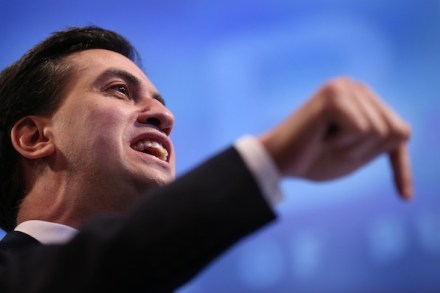
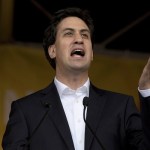
'We'd borrow more, but we'd use it better.' That was the message Ed Miliband found himself trying to get across when attacking David Cameron at PMQs today. He accused the Prime Minister of 'borrowing for failure', saying: 'He is borrowing for failure: that is the reality, and he is borrowing more for failure. That is the reality of his record. And here is the truth: they said they'd balance the books, they said they'd get growth, they haven't.' So Labour would borrow for success. What would that mean? Miliband decided to tease us by not mentioning how he'd do better borrowing. The two leaders traded quotes from various IMF staff members, as it's easy to find something in anything the IMF issues to suit your own theories about the economy.

Cameron encourages his party to bang on about Europe

Something quite curious is going to happen in the Commons this afternoon. David Cameron is encouraging his party to bang on about Europe. He has called a general debate, with the motion 'that this House has considered the matter of Europe', and it promises to be rather strange. The strangest thing is that a month ago, David Cameron would never have dreamed of tabling this sort of debate: his camp were busy in October trying to quell an uprising of backbenchers over the EU Budget. But after the speech that delighted even Mrs Bone last week, Cameron finally doesn't have to wait for a backbencher to pounce on him with entreaties on referenda and renegotiations: he's got nothing to hide now.

David Cameron visits Algeria for talks on ‘generational struggle’

The Prime Minister is visiting Algeria today to pay his respects to the victims of the hostage crisis. He will also hold talks with Algerian Prime Minister Abdelmalek Sellal, and The Sun reports that he will ask Sellal's permission for MI6 to hunt down the attack's mastermind, Mokhtar Belmokhtar. This will mark the next move in the 'generational struggle' he described in his Commons statement. One of the first big steps in this struggle took place yesterday, with Downing Street confirming the deployment of more than 330 troops to North Africa to help the French action in Mali. None of those troops will be in combat roles, with the majority training forces in neighbouring countries.

George Osborne urged to drop Google boss as business adviser

Starbucks had a go at David Cameron on Sunday for his 'cheap shots' at the coffee chain's tax arrangements in the UK. The company felt it was being unfairly singled out in comments about companies legally avoiding tax needing to 'wake up and smell the coffee'. So what about other firms known to be avoiding tax? Coffee House has learned that the former Lib Dem Treasury spokesman Lord Oakeshott is writing a rather scathing pair of letters to David Cameron and George Osborne about the government's dealings with Google, which paid only £6 million in corporation tax in the UK in 2012 by funnelling £6 billion worth of transactions through the tax haven of Bermuda. Google's executive chairman, Eric Schmidt, currently sits on the government's Business Advisory Group.

Boundaries vote: what next for the Coalition parties?

So the Lib Dems got their way in the end, teaming up with Labour and minor parties to delay the changes to constituency boundaries until 2018 by 334 votes to 292. There were Tory rebels, too, and here, thanks to the Press Association, are their names: John Baron Philip Davies David Davis Sir Richard Shepherd The minor parties also voted with the Lib Dems and Labour: only the Alliance's Naomi Long voted with the Tories. Nadine Dorries, who remains suspended from the party, also supported the Conservatives. Tempers ran high in the debate itself, with Tory Penny Mordaunt MP accusing the Libs of casting 'flirtatious glances' across the Chamber at Labour and of exchanging their sandals for flip flops. She didn't mention whether they'd also ditched their socks with the sandals.

Backbenchers want a cost of living Budget

Aside from Ed Balls' attack on George Osborne for going 'on the piste' in Davos, Treasury question time in the Commons today was interesting not for what Labour did or didn't have to say, but for some of the pushes from the Tory backbench on helping those on low incomes. Sometimes it's the pattern of the questions that matters more than the individual answers. Many of the questions were pitches for the Budget, which also gave ministers the opportunity to not really answer them. Robert Halfon asked about reintroducing the 10p income tax rate, to which Greg Clark said he noted the MP's bid for the Budget, adding: 'But he will know that we have taken people out of tax, which has been important in restoring incentives and the rewards people have for going back to work.

Truss’ truncated childcare announcement highlights mid-term review weaknesses

Controversial though her proposals to relax quotas for childminders and nursery staff may be, no-one disagrees with Liz Truss' central mission to reduce the cost of childcare. The opposition know affordable childcare will form an important part of their 2015 offer, and have also been visiting countries such as Denmark to pick up some tips. It's also worth noting that Truss is only relaxing quotas in so far as childcare providers can take on one or two more children per staff member: a nursery worker will be allowed to look after four babies instead of three, and six under-fives rather than four. Similarly, a childminder will be able to look after two babies rather than one, and four under-fives, rather than three.

Webb vs Byrne on the ‘bedroom tax’

One of the most frustrating things about being a policymaker must surely be when something that sounds so very sensible and straightforward in your ivory tower ends up being a bit messy in practice. Take the 'bedroom tax': it's not actually a tax, but Labour enjoy calling anything they don't like a 'tax' (odd, given their own penchant for taxation). This is a housing benefit cut for social tenants living in homes with more bedrooms than they need. It was announced in the 2010 emergency budget and comes into effect from April. Very sensible, you might think, especially when private tenants don't get extra housing benefit for spare rooms. The policy is in theory a no-brainer.

Senior Tory mulls changes to secret courts bill

After publishing a paper highly critical of the Justice and Security Bill this morning, Andrew Tyrie is now considering making amendments to the legislation, I understand. MPs in a Bill committee will scrutinise the legislation line by line this week, and are expected to report to the House of Commons by mid-February. Tyrie, who also chairs the influential Treasury Select Committee, is considering tabling amendments to the Bill to be debated at that report stage. The Centre for Policy Studies paper which Tyrie has co-authored with Anthony Peto QC says that 'part 2 of the Bill should, preferably, be withdrawn, at least until the government can come back with more balanced proposals, accompanied by a more rigorous explanation of the need for them'.

Grey launch day for Green Deal

The Tories in opposition were very keen on their 'Green Deal' for making existing housing stock energy efficient. It formed the cornerstone of their pledge when the Coalition formed to be the 'greenest government ever'. It had its big full launch today, with new loans available for homeowners to insulate their properties and pay back the money through their energy bills. The only problem is that the Green Deal isn't quite the big all-singing all-dancing deal the government envisaged. The idea was that big businesses would lead the way in providing the scheme, but one of the leading retailers who expressed initial interest in the scheme, Marks and Spencer, isn't involved.

HS2 announcement ignores airport problem

George Osborne, Patrick McLoughlin and Simon Burns have been flying the flag for the second phase of High Speed Rail 2 this morning. Politically, Osborne and Co see rewards in a project aimed at closing the North/South divide, rewards clearly so great that the Chancellor doesn't mind the second half of the route zipping through his own constituency and irritating local councillors and campaigners. Osborne was careful to underline this when he appeared on breakfast television this morning, saying: 'Our country has become so unbalanced and for the last 15 years as a country we gambled on the City of London and its prosperity and look where that got us.

Nick Clegg leaves door open to Lib-Lab coalition

Nick Clegg was careful in his interview on the Marr show today to leave the door open to a Lib-Lab coalition - which bookmakers regard as more likely (4-1) than another Con-Lab coalition (6-1). It was interesting that so much of his description of coalition referred to himself: He told Sophie Raworth: 'I’ve never, ever seen any of this as an issue about what one individual thinks of another individual. It is really all about what the British people think about the parties who are asking for their votes. David Cameron and I said lots of disobliging things before the last general election, disagreeing with things you’ve just highlighted. We still work together in a coalition government. That is coalition government.

Adam Afriyie ‘coup’: a false start for the stalking horse

The camp supporting backbench Tory MP Adam Afriyie in a possible leadership bid have been busy, managing to get whispers of their planned coup into three Sunday newspapers (the Sun on Sunday, The Sunday Times, and the Mail on Sunday). Whether or not Afriyie is a popular backbencher who managed to soothe colleagues over toasted teacakes in the Pugin room, and whether or not he's the ideal person to lead the Tory party after Cameron, the timing for the Windsor MP of the plot appearing in print couldn't be worse. This time last week, it wasn't difficult to find a clutch of MPs who would gloomily mourn the direction their party was going in.

Claire Perry interview: Leaving internet on at night is as reckless as leaving the front door unlocked

Claire Perry, the determined MP for Devizes, is very, very determined not to be set up as a 21st century Mary Whitehouse. Her job title, as the Prime Minister's adviser on preventing the sexualisation and commercialisation of childhood, might suggest the Tory MP is yearning for a more innocent bygone era. But she's insistent that she isn't anti-porn, or even a mother who snoops on her children: 'I'm in no way the Mary Whitehouse of this,' she tells me as she sits under a washing line in her office decorated with children's artwork. 'I am in no way old-fashioned, this is not some kind of anti-porn crusade. Amongst consenting adults, it's fine, it's just that it's not porn as we know it.

If Nick Clegg doesn’t think his local schools are much cop, then he should say so

Normally, it is really rather tiresome when a politician is pilloried in the media for choosing to send their children to a private school above the local state schools. There's even an argument that if you can afford to send your kid to a fee-paying school, then at least it is one less pressure in the great London school places crush. But one thing worth mulling over about Nick Clegg's admission on LBC yesterday that he might send his eldest son to an independent school if the school lottery doesn't go his way is that the Deputy Prime Minister has tried very, very hard since coming into office not to criticise state schools and teachers.

David Cameron disagrees with Nick Clegg on capital spending

Nick Clegg was apparently just being self-critical in his House magazine interview when he said the Coalition hadn't got it right from the beginning on infrastructure. Those close to the Deputy Prime Minister are insisting that though speaking out on economic policy remains unusual in the Coalition, he was simply pointing out what has actually happened, with the government now offering more on capital spending. But at this morning's lobby briefing, the Prime Minister's official spokesman didn't exactly take that same tone. 'The Prime Minister's view is that it was the right decision to have made,' he said, pointing to increases in infrastructure spending in the last two autumn statements. 'More already is being done,' the spokesman added.

Will Cameron’s EU speech help his drive for gay marriage?

The government's gay marriage bill is published later today, after receiving its first reading in the Commons yesterday. How it's received by the Tory party will be an interesting indication of just how powerful David Cameron's EU speech was this week. When Maria Miller unveiled the 'quadruple lock' to protect the Church of England from being forced to conduct same sex ceremonies, she did so into a febrile Commons. In the tearooms, MPs quarrelled or shook their head at the exodus of stalwart Conservatives from their constituency parties. But the Prime Minister's speech gave the party such a shot in the arm on Wednesday that the atmosphere is currently very different.

Nick Clegg: We made a mistake on infrastructure spending

The GDP figures for the final quarter of 2013 are out tomorrow morning, and with them will come the usual round of commentary from government and opposition. They're not expected to be good: Citi predicts that the ONS's first estimate will show a contraction of 0.1 per cent in Q4. So perhaps that's why Nick Clegg decided to get in early and taken a shot at his own government's economic policy this evening. Speaking to Paul Waugh and Sam Macrory in the House magazine, the Deputy Prime Minister had the following to say: 'If I'm going to be self-critical, there was this reduction in capital spending when we came into the Coalition government.

After party political porky pies, Number 10 admits debt is rising

Finally: Number 10 admits that far from 'dealing with debt', the government is seeing it rise. This morning the Prime Minister's spokesman was grilled on the party political broadcast that horrified Fraser last night in which the Prime Minister said 'we are making progress. We're paying down Britain's debts.' Fraser has explained the reality - that Cameron is in fact increasing Britain's debt by 60 per cent - in this post with two unnerving graphs, and the Prime Minister's spokesman conceded that 'the debt as a percentage of GDP has risen'. Asked whether the Prime Minister understood the difference between the debt and the deficit, he said: 'Yes, he does.