Isabel Hardman

Isabel Hardman

Isabel Hardman is assistant editor of The Spectator and author of Why We Get the Wrong Politicians. She also presents Radio 4’s Week in Westminster.

Starmer chooses not to probe Sunak on Post Office

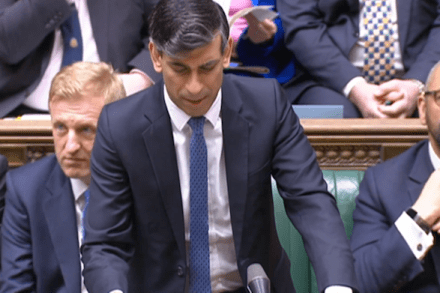
Keir Starmer clearly judged that while the Post Office scandal is the hot topic today, voters will be thinking about other things come election time. And so he used the first Prime Minister’s Questions of the year to attack Rishi Sunak on the Rwanda policy, just as the Tory row over that kicks off again. The Labour leader opened with a reasonably jocular question about ‘one ambitious Tory MP’ who had reservations about the scheme when Boris Johnson first proposed it. ‘He agreed with Labour that it wouldn’t work, that it was a waste of money, it was the latest in a long line of gimmicks. Does the Prime Minister know what happened to that MP?

Sunak to ‘swiftly’ exonerate Post Office scandal victims

Rishi Sunak used the start of Prime Minister’s Questions today to announce that the government will be introducing legislation to exonerate the victims of the Post Office scandal. A planted question from Tory party deputy chair Lee Anderson enabled the Prime Minister to say: The victims must get justice and compensation... today I can announce that we will introduce new primary legislation to make sure that those affected as a result of the Horizon scandal are swiftly exonerated and compensated. Only yesterday, Justice Secretary Alex Chalk was saying the government wanted to exhaust all options before taking ‘radical’ action like introducing legislation for a mass exoneration.

Paula Vennells has lost her CBE. That’s not enough

Paula Vennells has announced she will hand back her CBE with immediate effect, meaning the former Post Office boss now suffers the pain of a slightly shorter name as a consequence of the wrongful conviction of hundreds of subpostmasters. The former Post Office boss now suffers the pain of a slightly shorter name A petition demanding that she be stripped of the honour had reached 1.2 million signatures, and Rishi Sunak had let it be known that he was very supportive of the Honours Committee looking into whether she should lose the gong. So it was only a matter of time – and Vennells has clearly decided to cut the drama short on this at least.  Vennells and Ed Davey are the current lightning rods for a political debate that should have raged a good while ago.

The Post Office scandal was too boring for politicians to fix

The government is now ‘under pressure’ over the Post Office Horizon IT scandal. The pressure comes in the form of a petition calling for Paula Vennells, the former chief executive of the Post Office, to lose her CBE. It has garnered more than 920,000 signatures as of this evening. Then there’s the push from a number of MPs for the compensation process for the victims to be sped up, and for those responsible in the Post Office and Fujitsu to be identified and held to account. The Sunday papers carry reports that Justice Secretary Alex Chalk is examining ways of exonerate those who were wrongly convicted of stealing from the Post Office.

Sunak plays it safe with election announcement

Rishi Sunak is – not unusually – playing it safe by saying his ‘working assumption’ is that the election will be in the second half of this year. The speculation that it would be on 2 May had been building to the point that the Prime Minister was at risk of looking afraid if he didn’t then go for a spring poll. He knows from watching what happened to Gordon Brown’s Election That Never Was the dangers of ramping up speculation without following through. That doesn’t mean he won’t change course and go for the May election in the end anyway, but dampening the chatter about it is a sensible tactic.

Why the BMA is now at loggerheads with NHS leaders

Trust between the BMA and politicians has never been particularly strong. In the middle of the longest strike in NHS history, we are now seeing a breakdown in trust between the doctors’ union and leaders in the health service. Last night the union issued what was, even by its own standards, a bit of a stinker of a letter in which it accused NHS trust leaders of bowing to political pressure to undermine the junior doctors’ strike. Addressed to NHS England chief executive Amanda Pritchard, the letter says ‘derogations’ – the ‘last resort’ call for striking medics to return to work as a result of safety concerns – are being misused and that trusts aren’t providing the evidence that patients really are at risk.

Sunak gets tetchy during Rwanda and Israel grilling

13 min listen

Rishi Sunak appeared in front of the Liaison Committee this afternoon. In an interview with The Spectator last week, the PM said that he was enjoying the job. So why did he seem so agitated at the grilling today? Max Jeffery speaks to Isabel Hardman and James Heale.

Sunak gets tetchy during Rwanda and Israel grilling

If Rishi Sunak still doesn’t recognise the description of himself as ‘tetchy’, then he could do worse than to watch back his performance before the liaison committee this afternoon. The Prime Minister was not in a good mood when the questions started, though he did seem to relax a little as the 90-minute session wore on. The opening exchanges were testing – they covered the UK’s response to the conflicts in Ukraine and Gaza – and Sunak was rather testy with some of his answers.

Why did Sunak sound so tetchy at PMQs?

The last Prime Minister’s Questions of the year always has a festive, pantomime tone to it. That doesn’t mean it is always a cheery, comfortable experience for a prime minister, though, and it wasn’t today. At least Rishi Sunak could come to the chamber with the knowledge that his Rwanda legislation had passed its first hurdle in the Commons, rather than on the back of an angry and sizeable revolt by Tory MPs. The PM received loud cheers from Conservative MPs as he stood up. He even cracked a joke about there being a ‘record number of families’ under the Conservatives – reference to the hilarious new mafia-style branding for the five groups of Tory MPs now co-ordinating their response to the Rwanda legislation.

There’s no good option for Sunak over the Rwanda Bill

There is a lot more trouble to come on the Rwanda Bill, whatever happens tonight. When James Cleverly told MPs earlier that the emergency legislation complied with international law but was ‘very much pushing at the edge of the envelope’, he was trying to suggest that there was something for everyone. So far all the speeches in the debate on the second reading have suggested that there will be a lot of abstentions, with no Tory MP yet saying they will vote against. The five groups of traditional Tories have just said they ‘cannot support the bill tonight’ – which again is not an instruction to vote it down, and Mark Francois, who delivered the announcement, said they would be seeking changes later in the legislative process.

Robert Jenrick tears into the Rwanda Bill

Robert Jenrick has just given a furious speech against the Rwanda Bill in the Commons. It was a very well delivered speech, and highly persuasive. The former immigration minister not only took apart the flaws of the legislation as he saw them: he also explained why he had apparently adopted a much harder line while working in the Home Office. He said he had been to Dover to see ‘constituents whose homes have been broken into and whose lives have been ruined by illegal migrants’, and to Bournemouth, where an asylum seeker who posed as a child was convicted of murder.

Sunak’s strange Covid Inquiry appearance

Rishi Sunak had a strange pandemic. He spent a lot of it in government meetings, the details of which he could not recall, and with people who he always got on with. That was the overall thrust of his evidence to the Covid Inquiry today. The only phrase that came up more than a variation on ‘I do not recall the specific details’ was ‘referring to the Spectator article’ (you can re-read this now vital piece of inquiry evidence here).  There was one thing the Prime Minister can recollect in sharp detail from his time as chancellor, though, and that’s that absolutely no one raised any concerns with him about the Eat Out to Help Out scheme between it being proposed and going live. ‘There was almost a month between announcement and commencement’, he told the inquiry.

Was Sunak oblivious to No. 10’s Covid dysfunction?

Rishi Sunak has already provided a statement of evidence to the Covid Inquiry, but this morning’s hearing spent more time examining his interview with Fraser in The Spectator last summer. Hugo Keith KC was particularly interested in whether Sunak had a line of communication with Boris Johnson that wasn’t recorded. Keith was referring to a line in the interview which says Sunak tried not to challenge the Prime Minister in public or leave a paper trail because it would be leaked: He tried not to challenge the Prime Minister in public, or leave a paper trail. ‘I’d say a lot of stuff to him in private,’ he says. ‘There’s some written record of every-thing. In general, people leak it – and it causes problems.

Boris defends partygate yet again

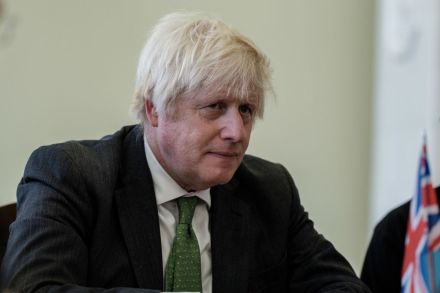
What does Boris Johnson want to come out of the Covid Inquiry? At the end of his second day of evidence today, the former prime minister claimed that it was social care reform and an investigation into how Covid originated. He told the room that in case he didn’t give evidence again (which he may well have to do as the inquiry is split into modules), he wanted to make an important point: I do think that when you come to the issues of health and social care are absolutely critical, and the government that I led was embarked on a big programme to try to bring them together. I think the fact that we had those delayed discharge patients was very, very difficult in the NHS. I hope that this Inquiry will give a kick to the powers that be to make sure that we really address that.

Robert Jenrick resigns as immigration minister

In the past few minutes, James Cleverly has confirmed that Robert Jenrick has resigned as immigration minister. He was asked repeatedly about the position of his minister of state in the Home Office during his statement on the emergency Rwanda legislation, and he has now said it ‘has been confirmed’ that Jenrick has left his role, which suggests the Secretary of State didn't know the position when he entered the chamber. Cleverly added: ‘Of course I speak with the ministers in the department regularly but ultimately the question of this session should be about the Bill but about the individuals in the House.’ This was swiftly followed by Mark Francois, who told the Chamber that it was ‘deeply worrying’ that Jenrick had gone.

Boris argues that Covid mistakes were inevitable. Is he right?

Boris Johnson had clearly come to the Covid Inquiry intending to be magnanimous about everyone, even advisers like Dominic Cummings who had ended up causing him so much grief – and who had not been at all complimentary about him in their evidence to the inquiry. He largely stuck to that persona in the first of his two lengthy evidence sessions today, with another to come tomorrow. He repeatedly praised Matt Hancock as doing a good job in difficult circumstances and who ‘was a good public communicator’.

Starmer skewers Sunak on Rwanda at PMQs

It was another clear win for Keir Starmer at Prime Minister's Questions today. The Labour leader decided to take a mocking tilt at the latest iteration of the Rwanda policy. He asked Rishi Sunak how successful it had been: ‘If the purpose of the Rwanda gimmick was to solve a political headache of the Tories’ own making, to get people out of the country who they simply couldn’t deal with, then it’s been a resounding success. After all, they’ve managed to send three Home Secretaries so the whole country can be grateful. Apart from members of his own cabinet, how many people has the Prime Minister sent to Rwanda?

Cleverly’s battle to send flights to Rwanda is not over yet

James Cleverly has just signed a new treaty with Rwanda that the UK government hopes will lead to the deportation policy finally getting going. As he did so, the Home Secretary insisted that the Rwandan government had made a ‘strong commitment’ to the safety of asylum seekers – which was the key reason the Supreme Court had ruled against the policy. He told a press conference in Kigali that ‘we’ve addressed the issues that were raised by their Lordships’ and said Rwanda had established a reputation for the humane treatment of refugees. The treaty that was signed today ‘builds on that joint work’.  The Home Secretary was clearly very careful to suggest that the Rwandan government was already doing the work needed, rather than the UK having to swoop in to improve things.

Sunak loses Commons vote for first time as PM

The government has just been defeated in the Commons for the first time since Rishi Sunak became Prime Minister. It wasn’t on one of the issues Sunak and his camp fret most about: it was on compensation for victims of the contaminated blood scandal. It was close: the government lost by just four votes on an amendment to the Victims and Prisoners Bill by Labour's Diana Johnson. The new clause passed 246 votes to 242, with 23 Conservatives backing the motion.  Johnson was calling for the government to establish a new body chaired by a High Court judge to administer compensation for victims, and that this would be done within three months of the Bill being enacted.