Isabel Hardman

Isabel Hardman

Isabel Hardman is assistant editor of The Spectator and author of Why We Get the Wrong Politicians. She also presents Radio 4’s Week in Westminster.

Please, stop trying to solve the Women’s Vote problem by banging on about childcare

Flicking through my diary this morning, I came across something I'd scrawled as 'All the Tory ladies' without further explanation. It turned out to be one of those drinks events for people in Parliament who happen to be women, presumably where we all stand around and talk about how great/terrible it is to be a woman, depending on the sort of day we've had. I was reminded of this again by James Kirkup's excellent blog examining the great power of Mumsnet over the British political establishment.

Sarah Wollaston, the next ticking Tory timebomb

MPs are having a party next week to celebrate the return of Nadine Dorries to the Tory fold. But as they pop champagne corks for the Prodigal Daughter, they might be wondering whether a similar drama could unfold with another of their number. Dr Sarah Wollaston appears to be growing increasingly angry with her party's leadership, and isn't afraid to say it in the press. She may be a very different Conservative to Dorries, but there's a risk that she moves into the same open stand-off territory that led to her colleague flying to the jungle. Many observers wrongly assume that the trouble began when Dorries told Giles Dilnot that David Cameron were 'two arrogant posh boys who show no remorse, no contrition and no passion to understand the lives of others and that's the crime'.

EU referendum amendment is just first step in long battle

As expected, the backbench Tory campaign for an EU referendum bill started as soon as the Queen's Speech proved not to contain one. The first battle is over an amendment expressing regret which John Baron, who is leading the charge on this, has tabled. The amendment, to the motion welcoming the Queen's Speech, simply reads: 'Respectfully regrets that an EU referendum bill was not included in the gracious speech.' This means that all Tory MPs who want a referendum, but in a different form, such as the mandate referendum that Bernard Jenkin and others have pushed for, can still sign the amendment. Baron tells me that he hasn't decided whether to push the amendment to a vote next week, but it seems there are plenty of Tory backbenchers who are expecting him to do so.

The Tories failed to make the case for relaxing childcare ratios: no wonder the policy bombed

Two ministers appeared in the Commons today to explain two different reforms. One is at the very start of its legislative life, appearing in yesterday's Queen's Speech, while the other one appears to be doddering about on its last legs after months of fanfare. Liz Truss found herself summoned to the despatch box to explain her plans to relax childcare ratios in order to drive costs down after it emerged Nick Clegg wanted to block them. This isn't a great surprise: the reform has excited strong opposition from the sector and parents. But what is strange is that the government never really made a great deal of effort to be aggressive about the idea in the first place.

Exclusive: Nadine Dorries reinstated as a Tory MP

Nadine Dorries has been given the Conservative whip back by Sir George Young, Coffee House can exclusively reveal. Sources in the Tory party tell me that the MP, who was suspended in November for appearing on the reality TV show I'm a Celebrity, Get Me Out of Here!, has just been told she can now return from exile. This is a huge relief for many Conservative MPs, who have been growing increasingly worried that the continuing absence of the Tory whip was beginning to look vindictive and sexist, and risked pushing the Mid-Bedfordshire MP into the arms of UKIP. As David Davis argued this weekend, Nadine Dorries is a working class woman who grew up in council housing and has been treated badly by the Tory leadership, while Jesse Norman is an Old Etonian rebel who received a promotion.

The bluffer’s guide to the Queen’s Speech

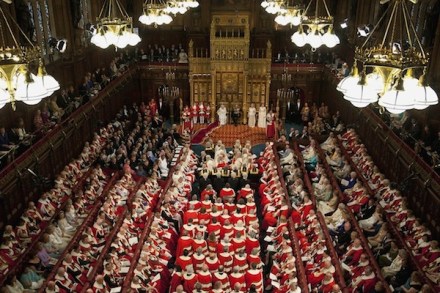
Want to know (or at least pretend you know) what the Queen was talking about when she addressed the House of Lords this morning? Here are the bills that the government will bring into Parliament over the next 12 months, and what they'll do: National Insurance Contributions Bill - The £2,000 employment allowance for every business and charity announced in this year's Budget. - Measures to combat tax avoidance, including an extension of the General Anti-Abuse Rule, which targets aggressive tax avoidance schemes, to National Insurance Contributions. - Further attempts to stop companies avoiding paying NICs using offshore employment payroll companies.

George Osborne braces himself for economic Ofsted inspection

It is probably unfair to say that the Queen's Speech will have nothing to do with the economy: we are, after all, expecting a deregulation bill among others, which the Treasury hopes will speed things up for small businesses. But if George Osborne looks a little distracted today, it's probably because his mind is on events outside Parliament. The International Monetary Fund's team arrives in London today for the start of a fortnight's inspection of the UK economy. The Chancellor must feel sympathy with teachers who fear the approach of their school's Ofsted inspection. Like teachers who suspect their Ofsted visit won't go their way, Osborne's allies have recently started to question the wisdom of the IMF, an organisation he has previously set great store by.

Ministers hope to reassure backbenchers with Immigration Bill

One of the key bills to be announced in today's Queen's Speech is an immigration bill. This serves two key purposes: the first is to bring into legislation all those additional restrictions on access to public services for migrants that was briefed out following the Eastleigh by-election. The second is to answer Tory backbench concerns about deportation of foreign criminals.

European debate returns to Tory MP vs Tory MP

One of the inevitable consequences of Lord Lawson's announcement that he'd vote 'No' in an EU referendum is that the ideological divides over Europe in the Tory party are starting to open up again. This lunchtime, two Conservative MPs debated one another on the issue, which must be confusing for the electorate, and also shows that it will be very difficult for any Tory leader to unite the party on the issue, even once the referendum has taken place. Margot James, a member of the new Number 10 policy board who also speaks for the pro-European Mainstream Conservatives on trade and investment, sparred with Bernard Jenkin, who isn't just a eurosceptic: he's a eurosceptic who wants a referendum now, rather than a few years' time, and who wants to leave the EU.

Lord Lawson doubts David Cameron’s EU power

The most damaging element of Lord Lawson's intervention on Europe in today's Times is not so much his decision that the facts have changed and that he would vote to leave the European Union in a post-2015 referendum, but his lack of faith in David Cameron's ability to secure any notable reforms. He writes: 'We have been here before. He is following faithfully in the footsteps of Harold Wilson almost 40 years ago. The changes that Wilson was able to negotiate were so trivial that I doubt if anyone today can remember what they were. But he was able to secure a 2-1 majority for the 'in' vote in the 1975 referendum. 'I have no doubt that any changes that Mr Cameron - or, for that matter, Ed Miliband - is able to secure will be equally inconsequential.

Ministers made a poor use of Parliament on press regulation

The government's decision to delay signing off the Royal Charter for press regulation was initially heralded as a dramatic change of heart, before being re-sold by those involved in the process as just a box-ticking exercise to avoid legal action. Either way, there is a growing noise not just about the rival charters now on offer, but also about the way the government's deal was brought before parliament. Shami Chakrabarti's disquiet over the proposals was widely picked up at the weekend. But there is also a growing unease in the Conservative party about the way Parliament voted on the legislative aspects of the new plan at such short notice. 'We were bounced into it,' one MP told me recently. 'If we'd had time to think about it, there would have been uproar.

Government caution makes Help to Buy warning all the more worrying

The introduction of the Help to Buy scheme was the only very small bone of contention in this year's successful Budget (successful politically, that is, in that no-one talks about it a month and a half later). The announcement itself was a political win for Communities Secretary Eric Pickles, who believes that the only problem left now is access to credit, over those in the Treasury who had, at one point at least, hoped to re-open the debate about planning regulations in order to increase supply. It is too soon to tell, of course, whether the scheme itself will be a roaring success: it only celebrated its first completion a week or so ago.

The backbench Tory plot to get a referendum bill into the Commons – and the row that will surely follow

John Baron and  Conservative backbench colleagues have been out and about insisting that today's results underline the need for legislation in this parliament for a referendum on Britain's membership of the EU after 2015. But Tories and Lib Dems in Number 10 were clear yesterday that this can't come as a government bill because of the realities of Coalition. But there will be a bill that comes forward. And it looks like it will cause its own almighty row. Those around the Prime Minister have been dropping pretty hefty hints to Tory MPs that though there won't be a government-sponsored bill, if there is 'any other way' of bringing legislation before the Commons, they would be sympathetic. There are two routes by which this can happen.

David Cameron: ‘It’s no good insulting a political party that people have chosen to vote for’

As we revealed on Coffee House earlier, David Cameron has now distanced himself from the 'fruitcake' characterisation of UKIP that he's employed in the past. Here's what he said: Cameron: Well I think there are major lessons for the major political parties, for the Conservatives, I understand why some people who've supported us before didn't support us again, they want us to do even more to work for hardworking people to sort out the issues they care about, more to help with the cost of living, more to turn the economy round, more to get immigration down, to sort out the welfare system. They will be our focus, they are our focus, but we have got to do more. Interviewer: You once called UKIP fruitcakes, do you still stand by that?

Sources tell Coffee House Cameron will mark an end to ‘fruitcakes’ name-calling

We could see a further tightening of the reconciliatory line that the Tories seem to be adopting on UKIP when the PM gives his response to the local elections later today. I hear from very well-placed sources in the Tory party that David Cameron plans to mark an end to the name-calling, acknowledging that it is time to take seriously the concerns of those who decided to vote UKIP yesterday. The Tory lines to take - reported by Guido - include this quote: 'Of course we understand why some people didn't vote for us - we need to focus even more on the things that matter to hardworking people: turning the economy around, fixing welfare, helping with the cost of living and controlling immigration.

Lib Dems try to avoid their own local election jitters

The dominant narrative in the build-up to these local elections has been all about UKIp vs the Tories, with a bit of angst about Labour's southern mission thrown in. The Lib Dems didn't really get a look in. They had moved to a reasonably stable position after romping home in the Eastleigh by-election, but today's results could change that. Their awful showing in South Shields - coming 7th - will shake the party, but so will any surprise big losses. The party has already failed to take control of Somerset County Council, which was one local authority it had focused a great deal of effort on. Sending out Tim Farron to do the expectation management hard work this morning was a good attempt at maintaining party unity.

Tories now see ‘fruitcakes’ and ‘clowns’ as serious voters impatient for change

We've only had a few results through in the local elections, but already the parties are giving their verdict on the way last night worked for them. One thing to watch today is the development of a Tory line on UKIP. There hasn't been one in the run-up to polling day, but will there be a concerted effort from the Conservative leadership to produce a clear message about what Nigel Farage's success means for the Tories? Grant Shapps certainly managed to stick to the Tinkerbell strategy of trying not to say 'UKIP' or 'Nigel Farage' in his Today programme interview. But he also stuck to the sympathetic portrayal of those who vote UKIP - rather than its candidates and now elected representatives - as people 'impatient for change'. He also told voters 'this is a loud and clear message.

Tory MPs think they’re psychic. But Cameron’s exciting them with false omens.

Even though there has been some reeling back today from the suggestion that David Cameron is on the brink of wowing his party with a bit of legislative red meat on an EU referendum, it won't stop Tory backbenchers trying to force the leadership's position on this matter. The problem is that Conservative MPs are starting to see themselves as psychic agents. They vote for something that their party doesn't want to happen and get called a rebel. A few months later, that rebellion becomes official party policy. One rebel joked to me earlier this week that 'I don't rebel against my government, I just vote two or three weeks ahead of it'.

Frank Field interview: Labour needs to do something dramatic to win back its lost working class voters

There's one government adviser who still feels Steve Hilton's absence very keenly indeed. 'He was always thinking ahead, how do we set the debate rather than endlessly react to it, that was why he was such a delight to work for. All the time he was racing ahead. It was difficult to keep up with him. I just thought he was brilliant, he was just wonderful.' But it's not a Tory MP or spinner who is missing the Prime Minister's 'blue-sky' guru: this adviser is Labour MP Frank Field, appointed by the government when it formed to work with David Cameron on how to tackle poverty. He suspects that it was Hilton's departure that led to the review that he painstakingly compiled gathering dust on a Number 10 shelf, allegedly unread.