Isabel Hardman

Isabel Hardman

Isabel Hardman is assistant editor of The Spectator and author of Why We Get the Wrong Politicians. She also presents Radio 4’s Week in Westminster.

Starmer made life miserable for Sunak at PMQs

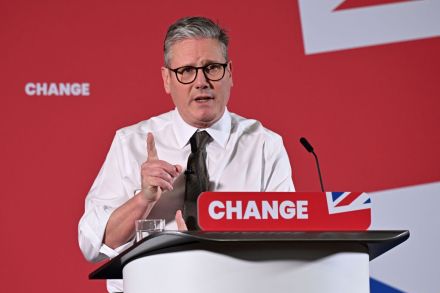
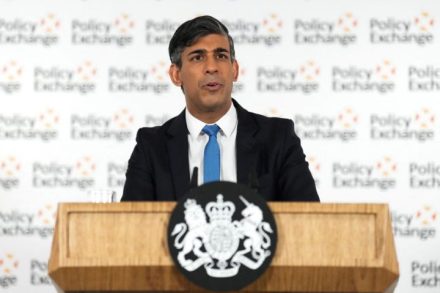
An ugly Prime Minister’s Questions today which will probably make the Tories wish they didn’t have to call an election for at least five years – and the public wish they didn’t have to endure the campaign that’s heading their way very soon. Inevitably, it was about racism, and inevitably Rishi Sunak had a miserable time. Starmer replied that he had changed his party but Sunak was scared of his Sunak did not try to pre-empt the session by announcing that Tory donor Frank Hester’s money would be going to charity, or any other measure suggesting he was taking the matter more seriously than yesterday’s slow crawl towards admitting Hester’s remarks about Diane Abbott were racist.

Kemi Badenoch refuses to toe the line – again

It's been another deeply uncomfortable day for the Tories, where the line to take on an issue of racism has collapsed at the last minute. Unsurprisingly, that collapse has also once again involved Kemi Badenoch. Ministers and Downing Street have spent the day refusing to say the word ‘racist’ when discussing the comments made by party donor Frank Hester about Diane Abbott. To recap, he was reported by the Guardian to have said in 2019 that ‘you see Diane Abbott on the TV, and you’re just like … you just want to hate all Black women because she’s there. And I don’t hate all black women at all, but I think she should be shot.

What does Boris want?

11 min listen

Newspapers today reported that Boris Johnson is going to campaign for the Conservatives in Red Wall seats. Responding, Nadine Dorries wrote on Twitter: ‘There’s no thawing of relations, no plans to campaign. Sunak not spoken to Johnson for over a year.’ So are the stories true? What does Boris want? Max Jeffery speaks to Kate Andrews and Isabel Hardman.

Can the Tories actually make their free extra childcare plan work?

Is the government’s expansion of free childcare actually going to work? The early years sector says not. They have warned that parents of two year olds won’t get the 15 funded hours they have been promised without eye-watering fee hikes overall – and that some nurseries may even be forced to close because they simply can’t balance the books. No wonder, then, that this policy was once again the focus of Labour’s attack at Education Questions in the Commons this afternoon. Ministers really do think the complaints about the scheme now simply amount to teething problems A number of opposition MPs, including Stella Creasy and shadow education secretary Bridget Phillipson, raised the looming launch of these extra free hours, supposed to start in April, during the session.

Will the NHS step count app get people back to work?

Is there really any point to the NHS app monitoring people’s step count? This is the latest announcement from Health Secretary Victoria Atkins, who wants to use the app as the ‘front door to prevention’ and helping people back into work. It is easily caricatured as a modern-day Norman Tebbit ‘on yer bike’ measure, suggesting to the long-term sick that if only they walk 10,000 steps a day, they’ll get back into a job. Except perhaps they will. We have a number of problems with our current approach to illness. One of them is that we tend to view everything through a biomedical model when other interventions can be as, if not more, powerful and permanent.

Why is Theresa May standing down?

13 min listen

Theresa May has announced that she will not seek re-election this year. The former prime minister said that launching her global commission on modern slavery and human trafficking meant she would not be able to spend as much time as she would like on constituency matters. James Heale speaks to Katy Balls and Isabel Hardman about the news.

Justin Welby: why shouldn’t bishops be political?

Michael Ramsey, Archbishop of Canterbury in the 1960s and early 1970s, would start his day by banging his head against his desk three times while chanting: ‘I hate the Church of England, I hate the Church of England, I hate the Church of England.’ Similar thoughts must surely have passed through the mind of Justin Welby at some point during the 11 years he’s been in the job. Since he was enthroned in 2013, the Church’s many divisions have worsened, most notably over women bishops, gay marriage and, in recent years, immigration policy. Given the fractured state of the C of E – not to mention the wider Anglican Communion – Archbishop of Canterbury looks like a role you’d only take if you enjoyed the constant sensation of hitting your head against a brick wall, not a desk.

Starmer offers little in response to Hunt’s Budget

Keir Starmer’s response to the Budget was delayed a little because the SNP forced a division on the immediate measures announced by the Chancellor. This was unusual, but if it gave the Labour leader a little more time to work out what he was going to say, it wasn’t clear he’d used it. He offered a stump speech that we’ve heard before: this was the ‘last, desperate act of a party that has failed’ and that there should be an election on 2 May. As I said earlier, if that was the last big event before Rishi Sunak calls a May election, he’s clearly aiming for a very low-key campaign that rests on the achievements of the past 14 years, rather than any last-minute flourishes.

Jeremy Hunt’s low-key Budget

If Jeremy Hunt’s Budget was the final flourish before a May election, it’s going to be a very low-key campaign indeed. The Chancellor did announce his National Insurance cut as trailed overnight, and abolished the non-dom status – also trailed – which will raise £2.7 billion for tax cuts for working people. He increased the child benefit threashold to £60,000, and prolonged the cut in fuel duty. But he had no big surprise, and no aggressive political attack. I suspect that the excited chatter around Westminster about Rishi Sunak calling a spring poll may die down a little now.

Starmer accuses Sunak of failing to act after Sarah Everard murder

Prime Minister’s Questions today was a weighty affair, with Keir Starmer focusing on the murder of Sarah Everard following the Angiolini Report into the failings of the police that allowed Wayne Couzens to continue in his role and to abduct his victim. The Labour leader asked how it could be the case that there was ‘nothing to stop another Couzens operating in plain sight’ three years on from Everard’s death. Sunak replied that the government had taken action ‘quickly’ to ‘strengthen police vetting, strengthen the rules for rooting out officers who are not there to serve and conducted the largest-ever screening of all serving officers and staff’. He added that ‘we will thoroughly consider all of the report’s recommendations’.

Will Jeremy Hunt play it safe today?

This Budget is probably Jeremy Hunt's last fiscal event before the election, and the Chancellor will want to at least set a fair wind for the Conservatives to head into polling day. That means giving voters a sense that sticking with the Tories is the safer option, offering them giveaways on tax and the sense that more tax cuts might be to come – as well as avoiding the sort of post-Budget rows that can define a government in all the wrong ways. Hunt is expected to cut National Insurance by a further two percentage points, on top of the 2 point cut he made in the autumn. This is cheaper than cutting income tax, but has the disadvantage of being a tax that voters don't fully understand or acknowledge in the same way.

What tax cut will Hunt deliver tomorrow?

13 min listen

Kate Andrews speaks to James Heale and Isabel Hardman as the speculation grows over what taxes Jeremy Hunt will cut in tomorrow's budget. National Insurance is looking most likely – it's a giveaway but does it go far enough?

Labour will find it hard to get tough on benefits seekers

Liz Kendall gave a speech this morning in which she promised to ‘build a better future’ for young people, with better mental health support and careers advice in schools. Sounds pretty motherhood-and-apple-pie from the shadow work and pensions secretary, but what’s getting more attention is that she also said there would be ‘no option of a life on benefits’ for people who can work.  This is interesting for two reasons. One is that the Labour party has really struggled over the past decade with conditionality in the benefits system, and more widely with the idea that it should tell people they should be in work. But that is exactly what Kendall said today. She told a Demos event: This is our commitment to young people. We value you. You are important.

Why wasn’t Wayne Couzens stopped?

10 min listen

Today, the long-awaited Home Office-commissioned Angiolini Inquiry into Wayne Couzens has been published. Couzens had kidnapped, raped and murdered 33-year-old Sarah Everard three years ago. The findings were chilling, revealing that numerous opportunities to stop Couzens throughout his policing career were missed. Katy Balls talks to James Heale and Isabel Hardman about where politicians failed Sarah Everard. Produced by Cindy Yu.

PMQs: Starmer and Sunak argue over who has the bigger racism problem

Today’s Prime Minister’s Questions was less about Rishi Sunak and more about the Tories around him. Keir Starmer opened his attack by describing the Conservatives as ‘the political wing of the flat earth society’. He said that ‘Tory MPs spent last week claiming that Britain is run by a shadowy cabal made up of activists, the deep state and most chillingly of all, the Financial Times’. Starmer’s second question referenced Liz Truss directly, but the first question was clearly designed to take in Lee Anderson’s comments about Sadiq Khan handing control of London to Islamists.

David Neal vs the Home Office

‘I’ve been sacked for doing my job. I think I’ve been sacked for doing what the law asks of me and I’ve breached, I’ve fallen down over a clause in my employment contract, which I think is a crying shame.’ That was just one of the bombs that former independent chief inspector of borders and immigration David Neal dropped at his select committee hearing this afternoon. It was never going to be a comfortable hearing, given he was sacked for being awkward to ministers in the reports he was writing on the state of border security (although they would say he was sacked for being awkward by leaking the contents of those reports). Neal’s argument was that he needed to be awkward to do his job.

David Neal vs the Home Office

12 min listen

Until recently the government's independent chief inspector of borders and immigration, David Neal has been in front of the Home Affairs select committee today to hit out at his erstwhile employers. Cindy Yu talks to Isabel Hardman and Katy Balls on the episode about Neal's abrupt sacking and just how 'independent' an independent inspector can be. Produced by Cindy Yu.

Linsday Hoyle has wound up the SNP again

Will Lindsay Hoyle really last as Speaker? Today he managed to enrage the SNP once again by refusing the party’s application for an emergency debate. The plan had been to use this SO24 debate, as it is known, to refresh the argument that the SNP couldn’t put to a vote last week about a ceasefire in Gaza. SNP Westminster leader Stephen Flynn raised this in a point of order this afternoon. He said: Mr Speaker, you apologised to the SNP and indeed you apologised to this House. You said: “I made a mistake, we do make mistakes and I own up to mine. We can have an SO24 to get an immediate debate because the debate is so important to the House.” Those were your words, Mr Speaker... It is my understanding, Mr Speaker, that SO24 application has not been accepted.

Ageing well: becoming a world leader in tackling dementia and Alzheimer’s

46 min listen

With cases of neurodegenerative conditions rising in the UK, it's crucial to re-examine how we tackle these diseases. The Spectator's assistant editor Isabel Hardman speaks to Debbie Abrahams MP (co-chair of the Dementia APPG), Dr Emily Pegg (associate vice president at Eli Lilly), Dr Susan Kohlhaas (executive director at Alzheimer's Research), and Professor Giovanna Mallucci (principal investigator at the Cambridge Institute of Science).

Commons chaos revealed the threat to MPs’ safety

13 min listen

As MPs return to their constituencies, the drama from Wednesday's parliamentary debate is still fresh in Westminster. James Heale speaks to Fraser Nelson and Isabel Hardman about whether MPs' safety concerns are influencing democracy, and why the outcome of the debate could mean lessons are learned for the future.