Isabel Hardman

Isabel Hardman

Isabel Hardman is assistant editor of The Spectator and author of Why We Get the Wrong Politicians. She also presents Radio 4’s Week in Westminster.

Labour: no change on HS2 position

Yesterday marked the first reasonably good day that agitators for HS2 have had in a while. Northern business leaders started the day with a call to David Cameron to hold firm on the project, followed by Labour leader of Birmingham City Council Sir Albert Bore warning Labour of 'protracted public conflict' in the run-up to the general election if it continued to 'put out such a negative message on HS2'. This morning's Guardian story that Labour will support HS2 provided the project's chairman Sir David Higgins is given the power to bring down its costs appears to be damage limitation. But party sources are today rowing back from that line, which means Labour's support or otherwise is no clearer than it was yesterday.

Energy bosses boost Tory tortoise in energy row with green taxes pledge

Like all good select committee hearings where MPs are grilling some unsuspecting witnesses on something they've decided to be very angry about, this hearing of the Energy and Climate Change committee took a very long time. It has been cut off for the time being from Ofgem's evidence by a series of votes in the Commons, but here's what we've learned from this first mammoth hearing in any case. The first is that the MPs clearly read Iain Martin's memo in the Telegraph about show trial-style select committee hearings. Only Ian Lavery managed the kind of fury that all members of these committees normally feel it necessary to manufacture, and even that was just a bit of a lecture rather than a rage.

Tristram Hunt tries to needle Lib Dems with troublemaking teacher debate

Opposition Day debates from Labour are often rather boring, with a frontbencher getting very angry about energy bills (one of their favourite topics for opposition day debates), and three backbenchers pulling stern faces at the lonely minister whose job it is to reply. But tomorrow's debate is being billed as a 'box office' encounter (which says a lot about the sort of thing people in Parliament get excited about) between the party's new Shadow Education Secretary Tristram Hunt and Michael Gove. Up to this point, Labour attempts to attack Gove have been about as effective as trying to scratch a diamond with a pin.

The private polling behind Labour’s energy bill swagger

A select committee meeting with the Big Six firms would attract attention in any year when the companies had announced such eye-watering price rises. But it is the political frisson added by Ed Miliband's energy price freeze pledge that makes this afternoon's hearing quite so interesting. Labour had a swing in its step anyway as it feels it has successfully spooked the Coalition parties, but it carried out private polling last week, seen first by Coffee House, that underlined this. 70% of voters surveyed by YouGov for Labour thought the government should introduce a price freeze, with 17% rejecting it.

Ministers need to re-energise wavering Tories on HS2 as well as Labour

Ministers' attention is now firmly focused on arguing that to abandon HS2 would be a sign that Labour is 'playing politics with prosperity', as Transport Secretary Patrick McLoughlin is set to say later today, or 'abandoning the North'. Yesterday the Prime Minister slipped in a joke about Ed Balls being absent from the Commons because he was trying to work out what his party's policy should be on the new line. Today Julian Smith is batting for CCHQ, predicting that 'if Labour oppose HS2 they'll be dismissing the long-term future of the country for a short-term political gamble'. As James explained last night, this is all part of an attempt to 'smoke out' the Opposition.

European Council statement: Leaders seize opportunity for economic ding dong

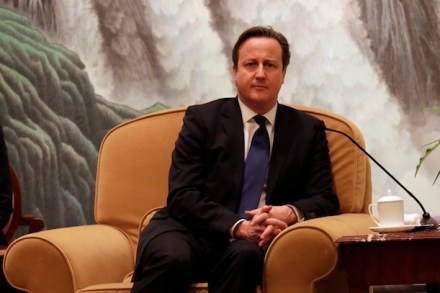
Why did the Prime Minister give a statement in the Commons on the outcome of last week's European Council summit? Though he is expected to report back to MPs each time one of these jamborees takes place, David Cameron didn't really have a great deal to tell them other than the tantalising suggestion that the leaders had made progress on cutting red tape and the declaration that 'the EU is changing'. It was hardly one of those statements where Cameron can wave a budget cut or some other great policy victory at MPs.

Off colour Ofgem?

Ofgem is the energy market regulator that is supposed to be examining what it is that is going well or badly in the market. But it doesn't seem to be doing the greatest job. This week we will hear more details about the annual competition test announced by David Cameron at PMQs last week, but the problem is that Ofgem has only just concluded an examination of this anyway. That review of the retail energy market took two years and published a series of rule changes in June 2013. The changes were designed to address 'widespread consumer confusion over energy tariffs, poor supplier behaviour and lack of transparency which is stifling competition'.

Energy competition heats up

Now that ministers are nearing a deal on those green taxes and levies, they are also trying to highlight their efforts to improve the energy market in general. Privately there were a number of Conservative MPs of a similar persuasion to John Major who I spoke to last week who sympathised with the former Prime Minister's windfall tax proposal. They argued that the energy companies are benefitting from a broken market, and this tax would simply be a tax on the extra benefits of that broken market. But Greg Barker this morning argued that it would damage investment.

‘Abandoning the North’: the new emotional HS2 debate

David Cameron insists that a project like high-speed rail needs cross-party support. That may well be sensible, but his desire for Labour to retain its support for the new line is founded more on the necessity of getting the legislation through Parliament, rather than a great belief in parties working together on the big things. The fact is that Cameron needs Labour votes because yet again he cannot rely on his own party, the party of government, to push the bills through. Labour obviously scents blood, not just because there's sport to be had in making a Prime Minister squirm and plead for the Opposition's votes, but also because dropping support for HS2 would lend the party some useful credibility.

Who feels grumpier about the recovery?

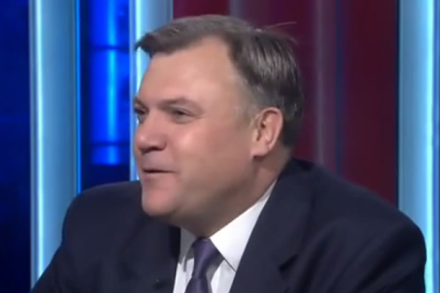
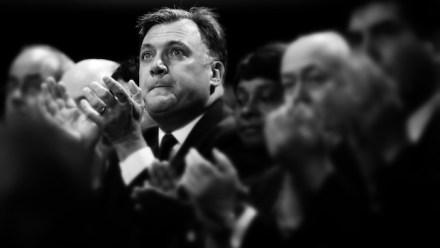
The Tories were expecting Ed Balls to be a little grumpy today after the ONS' latest figures showed the economy was growing at its fastest rate in three years. And the Shadow Chancellor didn't sound his cheeriest when he popped up to respond. In his official response, Balls said: 'After three damaging years of flatlining, it's both welcome and long overdue that our economy is growing again. But for millions of people across the country still seeing prices rising faster than their wages this is no recovery at all.' And on the World at One, he said: 'For people who are seeing their living standards falling, being told that somehow it’s now turned and it’s going well, just jars with people’s own experience.

Breaking: Economy grew by 0.8 per cent in Q3

As ministers had hoped, today's first estimate of GDP figures from the Office for National Statistics shows that the economy grew by 0.8 per cent in the third quarter of 2013. Citi had predicted 0.7  per cent, and while the economy is still 2.5  per cent below its pre-recession peak, ministers now have evidence of an upward trajectory, or, as the Treasury is describing it this morning, 'real momentum'. The Tories will use this now to argue that Labour has got it wrong on everything, while Labour sticks to its line of welcoming the growth but pointing out all the other bad things.

Three Tory whipping operations prepare for HS2 revolt

Critics of HS2 are scenting blood on all sides now. As the Sun reports, giving Ed Balls the final say on the project is another sign that the Labour party is at least constructing a coffin for the project, even if it isn't driving the nails in just yet. Meanwhile, on the Tory side, I understand that there are three whipping operations springing up around the report stage and third reading of the preparation bill next week. The PM's backbench envoy John Hayes and his PPS Mel Stride are the most active from the government side, even though Hayes is not a whip. One Tory MP observing these things tells me: 'Whenever the chips are down, he goes around drawing up lists of possible troublemakers and working out how to get alongside them.

MPs still fracked with nerves about shale gas incentives

In the days before Ed Miliband went all Marxist/brave on energy (delete as tribally appropriate), the debate around energy was more about fracking than it was about freezes. Shale gas has taken a back seat while ministers wonder what on earth they can do about bills to take the wind out of the Labour leader's sails. But the political problems haven't gone away. The debate is still about whether the incentives on offer are enough for local communities to accept fracking pads in their area. MPs whose constituencies sit atop the Bowland Shale don't think the government is offering enough, and have continued to tell the Prime Minister that. He recently held a meeting with MPs interested in fracking, but those who attended complain that they got little out of it.

Cameron’s 30-minute warning to the Lib Dems on energy bills

The Lib Dems are cross this afternoon about David Cameron's PMQs announcements on cutting back on green taxes in energy bills. They are mainly cross because they were only given 30 minutes' notice of the new policy before MPs crowded into the Chamber for the session, and are insisting that 'nothing concrete has been agreed'. A source close to Nick Clegg told Coffee House; 'Generally you would hope that an announcement of government policy would not be handled in this way. There was a quad discussion about this but nothing detailed was put forward and nothing concrete has been agreed.

Why Mike Penning can afford to be so aggressive about the benefit cap

What a combative interviewee Mike Penning made on the Today programme. The new work and pensions minister clearly felt that given the benefit cap is the most popular policy pollsters have touched in a long while (73% support the cap in principle), he could take the presenters and the Chartered Institute of Housing, which criticises the policy in a report today, to task in the most direct way possible. 'I'm really disappointed,' he said, adding that the work was 'fundamentally flawed' and scolding the BBC for even reporting it: 'I'm really disappointed with the work that's been done there because it's fundamentally flawed, and actually disappointed again with the BBC's reporting of it this morning.

PMQs silence on Grangemouth benefits SNP

Ed Davey is currently answering an urgent question in the Commons on the Grangemouth petrochemical plant. He urged Ineos and Unite to return to talks, describing the failure of the negotiations as 'regrettable'. As the questions from backbenchers to Davey continue, it's worth noting that there wasn't a single mention of the plant at Prime Minister's Questions, even though the closure of that plant will lead to around 800 people losing their jobs. Ineos estimates that around 10,000 jobs rely indirectly on the factory. The SNP have already picked up on this silence, and can quite easily argue that it shows that Westminster doesn't care about jobs in Scotland.

Sir John Major and the Number 10 vacuum

When Ed Miliband announced his eye-catching energy policy, Tory MPs hoped that their party would respond in kind with something similarly interesting to voters but that would really work. They hoped this would underline that the Conservative party is the party of government, while Miliband was only suitable for opposition. George Osborne's conference fuel duty freeze and his noises about green taxes and levies on fuel bills reassured many of them, but Sir John Major's intervention yesterday has highlighted the vacuum caused by a refusal by Number 10 to engage with what one strategist described to me as 'the footling little things'. One MP said after Major's speech: 'Number 10 is totally on the wrong page on this.

In areas of weakness, Labour can only complain that the government isn’t tough enough

Much of the coverage of today's Immigration Bill has centred around those controversial 'go home' vans, now ditched because they only sent one person home. Theresa May told the Commons this afternoon that 'we won't be rolling out the vans, they were too much of a blunt instrument'. In response to a question from Keith Vaz, she said: 'What I said to the right honourable gentleman is I didn't have a flash of blinding light one day and walk into the Home Office and say, I know, why don't we do this?' What I have done is looked at the interim evaluation in relation to the vans.

‘Now we’re relevant’: Lib Dems see free schools row as ‘win’

The Lib Dems are coming in for a beating this morning from the Tories over Nick Clegg's decision to go public with his thoughts on the flaws and limitations of the free schools programme. Rachel Sylvester and James Chapman both have very strong briefings from Conservative sources about the Deputy Prime Minister's comments, while the Lib Dems are annoyed both that there is such a fuss about a new plank in the differentiation strategy and also that they have apparently held this policy for a long time. Sources close to Clegg are highlighting that the Lib Dem spring conference backed a motion supported by the leadership which called for all teachers to either have qualified teacher status or be working towards QTS, and for all schools to teach the National Curriculum.

Sacked minister suggests making government messier – and better

After every reshuffle, sacked ministers choose to tread a number of different paths. Some go rogue, either to the extent that Tim Loughton has since losing his job last year, or at least in publicly criticising their party's policy, as Jeremy Browne has since being sacked in this year's round. Others go to ground, receive appreciative applause in the Chamber when they ask very anodyne questions about the local incinerator in their constituency, but don't bother their former bosses. And a very small number decide to offer some quiet thoughts on how things might be better. Sacked housing minister Mark Prisk seems to have gone down the third route.