Isabel Hardman

Isabel Hardman

Isabel Hardman is assistant editor of The Spectator and author of Why We Get the Wrong Politicians. She also presents Radio 4’s Week in Westminster.

Miliband under pressure over SNP pact

Labour has found Sir John Major rather useful in this Parliament, with his criticisms of government policy and praise of Ed Miliband’s energy price freeze. But his op-ed in today’s Telegraph in which he demands that Ed Miliband rule out a coalition with the Scottish National Party is rather less helpful. What makes this call even more unhelpful is that many Scottish Labour MPs are desperate for Miliband to rule out a pact because of the damage that shacking up with the SNP would do for their brand in Scotland. They will also have emerged from a bloody battle in which many of their number will have lost seats to the SNP, and so the visceral hatred between the sides will hardly have abated.

Even if there are ‘no votes’ in defence, Cameron must beware of mutiny in his party

Tory MPs are becoming increasingly agitated about defence spending and whether or not Britain will maintain its defence spending at 2 per cent of GDP. They do understand the pressures that protected spending for other areas puts on budgets such as defence, but as I explain in the Times today, they are unhappy that certain people who should know better have been telling them that there are ‘no votes’ in defence. ‘No votes in defence’ is an old saying, but it’s still striking that Philip Hammond used it at all when briefing Conservative MPs on foreign affairs and defence.

Cameron may have chickened out, but the broadcasters cocked up the TV debates

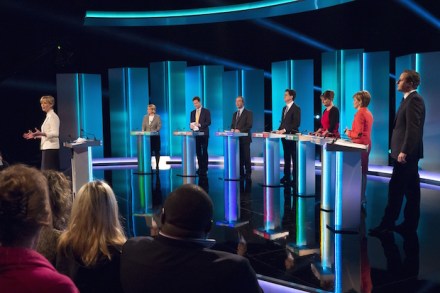
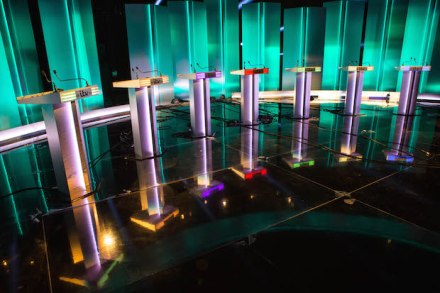
So David Cameron won’t debate anyone unless the broadcasters agree to his exact specifications, Ed Miliband won’t debate Clegg in Cameron’s place and has instead offered Harriet Harman, and the broadcasters are threatening to empty chair anyone who refuses to turn up to any of their debates. It’s fair to say that the TV debates are firstly very unlikely to happen and secondly in the most unimpressive mess. Though the Prime Minister is ducking out of them for the selfish reasons outlined here, the blame must ultimately lie with the broadcasters for making it possible for him to do so. They have managed to mess up at every stage of the process.

David Cameron’s debate ‘offer’ means he’s chickening out while pretending not to

So David Cameron has made his ‘final offer’, his final condition on which he will or won’t sign up to the TV debates. And it is a clever way of appearing to care about the TV debates while ensuring that they don’t happen at all. In a letter to the BBC tonight, the Prime Minister’s Director of Communications Craig Oliver has said he will only agree to one debate - lasting 90 minutes, between seven party leaders. And that’s it. Number 10 sources are briefing that the Prime Minister’s rejection of a two-way with Ed Miliband is because we have left the era of two-party politics. Well yes, but we also left the era where no one had a television much longer ago.

The PM knows the TV debates won’t happen

The broadcasters have now said they could be willing to host a TV debate between David Cameron and Ed Miliband on another date if that means the programmes will actually take place. Though this shows willing on the part of the broadcasters, who have messed up the debates with proposals that would inevitably end up mired in a row, it does not make them more likely to happen. It would be easy for any of the parties who feel hard done by, particularly the Lib Dems, to apply for an injunction against the head-to-head taking place on the grounds that they will have no chance to respond to any claims made about their party. And the Prime Minister could simply move on from complaining about the dates to arguing that they must be held as a set of three before he agrees to the head to head.

Some poorly-timed heckles made for an unedifying PMQs

Thank goodness there aren’t that many Prime Minister’s Questions left before the election. As James said, there was a rather end-of-term feeling to today’s session: indeed, it felt a bit like an end-of-term lunch where all the pupils are hopelessly overexcited and the teacher has given up. It wasn’t just that David Cameron decided he should troll John Bercow by reeling off a lengthy list of Tory commitments that the party has stuck to, giggling at the Speaker as he said ‘plenty of time!’ to mock Bercow’s habit of pompously telling MPs that the session will take as long as it needs to. It was also the way MPs were heckling, laughing and talking throughout most of the exchanges.

Ukip dumps its 50,000 immigration target – could this help the Tories?

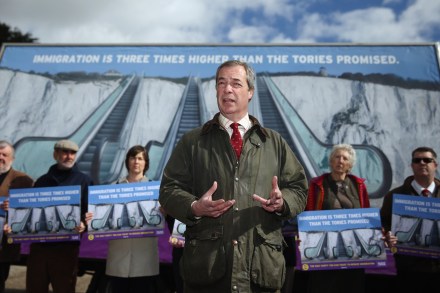
It was a bit rich of George Osborne to tease Nigel Farage for ‘a novel approach to policymaking’ for dumping Ukip’s previous commitment to a 50,000 cap on the number of migrants arriving in the UK each year live on the Today programme. George Osborne found this rather funny, even though he and his colleagues have spent the past year doing something reasonably similar. It was on the same programme that Theresa May downgraded the net migration target to a ‘comment’, while Osborne gave newspaper interviews in which he made it clear that it would be rather difficult to meet the target under Britain’s current arrangements with the EU.

Can the Tories really make another net migration target?

Why is Theresa May doggedly sticking to the Tory net migration target, even when it has failed so badly in this Parliament? Her Tory colleagues might be asking why she’s even talking about it when immigration is not one of the key campaign priorities for her party. It is supposed to be talking about housing this week, not immigration. But there on the front page of today’s Times (which is holding an immigration series this week, so May has probably not decided to time her intervention) is May insisting that the target should be kept. She tells the paper: ‘You will have to wait for the manifesto to see the exact words. The idea of the net migration target will still be there. It will be measured [in the same way].

Does the Tory housing pledge really help the housing crisis?

Given the Tories are the party of Macmillan, it seems quite right that they’ve picked housing as one of their six key election priorities. David Cameron gave a speech on it today, promising 200,000 ‘starter homes’ - properties sold to first-time buyers at a discount - by 2020. There have been some complaints today, notably from Shelter, that this policy will not increase the supply of housing overall because developers can swap plans they already had for affordable homes for the starter homes instead. Given housing supply is currently so low (see the two graphs below for the UK and secondly for England in the quarters covered by this Coalition), surely ministers should be more interested in overall supply, rather than tenure? [datawrapper chart="http://static.

Tories ‘have fixed’ beleaguered campaign database

The Conservatives believe they have fixed their beleaguered campaign database, VoteSource, after increasing complaints from MPs. Coffee House understands that a number of MPs in marginal seats complained to party co-chair Lord Feldman after they started to tire both of finding that their data wasn’t being saved properly and of being told that everything was fine. MPs have been told that the party made repairs to VoteSource over the weekend and it is now supposed to be fully functioning. Those checking their data in the past few weeks had been growing increasingly agitated about the way the database was working, with at least one association threatening to start using old-fashioned cards to keep voter information.

Immigration threatens to overshadow Tory housing week

It’s supposed to be the Tory housing week, with David Cameron setting out plans to double the number of discounted starter homes to 200,000. It’s an important, salient issue to make election promises on. But more salient is immigration, and somehow the Tories are having to talk about that again today. Today's Times contains a plea by Ken Clarke that Cameron drop the Tory target to drive net migration into the ‘tens of thousands’, given its failure in this parliament. Ministers have oscillated between blaming the Lib Dems and blaming Europe for missing the target (they could also blame the growing economy, as Fraser explains here) and David Cameron did closely tie controlling immigration to European reform in his speech before Christmas.

Are reports of a Ukip split greatly exaggerated?

Day two of the Ukip conference, and the placid mood continues. Delegates seem very content with the speeches that they've heard from Douglas Carswell, Patricia Culligan, Janice Atkinson and Diane James. They wee particularly entertained by Atkinson, who spent a great deal of her speech talking about Harriet Harman, and criticising the other parties' policies for women. They were very happy when Culligan described reforms to Ofsted that will mean children will be allowed to celebrate nativity plays (something that might have come as a surprise to a number of parents). And Diane James delivered a speech better than the sort of stuff you'd expect from many a junior minister.

Farage uses speech to clarify his position

Nigel Farage’s speech to the Ukip conference was fine. Not a bad speech, but not his best speech, either. It was just fine. Activists seemed happy, ecstatic, even when he came on, and were joyful chanting when he left the stage too. But Farage clearly wanted to answer a number of questions about his own position. The Ukip leader started by pointing out that there had been a number of questions about his whereabouts, and that some of his opponents had tried to spread some unpleasant rumours that he was unwell (there have been some rumours circulating in Westminster to that effect, though it’s unclear where they originated from).

Steven Woolfe tells us what Ukip doesn’t believe about immigration

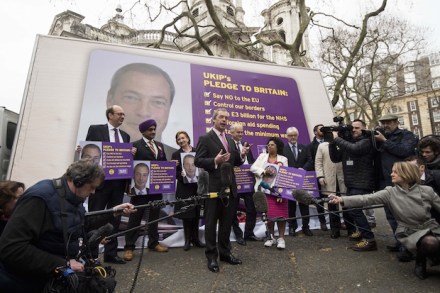
You might think that Ukip’s immigration spokesman Steven Woolfe had the easiest portfolio in the party. After all, as the ComRes/ITV poll showed yesterday, Ukip is already the most trusted party on immigration. It doesn’t sound like much hard work, does it? But Woolfe sees his job as being to articulate what the party doesn’t believe, explaining that it isn’t a party that dislikes immigrants per se, but one that wants to clamp down on mass immigration. He has just finished his speech to the conference, which he broke up with two speeches from Harjit Singh Gill, former Mayor of Gloucester, and Edward Fila. Both spoke about their experiences as immigrants or children of immigrants.

Ukip backs Osborne’s deficit plans – but how would Farage cut spending?

The Ukip spring conference is underway in Margate today, with the party starting the two days of speeches and fringes with a pledge that it will match the Tory plan to eliminate the deficit by 2017/18. Nigel Farage has said that this support is conditional on the Tories keeping their promises, but it will be interesting, once he has arrived at the conference from the US, to see how he articulates a Ukip vision for cutting the deficit.  Given the party has spent a fair while talking about what it wouldn't cut, for example the 'Bedroom Tax', it may find it less enjoyable to talk about what it would cut.

What Ukip needs from its spring conference

Ukip has put all the journalists in a special balcony above the main auditorium at its spring conference. It’s quite thoughtful of the party, as the gallery is right next to the press room where hacks can file, but it also means that they’re a little apart from the delegates. Sitting on the floor of the hall, I overheard a party official talking to a delegate. ‘Those people over there,’ he said, pointing to the gallery. ‘Are here to take the piss.’ To be fair, one of the jobs that the press in this country does very well is to take the mick out of politicians whose bloated egos could do with a little needling from time to time. We are like the little brother who teases his siblings, and in doing so, stops them from becoming a self-important twit.

Single snowdrop sells for £1,390: welcome to galanthomania

Have you heard of galanthomania? It’s an affliction that can rob people of their money - and, it seems, their senses. They’re so desperate to get hold of some small white stuff that they’ll part with hundreds of pounds at a time - or even resort to theft. Galanthomaniacs are people who collect snowdrops, often more kindly called galanthophiles. I wrote about this addiction in the magazine recently, but this week the record for the most expensive snowdrop was broken yet again. Someone shelled out £1,390 (plus £4 postage, which seems rather cheap: you’d expect a plant that expensive to turn up with a police escort) on eBay for Galanthus plicatus ‘Golden Fleece’.

Why are the Lib Dems spending so much time talking about mental health?

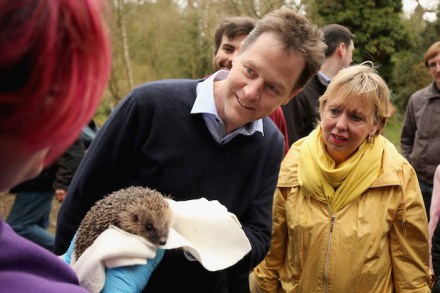
Nick Clegg is to hold an hour-long phone-in next week on mental health. The Deputy Prime Minister will host the session himself on LBC on Monday. This is part of the emphasis that the Lib Dems are placing on mental health in their election campaigning. Now, there are lots of good reasons why the Lib Dems might want to campaign on mental health, including that it jolly well needs campaigning on because it is, as Clegg says, a ‘Cinderella service’ that suffers from long waits, poor research and less funding, yet one in four people will suffer from some kind of mental ill-health. But there are sound political reasons too. The first is that it is very popular with potential Lib Dem voters, as explained here.

The Tory trouble to come on defence spending

There are still some unhappy mutterings about the possibility that the Tories won’t commit to spending 2 per cent of GDP on defence in the next Strategic Defence and Security Review. Treasury sources have been pouring cold water on the suggestion that George Osborne has told David Cameron that spending will fall below that target, but that’s because no-one’s making any decisions until they have to, and they only have to make a decision after the election. In any case, we’ve probably seen the full extent of the unhappy mutterings in the past few days anyway - at least, until the election is over.