Isabel Hardman

Isabel Hardman

Isabel Hardman is assistant editor of The Spectator and author of Why We Get the Wrong Politicians. She also presents Radio 4’s Week in Westminster.

Labour could U-turn on the benefit cap

The most striking aspect of Labour’s response to the Queen’s Speech yesterday was that it is ‘sympathetic’ to the Tory plan to lower the £26,000 benefit cap for workless households to £23,000. This is a policy position that Harriet Harman developed after some discussion with the rest of the party as she prepared to respond to the Speech. The party is well aware that it struggled to respond well to the introduction of that cap in 2010, and that given it ended up being one of the most popular policies pollsters have ever touched, it can’t make the same mistake again. But what’s interesting is that not all leadership candidates agree with this.

George Galloway’s presence will spice up the London mayoral campaign

George Galloway’s announcement on Twitter this afternoon that he is standing for London Mayor hasn’t surprised many, given he suggested he would do so before he even lost his seat as Respect MP for Bradford West. But it is still significant because it means that there will now be a fierce left-wing force splitting the Labour vote in London, even though the party does have an impressive line-up of big names bidding for the candidacy. One thing is clear: Galloway won’t make the campaign any more boring. He is a magnificent orator, and easily recognisable, too, which helps in any contest, but especially in a London fight that follows Boris Johnson’s eight-year tenure.

Boris Johnson makes his first intervention in the House of Commons

Boris has finally spoken. Intervening on his Tory colleague Cheryl Gillan, who was complaining about a lack of funding for rural public services and transport, the new MP for Uxbridge said 'Will she not agree that in fact her constituents get a superb service from Transport for London?' He thanked the government for its continued investment in London transport. Boris will continue to work as Mayor and focus on these duties. But it will be interesting to see what non-London interventions he makes before stepping down in 2016.

Yvette Cooper snaps up six more MP supporters for her leadership campaign

Six more Labour MPs have endorsed Yvette Cooper as leader: Coffee House has the names exclusively. Emily Thornberry Ian Austin Jim Cunningham Karen Buck Lyn Brown Steve McCabe They’re an interesting mix, ranging from Londoners like Karen Buck, Lyn Brown and Emily Thornberry to those with seats in the Midlands, such as Ian Austin, Jim Cunningham and Steve McCabe, and helps the Cooper campaign’s claim to have nationwide support, rather than backing from MPs in certain parts of the country. It is also interesting that Buck, who served as Ed Miliband’s PPS towards the end of the last Parliament, has backed Cooper, along with Austin, who was exposed as one of the MPs who had tried to complain about Miliband’s leadership.

Cameron will struggle to get human rights reform past parliament at any stage

David Cameron has decided to stall on human rights reform for now, partly because the Tories couldn’t quite work out how to get the reforms they wanted, and partly because the Prime Minister knew that he had a rebellion in his own party on his hands, opposition from almost all other parties bar the DUP, who Sam Coates explains in the Times have said they are unlikely to give their backing to the bill in the early part of the parliament. Opponents of big changes to human rights legislation within the Tory party are not surprised by the delay. They also don’t think that it is likely to pass at any stage in this Parliament, unless it is dramatically slimmed down to the point that it makes very little difference.

Will Nick Clegg’s response to the Queen’s Speech mean anything at all?

Could there be a sadder sight today than Nick Clegg, intervening on behalf of his now tiny ‘minor party’ in the Queen’s Speech debate? The Lib Dem leader is responding to this afternoon, his first intervention since the general election, and plans to use his slot to complain that the Tories are already turning their backs on the ‘clear thread of liberalism’ that his party installed in the government. He will say: ‘So it is dispiriting – if pretty unsurprising – to see how quickly, instead of building on those achievements, the new Conservative Government is turning its back on that liberal stance.

Chris Bryant interview: Labour has to speak to voters ‘at the end of the line’

Chris Bryant is haunted by Labour’s general election defeat. He has taken his former colleague Douglas Alexander’s office, and Commons staff have been appearing to collect the former Shadow Foreign Secretary’s computers. ‘They were referring to the computers as “the defeated computers”,’ he says. ‘Politics is quite brutal.’ The defeated computers are a sad symbol of Labour’s loss: Alexander was one of Labour’s many election chiefs, but is now just an ex-MP. But Bryant, who says he did feel in his gut that Labour was going to lose, still seems rather chipper.

The real Yvette Cooper is standing up

In many ways, Yvette Cooper has a perfect CV for Labour leader: a wealth of experience in government, not factional, respected by colleagues (except those who had a habit of moaning that she was, er, working on her leadership bid when in Ed Miliband’s shadow cabinet), well-known in the party membership, capable of delivering a jolly good speech that cheers up a grumpy conference and capable of using her long experience to trip up Theresa May when the Home Secretary is trying to get up to some funny business in the Commons. But the leadership candidate’s covering letter for her CV is a bit less exciting, because no-one really knows what she stands for.

Cameron’s EU charm offensive must seem genuine

There is so little detail on David Cameron’s talks with Jean-Claude Juncker that it is almost outweighed by the briefing on what the pair ate while at Chequers (a spring salad, followed by pork belly and vegetables and a dessert of lime bavarois). What we were told was that ‘Mr Juncker reiterated that he wanted to find a fair deal for the UK and would seek to help’ and that ‘they talked through the issue at some length in the spirit of finding solutions to these problems. They agreed that more discussion would be needed, including with other leaders, on the best way forward’.

Chuka Umunna endorses Liz Kendall for Labour leader

After pulling out of the Labour leadership contest himself, Chuka Umunna has given his star-studded endorsement to Liz Kendall, along with his leadership team of Emma Reynolds, Stephen Twigg and Jonathan Reynolds. In an article for the New Statesman, Umunna writes: ‘For us, our next leader must get this vision right. On all these big subjects, Liz Kendall has asked the tough questions and started to chart a course to the answers. She has been courageous in challenging conventional wisdom. She has no compunction in moving Labour beyond our comfort zone and is determined to build a team ready to chart a route forward. This is exactly what our party needs and that is why we are nominating her to be the next leader of the Labour Party.

David Cameron is trying to manage the referendum – and his party – properly

The government’s announcement that EU migrants will not be able to vote in the EU referendum tells us a number of things about the way David Cameron is approaching this vote. Firstly, he’s keen to show everyone that he’s getting on with it - indeed, the Prime Minister seems reinvigorated on all fronts at the moment - and making announcements about the franchise is just one example of that. The second is that Cameron does not want the debate about the referendum to be one of an Establishment stitch-up. Allowing EU citizens to vote would be one way of encouraging such a narrative from certain parts of the ‘Out’ camp. And thirdly, Cameron is keen to preserve party unity as much as he can on an issue that naturally splits his party.

Cameron confident about renegotiation result: but will it please voters?

David Cameron was in an extremely confident mood when he addressed the press at the end of today’s EU summit in Riga. He continually joked about journalists needing to write stories about the trials and tribulations of his EU renegotiations over the next couple of years, but those stories not meaning very much at all. ‘My advice would be - a bit like the election, really - wait for the result!’ he said gleefully when asked whether he would get what he wanted from the renegotiation. But he later admitted that ‘I’m not going to say I was met with a sort of wall of love when I arrived.

BBC announces Labour leadership hustings from constituency symbolising party’s failure

After Harriet Harman announced that Labour would ‘let the public in’ to its leadership contest, the BBC has announced that it will broadcast a hustings with the candidates on 17 June. The programme, which will be broadcast on BBC Two (which might give a clue as to how popular BBC executives think this example of public service broadcasting will be), will be presented by Laura Kuenssberg. The venue is quite instructive. Harman said this week that the contest need to take place in places where Labour wasn’t winning, rather than the party’s strongholds. So the hustings will be broadcast from Nuneaton: the constituency that showed the demise of Labour’s hopes of victory on election night by staying Tory.

Kendall is a hard act to follow for Cooper and Burnham

Liz Kendall is the great unknown Labour leadership candidate. She is the only one who hasn’t been in government or Shadow Cabinet, and as I blogged earlier, she needs to show that she has got qualities that make up for this lack of experience. She made a pretty good start on this at the press gallery lunch today, as the first candidate to speak to, and take questions from, journalists. Yvette Cooper and Andy Burnham will presumably agree to the same event at some stage - and they now have a hard act to follow. In her opening speech, Kendall painted a rather brutal picture of where her party had ended up and why it had lost. She said: ‘This defeat was epic. We lost by a magnitude few predicted or imagined. The election demands a new era for the Labour party.

Kendall, Cooper and Burnham all have perceived weaknesses to overcome

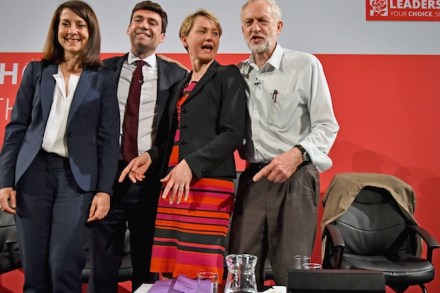
Now that Liz Kendall has enough MPs backing her to make it on to the ballot paper for the Labour Party leadership contest, the three main candidates are all starting to think about how to appeal to those party supporters who will vote for the leader. This involves contacting constituency Labour parties, trade union branches and so on in order to canvass. Each of the three main candidates also needs to overcome a key perceived weakness. For Andy Burnham, it is that he is the trade union candidate and just a populist figure of the Left. For Yvette Cooper, it is that her experience which her supporters see as a strength is also an unpalatable link to Labour's past, and also that she needs to set out in greater detail what she believes in.

The Tories try to deal with latest net migration target failure

One of the odd decisions that the Tories made before the election was to pursue their net migration target, in spite of the fact that they cannot meet it. Today’s figures underline that, with net migration at 318,000 last year, which is the highest total for a decade. The Office for National Statistics said this represented a ‘statistically significant’ rise of more than 109,000 from 2013. Knowing that these figures were coming and wouldn’t be a particularly comfortable experience — more comfortable, though, than had they been published during the election campaign — the Conservatives are setting out their own plans to crack down on the things that annoy people about immigration more than numbers.

Labour should now define itself as in favour of both a referendum and the EU

The three main Labour leadership candidates have now all said that they want a referendum on Britain’s relationship with the EU. But the party’s ‘official’ position - that is, the policy it went into the last election with that everyone seems quite keen to disown - is that there should not be a referendum. The party will not have chosen its leader by the time of next week’s Queen’s Speech, even if MPs seem to be making their minds up pretty quickly, and so when the EU referendum bill is published in that speech, the party will need to respond. It would perhaps make sense if that response wasn’t a repeat of the old Miliband policy, given all the candidates likely to succeed him want a referendum.

Tristram Hunt bows out of Labour leadership race and backs Liz Kendall

Tristram Hunt is not standing as Labour leader and will instead back Liz Kendall, he finally confirmed at the end of a long speech this morning. The party’s Shadow Education Secretary had some fun forcing hacks to listen to his assessment of Labour’s failure, which took a while, before he announced this, saying: ‘It is clear to me that I do not have sufficient support to be certain that I could run for the leadership myself.. there is a real risk that I might help restrict the choice for the party and that is not a risk that I am prepared to accept.' He complained that other candidates had been working on their campaigns for longer, saying they had 'longer, more established ambitions'.

The Labour leadership checklist

There seems to be a checklist for Labour leadership hopefuls which all of them are very keen to tick off. When launching a campaign, a candidate must say that their party has just suffered a terrible defeat from which a number of profound lessons must be learned. These lessons all seem to be rather similar, and have led the candidates to say the following things: ‘We didn’t speak enough to aspirational voters’ Mary Creagh: ‘People felt that Labour didn't understand their aspiration to earn money and provide a better life for their family.’ Chuka Umunna (when he was standing): ‘We need to… focus on what is the new agenda that is going to get a Labour government elected in 2020.