Isabel Hardman

Isabel Hardman

Isabel Hardman is assistant editor of The Spectator and author of Why We Get the Wrong Politicians. She also presents Radio 4’s Week in Westminster.

Why all the Labour leadership candidates have failed to deal with Jeremy Corbyn

Even though Jeremy Corbyn has the Big Mo in this Labour leadership campaign, it is fair to say that Yvette Cooper has had a pretty good few weeks too. The Shadow Home Secretary managed to produce all her passion for her speech today in which she finally rounded on Corbyn, as well as rightly attacking the idea that only those at the hard ends of the political spectrum are the ones with principles. This evening she has bagged the endorsement of the Guardian. Andy Burnham, meanwhile, has not been enjoying the campaign since his bungled handling of the welfare bill.

Failed candidates highlight Labour’s southern discomfort

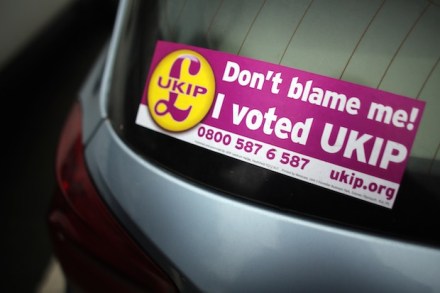
While the Labour leadership contest is in a miserable state, other parts of the party are trying to get on with working out how it can recover in 2020. Two big questions are how to deal with Ukip and how to make Labour a winning force again in the South of England and I look at the senior party figures who are trying to get going with answering these questions in this week’s politics column. So anxious are those who actually fought the general election in the South that they’ve written a letter to all four leadership candidates and deputy leadership contenders to remind them of the importance of making Labour a winning force in the South West, the South East and East of England.

Will Tony Blair really help save Labour?

Will Tony Blair’s intervention into the Labour leadership contest really make a difference? The former Prime Minister argues in today’s Guardian that this is a far worse crisis for his party than the 1980s, and uses what Angela Eagle last night described as ‘apocalyptic language’ to warn members of the danger the party is in. He writes: ‘This is directed to longstanding members and those who have joined but without an agenda. They’re still a majority and they have to exercise leadership now to save the party. It doesn’t matter whether you’re on the left, right or centre of the party, whether you used to support me or hate me. But please understand the danger we’re in.

Time is running out for Labour

[audioplayer src="http://rss.acast.com/viewfrom22/chinasdownturn-labourslostvotersandthesweetestvictoryagainstaustralia/media.mp3" title="Isabel Hardman and Rowenna Davis discuss Labour's lost voters" startat=622] Listen [/audioplayer] The Labour leadership contest was supposed to be a debate about the party’s future. Instead it has oscillated between petty personality politics and bickering. Nobody is addressing the question of how to win back lost voters. The four candidates have barely mentioned the fact that Labour is not winning seats in the south of England, nor the huge challenge from Ukip in its heartlands in the north. Given that the party failed to win its majority in England, it is staggering that more attention hasn’t been paid to this at hustings and in speeches.

When will David Cameron step down as Tory leader?

Will David Cameron really consider staying on as Prime Minister for the 2020 election as well? Ever since the Sun on Sunday reported that some of the Tory leader’s colleagues were agitating for him to continue, there has been feverish speculation about whether he will. Those MPs in favour of a longer reign from Cameron claim that he made his commitment to go before the next election while chopping vegetables in his kitchen and that he wasn’t really thinking. But he has reiterated that commitment since the election, and so clearly doesn’t think it was a mistake worth correcting. But the chatter about the PM going ‘on and on’, as he puts it, does raise a question that Cameron will have to answer at some point, which is his departure date.

What happens if Jeremy Corbyn doesn’t win?

Jeremy Corbyn is ahead in the Labour leadership race to the extent that it will now be something of a surprise if he doesn’t win. YouGov has published a poll putting Corbyn 32 points ahead of Andy Burnham on first preferences on 53 per cent and 21 per cent respectively, and 24 points ahead of Yvette Cooper in the final round voting on 62 per cent to 38 per cent. Corbyn is now the 1/2 favourite to win the contest according to Ladbrokes. He has had the Big Mo for weeks, and as ballots go out this week, he is sustaining that momentum at just the right time.

What’s so bad about professional politicians anyway?

If you’re at all ambitious in Westminster these days, the most important thing is to show that you’re not a professional politician. Generally, the accepted definition of ‘professional politician’ is someone who has done something normal as far away from Westminster as possible before entering Parliament. But some alter the standard definition at their convenience to also mean ‘has a northern accent’ or ‘isn’t from a posh family or school’. That second may make someone stand out in Parliament: given how expensive it is to stand in an election, it helps if you’ve got wealth of some kind, and private schools are disproportionately represented in Parliament.

Are you the heir to Blair? Liz Kendall: ‘I don’t think so, actually.’

Unless something entirely undetected is happening in the Labour membership, Liz Kendall is not going to be elected party leader in the next few weeks. Today in an interview with the World at One, she said she was ‘definitely’ the underdog in the contest and that though ’I know I’ve got a long way to go’, she would be making the case ‘right towards the end’. Now her aim, it seems, is to advance her arguments about the future of Labour, rather than hoping that she might win.

Can we have a crackdown on crackdowns?

Politicians are doing an excellent job responding to the Calais migrant crisis - if you’re assessing them against the rules of a Summer Crisis, that is. Today we have yet another ‘crackdown’ on employers who give jobs to illegal immigrants, with James Brokenshire announcing that ‘rogue employers’ will feel ‘the full force of the law’ and that he will ‘use the full force of government machinery to hit them from all angles’. This does sound rather as though Brokenshire is going on a rampage in a combine harvester, but in plain English, what he apparently means is raids on building sites, care homes and cleaning contractors.

Could tax credit cuts undermine the Tory claim to be the ‘Workers’ Party’?

The Tories are on a mission to brand themselves the Workers’ Party while Labour messes about with its leadership contest. The party has got the energetic Robert Halfon as its Deputy Chairman, and he is fizzing with ideas on how to improve the Conservative appeal to working class voters to the extent that they start seeing the Tories as their natural home, not Labour. Labour types might scoff, but if the past few months have taught us anything, it’s that you cannot take ‘your’ voters for granted as staying ‘yours’, with Scotland being the prime example. As I explain in the Sun today, the party has plans to get on with its blue-collar drive this autumn, including getting more working class candidates standing for seats.

Clause IV or not, Jeremy Corbyn wants to change Labour

Jeremy Corbyn’s supporters and spokespeople are fiercely debating whether or not he told the Independent on Sunday’s Jane Merrick that he wants to bring back clause IV. His quote to the journalist seems pretty clear: ‘I think we should talk about what the objectives of the party are, whether that’s restoring Clause Four as it was originally written or it’s a different one. But we shouldn’t shy away from public participation, public investment in industry and public control of the railways. ‘I’m interested in the idea that we have a more inclusive, clearer set of objectives. I would want us to have a set of objectives which does include public ownership of some necessary things such as rail.

Boris Johnson sets out his blue collar Conservative manifesto

How do the Tories win over low-income workers for good? That’s the question occupying the mind of anyone seriously thinking about the 2020 election, rather than assuming that Jeremy Corbyn will win it for them. Today Boris Johnson turned his hand to answering that question in an eloquent and detailed speech which set out his stall on social mobility. Of course, every speech at the moment is viewed as part of the leadership contest, and given Boris hasn’t had a particularly stellar first term in the Commons, this speech did appear to be partly a reminder that he hasn’t gone away at all. In fact, it was a fine speech which reminded us that Boris is far more than just a funny man.

David Cameron defends giving £3 million to Kids Company

Kids Company staff and service users have been protesting outside Downing Street today after the charity announced it was closing its doors. But the Prime Minister isn’t there: he’s on holiday. He did, however, give this clip to broadcasters in which he defended his ministers’ decision to overrule officials’ concerns and give the struggling charity a further £3 million: ‘Well, the government thought it was the right thing to do, to give this charity one last chance of restructuring to try to make sure it could continue its excellent work.

The looming Tory rebellions to look out for this autumn

Without wanting to dispel the utter euphoria that Tories are feeling at the current state of the Labour party, they do have a tricky autumn to get through which they don’t seem to be thinking much about. In today’s Times I set out some of the looming Tory rebellions on a range of different policies due for Commons scrutiny this autumn. There is, of course, the possibility that the whips pull many of these votes, which means that there will be problems in Parliament, but not actual rebellions in the Commons. The Tories may be trying to pass various policies that aren’t particularly popular, but they’re being nimble about it, dropping votes as soon as it becomes clear they are either going to be lost or too close to call.

How Jeremy Corbyn could boost David Cameron’s majority

Tories tend to think that Jeremy Corbyn as Labour leader will be fabulously useful for their party, returning them an even bigger majority in 2020 and pitching his own party into such turmoil that it struggles to work as an effective Opposition. But one benefit of his leadership to the existing Tory majority has been overlooked, which is the effect it would have on the Democratic Unionist Party. Sources in the DUP point out to me that given Corbyn's friendship with Sinn Fein, they would be unable to work with Labour to exert pressure on the Conservatives in key votes. This may mean that the eight DUP MPs are more likely to vote with the Conservatives, thus boosting their tiny majority of 12.

Kids Company closure: three questions for ministers

Yesterday, Miles Goslett revealed on Coffee House how the beleaguered charity Kids Company was dealing with the allegations against it. His cache of emails revealed that it was using the £3 million grant it had received from government to pay staff, a direct violation of the terms of the donation. This evening, the charity has shut its services. In a statement, Kids Company boss Camila Batmanghelidjh and the charity’s trustees said: ‘We have been forced to do so because collectively, despite the extraordinary efforts of Camila and her team, some truly enlightened philanthropists and the government, we have not been able to raise enough money to meet the ongoing costs and liabilities. The recent negative press coverage has been particularly damaging.

War crimes and renationalising the railways: the latest twists and turns in the Labour leadership contest

The Labour leadership contest has taken so many odd turns already that a few more might return it to a vague normal track. But with Jeremy Corbyn announcing last night that he thought Tony Blair could be tried for war crimes over Iraq, and Andy Burnham appearing to tack left on rail re-nationalisation, there are still a few turns to go. Here’s where each of the campaigns have got to: Jeremy Corbyn The frontrunner, miles ahead in all published polling and constituency party nominations, and capable of summoning good crowds to his rallies, or at least to peer excitedly through the windows at his rallies. Last night Corbyn told Newsnight that Blair could be tried for war crimes, saying: ‘If he has committed a war crime, yes. Everybody who has committed a war crime should be.

The Osborne Powerhouse is paying off: Chancellor soars ahead of other leadership rivals

George Osborne is having a good summer. He got in first with wooing the new intake of Tory MPs, to the extent that many of them seem slightly besotted with the warm and friendly Chancellor who welcomes them cheerily to drinks events. He humiliated Boris Johnson with jokes about his ‘dilapidated’ campaign bunker - and was at the very least rather pleased that Theresa May ended up humiliating the Mayor by refusing to approve the use of water cannon in London. Now he’s top of the ConHome Tory leader survey for the first time. The Chancellor has risen nine points and got the support of 30.9 per cent of the 700 Tory members surveyed, ahead of Sajid Javid on 18.7 per cent and Johnson on 16.6 per cent.

Assisted dying will make old age seem unbearable

Gill Pharaoh was a geriatric care nurse who had spent years caring for the elderly. When she herself began to grow old, she decided that she didn’t want to go through what her patients had suffered, travelled to Switzerland, and passed away at an assisted dying clinic. She was not terminally ill. She didn’t want to be elderly and infirm. Given Pharaoh worked with those who are old, she clearly knew what the lot of the elderly in this country is. And she didn’t like it. She wrote before her death on 21 July that she didn’t want to go further ‘downhill’ and that life ‘is not going to start to get better’. She was someone who was horrified by the natural process of ageing and who wanted to take control of her death.

Ministers stick to the Summer Crisis rulebook on Calais

One of the most important rules for politicians dealing with a Summer Crisis is that you must be seen to be Doing Things to deal with that crisis, even if those Things aren’t really very much to do with the cause of the crisis and won’t really make much difference to it overall. Take the latest announcement, which in keeping with those rules of dealing with a Summer Crisis is in fact a re-announcement but made in a sterner voice. Landlords who do not check their tenants’ immigration status will now face a five-year jail sentence, while the immigrants themselves can be evicted without a court order. These new plans, announced today as part of the government’s response to the Calais crisis, but first mooted before the election, follow a pilot in the West Midlands.