Isabel Hardman

Isabel Hardman

Isabel Hardman is assistant editor of The Spectator and author of Why We Get the Wrong Politicians. She also presents Radio 4’s Week in Westminster.

MPs brace themselves for start of boundaries row

Of all the publications from the Office for National Statistics this morning, the electoral statistics for the UK doesn’t sound like the most gripping. But it is the start of a very big political row, which is the boundary review. These electoral statistics will spark the formal review by the Boundary Commissions, which will then lead to new proposals for constituency boundaries later this year. Unsurprisingly, lots of MPs are nervous about this, especially Labour MPs who would face hostile constituency parties if they apply for selection in a new seat. The Labour whips alerted their MPs earlier this week, and are sending further updates once the Commissions make their announcements.

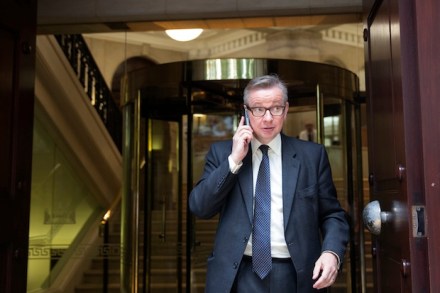
Michael Gove attacks EU reforms as ‘not legally binding’

Michael Gove’s BBC interview, in which he disagrees with his Prime Minister over whether his renegotiation deal is indeed legally binding, is a sign of how confusing the referendum campaign is going to get. The Justice Secretary is perfectly polite as he dismisses the stance of his own government, but he is still the Justice Secretary dismissing the stance of his own government, and that is only made marginally less odd by the suspension of collective responsibility. Gove said: ‘The European Court of Justice interprets the European Union treaties and until this agreement is embodied in treaty change, then the European Court of Justice is not bound by this agreement.

Undecided Tory MPs feel the pressure over EU referendum

The number of Tory MPs who have yet to declare what their stance is in the EU referendum is dwindling. Some of those are away, including Tracey Crouch, who is on maternity leave and gave this very amusing response to those asking about her priorities, while others have decided not to reveal which way they will vote because they are holding public meetings between now and the vote, and want to stay neutral so that they can chair those. But some are either torn, or just trying to work out the best way of announcing their intentions. And for those MPs, the pressure is becoming rather more intense. Many were contacted by senior Tories, including George Osborne, last week in the run-up to David Cameron securing his deal (James has a very amusing detail on this in his magazine column).

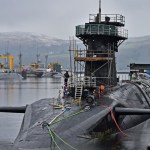
Labour faces two Trident spats

Labour’s angst over Trident has taken something of a back seat over the past few days as the party tries - relatively unsuccessfully - to revel in the split opening up in the Tories on Europe. But this evening, those tasked with developing Labour’s foreign policy, and particularly its stance on the nuclear deterrent, are holding a two-hour meeting on security and defence. This is a meeting of the International Policy Commission, which includes Hilary Benn, Emily Thornberry, Diane Abbott and Pat Glass from Labour’s frontbench, and members of the National Executive Committee including Ken Livingstone. Corbyn yesterday afternoon attacked David Cameron for ‘trying to appease—or failing to appease’ half of his party.

Tories are approaching the referendum in the wrong way

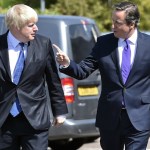
David Cameron's rather pointed digs at Boris Johnson in the Commons yesterday surprised his own MPs, who had thought that they were going to be ordered to be pleasant to one another, not attack senior colleagues who had taken different stances on the European Union. At the party meeting with the Prime Minister last night, MPs including Steve Baker asked Cameron to 'be nice to Boris', not because they are particularly worried about the Mayor's spirit being crushed but because there is some dismay in the party that the referendum debate is already getting so personal. One Outer who likes Cameron observes sadly that 'he was silly letting his temper show but it was sadly typical. He finds being challenged irksome'.

Hilary Benn and Alan Johnson cheer up Labour MPs

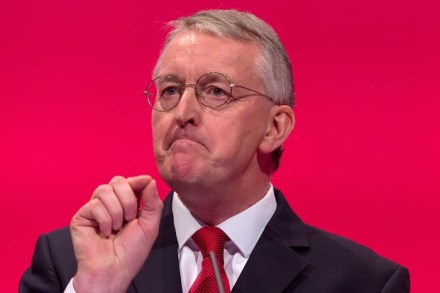
Jeremy Corbyn was still stuck in the Commons chamber when the Labour Party held its weekly meeting this evening. He had been due to attend after MPs had complained that he was avoiding them, but this has now been moved to another week. Instead, Hilary Benn and Alan Johnson gave brief speeches on the EU referendum that left some centrist Labourites in an unusual state of joy. Both performances were described as 'sparkling' by those inside the meeting, with one saying it made them 'proud to be Labour', a phrase you don't hear that often. The proud Labour MP continued: 'We were at our best tonight - all about the national interest and the seriousness of the situation.' Johnson told those present that Labour will officially sign up in support of the In campaign tomorrow.

Cameron takes aim at Boris in pointed Commons statement

The main difference between David Cameron’s statement to MPs on his EU deal and the two statements he has already given on the matter was that this one had added digs at Boris Johnson. Quite a few of them, in fact. The Prime Minister is clearly furious with the Mayor of London for his weekend announcement that he will be campaigning to leave, and inserted a number of extremely pointed lines into his feedback to the Commons that showed what he thought of Johnson’s decision. He ruled out the suggestion - one made by Boris himself - that voting Leave now would teach Europe a lesson and enable a better renegotiation before a second referendum.

Cameron faces tricky day in the House of Commons over EU deal

David Cameron faces MPs today after returning from Brussels with his European Union reform deal. At 3.30 in the Commons, the Prime Minister will give a statement on the outcome of the European Council meeting, and take questions from MPs, including many on his own side who think the deal is a load of tosh. It will be interesting to see how many of them choose to tell him that, and what sort of language they use. There is a risk that this referendum campaign becomes very personal and furious, even while everyone involved is pontificating about the importance of the Tory party getting along well after the vote.

Cameron makes last-minute appeal to Boris to campaign for Remain

David Cameron rehearsed many of his arguments about his deal on the Marr Show this morning, but he also made a fresh appeal to Boris Johnson to back the In side. He said: 'To Boris, I would say to Boris what I say to everybody else which is we would be safer, we will be stronger, we will be better off inside the EU. I think the prospect of linking arms with Nigel Farage and George Galloway and taking a leap into the dark is the wrong step for our country and if Boris and others really care about being able to get things done in our world then the EU is one of the ways in which we get them done.' This was a risky appeal, as now if the Mayor backs Out then it will be in spite of the Prime Minister's last-minute pleading.

Pro-Brexit ministers unpick Cameron’s EU deal

Cabinet ministers are now free to campaign in the EU referendum, and inevitably the pro-Brexit bunch have all given interviews or penned pieces in the press about why they want to leave the European Union. Chris Grayling today tells the Sunday Times that David Cameron’s renegotiation ‘doesn’t go far enough’ and can be overturned by the European Parliament, and points out that for all the fuss about the emergency brake on migrant benefits, the introduction of the living wage will ‘boost the attraction of Britain as a place to come and work’. He also dismisses the assurances that Cameron is planning to set out on the sovereignty of Parliament, saying that Britain is ‘bound by treaty to the supremacy of European law’.

And we’re off! David Cameron announces EU referendum on 23 June

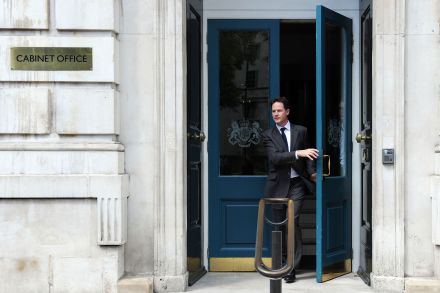
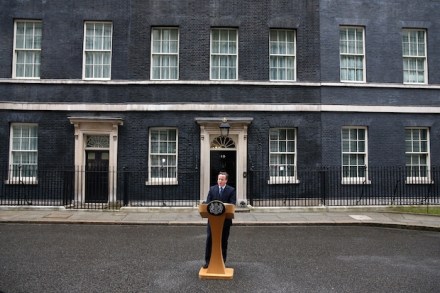
As expected, David Cameron has just confirmed that the EU referendum will be on Thursday 23 June. The Prime Minister confirmed - again - in his statement in Downing Street that he will be recommending an 'In' vote. The Prime Minister's statement was largely a reprise of his key themes from last night. He said that 'the choice goes to the heart of the kind of country we want to be' and argued that 'this is about how we trade with neighbouring countries to create jobs, prosperity and security for our families'. He also repeated his line from his Brussels statement about those who want to leave being unable to set out an alternative to Britain staying 'in a reformed Europe'. Members of the Cabinet are now leaving Downing Street, free to campaign as they wish.

David Cameron’s final EU deal: the details

[audioplayer src="http://rss.acast.com/viewfrom22/spectatorpodcastspecial-davidcameronseudeal/media.mp3" title="Isabel Hardman, James Forsyth and Fraser Nelson discuss the EU deal" startat=18] Listen [/audioplayer] Finally. In the past few minutes, EU leaders have reached a deal on David Cameron’s renegotiation of Britain’s relationship with Europe which gives the UK 'special status' in the EU. As is now traditional, Donald Tusk's Twitter feed is first with the news. https://twitter.

EU summit: Tired European leaders left waiting for their ‘English lunch’

EU leaders have a funny way of going about their negotiations. The best way, it seems, is to conduct most of the talks in the middle of the night in order to create a sense of urgency and pressure, and then spend the next day sleep-deprived and not eating. The ‘working breakfast’ that was originally supposed to start at 10 then became a late breakfast, before turning into a brunch, ‘English lunch’ (which sounded unhealthy), late lunch, and now it is ‘foreseen’ to be at 4pm. This is surely afternoon tea.

EU summit could last until Sunday

After three hours’ sleep, David Cameron returned to the European Council summit with the five areas on which he is seeking change still unresolved. As he walked into the summit, the Prime Minister said: 'I was here until 5 o’clock this morning working through this and we’ve made some progress but there’s still no deal and as I said I’ll only do a deal if we get what Britain needs so we’re going to get back in there, do some work, and I’ll do everything I can.' Sources are now saying that the summit could, if necessary, go on until Sunday.

EU summit: Hard day ahead for David Cameron if he wants to seal the deal

If David Cameron still hopes to wrap up his European negotiations by tea time today, he's got an intense, caffeine-fuelled few hours ahead of him. The Prime Minister left the European Council building just after 5.30am local time after meetings with Donald Tusk and President Hollande. A source said: 'It's hard going. Some signs of progress but nothing yet agreed and still a lot to do.' The talks went on for longer than many expected. Cameron does need to look as though he has fought for these changes, but there are also reports that he is having to demand more from leaders so that his eventual deal isn't totally underwhelming. He is currently pushing for 13 years of benefit restrictions on migrants, rather than the emergency brake lasting 7 years.

Cameron ‘could leave with no deal’ as sources cite ‘serious differences’ between EU leaders

As the night gets going in Brussels, there is some pretty heavy briefing about the progress being made in the talks. British officials say leaders are still stuck on the major issues, including benefits, and that Cameron could walk away from the summit with no deal. There are some major issues to resolve, sources said, adding that while many countries were showing a desire to help, the European Council president Donald Tusk ‘shares the assessment that there are some serious differences’. It is, we have been briefed, going to be a long night as leaders try to hammer out those differences, before the breakfast session tomorrow where it had been hoped that there would be a deal.

Cameron: Britain’s place in the EU has been ‘allowed to fester for too long’

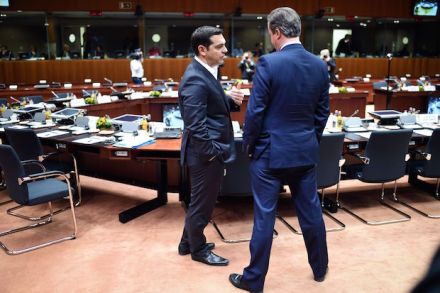
This is from tonight's Evening Blend, a free email round-up and analysis of the day's events. Subscribe for free here. Good evening from the Justus Lipsius building in Brussels, where David Cameron is tonight trying to persuade European leaders of the merits of his renegotiation of Britain’s relationship with the EU. For a deal that has underwhelmed almost everybody in Britain, it’s taking a remarkably long time to sign off. A working session, in which the Prime Minister told leaders that this was the ‘opportunity to settle this issue for a generation’, has just broken up, and talks on the migration crisis are starting over dinner. Cameron told leaders that ‘the question of Britain’s place in Europe has been allowed to fester for too long’.

Cameron’s EU summit: Long night ahead in Brussels

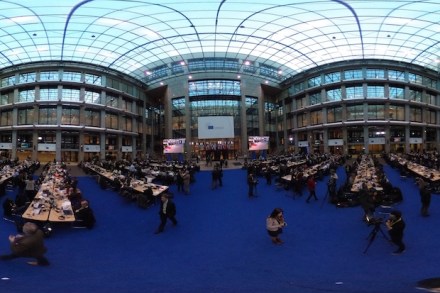
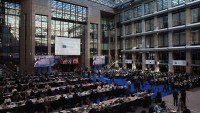
Journalists are waiting in the glass smoking pen at the Justus Lipsius building for the next development in the negotiations over Britain’s EU deal and the migration crisis. There’s a working session focused on the renegotiation followed by a working dinner this evening, where leaders will discuss migration. Nigel Farage is also strolling around the building, though he has yet to start puffing away in the smoking pen. Hacks from all the EU member states are trotting across the press room to take part in huddles - clusters of journalists around a spokesperson who briefs them on or off the record - about how the talks are going and the negotiating position of their country.

David Cameron: ‘I’ll be battling for Britain’

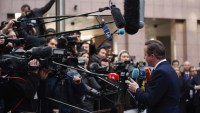
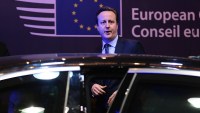
David Cameron has arrived in Brussels, using his ‘battling for Britain’ soundbite again as he walked into the European Council summit. In fact, he used most of his soundbites about his renegotiation again, telling the cameras that ‘if we can get a good deal, I will take that deal, but I will not take a deal that does not meet what we need’. The Prime Minister is meeting Donald Tusk this afternoon to discuss the talks that will take place over the next 24 hours. There is a working dinner tonight, but sources say that the real negotiations and the agreement are expected to take place at breakfast tomorrow. Member states will not vote on the agreement as ‘it has to be consensus’, an EU source said.