Isabel Hardman

Isabel Hardman

Isabel Hardman is assistant editor of The Spectator and author of Why We Get the Wrong Politicians. She also presents Radio 4’s Week in Westminster.

Nicola Sturgeon ridicules Labour’s ‘tortured’ Trident debate

Given last year’s election was so much about the possibility of the SNP and Labour working together in government, Labour figures will be smiling ruefully at Nicola Sturgeon’s interview on the Andrew Marr Show today, in which she stuck the boot into the party she once suggested a ‘progressive alliance’ with. The Scottish First Minister is of course thinking more about fighting Labour in this year’s Holyrood elections than about the Westminster Parliament, and so she wanted to paint her main challengers as weak and confusing.

Corbyn didn’t consult Shadow Business Secretary over controversial business policy idea

Angela Eagle wasn’t told about a controversial plan to ban companies who do not pay a living wage from paying out dividends to shareholders before Jeremy Corbyn floated it in a speech last week, Coffee House understands. I have learned that the Shadow Business Secretary was not consulted over the proposal, which is believed to have triggered the resignation of the Labour leader’s Head of Policy and Rebuttal, Neale Coleman. Corbyn floated the idea in his speech to the Fabian Society on Saturday, saying 'another proposal would be to bar or restrict companies from distributing dividends until they pay all their workers the living wage'.

Is Cameron really happy to let his EU renegotiation timetable slip?

What does David Cameron mean when he says, as he did today, that he’s happy to wait a bit longer for a deal in his renegotiation of Britain’s relationship with the European Union? The Prime Minister told the Davos summit today that ‘if there isn’t the right deal, I’m not in a hurry’ and that ‘it’s much more important to get this right than to rush it’. The expectation in Westminster has been that Cameron would get a deal at the European Council summit in February, but the Prime Minister has been dropping hints that he is prepared to let the timetable slip at the same time that his colleagues are saying privately that they are confident of a deal.

Tories worry about plan to Short change opposition parties

Labour is a very poor opposition at the moment, and no amount of money could fix that. But the government is currently pursuing a policy that seems intended to weaken even decent oppositions. In the Autumn Statement, George Osborne announced a 19 per cent cut to Short money, which is the state funding for political parties to be able to do their job of representing the millions of voters who want them in parliament. The 19 per cent cut is in line the reductions made to unprotected spending departments in the spending review, and is quite easy for ministers to defend, because they can talk about reducing the cost of politics, and voters like that idea. Naturally, the opposition parties involved don’t like the idea, and have been complaining about it.

PMQs: MPs scrutinise Labour instead of the government

David Cameron didn’t have a particularly good PMQs today. He struggled to make sense at some points, ending up telling the House that ‘two out of three people who want to become a nurse can’t become a nurse because of the bursary system’ and rambling about ‘two out of three Vickys’ being turned away from nursing courses, which left everyone wondering what the stats were for people not called Vicky. The Prime Minister’s assertion about the bursary system costing so much that fewer nurses overall go into training may well be true, in the same way that saying ‘affordable housing quotas make housing less affordable’ can be true in policy terms.

New Tory MPs push ministers on legal protections for children

MPs are debating the report stage and third reading of the psychoactive substances bill today, with a series of amendments from MPs on exempting poppers from the ban on legal highs (more on why the Tories might want to do that here), and one intriguing one from a group of Tory MPs on supplying drugs outside children’s homes. This amendment, tabled by Kit Malthouse, and signed by 11 other Tory MPs, all from the new intake, would make supplying psychoactive substance an aggravated offence if committed within 100 metres of a children’s home.

Beckett report will change little in Labour

Few Labour MPs had expected Margaret Beckett's report into the 2015 election loss to be the thing that saved the party. But they had hoped that it might give the current leadership pause for thought with a reasonable distance before the next election. Instead, much like an IMF report, the document contained something for everyone, with its author even describing it as a 'compilation' when interviewed about it on Today. What is odd about the report and about Beckett's own tone is that both don't really convey what many Labour MPs believe is the desperation of the situation. This might be because the party leadership doesn't think there's anything desperate about a party signing up many more members and most of those members being happy.

Beckett report into Labour’s loss is uncomfortable reading for all party factions

Labour’s report on its election defeat is finally out, and it says there are four reasons for its defeat: Failure to shake off the myth that we were responsible for the financial crash and therefore failure to build trust in the economy. Inability to deal with the issues of ‘connection’ and, in particular, failing to convince on benefits and immigration. Despite his surge in 2015, Ed Miliband still wasn’t judged to be as strong a leader as David Cameron. The fear of the SNP ‘propping up’ a minority Labour government. These are not surprising, and the report’s narrative verdict on how the party lost is far more interesting.

While the ‘Out’ campaigns squabble, the ‘In’ campaign has splashed the cash

The EU referendum is looming, but the biggest fight at present is not between the two sides of the argument but the different ‘out’ factions. Only one campaign can get the official Electoral Commission designation, which is leading to some rats-in-a-sack behaviour from Leave.EU and Vote Leave, made worse by the launch of Peter Bone’s Grassroots Out group. The problem for the two sides, who are both calling each other names, is that they have to demonstrate to the Electoral Commission that they are the group that ‘represents to the greatest extent those campaigning for the outcome’, and this includes setting out ‘how you plan to represent other campaigners for the same outcome including how you would engage with them’.

Why are MPs meddling with women’s toiletries?

The Times has a fascinating splash today on the discrepancy in prices between products for women and men. It reports that high street stores are charging women up to twice as much as men for practically identical products, with the addition of pink to something seemingly boosting its price hugely. The most striking finding is that products as banal as razors can be twice as expensive for women as they are for men. MPs are already involved, with Maria Miller, chair of the women and equalities committee, threatening to summon retail bosses to parliament to explain the ‘unacceptable’ higher prices. But while the Times has performed a vital public service in sifting through packs of razors, girls’ and boys’ toys, and clothing, is this really a matter for MPs?

Labour and pollsters confront what went wrong in May 2015

Two post-mortems into the general election come out today: the pollsters' examination of how their surveys got the election so wrong, and Labour's latest internal inquiry into how it lost that election. The first report, which is the preliminary findings of an independent inquiry set up by the British Polling Council and the Market Research Society, has more surprising information in it than the Beckett report which, when it it published later today, is expected to say that Labour lost because voters didn't trust the party on the economy, leadership, or immigration. The pollsters seem to have succumbed to 'herding', which is when individual companies alter their sampling formulae to ensure they are producing results in line with those published by others in the same field.

Labour struggles to be an Opposition as MPs mock its Trident tribulations

Emily Thornberry might not know why Jeremy Corbyn made her Shadow Defence Secretary, but she will have known that this afternoon’s departmental questions for the Ministry of Defence was going to be a difficult session. She came armed with two questions that she knew few would listen to, and delivered them well. But for the rest of the session, she had to listen to MPs on all sides of the Commons attacking not the government of the day, but the policy of the Opposition party. In fact, the government was barely scrutinised at all today, so intense was the focus on Labour and its potential U-turn on Trident.

Is a three-hour debate on Donald Trump the best use of MPs’ time?

Should Donald Trump be banned from visiting the UK? The candidate for the Republican presidential nomination hasn’t actually booked a trip here, but MPs are debating two petitions – one calling for him to be banned, and the other calling for him not to be banned – for three hours in Westminster Hall this afternoon. Paul Flynn, who is opening the debate, discussed the matter with the SNP’s Tasmina Ahmed-Sheikh on the Today programme this morning. Flynn doesn’t like Trump, but doesn’t think you should ban him, while Ahmed-Sheikh thinks the American politician’s views have ‘consequences’ and that therefore he should be banned.

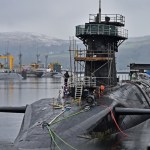
Will Corbyn take the nuclear option on Trident?

Jeremy Corbyn’s remarks about Trident have, unsurprisingly, been picked up everywhere this morning. The Labour leader told Andrew Marr yesterday that he could consider a ‘deterrent’ in which submarines continued to patrol the seas, but just without any nuclear warheads.

Who will reveal their Brexit plan?

George Osborne’s Newsnight interview has drawn ire from the Eurosceptics chiefly because the Chancellor used it to stamp on any suggestion that there might be a second EU referendum in which Brussels offered the UK all the changes it wanted in the first place in order to tempt it back into the European Union. But Osborne also reiterated last night that the ‘Treasury is 100 per cent now focused on achieving the renegotiation’ and wasn’t drawing up contingency plans for Brexit. The problem for ministers is that any admission or leak of such contingency plans would be written up as a Whitehall panic, or a secret desire on the part of the Prime Minister to leave the EU.

Why does Labour need to publish yet another report on why it lost?

It must come as a relief to many Labour MPs worried about their party’s electoral chances that the official report into why Labour lost in May will finally be published. But will it really make much of a difference? The BBC reports that the document, compiled by Margaret Beckett, will identify four key reasons for the party losing in May 2015, which are that it failed to shake off the myth that Labour was responsible for the financial crash and failed to build trust on economic issues, it didn’t connect with voters on key issues such as benefits and immigration, that Ed Miliband was not seen as being as strong a leader as David Cameron, and voters’ fears of the SNP propping up a minority Labour government. So far, so unsurprising.

Will Jeremy Corbyn’s reshuffle ever end?

Pity the poor correspondents who set up a reshuffle ‘live' blog to cover Jeremy Corbyn moving around his frontbench team last Monday. The Labour leader has, a week and a half in to the slowest shuffle ever, just made a few more appointments. Imran Hussain, Kate Osamor and Thangam Debbonaire are all new MPs, and join the International Development, Women and Equalities and Culture, Media and Sport teams respectively. Last night Jo Stevens, also a new MP, became Shadow Solicitor General. When will it end? To be fair to the Labour leader, the reshuffle has dragged on partly because people keep resigning, so it’s not entirely his fault that he seems to be taking until 2020 to finalise his top team.

Is Jeremy Corbyn really up for a fight with Len McCluskey over Trident?

Today's report that Len McCluskey plans to warn Jeremy Corbyn against changing Labour policy on Trident is not a surprise after the GMB's Sir Paul Kenny used pretty fruity language to do the same on Monday. But it is significant as it shows that the plan of those in the party who do not want the Labour leader to continue in post to the next election is progressing as they'd hope. That plan is pretty rough and ready, but it does involve the unions losing faith in Corbyn's basic competence, and not just blocking his moves to mark Labour a unilateralist party. Whether or not that plan succeeds isn't clear.

‘You don’t know what you’re talking about!’ Cameron has a fractious session at Liaison Committee

The Prime Minister was in a pretty ratty mood at the Liaison Committee today, taking exception especially to questions from the dry-as-sandpaper chair, Andrew Tyrie. At one point Cameron told Tyrie that ‘you don’t know what you’re talking about’ if he was suggesting that there weren’t people in Raqqa who were plotting to damage Britain. Later, he spoke sarcastically of Tyrie’s ‘great ability and genius’. Why was he bristling so much? Well, Tyrie and his colleagues on the committee, which is made up of the chairs of all the parliamentary select committees, were giving Cameron a hard time on his figure of 70,000 moderate opposition forces in Syria.

Church attendance drops below a million for the first time – and the real situation could be even worse

There is no way that Anglican attendance falling below one million for the first time is good news for the Church of England. The figures, released today, put Sunday Anglican congregations in 2014 at 764,000, down 3 per cent on the previous year. When weekday and Saturday services are included, the figure is still only 980,000. The Church often tries to distract from falling attendances and its apparently diminishing role in English society by pointing out how many people get married and attend carol services in its buildings, but it has to accept that those people don’t see any benefit in coming through church doors when it isn’t a high day or holiday. And that the rural church is in a terrible fix.