Isabel Hardman

Isabel Hardman

Isabel Hardman is assistant editor of The Spectator and author of Why We Get the Wrong Politicians. She also presents Radio 4’s Week in Westminster.

Cameron plays the Jungle drums again

This is from tonight's Evening Blend email, a free round-up and analysis of the day's political events. Subscribe here. Today in brief François Hollande warned that there would be ‘consequences’ for the British-French border deal that keeps migrants at Calais. Boris Johnson responded to the warnings that Brexit could lead to a ‘Jungle’ on UK soil with ‘Donnez-moi un break’. Jeremy Corbyn rejected the ‘failed economic orthodoxy’ espoused by the previous Labour government and called for a ‘new settlement with the corporate sector’. Caroline Lucas attacked Labour for its ‘silence’ in the EU referendum. Sajid Javid said he was still a ‘Brussels basher’ despite backing the campaign to stay in.

Labour shadow ministers told to emulate Will Smith in EU campaign

Even if Jeremy Corbyn isn’t making waves in Labour’s EU campaign, the rest of the party is trying to knuckle down and get on with what is essentially an enthusiastic get out the vote operation. The party knows that the bulk of its voters are in favour of Britain staying in the European Union, and that it just needs to enthuse them enough to bother to vote - which is the problem I set out in this earlier post. If Corbyn can’t do the enthusing, then other frontbenchers need to do it in his stead.

Labour MPs unnerved by party’s low-key referendum campaign

Caroline Lucas is speaking for a number of Labour MPs with her warning about the weakness of the Labour party in the EU referendum debate. They are worried that their party is not going to be able to deliver the voters needed to keep Britain in the European Union. ‘Labour voters will not be turned out by a load of Tories,’ says one MP, though when Labourites start moaning about a lack of leadership from Jeremy Corbyn on the Labour for In side of things, they then end up accepting that actually a very involved Labour leader might not be a good thing, either, given his lack of appeal to those Labour voters.

Tory MPs to push ministers further on snooping bill

Tory MPs believe they have sufficient numbers of would-be rebels to be able to amend the government’s Investigatory Powers Bill, which was published yesterday. Coffee House understands that there are already around 10 Tory MPs who would be happy to join forces with Labour to change key sections of the legislation on the authorisation of interception warrants, and on the level of detail on someone's internet history that is available to intelligence services and the police. David Davis, the Tory MP who tends to lead the charge on civil liberties matters, is concerned that a number of the points set out by the joint committee that scrutinised the Bill when it was in draft form have still not been addressed now that it has been published.

What is the point of the government’s dodgy EU dossier?

Ministers are today publishing a document that is already being rubbished as a ‘dodgy dossier’ about the options for Brexit. The report, which comes out later, concludes, funnily enough, that all of the alternatives to EU membership would leave Britain ‘weaker, less safe and worse off’ and that ‘no alternative model guarantees that British businesses would have access to Europe’s free trade Single Market, that working people’s jobs would be safe and by how much prices would rise’. Iain Duncan Smith has been sent out to rubbish it, saying: ‘This dodgy dossier won’t fool anyone, and is proof that Remain are in denial about the risks of remaining in a crisis-ridden EU.

How Tory MPs could cause more trouble in EU document ban row

Sir Jeremy Heywood is currently insisting to the Public Administration and Constitutional Affairs select committee that there is absolutely nothing untoward about his guidance to civil servants about withholding documents that have a bearing on the EU referendum from ministers. ‘I’m really struggling to see what the problem is here,’ he has just argued to MPs. The row is occupying the energy of an awful lot of Tory MPs at the moment, and is unlikely to go away. One way that ministers could escalate the dispute is to work with backbenchers and use departmental questions in the Commons to make their point about the impact that this guidance has on their ability to do their jobs from day to day.

Cameron’s EU referendum troubles were so inevitable

Britain's membership of the European Union is a matter of principle and emotion for most Tory MPs. But it is also a matter of party management. David Cameron would have had an easier time as Prime Minister in the last parliament had he realised that while Conservatives will always want to bang on about Europe, the ferocity of and damage caused by those bangs still depends on how the leadership responds. Cameron didn't want to hold a referendum, and ducked and weaved away from MPs demanding one. Now he is trying to 'gag' pro-Brexit ministers using civil service guidance to prevent them accessing documents that have a 'bearing' on the EU referendum.

Labour MPs walk out of party meeting as Corbyn tries to enforce message discipline

Jeremy Corbyn’s much-awaited appearance at the weekly meeting of the parliamentary Labour party didn’t go particularly well this evening, which means that for the group of increasingly determined MPs trying to oust him, it was a hugely successful session. MPs were reminded that the meeting is off the record at the start, before being given a lecture by the leader about the importance of message discipline. They were told that there would be weekly messages that MPs should stick to. A number of MPs found this ‘unpalatable’, and some left.

MPs blast ‘sordid’ document ban for pro-Brexit ministers

Even if there has been no mistake at all in the guidance to civil servants about what documents they can share with pro-Brexit ministers during the referendum campaign, the government has clearly made a number of mistakes at least in the presentation of that guidance, as this afternoon’s urgent question in the Commons showed. The first mistake that ministers made was purely a process one: they failed to get any supportive MPs who are in favour of the guidance to attend the session, which meant that Matt Hancock spent the whole urgent question being beaten up by pro-Brexit MPs who are furious a minister will not be able to obtain information that an MP can quite easily get through a parliamentary question.

Jeremy Corbyn faces stronger opposition from MPs

The one thing quieter than the quiet Commons at the moment is the Labour leadership. Even when Jeremy Corbyn speaks in the Chamber, he makes so little impact that trees falling in empty forests have excited more attention. Last Monday during his response to David Cameron’s European Council statement, Labour backbenchers nattered amongst themselves in a manner more common in the tea room. Corbyn probably wasn’t offended: he almost seemed indifferent to his own statement too. Time was when a poor performance from the leader was bad for morale amongst Opposition backbenchers.

Snooper’s Charter to make waves in quiet Commons

If the parliamentary diary for this week is anything to go by, the next few days are going to be very quiet in Westminster. There is hardly any legislation in the Commons, save for the exciting and largely pointless circus of Private Members’ Bills on Friday, and a series of votes on estimates - public spending by government departments. It’s almost as though the government’s mind is entirely elsewhere. Given how fractious the Tory party is at the moment after a week of insults in the EU referendum campaign, it seems odd that ministers would want to leave MPs even less occupied, with even more time to buzz about in Portcullis House, plotting and grumbling together.

Iain Duncan Smith: Brexit would be a ‘stride into the light’

The papers report today that many Conservatives are furious with the way David Cameron is conducting the referendum campaign. MPs threaten that if the Prime Minister continues with the personal attacks that he launched at various opponents on the 'Leave' side this week, it will impossible for him to continue at leader after the referendum, whatever the result. Today Iain Duncan Smith exacted some revenge on the Prime Minister with his own attacks on the Remain side, offering the Marr Show a rather furious critique of the campaign's tactics.

Why is Jeremy Corbyn insisting on speaking at the CND rally?

Jeremy Corbyn is this weekend campaigning against Labour Party policy. A year ago, it would have been quite unremarkable for the then obscure backbencher to turn up to the CND rally and give a speech against nuclear weapons. But now he's the Labour leader, Corbyn will be speaking against the current official policy of the party he heads up. This has obviously annoyed the many pro-Trident MPs in Labour, though some of their public frustration includes feigned surprise, given their party elected a man who sticks to his principles like glue, and who has hardly snuck those principles up on his party after election. He's been going on about them for years.

Cameron dismisses second referendum idea as ‘complete fiction’

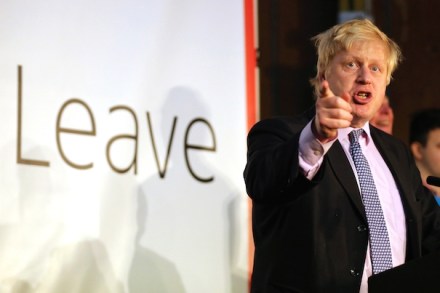
Has David Cameron settled on a strategy for dealing with his opponents in the EU referendum? The Prime Minister was clearly caught on the hop by the decisions of Boris Johnson and Michael Gove to back the ‘Out’ side at the weekend, and his angry digs at the Mayor in the Commons on Monday showed that. But later in the week, the Prime Minister tried to patch things up a little by saying that Boris was a ‘great friend’, which suggested an attempt at least at calming things down. But today in response to Michael Howard’s decision to back Brexit, Cameron said that claims made by those like the former Tory leader (though he didn't name Howard) that EU leaders might make new concessions in the event of a vote to leave were ‘complete fiction’.

Liam Fox accuses David Cameron of ‘breaking faith’ with voters on migration target

Quite naturally, those campaigning for Britain to leave the European Union have seized on today’s net migration figures as evidence that staying in won’t resolve voters’ concerns about immigration. Priti Patel has said that ‘the proposed deal will do nothing to reduce the level of immigration from the EU, and will leave unelected politicians in Brussels and judges from the EU court in control of our borders’. Liam Fox has decided to go further. He points out to Coffee House that it is impossible for David Cameron to both campaign for Britain to stay in the European Union and continue to commit to the net migration target - and that the Conservative party should drop that target.

Can David Cameron really stick by his net migration target now his EU deal is done?

The net migration statistics have, for quite a while, been an awkward quarterly occurrence that the Tories just have to sit through and pretend isn’t happening. Today’s release from the Office for National Statistics shows that David Cameron is still nowhere near hitting his pledge of driving net migration into the tens of thousands, with net long-term migration in the year to September 2015 at 323,000, up 31,000 from the previous year. EU net migration was 172,000, with a year-on-year rise that the ONS says is not statistically significant, while non-EU net migration was 191,000, which is roughly similar to the 188,000 in the previous year.

MPs brace themselves for start of boundaries row

Of all the publications from the Office for National Statistics this morning, the electoral statistics for the UK doesn’t sound like the most gripping. But it is the start of a very big political row, which is the boundary review. These electoral statistics will spark the formal review by the Boundary Commissions, which will then lead to new proposals for constituency boundaries later this year. Unsurprisingly, lots of MPs are nervous about this, especially Labour MPs who would face hostile constituency parties if they apply for selection in a new seat. The Labour whips alerted their MPs earlier this week, and are sending further updates once the Commissions make their announcements.

Michael Gove attacks EU reforms as ‘not legally binding’

Michael Gove’s BBC interview, in which he disagrees with his Prime Minister over whether his renegotiation deal is indeed legally binding, is a sign of how confusing the referendum campaign is going to get. The Justice Secretary is perfectly polite as he dismisses the stance of his own government, but he is still the Justice Secretary dismissing the stance of his own government, and that is only made marginally less odd by the suspension of collective responsibility. Gove said: ‘The European Court of Justice interprets the European Union treaties and until this agreement is embodied in treaty change, then the European Court of Justice is not bound by this agreement.

Undecided Tory MPs feel the pressure over EU referendum

The number of Tory MPs who have yet to declare what their stance is in the EU referendum is dwindling. Some of those are away, including Tracey Crouch, who is on maternity leave and gave this very amusing response to those asking about her priorities, while others have decided not to reveal which way they will vote because they are holding public meetings between now and the vote, and want to stay neutral so that they can chair those. But some are either torn, or just trying to work out the best way of announcing their intentions. And for those MPs, the pressure is becoming rather more intense. Many were contacted by senior Tories, including George Osborne, last week in the run-up to David Cameron securing his deal (James has a very amusing detail on this in his magazine column).

Labour faces two Trident spats

Labour’s angst over Trident has taken something of a back seat over the past few days as the party tries - relatively unsuccessfully - to revel in the split opening up in the Tories on Europe. But this evening, those tasked with developing Labour’s foreign policy, and particularly its stance on the nuclear deterrent, are holding a two-hour meeting on security and defence. This is a meeting of the International Policy Commission, which includes Hilary Benn, Emily Thornberry, Diane Abbott and Pat Glass from Labour’s frontbench, and members of the National Executive Committee including Ken Livingstone. Corbyn yesterday afternoon attacked David Cameron for ‘trying to appease—or failing to appease’ half of his party.