Isabel Hardman

Isabel Hardman

Isabel Hardman is assistant editor of The Spectator and author of Why We Get the Wrong Politicians. She also presents Radio 4’s Week in Westminster.

Tory fights about ‘con tricks’ make the post-referendum repair job even harder

Time was when the main argument between the two campaigns in the EU referendum was about who was running the most negative show (not, of course, about the matter in hand). The Remain campaign were talking down Britain, pro-Brexiteers such as Boris Johnson complained, while the In side argued that Leave was trying to frighten people. But with just days to go, the debate has changed, and is now all about who is telling the biggest whoppers. Yesterday Sir John Major launched his extraordinary attack on top Tories campaigning for Brexit, accusing them of speaking ‘absolute hogwash’ and ‘nonsense’ about the European Union, and arguing that ‘as the leader Boris is in a position to stop’ the dishonesty in the campaign.

How good government often goes unnoticed and unrewarded

What make a good minister? Is it how well they perform at the Dispatch Box in the Commons? Or their ability to field questions on Newsnight? Or even their ability to be a good lunch guest for a member of the lobby? The truth is that often we don’t know whether someone has been a good government minister until years after they’ve left the department and the policies they introduced have actually run their course, rather than just enjoyed a bit of media limelight. Take the 1999 Teenage Pregnancy Strategy. Launched in June of that year by Tony Blair, the strategy examined a study by the Social Exclusion Unit and aimed to halve the rate of teenage pregnancies in ten years.

Is the Leave campaign going around in circles?

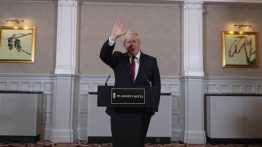
Boris Johnson took in a car factory as part of his day of campaigning for Vote Leave in Yorkshire. The former Mayor did the usual politician’s thing of touring the workshops of Ginetta, pointing at various pieces of equipment and asking the workers what it was that they were doing, before hopping in one of the carmaker’s vehicles - branded with Vote Leave insignia - for a spin. He drove it out of the factory before handing the wheel over to a proper driver, who proceeded to whizz him around in tight donuts in the car park outside, sending up a large amount of smoke from the burning rubber. ‘We’re taking back control!’ Boris pronounced happily as he clambered out of the passenger seat. https://twitter.

On the EU campaign trail with Boris

Boris Johnson is on the Vote Leave campaign trail in York this morning, and has just addressed a medium-sized crowd in the city centre. Unlike some of the election rallies that we saw last year, there were some real members of the public attending - and a chap who had turned up to egg he former Mayor, but didn't manage to. Boris turns to the chap who had brought an egg to throw at him and tells him people are going hungry pic.twitter.com/z6Wfl7eRwD— Isabel Hardman (@IsabelHardman) May 23, 2016 Afterwards, the failed egger claimed he had never intended to throw the egg, but had just brought it along to 'cause a scene', which rather made it sound as though the egg itself had been threatening to run amok in the square.

Post-referendum, will David Cameron accept that all’s fair in love and war?

This weekend’s public spat between David Cameron and Penny Mordaunt about whether Britain can stop the accession of new countries such as Turkey into the European Union looks like just another row in the referendum campaign. Every day one figure on one side makes a claim that riles the other side, and a war of press releases and broadcast interviews ensues. But this particular row doesn’t just tell us a lot about where the two camps are in the campaign, but also makes a considerable difference both to the campaign and to the aftermath of the vote. Firstly, it is clear that the Tory party is going to take a long time to repair after this vote.

Government accepts rebel amendment on Queen’s Speech to stave off defeat

So Number 10 has yielded and decided to stave off the Queen’s Speech rebellion by accepting the rebel amendment to it, thereby stopping the first defeat of a government on its legislative programme since 1924. A spokesman said: ‘As we’ve said all along, there is no threat to the NHS from TTIP. So if this amendment is selected, we’ll accept it.’ So job done, rebellion gone. But it is still a bloody nose for the government from eurosceptics, who are forcing the Prime Minister and the rest of the executive to support something that regrets that they failed to table a bill exempting the NHS from something they have been insisting for over a year is already exempt from the trade agreement.

Queen’s Speech row: whose fault is it?

Tory eurosceptics are threatening to cause the first government defeat on a Queen’s Speech since 1924 by joining forces with Labour MPs over an amendment expressing regret that there is no bill exempting the NHS from the Transatlantic Trade and Investment Partnership. It’s the second time the eurosceptics have worked with Opposition MPs to try to force an embarrassing and historic defeat on a major government event: the last one was on the Tampon Tax after the March Budget (which turned out to be the least embarrassing bit of the aftermath of that Budget, as it happens). But why are Tory eurosceptics joining in with this opposition game-playing?

Tory MPs mull cautious Queen’s Speech

The quiet Queen’s Speech seems largely to have underwhelmed Tory MPs - though they do predict a number of sticky moments in the Commons over the coming months. Most I have spoken to describe it as ‘pretty bare’, though they also understand why the Prime Minister isn’t trying anything particularly ambitious at this stage ‘Why waste initiatives when no-one is listening?’ asks one. Another anti-Cameron MP describes the content rather more bluntly as ‘uninspiring, managerialist and vacuous’. There will be flashpoints on the Bill of Rights and the Investigatory Powers Bill, something the whips are hard at work on.

What David Cameron is trying to tell us with this Queen’s Speech

What is the point of today’s Queen’s Speech? The government’s legislative programme for the year is being briefed as light and safe, given the ructions in the Tory party over Europe and David Cameron’s tiny majority. But it is also being briefed as a social justice speech, one focused on getting on with the important reforms to improve the life chances of disadvantaged people. The main story is the reforms to the prison system, which will be carried out by Michael Gove and include ‘in-cell technology’ such as iPads to help prisoners learn independently (a far cry from the ‘book ban’ over which Gove’s predecessor Chris Grayling tussled with the criminal justice establishment).

Labour MPs are stuck in a miserable stalemate – and some want out

When are Jeremy Corbyn’s enemies going to get their act together? Today’s Times poll of the Labour membership shows that they would get a rather cold reception if they tried to remove the Labour leader, with 72 per cent telling YouGov that Corbyn is doing well, up from 66 per cent in November. Members are slightly less upbeat about the party’s prospects for actually governing, with 53 per cent believing it will be in government after the 2020 election, and 47 per cent saying Corbyn is likely to become Prime Minister.

Tory unity after the referendum is looking increasingly difficult

One of the big questions about the EU referendum campaign is whether the Tory leadership is running its campaign in such a way as to make it impossible to stitch the party back together again after the result on 23 June. The Prime Minister’s colleagues concerned with party management who work in Number 10 and the whips’ office are certainly very agitated about the mood in the party, with a number of pro-Brexit ministers appearing to conclude that they have burned their bridges irreparably. This has led their colleagues to worry that there will be a large group of ministers and backbenchers after a ‘Remain’ vote who still try to move against the Prime Minister.

EU debate takes ludicrous twist as Ken scolds Boris for Hitler comments

You know you’ve not necessarily added a great deal to your argument when Ken Livingstone is telling you off for invoking Hitler. Boris Johnson finds himself in that rather awkward position today, with the former Mayor being scolded by another former Mayor for claiming at the weekend that Hitler was among ‘various people’ who tried to create a European superstate and that ‘the EU is an attempt to do this by different methods’. Livingstone insisted that while ‘what I said was perfectly true’ (that was that Hitler supported Zionism ‘before he went mad and ended up killing 6 million Jews’, in case you’d forgotten) that Boris had got his facts wrong, and that ‘there was never a plan for a United States of Europe under Hitler.

Should we care that young men aren’t going to university?

When politicians and tutors talk about underrepresented groups at universities, few expect men to feature on the list. Yet as a report from the Higher Education Policy Institute today shows, men are now an endangered species at university, with women being 35 per cent more likely to go to university than men. Men are also more likely to drop out, or get a lower degree mark. The report worries that this is a trend that could get worse - and argues that instead of being a victory to celebrate in a battle of the sexes, that men falling behind in education is something that policymakers should take seriously.

Vote Leave loses its temper over ITV referendum event

If the Leave campaign in the EU referendum was resembling Project Grouch a few weeks ago, today it is rather closer to Project Apoplexy. Vote Leave exploded late last night after ITV announced that it would be holding a live referendum event with David Cameron and Nigel Farage. The campaign group first accused the broadcaster of a ‘stitch-up’, furious that it had capitulated to Number 10’s demands that there be no blue-on-blue fighting on the programme, and picked Nigel Farage, who is not just the member of rival campaign Leave.EU but also a turn-off to the sort of swing voters the Leave bunch actually need to appeal to.

Will Labour never learn?

By now, Labour should be rather good at post-defeat inquests. Plenty have been conducted over the years and the drill has become familiar. The party goes into an election promising a certain vision of the future only to find out that it leaves the voters cold. A senior figure is then commissioned to state the obvious, and the report is sent back to the leader’s office, where it is filed and ignored. Then the party embarks upon a fresh misadventure — and the cycle of defeat begins again. This week Labour is digesting its worst result in Scotland since 1918, having lost not only to the nationalists but to the Tories.

Tory eurosceptics fear government sneakiness on EU postal votes

One of the major features of the EU referendum campaign is the suspicion on the part of Tory eurosceptics that their party in government is trying to screw them over. The latest theory centres around the dates when the postal votes are sent out and when the government is forced by official rules governing election campaigns to shut up. The postal votes in the EU referendum are being sent out between 27 May and 3 June, and the official ‘purdah’ for the campaign also begins on 27 May.

Has Jeremy Corbyn forgotten how to ask a proper question at PMQs?

Jeremy Corbyn’s questions at PMQs weren’t so much a dog’s dinner as a miserable casserole of leftovers. The Labour leader didn’t appear to have bothered to craft the lines he delivered from the dispatch box. This meant that the questions he asked the Prime Minister were rambling, and strangely managed to continue long after the actual question had been asked. Take this example: ‘Mr Speaker, I support a wage rise, obviously, the point I am making is that it is not a living wage! It is not a living wage, as is generally understood. Um, Mr Speaker, ummm, saying yes seems to be one of the hardest words for the Prime Minister. For a third time, could he just say whether he does or does not support the posting of workers’ directive?

How MPs waste time in the House of Commons

There are strict rules governing the language that MPs can use in the House of Commons. Words like ‘guttersnipe’, ‘stoolpigeon’ and ‘hypocrite’ are considered unparliamentary, and MPs can be chucked out of the Chamber for the rest of the day if they do not withdraw their comments. Sadly, though, they can get away with behaviour that is quite unparliamentary in the sense that it undermines the purpose of parliament on a regular basis. This unparliamentary behaviour popped up at today’s Work and Pensions Questions, but it occurs in almost every departmental question session, and at Prime Minister’s Questions too.

How much of a threat will Sadiq Khan be to Jeremy Corbyn’s leadership?

Sadiq Khan starts his first day as Mayor today, and has spent more of his weekend distancing himself from Jeremy Corbyn than he has been talking about London. He made a series of pointed references to the need for his party to win elections and that ‘we only do that by speaking to those people who previously haven’t voted Labour’. And the Labour leader didn’t attend Khan’s swearing-in ceremony at Southwark Cathedral due to ‘capacity problems’, which is probably an excuse those in charge of seating in the Cathedral don’t hear that often. It is clear that Khan doesn’t think there is much merit in appearing close to Corbyn in any way, even now that he has won his election.

Government drops plans to force all schools to become academies

It’s a good day for the Conservatives to bury bad news, when all attention is on Labour and the SNP’s election performances. So that must be why in the past few minutes Nicky Morgan has announced she is U-turning on the government’s plans to force all schools in England to become academies. The Education Secretary will no longer force good schools to change their structure, but will instead focus on selling the benefits of academies within the education community. This is a significant shift. In reality, it is all the government could do as there were too many Tory MPs opposed to the plans as set out in the White Paper for it to ever make it through the Commons as a piece of legislation.