Ian Williams

Ian Williams

Ian Williams is a former foreign correspondent for Channel 4 News and NBC, and author of Vampire State: The Rise and Fall of the Chinese Economy (Birlinn).

China’s Belt and Road to Damascus

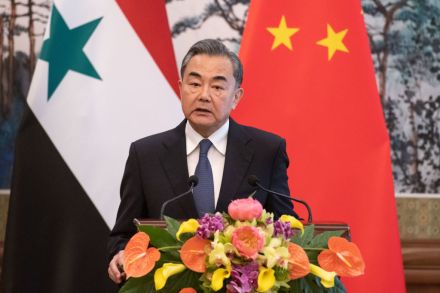
There is, it seems, no regime too odious to be a partner of China. Being repressive and corrupt have long been useful assets for gaining the friendship of Beijing, but its recent embrace of the ‘Butcher of Damascus’, Bashar al-Assad, carries reputational and other risks for China – even when it doesn’t have much of a reputation to lose. China has offered Syria membership of its Belt and Road Initiative (BRI), and with it the promise of munificent investment in Syrian roads, railways, ports, telecoms, hotels and much more. The offer came this week from China’s foreign minister Wang Yi, who was the first high-profile guest in Damascus after Bashar al-Assad’s re-election as president.

How China bought Cambridge

41 min listen

What level of control does China have at Cambridge University? (00:48) Also on the podcast: Will the Church of England’s new plans for modernisation leave us with an institution we even recognise? (10:26) And finally let's talk about Streaking, indecent exposure or proud British pastime of joy and humour? (27:26)With Ian Williams author of ‘every breath you take, a study of China’s surveillance state’; Harry Goodwin, Editor in Chief of The Cambridge Student; Priest Marcus Walker; Dave Male Director of Evangelism and Discipleship for the CoE; writer and amateur streaker Poppy Royds and professional streaker Mark Roberts.

How China bought Cambridge

One of the first places Professor Stephen Toope visited as Vice-Chancellor of Cambridge University was the Chinese embassy in London. He posed for photographs with ambassador Liu Xiaoming and the two men discussed furthering the ‘golden era’ of China-UK relations. Shortly after that 2017 meeting, Toope told Xinhua, China’s state news agency: ‘There will be more opportunities to engage actively with China, a country with an extraordinarily growing influence which a university like Cambridge must pay attention to.’ Fast forward three and a half years and the shine has come off the ‘golden era’. But word has been slow to reach Cambridge, where Professor Toope continues his headlong pursuit of Chinese money.

Matt Hancock isn’t the only politician who is clueless about cyber security

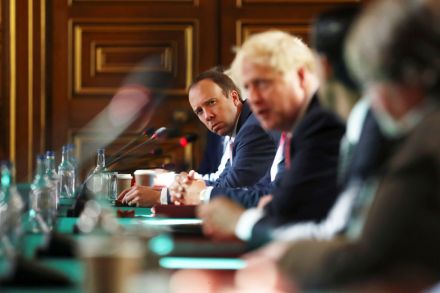
It is widely acknowledged that Britain has some of the world’s finest cyber capabilities. GCHQ is a global leader in those dark arts, and its offshoot, the National Cyber Security Centre (NCSC), is making that expertise available to businesses and others in need of help with their digital defences. All the more shocking, then, that our political leaders seem so utterly clueless. They have pledged to make Britain the ‘safest place in the world to be online’, but instead are running around like stars in a digital age ‘Carry On’ movie. Exhibit number one is Matt Hancock.

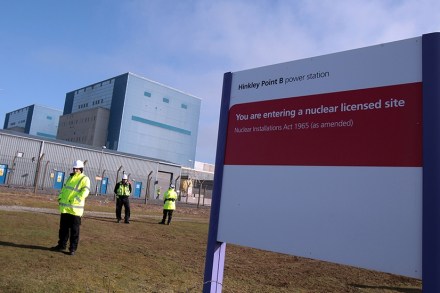
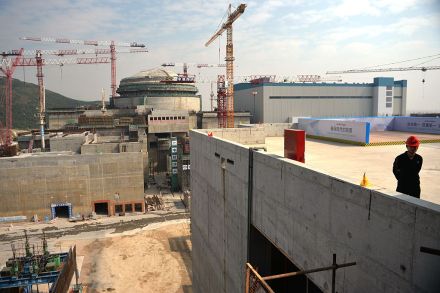
How Taishan almost became China’s Chernobyl

Days after a nuclear power plant began spewing deadly radiation, the ruling Communist party pushed ahead with a huge and self-indulgent celebration of the sort that had become a hallmark of its rule. This was no time for bad news, and the party delayed, dithered and hid the truth about the deadly events that were unfolding.  That was the Chernobyl disaster in 1986. Soviet leaders allowed Kiev’s International Workers’ Day celebrations to go ahead. The participants, meanwhile, were oblivious to events at the stricken reactor just 60 miles away.

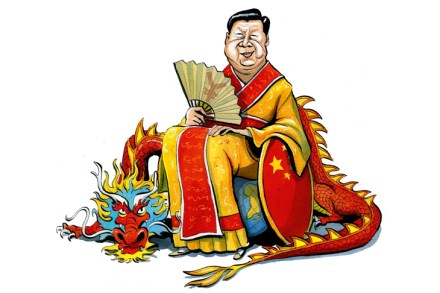
The growing cult of ‘Dada’ Xi Jinping

In a defiant speech to mark the Communist party’s centenary today, Xi Jinping warned foreign powers they would ‘have their heads bashed bloody against the Great Wall of Steel forged by over 1.4 billion Chinese people’ if they tried to bully China. Beijing would not allow ‘sanctimonious preaching’, he told a carefully vetted crowd in Tiananmen Square, declaring that ‘only socialism can save China’. At one point military jets flew over forming the number 100 – apparently flown by loyal party members.

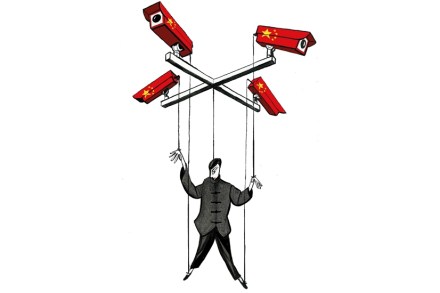
Matt Hancock and the problem with China’s surveillance tech

There can have been no more avid viewers of the CCTV footage of Matt Hancock’s snog and grope than China’s cyber spies, chuckling in some dark room in Beijing and asking each other, how can it have been so easy for somebody to obtain? MI5 seems to be asking itself the same question. Three days after the photographs and video were first published, it appears that nobody knows for sure how it was done. Did it come from somebody with access to the feed who downloaded it or filmed it on the screen with a mobile phone? Or was the camera hacked, because the dirty little secret of these devices is that they are not at all secure? Equally as worrying is Hancock’s claim that he didn’t even know there was a camera in his office.

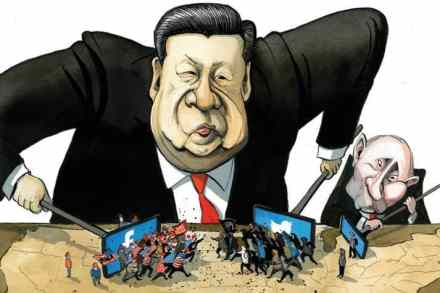
How China is stoking racial tensions in the West

Footage of a brutal late March attack on a 65-year-old Asian American woman in Manhattan drew widespread outrage on social media. It also made for a productive afternoon for Zhao Lijian. From his Beijing office, the Chinese government spokesman retweeted 20 posts and shared the video 12 times on his official Twitter account. ‘We can’t help but wonder, who will be the next victim? When will it all end?’ he asked his almost 900,000 followers. Zhao isn’t the only one who’s been busy. In the wake of the Atlanta spa shootings on March 16, Chinese state media used Facebook, Twitter and YouTube to stoke a narrative of American racism and hatred.

Ian Williams, Fiona Mountford and Deborah Ross

23 min listen

On this episode, author and journalist Ian Williams starts by looks at how China is using tech to expand its reach. (00:45) Then, Fiona Mountford reflects on how to deal with grief. (12:00) Finally, Deborah Ross reviews the Oscar-nominated Promising Young Woman, 'a wonderfully clever, darkly funny, stomach-knotting' revenge-thriller.

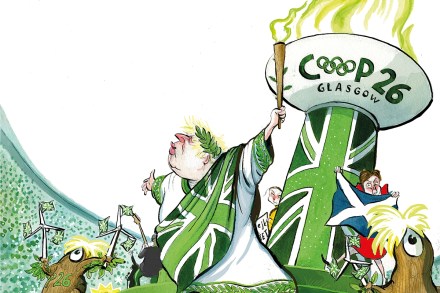
The green games: Boris’s plan to rebrand Britain

37 min listen

In this week’s podcast, Katy Balls expands on her cover story, analysing Number 10’s hopes for November’s COP26 summit in Glasgow (01:10). She’s joined by Boris Johnson’s former advisor and co-author of the last Conservative election manifesto, Rachel Wolf and together, they ponder whether the much-anticipated green jamboree signposts a supercharged boost not only for global climate policy, post Covid but also the Johnson premiership?

Who can take on China in the tech arms race?

The government’s decision to water down new foreign investment rules designed to protect national security casts serious doubt about its resolve to keep China out of the most sensitive parts of the British economy. Raising the threshold above which an overseas stake must be examined from 15 per cent to 25 per cent will sharply reduce the number of deals facing scrutiny. The amendment to the National Security and Investment Bill, now wending its way through parliament, was presented by business secretary Kwasi Kwarteng as necessary to show Britain is still ‘open for business’.