Ian Williams

Ian Williams

Ian Williams is a former foreign correspondent for Channel 4 News and NBC, and author of Vampire State: The Rise and Fall of the Chinese Economy (Birlinn).

China breaks new records in the Surveillance Olympics

Never before have the participants in a major sporting event been so closely monitored as in this Winter Olympics in Beijing. The 1980 Summer Olympics in Soviet Moscow were nothing in comparison. Athletes are competing under a blanket of observation, ostensibly to keep Covid at bay, yet imposed by a paranoid Communist party for whom critical words or thoughts are as dangerous as any virus. Everyone attending the games, including athletes, support staff and media, must install on their phones an app, My 2022, which harvests a wide range of personal data. It has the ability to censor and track its users, according to cybersecurity experts who have examined the app. The app is used to submit health information such as Covid test results and vaccination status.

The dangerous alliance between Russia and China

The growing alliance between Russia and China is something we shouldn’t lose sleep over, their long history of mutual suspicion runs too deep – or so we are told. Such a view is too complacent by half. China and Russia’s mutual hostility towards the West and their opportunism also run deep. And even if their burgeoning alliance is a marriage of convenience, it is still a very dangerous one. As Russia has massed more than 100,000 troops near the Ukrainian border, the nightmare for western strategists is that Vladimir Putin’s actions are being coordinated with those of Xi Jinping in and around the Taiwan Strait, where China’s military intimidation of Taiwan has reached new levels of intensity.

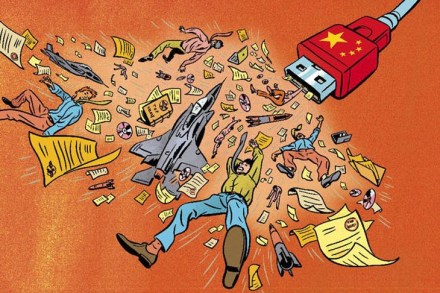
How China spies on the West

In December last year Oxford University students were offered £15,000 in prize money if they could solve challenges relating to the surveillance and tracking of devices and their users. ‘Huawei welcomes a selection of top-of-the-class students to their 2021 University Challenge’, the invitations read. The company added that the technology would be used for ‘business intelligence’ and ‘security services’. The invitation to the ‘hackathon’, as Huawei described it, was aimed at data science students, and was relayed by Oxford’s careers service just a few weeks before Christmas.

China’s zero-Covid policy is becoming unsustainable

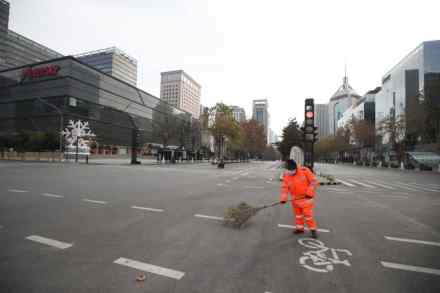
With just three weeks until the opening of the Winter Olympics in Beijing, Covid-19 is creeping ever closer to the capital. The Communist party is seeking to isolate Beijing from the rest of the country to keep the virus at bay and the games on track. But its zero-Covid policy, a desperate game of Whac-A-Mole with the virus, is looking increasingly unsustainable. All routes between Beijing and Tianjin have been closed after an outbreak in the port city, which is adjacent to the capital. Flights and high-speed train services in and out of a city of 14 million people have been cancelled and highways closed after the discovery of 126 cases in recent days, all of them the highly contagious Omicron variant. A third round of mass testing has been ordered.

Britain is finally waking up to China’s influence operations

The biggest surprise in Thursday’s security warning about a Chinese agent seeking to influence British politicians is that it came as a surprise at all. The Chinese Communist Party operates a vast and growing influence operation in Britain, which has pretty much been allowed free rein. The warning came from MI5 in the form of an ‘interference alert’ sent to House of Commons Speaker, Sir Lindsey Hoyle, which he then passed on to MPs. It warned that Christine Lee, a lawyer, was ‘knowingly engaged in political interference activities on behalf of the United Front Work Department of the Chinese Communist party.

China could be more dangerous than ever in 2022

Twenty twenty-two is the year that Xi Jinping plans to seize power for life, but it is not going according to script. He is retreating further into his bunker – a self-isolation that is amplifying the Communist party’s arrogance and insecurities. Challenges are mounting at home and abroad, which will make for a bumpy year in China’s growing rivalry with the West. Xi’s most immediate problem is Covid-19, where he has backed himself into an increasingly untenable ‘zero tolerance’ cul-de-sac, just as most of the rest of the world is learning to live with the virus. Just before the new year, gun-toting police in the city of Jingxi paraded four people accused of breaching Covid control measures through the streets.

Why is China turning its back on the world?

China reacted to the news of the US government’s diplomatic boycott of the Beijing Winter Olympics with predictable fury — a foreign ministry spokesman described it as a ‘naked political provocation’. He then added that US officials had jumped the gun because they had not even been invited. That seemed like a bit of added petulance, but it is entirely in keeping with China’s growing mood of self-isolation — a mood that is beginning to have some bizarre and dangerous consequences. The Chinese Communist party has always been a paranoid organisation, with a deep suspicion towards the outside world, but President Xi Jinping has taken this to new heights. Western policy-makers are alarmed.

Why it matters that tennis is standing up to Beijing

The commercial road to Beijing is littered with grovelling apologies, cringeworthy kowtows and silent complicity in repression. That’s why the Women’s Tennis Association’s decision this week to suspend all tournaments in China is so important. In doing so the WTA is demonstrating commendable support for the missing tennis player Peng Shuai, but it is also putting moral clarity ahead of business and making a rare stand against the Chinese Communist Party. In a statement released on Wednesday, WTA chief executive Steve Simon said, ‘In good conscience, I don’t see how I can ask our athletes to compete there.’ He said he had serious doubts that Peng was ‘free, safe and not subject to intimidation’.

The troubling disappearance of Peng Shuai

Serena Williams has joined the growing ranks of international tennis stars expressing concern over the disappearance of Peng Shuai. The former world No. 1 said she was ‘devastated and shocked’ about the plight of the Chinese tennis star, who has not been seen since she accused a senior Communist party official of sexual assault. The Women’s Tennis Association (WTA) said it was prepared to pull its tournaments out of China if it does not get satisfactory answers. ‘This is bigger than business. Women need to be respected and not censored,’ said chairman Steve Simon. He was demonstrating something altogether too rare in dealings with China – a willingness to put moral principle ahead of the lucrative Chinese market.

Peng Shuai and the limits of China’s #MeToo movement

China’s #MeToo movement has taken a step closer to the centre of power in Beijing, after sexual abuse allegations by a top Chinese tennis star were made against a man who until recently was one of Xi Jinping’s closest henchman at the pinnacle of Communist party rule. The tennis star, Peng Shuai, made the allegations against Zhang Gaoli, who until 2018 was vice-president and a member of the seven-strong Standing Committee of the Party’s Politburo, the country’s highest ruling group. Peng alleged in a post on her Weibo social media account that Zhang had assaulted her at the beginning of an affair that lasted from 2012 to 2017.

China’s energy crisis

The absence of Xi Jinping from COP26 in Glasgow this weekend should strip away any illusion that China is a serious partner on climate change. It also points to another intriguing possibility – that we may be witnessing not Peak Carbon, but Peak China. The Communist party may be facing the sort of decline it wishes on the West, and as with the climate, the impact could be dangerous and unpredictable. By staying at home China’s leader can concentrate on what has become an urgent priority for his government: massively ramping up the production and import of coal to solve the energy crunch his increasingly unsustainable economy is facing. That might have been a bit of a conversation stopper around the dinner table in Scotland.

Can Beijing buy the Taliban?

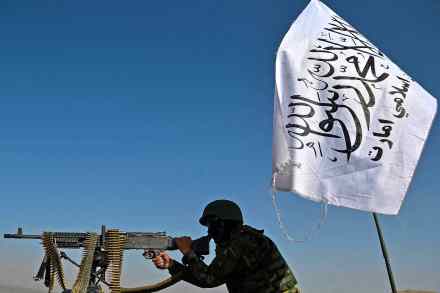
China is seeking a grand bargain from the Taliban: eliminate the groups Beijing says are stirring up trouble among its Muslim Uighurs in exchange for massive aid to rebuild Afghanistan. It sounds enticing for both sides as they sit down in Doha this week, but there are numerous questions about whether either can deliver, and a good chance that China will become the next imperial power sucked into the ‘graveyard of empires’. Mullah Abdul Ghani Baradar, the Taliban’s deputy prime minister, and Wang Li, China’s foreign minister, are reportedly meeting in the capital of Qatar just as the Taliban faces a growing number of attacks from Isis-K, a provincial affiliate of Islamic State. Baradar is insisting that the security situation is ‘under control’.

The car industry’s China crisis

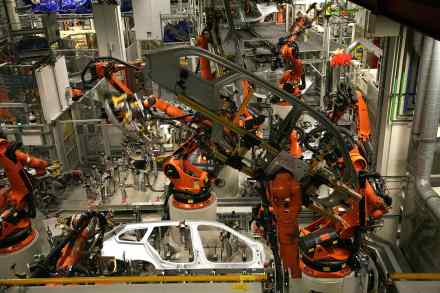
New cars could soon start disappearing from Britain’s forecourts, with the latest supply chain crunch threatening to cripple the global motor industry. It’s a crisis that once again delivers a stark warning about the dangers of over-dependence on China and the costs of succumbing to Beijing’s predatory trade practices. The automotive industry is currently facing a critical shortage of magnesium, which is an essential raw material for the production of aluminium alloys, including gearboxes, steering columns, fuel tank covers and seat frames. Stockpiles are running low, there is no substitute for magnesium in the production of aluminium sheets, and China has a near monopoly on the market.

Xi threatens Taiwan because he’s weak

Over the weekend, China sent waves of warplanes racing towards Taiwan in numbers not seen before, forcing the democratic self-ruled island to scramble fighters and ready its air defence missiles. The United States says it is ‘very concerned’ by Beijing’s ‘provocative’ actions and reiterated Washington’s ‘rock solid’ commitment to the island. According to Taiwan’s defence ministry, 38 Chinese aircraft, including nuclear-capable bombers and J-16 fighter jets, entered its air defence identification zone on Friday, and another 39 did so again on Saturday — the largest incursion to date. Some 16 more were sent on Sunday.

Running on empty: the government is out of fuel – and ideas

39 min listen

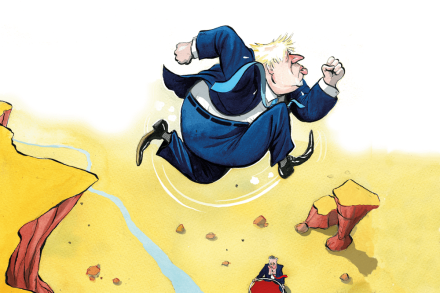
In this week’s episode: is Boris Johnson running on empty or is a weak opposition giving him the momentum he needs? Kate Andrews asks in her cover story this week if Boris Johnson’s government has run out of ideas – as well as petrol. Katy Balls also writes in the magazine that the opposition seems unable to take advantage of the government’s failures. Katy and Kate join William on the podcast to give their takes on the state of both parties. (00:51) Also this week: what is behind China’s latest crackdown on cryptocurrency? Ian Williams writes in this week’s Spectator that the CCP’s latest move to criminalise anyone dealing in cryptocurrency is to clear the decks for China’s new, state-sanctioned digital currency.

Will China’s ‘digital yuan’ reinvent money as we know it?

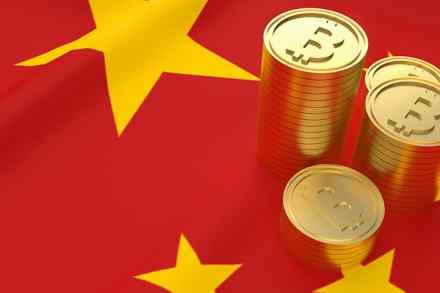
What’s behind China’s latest crackdown on crypto? For some time, Beijing has banned bitcoin and other cryptocurrency exchanges from operating within its borders. Last week, the Chinese Communist party extended the ban to criminalise anyone dealing in crypto. ‘Virtual currency-related business activities are illegal,’ declared the People’s Bank of China. The CCP would ‘resolutely clamp down on virtual currency speculation… to safeguard people’s properties and maintain economic, financial and social order’. China accounts for nearly half of the world’s crypto mining, a process in which high-powered computers are used to generate the digital currencies.

Is China’s debt-fuelled economy doomed?

For years it seemed as though China’s massively inflated property bubble would just keep on expanding, seemingly defying the laws of economics, as well as regular warnings of the dire consequences for the economy should it burst. Now that moment may have been reached, as the country’s biggest developer teeters on the brink of bankruptcy. Evergrande is the biggest debtor in China – and in the world. It owes an estimated US$300 billion to Chinese banks, suppliers and foreign investors, and is struggling to meet interest payments. Some $US84 million of bond interest is due this Thursday, but the company has run out of money.

Xi Jinping is weaponising China’s sex scandals

Zhou Xiaoxuan was in tears when she emerged from the Beijing court around midnight on Tuesday. ‘I’m really sorry there wasn’t a better result,’ she said in a video clip shared by supporters after the court threw out a sexual harassment case against one of the country’s most famous television hosts. Zhou claimed she had been forcibly groped and kissed while working as an intern at state broadcaster CCTV in 2014. The case was seen as a test of China’s proclaimed determination to clamp down on abuse, and it galvanized the country’s fledgling #MeToo movement.

China tightens its grip on Cambridge

The revelations this week of the alarming influence of Huawei within the Cambridge Centre for Chinese Management provide the latest evidence of the tightening grip of China on Britain’s leading university. The Times reports that three out of four directors of the centre — part of the university’s Judge Business School — have ties to the telecoms giant, which has close links to the Chinese Communist party. The centre’s ‘chief representative’ is a former vice-president of the company who has been paid by the Chinese government. An honorary fellow of the centre wrote a book praising Huawei’s ‘ability to transform the intellectual elite into a band of soldiers with the same set of values and resolve'.

Are China’s climate promises just a load of hot air?

Few cities in China represent the country’s addiction to coal more than Tianjin, where Alok Sharma travelled this week to talk about cooperation on climate issues. It sits on the coast of one of China’s most polluted regions, and its port is a key hub for trading 100 million tons a year of the stuff – that’s roughly 12 times Britain’s annual coal burn. Chinese coal consumption is on track to increase this year by around ten per cent. To meet that demand, vast new open cast pits are being rushed into service in Inner Mongolia, China’s biggest coal production region, from where supplies are brought down the coast to Tianjin.