Ian Williams

Ian Williams

Ian Williams is a former foreign correspondent for Channel 4 News and NBC, and author of Vampire State: The Rise and Fall of the Chinese Economy (Birlinn).

Is the CCP’s desperation behind China’s abrupt reopening?

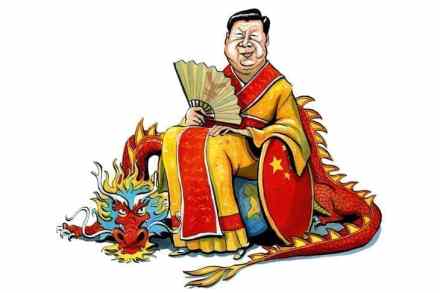
China usually shuts down for the Lunar New Year, but Communist party leaders have marked the arrival of the Year of the Rabbit with a burst of activity worthy of that skittish animal. They have followed their colossal U-turn on zero-Covid with a charm offensive to convince the outside world that China is open for business. In many ways it is as abrupt an about-turn as scrapping Covid controls in the first place. Xi Jinping despatched his trusted vice-premier and economic tsar Liu He to Davos to schmooze with western business leaders. In his speech to the World Economic Forum two weeks ago, he mentioned ‘strengthening international cooperation’ no less than 11 times. He said that the door for foreign investors would ‘open up further’.

China’s chip industry is struggling

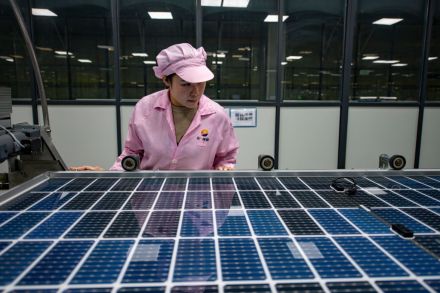
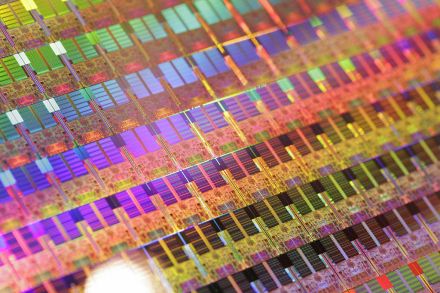
China is entering the new year with its tech ambitions under a Covid cloud. The enormous cost of the now abandoned zero-Covid policy has badly strained government finances, and the communist party’s pledge to build a world-beating chip industry, already reeling from American sanctions, is falling victim to the familiar ills of cost, waste and corruption. A much hyped one trillion yuan ($145 billion) investment plan is reportedly on hold. Costly subsidies have born little fruit but they have encouraged graft and provoked sanctions. As a result, government officials are looking at alternative ways of encouraging growth in the semi-conductor industry, according to Bloomberg.

China’s dangerous zero-Covid retreat

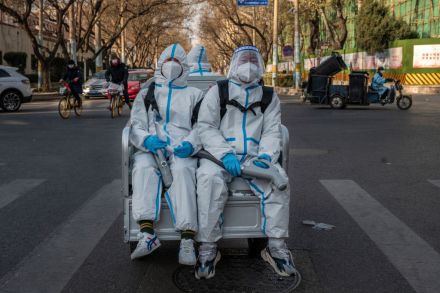
China’s scrapping of strict Covid controls represents not so much a shift in gear, as a screeching hand-break turn. It is abrupt and haphazard and comes at a particularly risky time. Hundreds of millions of people will soon be on the move for Chinese New Year, which is next month, and the spread of the virus, already fast, will accelerate rapidly. The transition to living with Covid has not been easy for any country but will be particularly difficult for China – and dangerous for the communist party.

The death of Jiang ‘the toad’ – and memories of a more open China

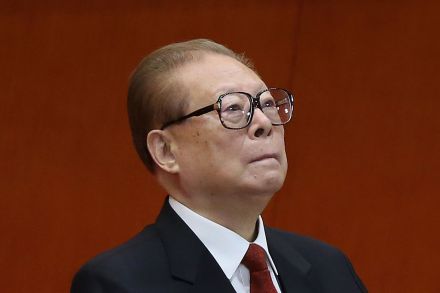
It is a measure of the dark places Xi Jinping is taking China politically and economically that the rule of Jiang Zemin, who died on Wednesday aged 96, is being looked back upon with some nostalgia. During Jiang’s later years, ‘toad worship culture’ (a play on his supposed amphibious features) became popular on social media as an oblique way of criticising Xi’s rule and praising China’s relative openness under Jiang.  Stability was always Jiang’s top priority. He didn’t hesitate to crack down against any perceived threat to the CCP Jiang was plucked from relative obscurity to head the Chinese communist party in 1989, soon after the Tiananmen Square massacre, and was president of China from 1993 to 2003.

Is Xi Jinping in trouble?

The Chinese people seem to have run out of patience with their country’s draconian Covid policies. After almost three years of brutal lockdowns, mass testing and sweeping quarantine, all facilitated by claustrophobic surveillance, they appear to have snapped. The protests that swept China at the weekend are the biggest challenge to Xi Jinping since he took power in 2012, and try as he might he cannot shift the blame. Zero Covid is his policy. Dissenting voices pointing to the economic and social cost have been silenced, and ‘defeating’ the virus and demonstrating the superiority of the Chinese Communist party over the floundering West is part of the cult of Xi.

Zero-Covid is the new one-child policy

It has been a remarkable few days for China’s increasingly absurd and at times chilling zero-Covid campaign. There was outrage on social media after the death of a three-year-old boy from carbon monoxide poisoning, which his father blamed on delays obtaining treatment because of a lockdown. Angry residents who took to the streets were confronted by riot police. While videos from the world’s largest iPhone factory in the central Chinese city of Zhengzhou, where 350,000 are employed, showed workers scaling barricades in what amounted to a mass break-out following attempts to lock them in their dormitories after a Covid outbreak. A surge in cases across the country has seen restrictions imposed in 28 cities, home to more than 200 million people.

The mystery of the Hu Jintao incident

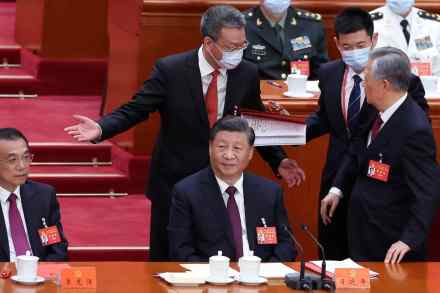
A steward tries to lift Hu Jintao from his seat, but Hu doesn’t want to move. The former Communist party leader is sitting to the left of current boss Xi Jinping, and he reaches out to take Xi’s notes, but Xi moves Hu’s hand away and takes back the papers. The world’s cameras follow every move, as Hu is eventually raised to his feet. There are two stewards now, one holding him firmly under the arm, the other gesturing for him to leave. But Hu is clearly reluctant to go, leaning over and saying something to an impassive-looking Xi, who nods and gives a brief reply to Hu without looking directly at him. Hu then taps the shoulder of Premier Li Keqiang, who is sitting on Xi’s right. Li looks uneasy, turning briefly to watch Hu being ushered from the hall.

The threat of Chinese headhunters

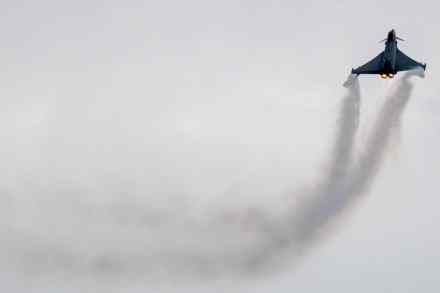
It is hard to say what is more shocking, dozens of former British military pilots lured by vast salaries to work for China’s People’s Liberation Army or the fact there appears to be no law to stop it. At least 30 experienced pilots, who have flown Typhoon, Jaguar, Harrier and Tornado fighters, as well as piloting advanced helicopters used for anti-submarine warfare, have been lured to China on packages worth as much as $270,000 dollars, according to the Ministry of Defence. The information they are passing on will be especially important should there be a conflict over Taiwan, and the PLA comes face to face with western military aircraft.

Joe Biden has jolted China

The chip war between China and America is heating up, with an increasingly assertive Joe Biden battling with Xi Jinping as he enters his third term as Chinese leader. The US last week further restricted China’s access to advanced American know-how, in what were some of the most stringent export controls for decades. Xi didn’t mention semiconductors in a speech on Sunday marking the opening of the Communist party’s twice-a-decade congress in Beijing, but he did pledge that China would ‘resolutely win the battle in key core technologies’. To compete with the US, China will need better tech. These new export controls will make Xi’s vision much harder to achieve.

Is Liz Truss going soft on China?

In her speech to the Conservative party conference, Liz Truss rightly pointed out that we did not stand up to Russia early enough. ‘We became too dependent on authoritarian regimes for cheap goods and energy,’ she said. We can safely assume that those ‘other’ regimes include China, though curiously given how prominently the China threat figured in her leadership campaign, her speech contained no direct reference to Beijing. To be fair, Truss had a lot on her mind, and it is early days in her administration. But there are a number of reasons to believe she is wobbling on her commitment to a more robust and coherent China policy. It's time to ask whether her tough talk will soon be swept aside by the crisis facing her and the economy.

China’s lockdown nightmare is far from over

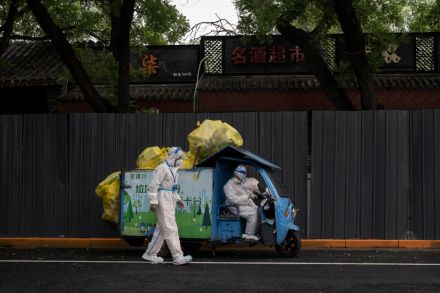
Another Covid-19 lockdown, another angry confrontation. This time it was on the streets of Shenzhen, China’s high-tech hub, where videos this week showed an angry crowd facing off against police officers wearing protective medical gear, including blue gowns, masks and plastic visors. ‘Lift the lockdown’, the protesters yelled, pushing against hastily erected barricades. Some threw plastic bottles at the police. In one clip, a woman can be heard shouting, ‘The police are hitting people’. The protest, one of several reported in the city, followed an order for residents of three districts to stay at home after just ten infections were detected. Subway stations were closed, and affected areas cordoned off.

Even Xi is unimpressed with Putin’s bungling autocracy

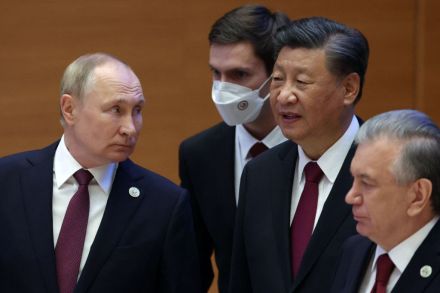
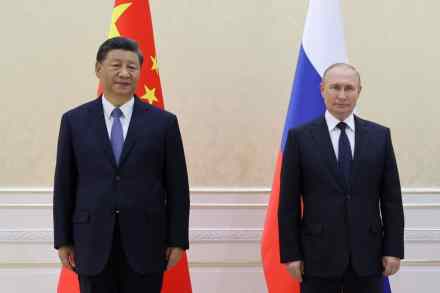
To say that Vladimir Putin is giving autocracy a bad name is rather to state the obvious. But it now appears to have dawned even on his ‘old friend’ Xi Jinping that Russian incompetence and cruelty in Ukraine is undermining their joint ambition to re-write the international order. Putin’s admission that Beijing might have ‘concerns’ about his bungled war was cryptic but striking. ‘We highly value the balanced position of our Chinese friends when it comes to the Ukraine crisis,’ Putin said in remarks ahead of their meeting in Uzbekistan. ‘We understand your questions and concerns about this. During today’s meeting, we will of course explain our position.

The extreme heatwave wreaking havoc across China

China is struggling to limit the impact of its longest and most widespread heatwave since records began more than 60 years ago. Temperatures have reached the highest the country has ever recorded and a drought is wreaking havoc across much of southern China. It is compounding the multiple economic challenges facing China’s communist leaders, including the fallout from strict Covid-19 lockdowns and a bursting property bubble. Maximiliano Herrera, a weather historian who monitors extreme heat around the world, has described China’s soaring temperatures as the most severe heatwave ever recorded anywhere. The authorities have declared a drought emergency, warning that the critical autumn harvest is under ‘severe threat’.

The Chinese spy ship and the dangers of debt-trap diplomacy

A Chinese spy ship that docked in Sri Lanka on Tuesday in defiance of Indian and western protests is the latest symbol of China’s power and ambition in the Indian Ocean. It is also a stark demonstration and warning of the harder edges of Beijing’s debt trap diplomacy. The Yuan Wang 5, bristling with satellite dishes and antennas, is described by China as a ‘research and scientific vessel’. In reality it is one of the latest generation of space-tracking ships, able to monitor satellites, as well as rocket and intercontinental ballistic missile launches. There is speculation that it carries a fleet of underwater drones. It is in other words, a formidable piece of surveillance kit.

Is Chinese espionage a threat to US democracy?

26 min listen

Freddy Gray speaks to Spectator contributor, Ian Williams, author of Every Breath You Take: China's New Tyranny and Nicholas Eftimiades, a senior fellow at the Atlantic Council and professor of Homeland Security. On the podcast, they discuss the scale of Chinese espionage infiltrating Western society. Has the problem been ignored for decades? What kind of a threat is it to America's democracy?

China’s Taiwan tantrum is already backfiring

Chinese social media is full of anger and frustration – because the military didn’t shoot down Nancy Pelosi’s plane. As she headed to Taiwan, the Chinese Communist Party (CCP) whipped up a wave of rabid online nationalism. Influential commentators led by Hu Xijin, the former editor of the CCP’s Global Times, suggested the speaker of the US House of Representatives could be taken out, a view that was widely applauded. Nationalists have a lot of leeway on China’s tightly-controlled internet, in large part because their views are shared by the increasingly chauvinistic CCP. But after Pelosi’s plane not only landed, but left Taiwan in one piece, they exploded in outrage.

Taiwan tells China: we’re not scared

China has launched a new round of military drills near Taiwan, having previously announced they were ending on Sunday. The People’s Liberation Army’s Eastern Theatre Command said it was ‘continuing joint training under real war conditions, focused on organising joint anti-submarine warfare and naval strikes’. A social media account of the nationalist tabloid Global Times said exercises around Taiwan might continue, since the summer is a popular drill season for the PLA. Taiwan said it was closely monitoring the exercises, but that so far Monday no Chinese ships or aircraft had entered its territorial waters.

The UK is just waking up to the scale of Chinese espionage

The scene could have come straight out of a spy novel. An ornate Chinese garden with temples and pavilions, built at one of the highest points in Washington DC – a gift from the Chinese government. At its heart, a 70-foot high white pagoda – perfectly positioned and equipped to eavesdrop on communications at the heart of the American government below. China offered to spend $100 million to build the garden at the National Arboretum. But the project never got off the drawing board. It was quietly killed off by US counter-intelligence after they discovered that Chinese officials wanted to build the pagoda with materials shipped to the US in diplomatic pouches, meaning they could not be examined by US customs officials.

HSBC has answered the call of the Chinese Communist Party

HSBC was being more than a little disingenuous when it claimed on Thursday that Communist party cells don’t have much influence on the businesses in which they are installed. Try telling that to Xi Jinping, under whom the CPP has extended its tentacles into every aspect of nominally private businesses in China. The British bank was responding to a report in the Financial Times that it has become the first foreign lender to install a CCP committee in its investment banking subsidiary in China. While neither confirming or denying the report, an HSBC statement played down the importance of the cells, saying, ‘they do not influence the direction of the business.’ This is simply wrong.

China’s economy is grinding to a halt

Economic growth in China is grinding to a halt. The days of soaring double-digit growth are over, and the malaise facing the country’s spluttering economy goes far deeper than the hit from Covid-19 lockdowns. Gross domestic product in the April to June quarter grew by a paltry 0.4 per cent from a year earlier, according to figures released on Friday, well below the forecasts of analysts. On a quarter by quarter basis, the economy shrank, down 2.6 per cent compared with January to March. It was sobering reading for China’s communist leaders, who derive much of their legitimacy from their management of a fast-growing economy. It is easy to blame the impact of the lockdowns. Restrictions were imposed on major cities across the country in March and April.