Ian Acheson

Ian Acheson

Professor Ian Acheson is a former prison governor. He was also Director of Community Safety at the Home Office. His book ‘Screwed: Britain’s prison crisis and how to escape it’ is out now.

What the stabbing of Ian Watkins says about our prisons

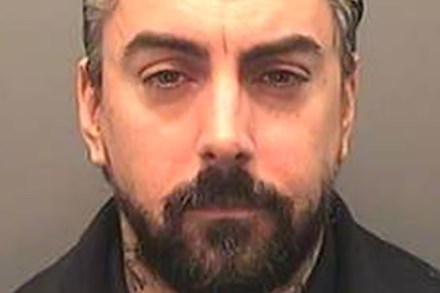
This weekend, armed assailants tortured a prisoner and held him hostage in HMP Wakefield for six hours, before specialist prison staff stormed the cell. The prisoner was taken to hospital with stab wounds. Much has been made of the fact that he is Ian Watkins, the front man of the group Lostprophets, who was imprisoned for 29 years in 2008 for the sexual abuse of children. As you can imagine, there isn’t a lot of sympathy for one of the most grotesque and sadistic paedophiles in our prison system. But this misses an important and troubling point.   Wakefield prison is one of a small number of high security prisons. It was recently classified as ‘outstanding’ in HM Prison and Probation Service annual performance ratings.

The Dartmoor appeal win is a victory against wealthy landowners

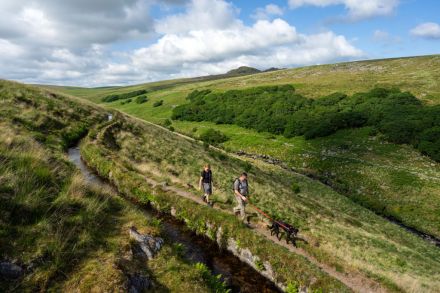
This evening, activists will gather under Haytor, Dartmoor's iconic landmark rocks, to celebrate what feels like a rare victory for the right of citizens to roam. Today, the court of appeal has overturned an earlier decision that ended an assumed and ancient right: that which allowed you to lay your hat and your home without permission more or less anywhere on the park's 368 square miles. I declare an interest as someone who both lives on the moor and who often disappears with my tent into southern England's last wilderness for a natural mental health spa — and I am one of many who have been waiting for this appeal outcome for far too long.

The truth about the Bibby Stockholm migrant barge

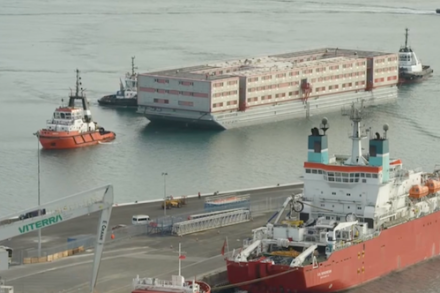
The ingloriously-named Bibby Stockholm has weighed anchor in Dorset's Portland harbour to a storm of protest. The vessel is intended to house up to 500 single male adults who have arrived in this country by illegal means. Rishi Sunak's pledge to 'stop the boats' has morphed into a need for bigger boats to contain a small fraction of those asylum seekers still arriving every day on our coastline. A rare but conspicuously uncomfortable alliance of activists and local Nimbys have united in protest against this move. The former assert that conditions will be inhumane; the latter fret about overwhelmed local services.

Will anyone be held accountable for the Zephaniah McLeod attack?

A report, just published by the NHS, is a stark 171-page indictment of our protective services. The investigation details the shocking failures of every agency either side of the prison walls to safely manage Zephaniah McLeod, a plainly very dangerous and mentally unwell man with a long criminal history, who was released from prison without any restrictions or supervision.   In September 2020, less than six months after being let out, McLeod went on a late-night killing spree with a knife in Birmingham city centre. He murdered one young man and maimed eight others, before being arrested by armed police. As with the recent eerily familiar atrocity in Nottingham, his victims were selected at random and totally innocent.

The Dartmoor prison hostage taking could have been far worse

Taking my son for a walk yesterday, we passed HMP Dartmoor, where I served as a prison governor. Unknown to us, a dramatic and serious incident was unfolding just behind its austere walls. A prisoner had taken an officer hostage in the establishment’s segregation unit. I understand that the officer was overpowered while letting the perpetrator out into the unit’s exercise yard. I’m told that this prisoner was armed with a bladed weapon and that the officer was overpowered with his own handcuffs. We won’t know whether all these details are accurate from the Ministry of Justice because they were only forced to reveal the scantest of details after the event was broadcast on social media.

Sinn Fein’s shameful commemoration of the IRA

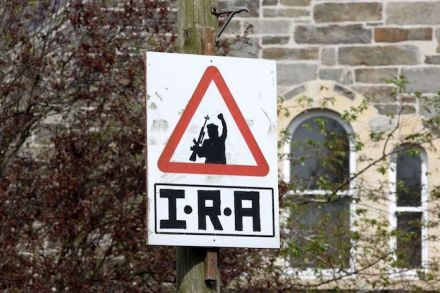
A member of the UK Parliament is the keynote speaker at an event tomorrow commemorating ‘volunteers’ in South Armagh. The ceremony will take place in the tiny village of Mullaghbawn, set in the now picturesque Ring of Gullion, more familiar to students of the Northern Ireland Troubles as the heart of ‘Bandit Country.’  According to one Northern Irish politician, previously the event has included a ‘roll of honour’ for members of the IRA.  Sinn Fein’s North Belfast MP, John Finucane, who is billed as the keynote speaker, is no stranger to the sort of sectarian horror terrorists inflicted on this part of the world.

The BBC’s Blue Lights is a near-perfect cop drama

‘Remember your training Grace, get the rifle.’ We’re only moments into the opening episode of the superb new police procedural Blue Lights when we are reminded this is a very different cop show. In Northern Ireland, where it is set, policing the semi-skimmed peace still carries the additional risk of being ambushed by terrorists. Being tooled up, even for a traffic stop, can be a matter of life and death.   Any of us who have worn a uniform while wet behind the ears can empathise with the struggle of these three new officers Grace and Stevie, her mentor – and possibly more as the series develops – are two central characters in a six-part BBC drama that manages to humanise the lives of the men and women in the Police Service of Northern Ireland without mawkishness.

Violent extremists won’t spoil Joe Biden’s visit to Northern Ireland

What can violent extremists do to wreck Joe Biden’s first visit to Northern Ireland? The answer is precious little. The President’s visit has been denied the electoral fairy dust of a functioning Executive as he blows in to hail 25 years of the Good Friday Agreement. While that might disappoint some local politicians keen to bathe in some harmless warm platitudes, it will be less of a security headache for those charged with keeping him safe. So what of the known arrangements and the risks? Biden will land at Belfast International Airport this evening and be taken, one assumes by air, to a venue in the city for some glad-handing.

Northern Ireland’s flawed peace has still saved countless lives

A fortnight before the signing of the Belfast Agreement on Good Friday 1998, 25 years ago tomorrow, two republican terrorists were waiting at the back of a supermarket in Armagh city, Northern Ireland, for Cyril Stewart. Mr Stewart was a former police reservist, medically retired the previous year after a heart attack. He was well known in the city and in local football circles where he was an official. He was executed in cold blood in front of his wife at the back of a Safeway's in pursuit of Irish unity. Barely three weeks earlier, the future inaugural First and Deputy First ministers of the Northern Ireland Executive stood together in a small village, 20 minutes’ drive from where Mr Stewart was murdered.

The problem with the BBC’s Manchester bombing coverage

The BBC have reacted to the Manchester Arena bombing, carried out by an Islamist maniac, by providing us with a cautionary tale of how easy it is to be radicalised by…the extreme right. The fifteen-year-old boy, named as John, who is featured in the online article describes how he was manipulated into ‘hating Islam’ by consuming hours of dodgy online content and eventually attending some demonstrations.  'To see Manchester attacked – a city where I spent a lot of time – really fuelled my anger,' he said. 'I stopped caring who knew about my involvement and moved from mainly speaking online to actively trying to recruit people and sharing propaganda.' John was a plainly troubled young man in need of some solid parenting and guidance.

The DUP would be foolish to reject Sunak’s Brexit deal

Rishi Sunak and EU chief Ursula von der Leyen hailed a 'decisive breakthrough' as they unveiled their updated version of the Northern Ireland Protocol deal, but will it wash with the people of Northern Ireland? For those just back from Mars, the Protocol was an attempt to reconcile the United Kingdom’s departure from the European Union with the indigestible fact of a land border between the two jurisdictions on the island of Ireland. It was incorporated into the Brexit withdrawal agreement after months of torturous negotiations.

The chilling attack on a Northern Ireland police officer

An off-duty senior detective in Northern Ireland’s police service was ambushed last night by masked gunmen as he helped at a football coaching event in Omagh, Country Tyrone. Two assailants fired at least four bullets into Detective Chief Inspector John Caldwell, shooting him on the ground as his terrified son looked on. He remains critically ill in hospital. PSNI detectives investigating his attempted murder are pursuing dissident republican terrorists in the ‘New IRA’ as a strong line of inquiry. Three men have been arrested. Twenty five years ago, this sort of casual barbarity gained not much more than a sidebar in a local newspaper.

The eradication of the victims of Enniskillen

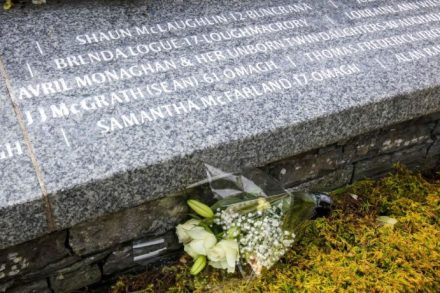
In Northern Ireland, the dead are being eradicated. This week marks the 35th anniversary of the IRA bombing of a remembrance service in my hometown Enniskillen. In an attack so barbarous it was condemned at the time by the Kremlin, a bomb planted the night before slaughtered 12 of my neighbours standing around the town’s cenotaph. No warning had been given. The chemist, the teacher, the nurses, the retired police officer, the housewives, the house painter, all standing around a war memorial with the names of Catholic and Protestant locals on it who fought and died in the trenches, were cut to pieces. My father, one of the first responders, discovered his colleague and wife dead in the rubble. It was an image that haunted him to his death.

Northern Ireland’s future isn’t Catholic or Protestant

For the first time in Northern Ireland's history, Catholics now outnumber Protestants. Census data on national identity and religious from 2021, which was published today, shows that Catholics born into or practising their religion make up 45.7 per cent of the population, with Protestants at 43.5 per cent. In the bleak zero-sum world of Irish confessional demographics, that translates into a headcount victory for those champing at the bit to end British rule there. There’s no denying the figures are momentous. They will be gleefully weaponised by those who have no interest in a truly shared or reconciled future. But the headline numbers don't reveal everything about the state of play in Northern Ireland.

Northern Ireland is descending back into sectarianism

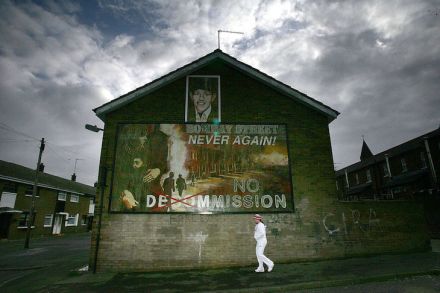
Nearly 25 years after the Good Friday Agreement, the embers of sectarianism in Northern Ireland are still glowing bright. This week thousands of young nationalists at a west Belfast community and music festival ended the night by chanting pro-IRA slogans. They were seemingly oblivious to the fact that the IRA murdered more Roman Catholics in the Troubles than any other combatants. The spectacle of kids, born after the guns went silent, gleefully venerating terrorists who brought such pain and suffering to the whole community was depressing enough. But it gets worse. The West Belfast based Féile (festival), where the chanting took place, is publicly funded by Belfast City Council, the Arts Council of Northern Ireland and NI tourism board.

Banning greeting cards won’t keep spice out of our prisons

The last time inspectors visited HMP The Mount in 2018, the place was awash with drugs. The prevalence of the psychoactive substance ‘bird killer’, and the violence associated with it, meant nearly half of all prisoners there reported feeling unsafe. This insidious drug, collectively known as ‘spice’, was smuggled past officers in the form of letters and cards invisibly impregnated with the stuff which prisoners then smoked or licked. Wings and landings filled with zombified inmates in a haze of toxic smoke that felled officers were not an uncommon sight. The addictive qualities of this junk resulted in a spiral of debt, predation and lawlessness that threw rehabilitation out the cell window.

Sinn Fein’s victory doesn’t mean the end of the Union

No amount of extra counting later today can undo the seismic shift that has taken place in Northern Ireland’s politics. The first preference votes in Northern Ireland’s devolved assembly elections are in and Sinn Fein are the clear winners on 29 per cent. Sinn Fein – once the political appendage of a terrorist organisation that wrought 30 years of havoc and misery – is set to win the most seats in Stormont. It will then be able to nominate the first ever Republican First Minister. Before Unionists panic though, it’s worth examining the facts. On total votes cast, there will likely be a Unionist majority hidden by the byzantine calculus of the Single Transferrable Vote system which benefits smaller parties.

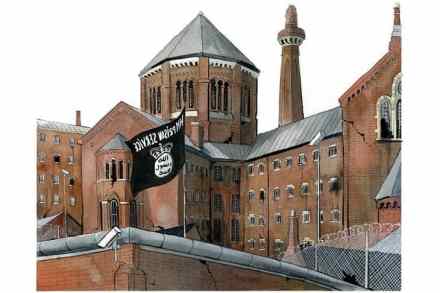
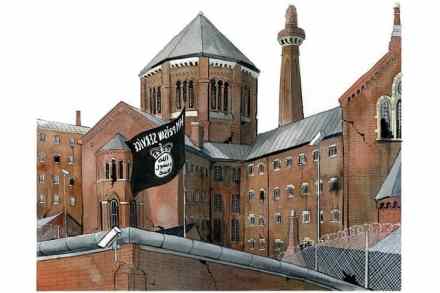
Why prisons are still failing to stop Islamist terror

Johnathan Hall QC has done the state a service. His cogent report on prison terrorism, published today, compliments and advances work I started in 2016 to alert the government to the profound problems in how we manage ideologically motivated offenders in our jails. Hall’s report critically examines the contemporary threat of violent extremism from within the prison walls – where at the last count reside some 230 offenders convicted of terrorist offences and a greater number who are at risk of radicalisation or already radicalised. The vast majority of these offenders are motivated by Islamist extremism which explains his report’s focus. He begins by making two stark points, obvious to those of us who have paid attention to jail jihad.

Our prisons are woefully unprepared for Ali Harbi Ali

The Islamist terrorist Ali Harbi Ali will spend the rest of his life behind bars for the murder of Sir David Amess MP. But as he fades from public view, will his risk also disappear? That’s a headache our beleaguered prison service will now have for decades to come. The signs are not promising. Harbi Ali, who reportedly smirked after stabbing Amess more than 20 times, showed no sign of remorse or contrition throughout his trial. Unlike many of the terrorists he will be joining in one of our high security prisons, he managed to convert his distorted thoughts into lethal action. He’s a blooded jihadist and he will be an iconic figure to many within the system, not just those locked up for ideological crimes.

The dog catcher, the terrorist and the dark history of Sinn Fein

The dead in the ground and those who put them there in the name of ideology do not rest easily in Ireland. The Glasnevin cemetery in Dublin was recently forced to close its wall of remembrance to those who died in the Easter rising of 1916 because of relentless vandalism. In previous attacks the wall had been smashed with sledgehammers and in 2017 paint was thrown over it. What drove this constant destruction? It seems it was targeted because the attackers could not tolerate the presence of the names of British soldiers on the wall. These soldiers had died alongside republican rebels and civilians in the five days of insurrection that gave birth to the modern Irish state.