Helen Nugent

First-time buyers, Black Friday, tax avoidance and unemployment

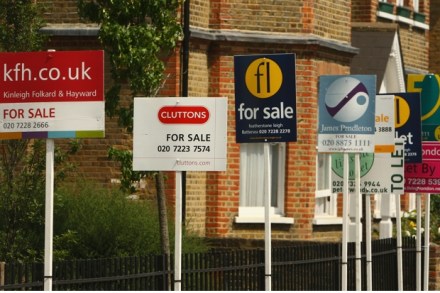
First-time buyers need more help to put an end to the decline in home ownership, according to a report from the chief executive of one of Britain's largest housebuilders. Long-term building targets were also needed to avoid 'kneejerk' policy moves, the Redfern Review said. According to the BBC, the study found home ownership rates in England dropped from 71 per cent to 64 per cent over 12 years, with the steepest fall among young people. Labour commissioned the report. It said the findings revealed a 'lost generation'. Among 25-34 year olds, the rate of home ownership fell from 59 per cent in 2003 to 37 per cent in 2015. The review was led by Pete Redfern, chief executive of Taylor Wimpey, who conducted the investigation in a personal capacity.
Tax, bonds, national insurance and pensions

A slowdown in the UK economy will affect tax receipts and leave Philip Hammond with scant opportunity for giveaways at next week’s autumn statement, according to The Guardian. Publishing new forecasts for GDP growth to slow next year as the Brexit vote takes effect, the consultancy firm PwC said the Chancellor could afford some spending on big projects such as housing and roads if he changed the Government’s fiscal rules. But he would not have the money for large net tax cuts and would most likely keep tight control on spending by central and local government. Bonds The worldwide bond sell-off gathered pace yesterday as expectations that Donald Trump will unleash a massive fiscal stimulus kicked off a global jump in borrowing costs.

We must improve financial education in schools

When I was at school in the, er, 1980s, there was no such thing as financial education. Yes, we had maths lessons but they focused on the hypotenuse and mastering scientific calculators. I still break out in a sweat at the thought of trigonometry. Since my day (when all this was fields etc etc), the curriculum has changed significantly. No more Home Economics - I think it's called Domestic Science now - and I'm guessing that ballroom dancing has been replaced by something altogether more modern. I also suspect that the fledgling word processing lab at my high school has morphed into a 21st century cutting-edge centre where coding lessons are commonplace. Given the pace of change over recent decades, I'm wondering why finance is still so neglected in the classroom?

Energy profits, pensions, financial education and housing

The Government is to investigate claims that energy providers are pocketing larger profits than they have previously admitted, according to The Sun. The newspaper says that gas and electricity firms may be netting six times more than they state. But trade group Energy UK rejected The Sun's claims, saying they were 'a misrepresentation of the facts'. However, using figures published in a report commissioned by Energy UK from the accountancy firm PwC, The Sun says that suppliers could be making a 24 per cent profit margin. This compares to a 4 per cent profit margin on the price of a typical dual fuel bill which has been recorded by the regulator, Ofgem. Now the business secretary, Greg Clark, will examine the claims.

Price rises, BHS, current accounts and property

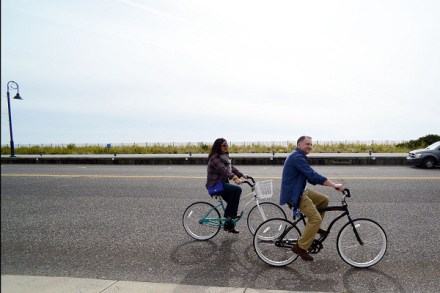
Bicycle prices could rise following the Brexit vote, because the cost of importing bikes from Asia has increased. The head of Halfords Jill McDonald said the retailer was in talks with its suppliers following the pound’s fall. 'For bikes bought in Asia in US dollars, we are seeing prices beginning to move.' According to The Guardian, McDonald also said Halfords, the UK’s biggest bike seller, was better positioned to tackle price rises than smaller businesses because 90 per cent of the bikes it sells are own labels. Evictions More than 100 households were evicted each day from their rented homes in England last year, according to figures from the Ministry of Justice.

Markets, banks, property and the pay gap

It's the morning after an 18-month campaign - and the markets have started to digest Donald Trump's surprise election as US President. In early trading, the FTSE 100 index jumped by 49 points, or 0.7 per cent, to 6960. The Dow Jones industrial average is on track to hit a new record high when the US stock market opens later today. Last night the Dow closed near to its highest levels. And, after touching almost $1,340 an ounce yesterday before falling back, gold is up slightly this morning at $1,291.

Trump win, Tesco Bank, RBS and payday loans

There's really only one story this morning - and the markets agree. After Donald Trump beat Hillary Clinton to become the next President of the US, global markets are in chaos, the dollar has plummeted and, as widely predicted in the event of a Trump win, gold prices have soared. UK stocks mirrored their US counterparts and the FTSE 100 index was down about 0.5 per cent to 6,812 in the first hour of opening. Other major European stock markets are also lower. However, according to the BBC, neither markets nor currencies have swung as wildly as they did after June's Brexit vote. The pound has strengthened against the dollar, rising 0.3 per cent to go back above $1.24, while the euro is 0.4 per cent higher against the US currency.

M&S, spending, savings and the economy

M&S is to close more than 80 stores as part of a major business overhaul, The Guardian reports. 'We have now completed a forensic review of our estate both in the UK and in our international markets,' said M&S chief executive, Steve Rowe. The move means that the high street chain will retreat from owning stores in 10 countries and reduce its reliance on its poorly performing clothing business, Rowe has already promised to lower its clothing prices and pay more attention to its most loyal group of shoppers. Analysts say these 50-something women had been neglected as the store chased younger shoppers. M&S is shutting 30 UK stores but a further 45 will have their clothing departments closed or be relocated.

Debt, Tesco Bank, food prices and equity release

Household debts have risen to £1.5 trillion for the first time in the UK, new statistics reveal. Indebtedness is growing at the quickest rate since before the credit crunch of 2008, says the Money Charity. The BBC reports that UK adults owe an average of nearly £30,000 each - mostly in mortgages, but also in loans and credit cards - 83 per cent of the country's annual economic output. Some 87 per cent of this debt is in the form of mortgages, secured by property. But UK adults also now owe an average of £3,737 in loans and credit cards. Tesco Bank Tesco Bank has stopped online payments for current account customers after money was taken from 20,000 accounts.

Rent, fuel, pensions and the economy

Rents across the UK are set to rise considerably faster than house prices over the next five years, according to property agents Savills. It forecast that rents will go up by 19 per cent between now and 2021, while house prices will only rise by 13 per cent, the BBC reports. The gap will be even more pronounced in London, where it said rents will rise by 24.5 per cent, and house prices by 10.9 per cent. Fuel The price of diesel has risen faster than at any time in almost a decade as a result of a slump in the pound after the Brexit vote, the RAC said. The Times reports that almost £3 was added to the cost of filling the average car last month in a further sign that the vote to leave the EU may be harming family finances.

The City watchdog is to scrutinise overdraft charges, but it may be too little, too late

It's about time. The city watchdog has announced it will take action to improve competition in the current account market. Let's face it, current accounts are a bit rubbish, aren't they? Many offer 0 per cent interest no matter the balance, overdraft charges can be extortionate, late payment fees are astronomical and, despite years of industry pleas, switching accounts is still seen as a pain in the neck. To add to customer woes, back in August the Competition and Markets Authority (CMA) published a number of recommendations aimed at shaking the retail banking industry, including ordering banks to share customers' information with third parties from 2018 to make it easier for them to find better deals. The report ran to 700 pages and cost £5 million.

Overdrafts, BHS, debt and pensions

A decision by the competition regulator not to recommend a cap on excessive overdraft charges could be re-examined, the Financial Conduct Authority says. In its report on bank accounts published in August, the Competition and Markets Authority decided against a cap on charges. The BBC reports that the FCA has now announced that it is to examine the issue in detail itself. It said the inquiry could look at a compulsory limit on overdraft charges. BHS The Pensions Regulator has launched enforcement action against Sir Philip Green and other former owners of BHS, according to the BBC. The regulator said it was seeking redress for BHS's 20,000 pension scheme members following an investigation.

It’s good to share – and it could put money in your pocket

Would you rent out your cat? What about your lawnmower? Or your driveway? That first one may not be practical but new research shows that, as a nation, we are embracing the sharing economy, whether that's pets, home appliances or our living spaces. It's good to share. My sister has instilled that virtue in her young daughter although, admittedly, neither her nor I were very good at it when growing up. I recall many arguments over weekly deliveries of Just Seventeen magazine, not to mention rows about favourite toys and treasured books. Maybe if money had changed hands, we would have been better at sharing?

Inflation, house prices, pensions and car insurance

UK inflation will quadruple to about 4 per cent in the second half of next year and cut disposable income, according to a leading think tank. The rise in prices will 'accelerate rapidly' during 2017 as the fall in sterling is passed on to consumers, according to the National Institute for Economic and Social Research. The revised figure is significantly higher than the 3 per cent it forecast in August. 'Households have really got a choice. Do they spend less or do they start saving less?' Angus Armstrong, director of macroeconomics at NIESR, told the BBC's Today programme. Meanwhile, ratings agency Moody's is thinking about downgrading the UK over Brexit fears.

Tax, energy bills, pensions and broadband

HMRC is chasing almost £2 billion that may be owed in taxes by Britain's wealthiest people, according to the public spending watchdog. The National Audit Office said HMRC's specialist unit recovered £416 million in 2015 from 6,500 high net worth individuals' with wealth of more than £20 million. The BBC reports that efforts are ongoing to recover an estimated £1.9 billion. Energy bills Major energy suppliers have ditched controversial tariffs that denied their existing customers their cheapest prices, amid speculation over a political crackdown on the sector, The Telegraph has learnt. Four of the Big Six suppliers  - E.

Pensions, RBS, current accounts and bonds

Thousands of small companies have been fined for failing to enrol staff in a workplace pension as firms struggle to deal with the most significant overhaul to retirement savings in generations. According to The Times, an increase in enforcement action by the pensions regulator resulted in more than 3,700 businesses being issued with penalties between July and September, compared with 861 in the previous three months. RBS Unlike other major banks which this week announced extra provisions for the mis-selling of payment protection insurance, RBS said today it has not set aside any extra cash. It did, however, report an attributable loss of £469 million for the third quarter. That loss reflects charges related to reorganising the business, and litigation and conduct costs.

Car insurance, economy, pensions, PPI

Car insurance premiums are continuing to rise as the AA’s latest British Insurance Premium Index shows the average premium for a comprehensive car insurance policy has increased by more than £20, to £585.84, over the three months ending 30 September. This is a jump of 3.7 per cent over the third quarter. Over 12 months, the average quoted premium has risen by 16.3 per cent, adding almost £82 to a typical motor policy. 'We are witnessing sustained price increases once again which is bad news for drivers,' said Michael Lloyd, the AA’s director of insurance. In other motoring news, new data from uSwitch.

PPI, gender gap, pensions and property

Lloyds Banking Group has set aside a further £1 billion to pay compensation for mis-sold payment protection insurance (PPI). The extra provision was expected after the deadline for PPI claims was extended to June 2019. The announcement came as the bank announced that pre-tax profits for the three months to the end of September fell 15 per cent to £811 million, the BBC reports. In other PPI news, the Daily Mail reports that thousands of divorced women deprived of PPI payouts by NatWest and Royal Bank of Scotland will now receive compensation. State-backed RBS-NatWest failed to pay separated and divorced women their legal share of payouts for mis-sold PPI.

Don’t let half-term break the bank

My niece is four-years-old. It's no exaggeration to say that her social life is better than mine - by some considerable distance. In the past few weeks alone she has attended two kiddie raves (don't ask), explored the ginnels of Skipton Castle (that's alleyways to non-Northerners), seen Disney on Ice (Frozen, naturally), made baked apples at CommuniTree in the local park, attended a badge-making course, and spent many happy hours collecting conkers. Over the same period I have sat at my computer, binge-watched DCI Banks, sat at my desk some more, and, er, that's it. I did go to Skipton but only because my niece was making the trip. Of course, I realise that keeping kids entertained doesn't come cheap.

Savers, tax, pensions and sterling

Savers looking for the stability of a fixed-rate account over the long term are facing pitiful returns as rates have plummeted throughout 2016. At present, the best buy five year fixed-rate savings deal in the This is Money savings table pays a paltry 1.95 per cent. In January 2016, after a brief flutter of competition among new providers, savers would have been able to beat this rate - with a 12-month fix. It means savers would have to lock away their cash up for an extra four years if they want to obtain the returns they would have easily bagged at the start of the year, when Close Brothers Savings had a two per cent rate over 12 months.