Harry Mount

Harry Mount is a barrister, editor of The Oldie and author of How England Made the English (Penguin) and Et Tu, Brute? The Best Latin Lines Ever (Bloomsbury).

Asterix

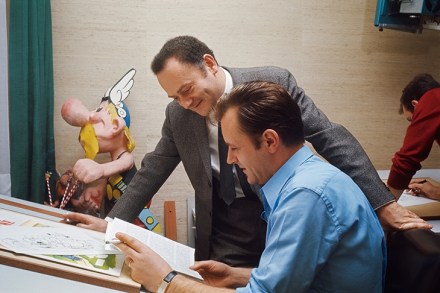
A sterix, te amamus! For those not lucky enough to learn their Latin from the dazzling René Goscinny and Albert Uderzo comic books, that means: ‘Asterix, we love you!’ How brilliant the Asterix books are and how very clever in their puns and deep appreciation of Roman history. A new exhibition at the Jewish Museum in Camden shows how much research Goscinny the writer and Uderzo the artist put into the books; and yet, like so much hard-won art, the result looks effortlessly light. The puns work in French and English, thanks to the inspired translations by Anthea Bell and the late Derek Hockridge. Getafix, the village druid, is Panoramix in the original French editions.

The grand tourist trap

Last week, I was in the Florence Baptistery by 8.30 a.m. That used to be early enough to avoid the crowds and admire the Baptistery’s east doors by Ghiberti — the Gates of Paradise, as Michel-angelo called them. No longer. As I stared at the 13th-century mosaics in the apse and Donatello and Michelozzo’s tomb of Antipope John XXIII, a group of bored Italian teenagers started hugging each other and gossiping on the front pew next to me. It was the same all over town. In the Piazza della Signoria, tourists flocked round the copy of Michelangelo’s David at 8 a.m. Next door, they were queuing to see the Botticellis at the Uffizi before the gallery opened at 8.15. And this was in early spring, long before the mass tourism of summer.

Two nations

Last month, a 17-year-old business student of Somali extraction, Abdikarim Hassan, was knifed to death outside a corner shop, 70 yards from my home in Kentish Town, north London. At that very moment, in a parody of middle-class life, I was having dinner with friends, playing bridge in my flat. Less than two hours later, and less than a mile away, another youth of Somali extraction, Sadiq Aadam Mohamed, 20, was slashed to death with a samurai sword. That same evening, a mile and a half from me, a 17-year-old survived a stabbing and a 24-year-old was attacked, suffering non-serious injuries. Two people have been charged in connection with the killings. It later turned out that Hassan’s brother, Mohamed Aadam, 20, was knifed to death in September.

The greatest story ever told

Did the Trojan War really take place? The Foreign Secretary certainly thinks so. ‘The Iliad must have happened,’ Boris Johnson once told me. ‘That description of the Trojans attacking like birds is so chilling, it must be true.’ Boris was referring to the beginning of Book 3 of the Iliad, where the Trojans ‘advanced with cries and clamour, a clamour like birds, cranes in the sky, flying from the winter’s storm and unending rain, flowing towards the streams of the ocean, bringing the clamour of death and destruction to Pygmy tribes, bringing evil and strife at the break of day’. You only have to stand on top of the ruined towers of ancient Troy, on the western shores of Turkey, to agree with Boris.

Meghan Markle and the return of American Anglophilia

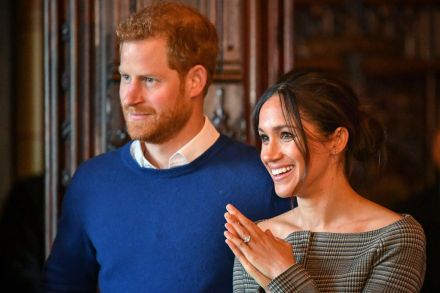
Prince Harry's imminent wedding to Meghan Markle will reinvigorate the dying special relationship between Britain and America. It is a boost for the fading American regard for the monarchy. In America, the mother country is increasingly the forgotten country – and it has been fading for a century, ever since the First World War. As Sellar and Yeatman put it in 1066 and All That, after the allied victory 'America was thus clearly top nation, and History came to a full stop'. As the increasingly weaker party in the 242-year affair, we cherish the special relationship much more than the dominant partner. That great Anglo-American WH Auden – an exile to New York, born in York – got it right: 'If equal affection cannot be, let the more loving one be me'.

Holy lands

Holy smoke! The sleepy old Church of England is a greedy, money-grubbing property tycoon. This month, it emerged that since 2010 the church has laid claim to minerals under 585,000 acres of land, including territory it doesn’t actually own. Its current holdings amount to only 105,000 acres, but it retains the underground mineral rights to vast areas that used to belong to the church. And it’s making damn sure it retains those rights. The church has sent letters to thousands of people, telling them they don’t own the gilt-edged minerals below its land. In its defence, the church says it’s just doing its statutory duty in registering the rights.

Rise of the glamocracy

The world may be dazzled by Prince Harry marrying a divorced, mixed-race American TV star. But his grand friends and royal cousins will hardly bat an eyelid. Because they’ve been marrying celebs (and Americans) for the past decade or so. In a subtle, gradual change in the British upper classes, the aristocracy has given way to the glamocracy. Gone is the blue-blood obsession; gone the marrying off of smart cousin to smart cousin which has continued since Agincourt; gone the Mrs Bennets frantically flicking through Burke’s Peerage, desperate to marry off their boot-faced daughter to the local squire. These days, young royalty and aristocracy are increasingly mixing with, and marry-ing, international money, beauty and fame.

… while Rome freezes

Why did the Roman Empire collapse? It’s a question that’s been puzzling writers ever since Edward Gibbon wrote The History of the Decline and Fall of the Roman Empire in the late 18th century. One classicist — a German, inevitably — bothered to count up all the various hypotheses for the fall, and came up with 210. The conventional explanation is that, in 410 AD, King Alaric and his Visigoths sacked Rome. Across the Empire, from Hadrian’s Wall to Africa, legionaries folded their tents and deserted their posts. Several centuries of self-indulgent, over-reaching and in-fighting emperors had done for the whole shooting match, leaving the Eastern Roman Empire to stumble on until the fall of Constantinople in 1453. And so Roman history came to a full stop.

Homer Simpson meets Homer

Milan Kundera has said that Homer’s Odyssey was the first novel. I’m not so sure — the verse kind of gets in the way — but it’s certainly the earliest surviving great travel book. Ever since the 5th century BC, Odyssey obsessives have been trawling the Mediterranean in their hero’s footsteps to track down the real Cyclops or the real Scylla and Charybdis. Herodotus and Thucydides identified the Land of the Lotus Eaters with a spot in Libya. In the 4th century BC, Euhemerus, a Greek Sicilian, maintained that, beneath all the monsters and the myths, there lay pure historical fact. The romantics who go in search of the real Odysseus — and the real Homer — are called ‘euhemerists’ as a result.

Eat, pray, learn

My greatest spiritual moment this year came in Eton College Chapel. I was there for Evensong with a friend who’s an English master at the school. Suddenly, unexpectedly, the congregation belted out Verdi’s ‘Chorus of the Hebrew Slaves’ — in English. Part of the pleasure came from the shock of hearing 1,300 upper-middle-class schoolboys imitating Hebrew slaves singing a lament about their Babylonian captivity in 500 BC. But it was also the sheer joy of the music in Henry VI’s chapel, a triumph of the Perpendicular Gothic. In quieter moments during the service, I examined the 15th century wall paintings, which are splendid, Flemish-style pictures of miracles of the Virgin Mary.

AN Wilson: Why Darwin was wrong

AN Wilson's charming, 1840s terraced house sits on the brow of a hill, overlooking Camden Market in north London. Walking through the market recently, he was much taken with a particular stall. 'There was a T-shirt for sale in the market, saying, 'Too stupid to understand science? Why not try religion?'' he says, laughing, 'I like that. The people who think they’ve demolished religion by these scientific discussions think they’re in the same category. The questions posed by religion are very different from the questions posed by science.' Wilson has just walked into a classic religion/science row with his new biography of Charles Darwin. The book certainly doesn't pull its punches. The first line declares, 'Darwin was wrong.

If you want to get ahead in politics, wear a tie

O tempora, o mores! The Speaker yesterday announced that men no longer have to wear ties in the House of Commons. In fact, until now it's only been a convention - not a rule - that they should wear one. And that's exactly as it should be. Politics is far too important to be trumped by sartorial rules. If you elect your representative, they should be allowed to wear shorts or a T-shirt in the chamber.  But not encouraged to. The thing about a suit and tie is that they just happen to make men look smarter than they do in shorts or T-shirts.

Boiling point

Bicycling up Regent Street in the intense June heat last week, I was cut up by a black cab driver. When I remonstrated with him, he leapt out of the cab and assaulted me, with a violent shove in the small of my back, trying to push me off my bike. It was the heat that did it. The driver wouldn’t have deserted his snug cab — and his passenger — if it had been raining. But, in the longest heatwave in more than a decade, he went stir-crazy in his confined space, as the black paint of his taxi absorbed mind-altering quantities of ultraviolet rays. He isn’t the only one who goes bonkers in this weather. When summer heat strikes the British, it morphs into summer madness.

Feeling full of rage? Blame the summer heat

Bicycling up Regent Street in the intense June heat last week, I was cut up by a black cab driver. When I remonstrated with him, he leapt out of the cab and assaulted me, with a violent shove in the small of my back, trying to push me off my bike. It was the heat that did it. The driver wouldn’t have deserted his snug cab — and his passenger — if it had been raining. But, in the longest heatwave in more than a decade, he went stir-crazy in his confined space, as the black paint of his taxi absorbed mind-altering quantities of ultraviolet rays. He isn’t the only one who goes bonkers in this weather. When summer heat strikes the British, it morphs into summer madness.

My Prince Philip story

Prince Philip has died at the age of 99. When he retired four years ago, Harry Mount reflected on his meeting with the Duke of Edinburgh and his sense of public service.  A friend of mine’s father — who knows Prince Philip — calls him 'a kind of semi-deity'. I realise that’s laying it on a bit thick, when it comes to sycophancy to the Royal Family. But he’s certainly a quite extraordinary figure: a 95-year-old war hero, who has been working solidly and loyally for nearly 70 years alongside his wife. In November, he and the Queen celebrate their 70th wedding anniversary. This morning’s announcement from Buckingham Palace — that he’s retiring from royal duties this autumn — should have been utterly routine.

How the National Trust is spoiling its treasures

Osterley Park on the western fringes of London is a rare survival. A Robert Adam house, with splendid Adam interiors, it’s still surrounded by its Elizabethan stables, an 18th-century landscape and classical follies — in the middle of urban Hounslow. Over the past decade, this Georgian gem has been increasingly despoiled and dumbed down by the National Trust. The Trust is spending £356,000 to turn Osterley Park into a child-friendly leisure centre. As one of the huge posters strapped to the park fence says, the money will pay for ‘A new skills area for young families providing kids with a safe place to learn to cycle and gain confidence’. Why splurge this vast amount of money on something you can already easily do on the paths at Osterley, i.e. bicycle?

Dumbing down the house

Osterley Park on the western fringes of London is a rare survival. A Robert Adam house, with splendid Adam interiors, it’s still surrounded by its Elizabethan stables, an 18th-century landscape and classical follies — in the middle of urban Hounslow. Over the past decade, this Georgian gem has been increasingly despoiled and dumbed down by the National Trust. The Trust is spending £356,000 to turn Osterley Park into a child-friendly leisure centre. As one of the huge posters strapped to the park fence says, the money will pay for ‘A new skills area for young families providing kids with a safe place to learn to cycle and gain confidence’. Why splurge this vast amount of money on something you can already easily do on the paths at Osterley, i.e. bicycle?

Bye bye, Buller

RIP the Bullingdon Club, 1780–2017. It isn’t quite dead — but it is down to its last two members. That’s barely enough people to trash each other’s bedrooms, let alone a whole restaurant, as the Bullingdon was wont to do, according to legend — not that we ever did that sort of thing in my time in the club, from 1991 to 1993. The Bullingdon, or Buller, as it is sometimes known, just couldn’t survive 11 years of bad headlines — from 2005 to 2016, when three of its former members, David Cameron, George Osborne and Boris Johnson, were the most powerful Conservatives in the country. For more than a decade the Bullingdon exerted a totemic power so mighty that it spawned several conspiracy theories.

Surviving Trumpworld

While he was on the campaign trail, Donald Trump was asked an intriguing question by Bob Lonsberry of WHAM 1180 AM, a local radio station in Rochester, New York. ‘Is there a favourite Bible verse or Bible story that has informed your thinking or your character through life, sir?’ Lonsberry said. Trump’s answer? ‘An eye for an eye.’ If you wanted a quick glimpse inside Trump’s brain, that quote’s as good as any. It captures his narcissism, his thin skin, his exponentially cranked-up aggression.

Alexander Chancellor, 1940-2017

Alexander Chancellor, who died this morning aged 77, created the modern Spectator. Since 2012, he has also been a weekly columnist with his Long Life column - which darted from the vagaries of growing old, to memories of his time as editor of The Talk of the Town in the New Yorker, to the wicked foxes who nabbed his beloved ducks at his Northamptonshire house. Spectator editor from 1975 to 1984, he was responsible for giving the magazine the amusing, anarchic, clever but readable feel it has today. It was Chancellor who employed Taki - still happily with us - and had the inspired idea of pairing his High Life column with its polar opposite, Low Life, by Jeffrey Bernard.