Gus Carter

Gus Carter

Gus Carter is the deputy editor of The Spectator’s US edition.

Inside the Tory party’s China split

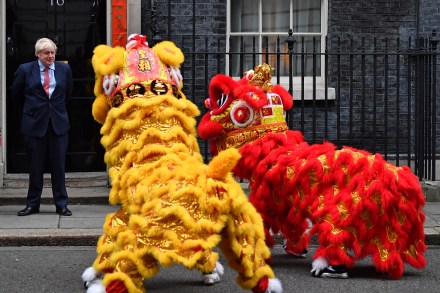
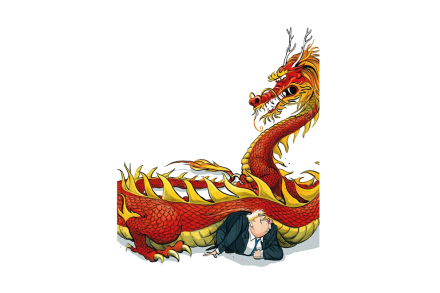
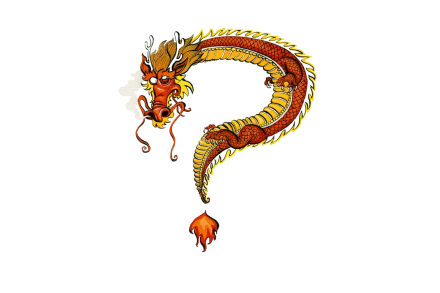
Back in 2005, Boris Johnson wrote that among geopolitical gloomsters, China was becoming the ‘fashionable new dread’. They were obsessed with the idea that this ‘incubator of strange diseases’ was angling to become 'the next world superpower’ — ‘China will not dominate the globe’ he concluded. The China question is now the most fashionable new dread in Boris Johnson’s Tory party. Within the space of a few short years, the country has gone from a mid-level concern, via Cameron and Osborne's 'golden era’ to becoming an existential rival. And where once the country was of interest only to a few dusty old Sinologists, now it is the cause célèbre for ambitious backbenchers hoping to make a name for themselves.

China hawks suffer a setback

The House of Commons was due to vote on the so-called 'genocide amendment' to the Trade Bill later today. The proposal gives British courts the right to decide if a country is committing genocide and was on course to trigger a major Tory rebellion — with China hawks ready to take a stand. However, that plan has been made much harder. The government intervened last night in a bid to avoid a possible defeat.  With the UK now free to forge its own trade deals, new legislation is passing through the Commons on the framework for future dealmaking. There is growing support across the House for a principled approach — with a focus on China top of the list.

Can a self-isolating Boris reset his premiership?

15 min listen

Boris Johnson has been told to self-isolate by contact tracers after meeting with a Covid positive MP last week. It comes just as the PM was expected to reset his premiership following the departure of Dominic Cummings and Lee Cain. Gus Carter is joined by Fraser Nelson and Katy Balls.

Could the vaccine trigger another Tory divide?

13 min listen

Backbench Tory MPs are questioning the government's plan for rolling out the vaccine. Meanwhile, rumours over a new Downing Street chief of staff have triggered a spat inside No. 10. Gus Carter talks to James Forsyth and Katy Balls.

The haunting stories of Britain’s ‘bog bodies’

Some believe that All Hallows’ Eve is adopted from a much older Celtic holiday, Samhain, that marked the change from harvest’s living richness to the darkness of winter. In its modern guise, Halloween still retains something of that pagan philosophy — a time when the borders between the living and the spirit world are supposed to be at their weakest. For our pre-Christian ancestors, this sense of the in-between was felt not only in the mulchy decay of autumn but also in the land around them. Bogs were an in-between space for Iron Age Europeans. They thought that these muted open wetlands, with their sodden pools of still black water, exposed an opening to some other realm.

Boris brings in new restrictions

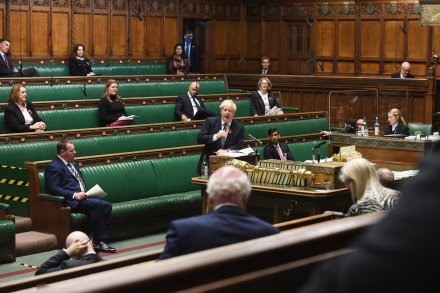
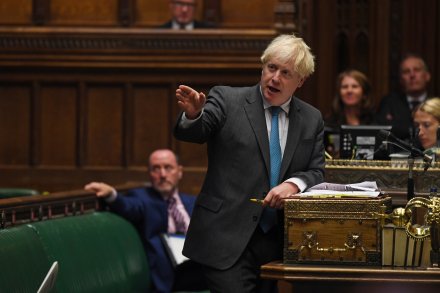
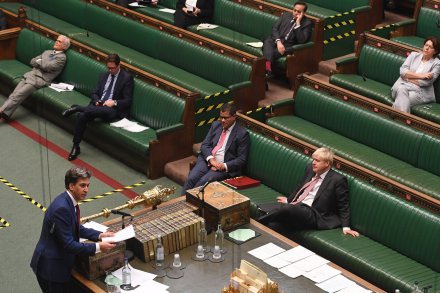
Boris Johnson has announced sweeping new Covid restrictions, imposing a curfew on pubs and restaurants and telling office workers to return to home working if they can. In a statement to the House of Commons, the Prime Minister said the UK is at a 'perilous turning point' and promised that more measures would be introduced if the rate of infection was not reversed. From Thursday, a 10 p.m. curfew on pubs, bars and restaurants will be introduced under the new restrictions which he said could last up to six months. Meanwhile, planned relaxations for sporting events have been halted while retail staff will now be required to wear face masks.

Full list: Internal Market bill abstainers

Last night's second reading of the Internal Market Bill passed with a comfortable 77 votes for the government. In truth, this was always going to happen. A second reading vote confirms merely the principle of a bill so the real question was over the size of any potential rebellion rather than the future of the legislation itself. The problem comes next Tuesday when Bob Neill's amendment is laid before the House. This would give MPs a vote on whether the UK chooses to break the Withdrawal Agreement when it comes to customs checks in the Irish Sea or state aid interventions for NI businesses.  In the meantime, abstentions on the Bill do prove instructive when it comes to working out who might cause potential problems for the whips.

Watch: cabinet minister says Brexit plans ‘break international law’

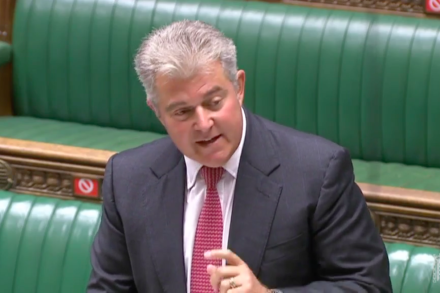
Following widespread speculation that the UK government intends to renege on the Withdrawal Agreement, Northern Ireland Secretary Brandon Lewis was summoned to the chamber to answer an urgent question on the issue. Despite government attempts to suggest that intended changes to the Withdrawal Agreement through the new Internal Market Bill were simply to tie up loose ends, Lewis did admit that the moves would break international law. He said, however, this would be in 'a very specific and limited way'.

Can Simon Case reform the civil service?

11 min listen

Simon Case has been appointed the new cabinet secretary, tasked with leading the UK through its coronavirus recovery and reforming the civil service. Is he up to the job? Gus Carter speaks to James Forsyth and Katy Balls about the country's most powerful official.

What Ed Davey’s election means for the Lib Dems

For many Lib Dems, this leadership election felt like an existential choice. The party is now on its fourth leader in almost as many years, while Brexit has left the party a polarising – and increasingly irrelevant – force in British politics. Sir Ed Davey made clear that he knows his party is facing serious problems during his livestreamed acceptance speech. The MP for Surbiton explained: ‘Our party has lost touch with too many voters.’ Davey has been acting leader since Jo Swinson lost her seat at the 2019 general election – and he was widely seen as the favourite during the contest. In the event, he won twice as many votes as the more radical Layla Moran.

Are the Lib Dems finished?

16 min listen

The Liberal Democrat leadership race will finally come to an end this month but, after December's crushing election defeat, is the party over too? In a special Saturday edition of Coffee House Shots, Gus Carter speaks to Katy Balls and Nick Tyrone, author of Politics is Murder, about how a new leader could pull the Lib Dems back from the brink of extinction.

Will France be quarantined next?

11 min listen

Belgium, Andorra and the Bahamas were added to the UK’s quarantine list yesterday evening, meaning Brits returning from those countries will be required to stay at home for two weeks. With Belgium’s neighbour, France, also seeing a surge in coronavirus cases, will they be next? Gus Carter speaks to Katy Balls – who is on holiday in Paris – and James Forsyth about air bridges, exam results and the lack of candidates to become the next cabinet secretary.

Can Douglas Ross take on the SNP?

10 min listen

Douglas Ross has won the Scottish Conservatives leadership election – but can take on the SNP without risking a second independence referendum? Meanwhile, pressure is growing on the Tories to suspended a former minister accused of rape. Finally, a new report by a cross-party group of MPs suggests the failure to impose quarantine on travellers at the height of the pandemic could have worsened the coronavirus crisis. Gus Carter talks to James Forsyth and Katy Balls.

Are we heading for mass unemployment?

10 min listen

Pizza Express today announced that 1,100 jobs are at risk as they close 67 outlets. With the Chancellor's furlough scheme winding up in November, should we expect more mass redundancies when the government support is cut? Gus Carter speaks to Kate Andrews and Katy Balls about the UK's economic outlook, and also asks whether the UK's track and trace system is ready for children returning to school next month.

Five things we learnt from the Russia report

The report into Russian interference in British politics was finally published on Tuesday morning following a nine-month delay. Here are the five most interesting takeaways from the report:  1. The government 'actively avoided' investigating Russian interference  During this morning's press conference, intelligence and security committee member Stuart Hosie made the extraordinary claim that 'no one in government knew if Russia interfered in or sought to influence the referendum because they did not want to know'. He explained that the British authorities 'actively avoided looking for evidence that Russia interfered' in UK elections.

How long can the two-metre rule last?

12 min listen

Tory MPs are increasingly concerned about the impact of the two-metre rule, with No. 10 facing pressure to relax the policy to help save businesses. Gus Carter talks to James Forsyth and Katy Balls.

Cummings may have committed minor lockdown breach, says Durham police

Dominic Cummings may have committed a minor breach of lockdown restrictions during a trip to Barnard Castle, an investigation by Durham police has concluded. The force has said that the journey 'might have been a minor breach of the regulations that would have warranted police intervention'.  The statement released earlier today says that while his trip up from London to self-isolate in Durham was in line with the regulations, the journey on 12 April might have constituted a breach. The police have also said that if Cummings and his family had been stopped by officers, they would have been asked to return to his father's farm.

Revealed: 90,000 ‘void’ UK Covid tests

Every evening, at around 5 o'clock, a minister walks through the large panelled doors to Downing Street's state dining room and delivers the daily coronavirus briefing. The conference always begins in the same way – 'I'd like to update you on the latest daily figures'. The minister in question then proceeds to tell us just how many tests have been carried out over the last 24 hours and the number of positive cases discovered. We are left to conclude that the remaining tests must have come back as negative, that no infection was detected. However, there is a third category of result: void tests. These are tests that proved inconclusive, either because the sample wasn't taken correctly or because of some other issue involving the lab. Essentially, the test failed.

New polling: Public braced for higher unemployment and no Christmas parties

One of the great Cameron legacies has been an era of very low unemployment. In his biography, the former PM cited two defining moments of his teenage years; the first was getting caught smoking weed at Eton and the second was reading the 1982 IEA pamphlet ‘What cost unemployment?’. While Cameron avoided many of the radical policies that emanated from the free market think tank, he did adopt one of the central tenets of the paper: that those in work should be better off than the unemployed. By the time he left office in the wake of the 2016 referendum, UK unemployment sat at just 5 per cent. When Boris Johnson took over in July last year, the number of people out of work was half what it was at the height of the financial crisis.

The curious case of the coronavirus conviction

Last Saturday, a 41-year-old woman was arrested for what police described as ‘loitering between platforms’ at Newcastle Central station. By Monday, she had been successfully prosecuted – finding herself with a criminal conviction for breaching the newly enacted Coronavirus Act 2020. Days later, the conviction was dropped after police accepted they had misunderstood the law.  Why does all this matter? Well, clearly it’s important when law enforcement misuses some of the most draconian legislation passed in living memory. But the case tells us something else about the state of our criminal justice system. British justice, like the other parts of our constitution, is designed precisely so that failures like this do not occur.