Gus Carter

Gus Carter

Gus Carter is the deputy editor of The Spectator’s US edition.

Cummings may have committed minor lockdown breach, says Durham police

Dominic Cummings may have committed a minor breach of lockdown restrictions during a trip to Barnard Castle, an investigation by Durham police has concluded. The force has said that the journey 'might have been a minor breach of the regulations that would have warranted police intervention'.  The statement released earlier today says that while his trip up from London to self-isolate in Durham was in line with the regulations, the journey on 12 April might have constituted a breach. The police have also said that if Cummings and his family had been stopped by officers, they would have been asked to return to his father's farm.

Revealed: 90,000 ‘void’ UK Covid tests

Every evening, at around 5 o'clock, a minister walks through the large panelled doors to Downing Street's state dining room and delivers the daily coronavirus briefing. The conference always begins in the same way – 'I'd like to update you on the latest daily figures'. The minister in question then proceeds to tell us just how many tests have been carried out over the last 24 hours and the number of positive cases discovered. We are left to conclude that the remaining tests must have come back as negative, that no infection was detected. However, there is a third category of result: void tests. These are tests that proved inconclusive, either because the sample wasn't taken correctly or because of some other issue involving the lab. Essentially, the test failed.

New polling: Public braced for higher unemployment and no Christmas parties

One of the great Cameron legacies has been an era of very low unemployment. In his biography, the former PM cited two defining moments of his teenage years; the first was getting caught smoking weed at Eton and the second was reading the 1982 IEA pamphlet ‘What cost unemployment?’. While Cameron avoided many of the radical policies that emanated from the free market think tank, he did adopt one of the central tenets of the paper: that those in work should be better off than the unemployed. By the time he left office in the wake of the 2016 referendum, UK unemployment sat at just 5 per cent. When Boris Johnson took over in July last year, the number of people out of work was half what it was at the height of the financial crisis.

The curious case of the coronavirus conviction

Last Saturday, a 41-year-old woman was arrested for what police described as ‘loitering between platforms’ at Newcastle Central station. By Monday, she had been successfully prosecuted – finding herself with a criminal conviction for breaching the newly enacted Coronavirus Act 2020. Days later, the conviction was dropped after police accepted they had misunderstood the law.  Why does all this matter? Well, clearly it’s important when law enforcement misuses some of the most draconian legislation passed in living memory. But the case tells us something else about the state of our criminal justice system. British justice, like the other parts of our constitution, is designed precisely so that failures like this do not occur.

Geoffrey Cox hedges his bets on the eve of the reshuffle

A good barrister will always keep his options open. And the Attorney General, Sir Geoffrey Cox, has the letters Q and C at the end of his name, so he must be a good barrister. During an event this morning Cox laid out the case both for his continuation as Attorney General, while also hyping himself up as a potential chair of the government's upcoming constitutional review. He told the crowd: Have I had enough of the job [of AG]? let me make plain, absolutely not. This has been one of the greatest – in fact, thegreatest – honour of my political life… If you gave me the opportunity to continue, I would embrace it eagerly. But equally, if it is not to be, well then there are other doorways that will open for me.

Putting cameras in courts is little more than a gimmick

The world of criminal trials is slowly catching up with the modern era. The Ministry of Justice has announced it will partially overturn a 100-year-old law and allow cameras into English and Welsh courtrooms for the first time. The press will now be able to apply for video footage of a judge passing sentence over convicted defendants. This has been lauded by some (mainly broadcasters) as a landmark moment for judicial transparency. And it is certainly an improvement. But given how murky the system still is, the decision is hardly the 'radical' change that some are suggesting. The public's understanding of the criminal justice system – the most invasive, coercive arm of the state – is mediated almost entirely by journalists.

Six things we learnt from the Boris BBC Breakfast interview

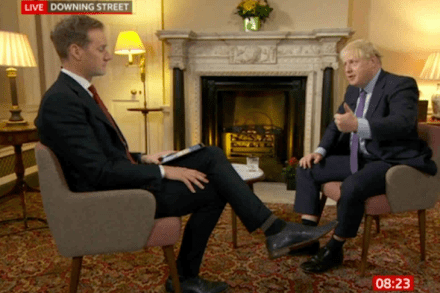
Boris Johnson has just given a wide-ranging interview to BBC Breakfast in which he signalled support for a new Trump nuclear agreement with Iran and promised to bring forward plans for social care by the end year. Here are the six things we learnt from the interview: 1. Boris backs Trump's Iran strategy The Prime Minister told viewers that the US had been right not to notify the UK before the assassination of Qasem Soleimani, saying 'This was not our operation. There was no reason for us to be involved.' Addressing the nuclear deal negotiated by Obama, the PM said: 'If we're going to get rid of it, let's replace it - and let's replace it with the Trump deal. That's what we need to see and I think that would be a great way forward.' 2.

Ones to watch: The most promising new MPs of 2019

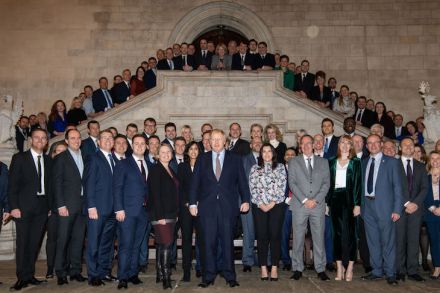
Last week's election saw 140 new MPs joining the House of Commons, along with 15 former parliamentarians who have managed to regain a place. 2019 has seen a record number of women entering parliament as well as the most ethnically diverse set of MPs yet elected. Many of the new intake have impressive CVs and some could well find themselves on the front benches of their respective parties before too long.

Is Blyth Valley Boris’s Sunderland moment?

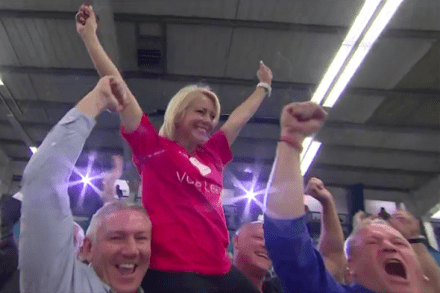
In 2016, it was Sunderland that signalled what was to come. The North-Eastern town voted for Brexit by a margin of 61 to 39 per cent. That announcement was seen as a turning point on the night of the EU referendum - if a town as reliant on foreign manufacturing (namely the Nissan plant) could vote so decisively for Brexit then surely the rest of the country could well follow suit. The pound duly dropped three per cent in the minutes after the result, those cheering Leave supporters seared into the memories of those who stayed up to watch the count. This time around, will Blyth Valley become that symbolic vote? Another heavy Leave-voting constituency in the North East that has been Labour since its creation in 1950.

15 viral videos that could win (or lose) this election

Election campaigning has changed in recent years. While the Saturday morning door knock is here to stay, the battle for hearts and minds is increasingly fought on social media. As Katy Balls recently wrote in The Spectator, there's a whole other conversation happening online: one that consumers of traditional media just don't see. Here's a rundown of the 15 biggest viral videos from this year's election campaign: 15. https://twitter.com/Conservatives/status/1197439107460485120?ref_src=twsrc%5Etfw The misleading Jess Phillips video 240,000 views The Conservatives made a bit of a stink earlier on in the campaign when they shared a misleading video of backbench Labour rebel Jess Phillips.

Has Boris Johnson changed his campaign strategy?

Stump speeches and battle bus stop-offs are a staple of political campaigning. And while much of the battle for votes now happens online, as Katy Balls points out in this week's Spectator, the constituency fly-by remains a central element of any party's election schedule. So what can we learn about the Conservative strategy from Boris Johnson's tour across the country? It could reveal that the Tories are starting to panic. The Prime Minister's campaign machine has shifted into a surprisingly defensive gear over the last week or so. Rather than descending on top target seats, Johnson is now focusing on Conservative held marginals.

The eight big losers from YouGov’s poll

Labour is heading for its worst election performance since 1983, according to YouGov's long-awaited MRP forecast. The poll also makes for miserable reading for parliament's independent candidates, most of whom look set to lose their seats. Given that YouGov was one of the few pollsters to correctly predict a hung parliament in 2017, it would seem foolish to dismiss their predictions. Here are the eight big names who could find themselves booted out of parliament come 13 December: Don Valley - Caroline Flint, Labour Prediction: Likely Conservative GAIN A former minister for Europe under Gordon Brown, Flint is one of the few Labour Remainers to have undergone a full Brexit conversion. She was one of just 19 Labour MPs to have voted for Boris Johnson's Brexit deal.

Labour’s ‘race & faith manifesto’ launch fails to go to plan

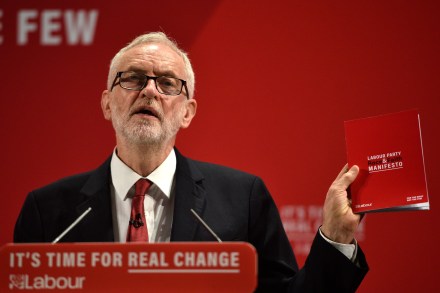
Labour launched its 'Race & Faith Manifesto' earlier today amid a storm of criticism over the party's anti-Semitism problem. The latest person to condemn Jeremy Corbyn is the chief rabbi, who questioned whether the Labour leader is fit to become prime minister. During today's event in north London, Corbyn hit back, insisting that under his government 'no community will be at risk because of their identity'. The party had hoped the mini-manifesto launch would focus attention on policy ideas such as a wholesale review of the Prevent strategy or the scrapping of random stop and searches. But it didn't go to plan. Outside the venue in Tottenham, activists had parked up trucks with phrases such as 'A vote for Labour is a vote for racism'.

The fiery frustrations of the independent conservatives

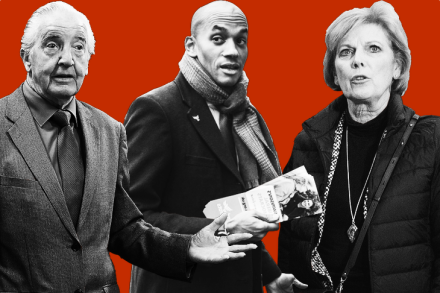
Dominic Grieve, David Gauke and Anne Milton face a big challenge to keep their seats come 12 December. The trio were among 21 Tory MPs who lost the whip when they backed the Cooper-Letwin bill back in September. Last night, Grieve, Gauke and Milton teamed up with the former deputy prime minister Lord Heseltine to hold an event in Grieve's Buckinghamshire constituency of Beaconsfield to rally against the party they once called home. While the odds might be against them in their bids to retain their seats as independents, the three candidates are optimistic.

Did a Tory minister fail to help police in a Westminster sex assault case?

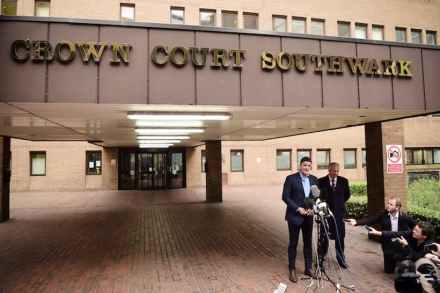
If an MP’s researcher is accused of sexual assault, what should the MP do? Co-operate fully with the police, of course, which is what Chris Skidmore claims he did when his assistant ended up in court. The Tory MP and minister for universities strenuously denies that he refused to provide the police with evidence. But questions still remain after what an officer said during the trial at Southwark Crown Court. You might have heard about the case: 27-year-old Callum Warren, Skidmore's former staffer, was cleared last week of molesting a teenager. The court heard descriptions of a legislature that runs on an endless supply of cheap lager and eager young graduates. But the trial itself brought up interesting questions about how helpful the minister was.

The unparalleled entertainment – and heartbreaking reality – of watching a court hearing

‘Barristers’ speeches vanish quicker than Chinese dinners, and even the greatest victory in court rarely survives longer than the next Sunday’s papers.’ So wrote John Mortimer in Rumpole of the Bailey. While no doubt true, a barrister delivering a well-honed speech is still something to behold. They are the last defenders of a rhetorical tradition that our politicians have all but given up on. Many QCs still use Cicero’s principles of oratory: to teach, to entertain and to move. The public are allowed to watch almost any court hearing, but few ever do. As a court reporter, I have been struck by how empty the public galleries tend to be, beyond a few elderly men who regularly turn up.

The Dominic Cummings approach to government: a beginner’s guide

The appointment of Dominic Cummings as one of Boris Johnson’s top No. 10 advisors caused a media storm last week, with the former Vote Leave strategist cast as some kind of shadowy Brexit Svengali. Cummings is seen by a certain section of Remain activists as the calculating mastermind behind the Leave vote – the man who turned a normal political campaign into a ruthless battle of data black-ops. Equally, his decision to freeze certain sections of what is now the ERG out of the 2016 Brexit referendum campaign infuriated several Tory Brexiteer backbenchers. There have already been endless column inches devoted to what Cummings thinks and how that will play out in the Boris government. Luckily, our readers don’t have to speculate.

The truth about the Cambridges’ anniversary video

In celebration of their tenth wedding anniversary, the Cambridges have released a 40 second vignette of their painfully British existence. It’s all Barbour jackets, laughing children and windswept beaches. It is, in other words, a John Lewis nightmare. But who wants an aspirational royal family? That’s kind of the point isn’t it, that they’re not like us? No, apparently the focus groups have spoken and Britain wants a set of Boden models to represent the nation. https://twitter.com/KensingtonRoyal/status/1387778071319781378?ref_src=twsrc%5Etfw The Cambridges' performance is arguably just as confected as anything Harry and Meghan said on Oprah’s sofa Why can’t we just have a nice formal photo of the family together with the Queen?