Gus Carter

Gus Carter

Gus Carter is the deputy editor of The Spectator’s US edition.

Daniel Dennett’s last interview: ‘AI could signal the end of human civilisation’

Do we still need philosophers? Daniel Dennett, who died last week, believed strongly that we do. ‘Scientists have a tendency to get down in the trenches and commit themselves to a particular school of thought,’ he told me from his home in Maine, not long before he died. ‘They’re caught in the trenches so a bird’s eye view can be very useful to them. Philosophers are good at bird’s eye views.’ Scientists of all sorts valued their conversations with him, ‘I think because I could ask them questions that they realised they should have had answers to,’ he said. I grew up with Dennett. First, as a teenager, watching YouTube videos as he raged joyfully against the irrationalities of religion. Then, as an undergraduate, I came to his ideas about consciousness.

The dangers of political prosecution

31 min listen

This week: the usual targets First: Trump is on trial again – and America is bored rather than scandalised. This is his 91st criminal charge and his supporters see this as politicised prosecution. As an American, Kate Andrews has seen how the law can be used as a political weapon – so why, she asks, is Britain importing the same system? In less than 18 months, the police have been sent to investigate Rishi Sunak for his seat-belt, Nicola Sturgeon for campaign funds, and Angela Rayner over her electoral registry: each time, the complainant is political and the process is the punishment. Kate joins the podcast alongside The Spectator’s editor Fraser Nelson to discuss. (01:34) Then: Confessions of a defecting Starmtrooper.

The Starmer supremacy

40 min listen

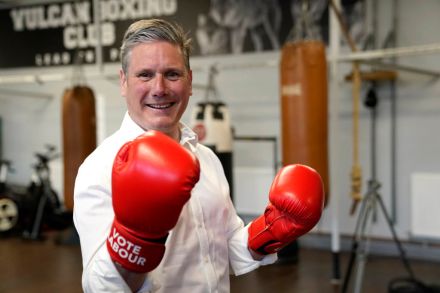
On the podcast this week: what could achieving a large majority at the next election mean for Labour; how much should parents worry about picky eating; and why are humans fascinated with the apocalypse?  First up: The Starmer supremacy. If the polls are correct, Labour could be on to a record landslide at the next general election. Any political leader would relish such a win. But can achieving such a large majority present internal problems of its own? Labour MP Harriet Harman joins The Spectator’s political editor Katy Balls to discuss. (1:32) Then: Lara and Gus discuss some of their favourite pieces from the magazine, from Charles Moore’s column to Christopher Matthew’s piece on A. A. Milne’s time at Punch magazine.

War on words: is Scotland ready for its new hate crime law?

51 min listen

On the podcast: Scotland’s new hate crime law; the man who could be France’s next PM; and why do directors meddle with Shakespeare?  First up: Scotland is smothering free speech. Scotland is getting a new, modern blasphemy code in the form of the Hate Crime and Public Order (Scotland) Act, which takes effect from 1 April. The offence of ‘stirring up racial hatred’ will be extended to disability, religion, sexual orientation, age, transgender identity and variations in sex characteristics. The new law gives few assurances for protecting freedom of speech writes Lucy Hunter Blackburn, former senior Scottish civil servant. Lucy joins the podcast, alongside Baroness Claire Fox, unaffiliated peer and founder of the Academy of Ideas think tank.

Why can police sue for being asked to do their jobs?

I can’t imagine being confronted with the body of someone who has jumped to their death: limbs splayed in ways that shouldn’t be possible, clothes shredded by velocity and tarmac, the bloodied remains of a face. The idea is appalling. So I have every sympathy for the police officers who saw just that at the Grenfell Tower fire and are currently seeking damages in the High Court. But while they have my sympathy, I happen to think that their case is bad news for the rest of us.  We seem to be entering a more litigious era, one in which tragedy becomes industry Thirty-three officers are suing 12 different parties, including the Met police commissioner and Kensington and Chelsea council, for ‘psychiatric injuries’.

Trump II: Back with a Vengeance

47 min listen

On the podcast: what would Trump’s second term look like?  Vengeance is a lifelong theme of Donald Trump’s, writes Freddy Gray in this week’s cover story – and this year’s presidential election could provide his most delectable payback of all. Meanwhile, Kate Andrews writes that Nikki Haley’s campaign is over – and with it went the hopes of the Never Trump movement. Where did it all go wrong? They both join the podcast to discuss what to expect from Trump’s second coming. (03:11) Then: Will and Gus take us through some of their favourite pieces from the magazine, including Michael Hann’s Pop review and Cosmo Landesman’s City Life column. (16:38) Next: Flora Watkins writes in The Spectator about on private schools.

Why don’t my local police work nights?

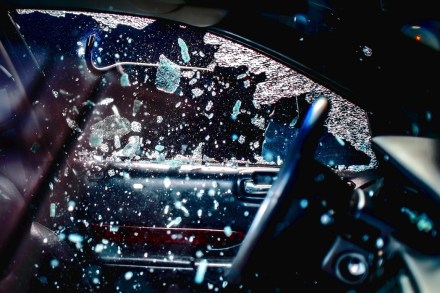
Every few weeks, I leave my front door to find a car missing its side window and a pile of glass on the pavement. One morning there were four windowless cars, all in a row; someone had already been out with duct tape and some bin bags in an attempt to keep the rain from their back seats. The debris from these thefts is just another feature of our London street, like the confetti from Chelsea’s Registry Office which flutters all the way down the King’s Road. But last Wednesday, at 8.15 p.m. to be exact, I witnessed my first attempted smash and grab.  There’s something vindictive about law breaking. This isn’t an exercise in pure economics The two cyclists hadn’t seen me, fag in hand, watching them from my balcony when they pulled up outside.

The weirdness of our new migrant god

Funny to think what our taxes go on. I wouldn’t have had ‘the invention of a deity’ on my 2024 government expenditure bingo card, but here we are. The National Maritime Museum, which last year received £20 million from the Department for Culture, Media and Sport, has unveiled a statue of a ‘god-like protector of all migrants’ to sit next to a bust of Horatio Nelson. The pair will engage in a pre-recorded conversation in which the gender-neutral god praises the ‘resilience’ of those ‘escaping war’ while moaning about our national hero’s ‘fancy medals and uniform’.  We find a sort of syncretic religion in the National Maritime Museum’s migrant god  There’s plenty to laugh at in this commission.

Hong Kong’s fading Britishness

Not much of Hong Kong still feels British. There is the odd tube stop – Admiralty, Kennedy Town, Prince Edward – but that’s about it. On the car ride from the airport, I chatted to the driver as we passed under half-built concrete arches covered in green construction cloth. He told me the authorities were building another runway; we’ve been arguing over a third runway for the best part of 30 years, I said, and it still hadn't started. He laughed. ‘We used to be run by England. Now the communists are in charge, it’s much easier.’  I went to Java Road in search of the morgues and black bunting My cheapy British phone contract is allergic to Hong Kong networks and insists on gobbling up around £20 of credit a day. None of my bank cards seem to work either.

Scattering my father’s ashes in Santiago de Compostela

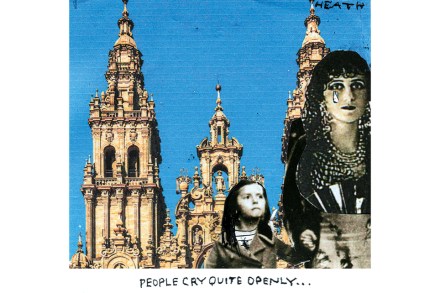
We are in the holy city of Santiago de Compostela to scatter our father’s ashes. He and my youngest sister had planned to walk the Camino, which finishes here at the resting place of Saint James, to mark the start of her adulthood and the beginning of his retirement. Instead, my two sisters have been walking the ancient pilgrims’ route for the past few weeks. I’ve flown into the city to meet them at the end. Most of Dad’s ashes went into a smart Regency tea caddy. The funeral directors had offered us a standard-issue urn but we decided he’d prefer something jolly and Georgian. The lacquered box didn’t quite hold all of his remains so the youngest put the rest in a Tupperware tub and brought him here to Spain.

The Greggs delusion

Everything about Greggs is fake. You can smell it as you walk down any British high street. There’s an astringency, a hint that what lingers in those ovens is more than butter, flour, eggs and salt – that their food has been adulterated with something unnatural. What you’re smelling is an approximation of pastry, an attempt by the Greggs customer development unit to ‘curate an authentic baked goods experience’.  Of course, we all secretly know the food is fake. The texture of the baguettes suggest that they’ve been salvaged from a 1970s deep freezer found buried beneath a Midlands business park. And the fillings. All that slimy pink ham. The medical cross-sections of boiled egg.

The joy of colleague-cancelling headphones 

I’m writing this with headphones in, sitting at my desk on Old Queen Street. Please don’t tell Debrett’s. Apparently listening to headphones in the office is a huge faux pas, akin to cutting camembert with a fish knife. The company’s etiquette adviser, Liz Wyse, told the Times: ‘If you work in an open-plan office where there is frequent conversation and interchange of ideas between colleagues, do not wear AirPods or headphones.’  The worst thing that happens when zoned out on David Bowie is that a colleague has to wave near your eye line We will, she assures us, be ‘much more valuable staff members’ if we instead choose to ‘tune into conversations’ and ‘stay alert’. Beep boop. Jeeves3000 has spoken.

The joy of cheese rolling

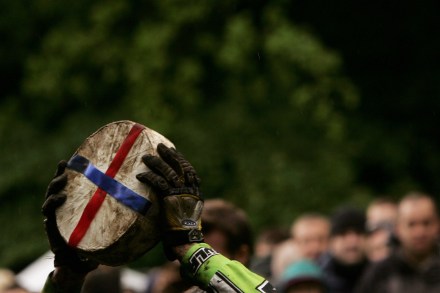
It’s unnerving being surrounded by a crowd in the woods. You can hear people but only glimpse their limbs or faces through the leaves. It triggers something primordial, similar to the feeling of being watched. Ideally, someone with a big strimmer would have given Cooper’s Hill a good going over before the cheese rolling. But cheese rollers don’t concern themselves with ideals.  My friends were shocked by the brutal pitch of the hill. Could someone really hurl themselves down that? On the last Monday of May, and for reasons lost to time, a wheel of Double Gloucester is thrown down the hill and a group of runners throw themselves after it. The first to reach the bottom gets the cheese.

Niru Ratnam, Gus Carter and Graeme Thomson

20 min listen

This week: Niru Ratnam argues that teachers are putting principles before children (00:59), Gus Carter discusses the curious business of fertility (08:14), and Graeme Thomson reviews Beyonce at Murrayfield Stadium (14:24).  Produced and presented by Oscar Edmondson.

Ukraine’s next move

39 min listen

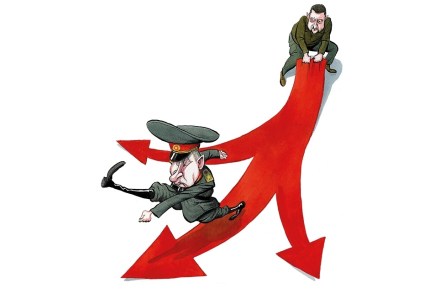
This week: In his cover piece, journalist Mark Galeotti asks whether Putin can be outsmarted by Zelensky’s counter-offensive. He is joined by The Spectator’s own Svitlana Morenets to discuss Ukraine's next move. (01:08) Also this week:  Journalist David Goodhart writes a moving tribute to his friend Jeremy Clarke, The Spectator’s much-missed Low Life columnist who sadly passed away earlier this week. David is joined by Cass Pennant and Freddy Gray, The Spectator’s deputy editor, to remember the life and writing of Jeremy Clarke. (12:52)  And finally: The Spectator’s deputy features editor Gus Carter writes this week about the curious business of fertility.

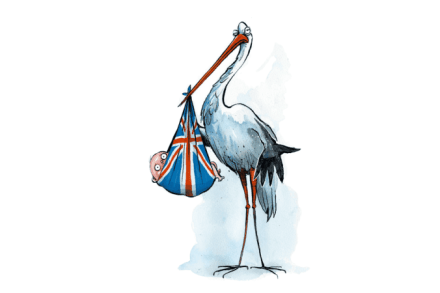
The curious business of fertility

I’ve always wanted children. Friends sometimes tease me about my broodiness, apparently uncommon among single 29-year-old men. But unless I’ve accidentally knocked someone up in the past few months, I’m going to be an older parent than mine were by the time they had me. I suppose that’s normal. The average age at which couples start a family has risen consistently since the mid-1970s. I’m told not to worry: look at Mick Jagger, whose youngest child was born when he was 73. Men don’t suffer from the same biological restraints as women. One acquaintance insists rather admirably that she’s going to have children by 25, regardless of the consequences. She also insisted on smelling me to test my pheromones and, therefore, our compatibility.

Britain is stuck in a fertility trap

Pope Francis wants you to have sex. Or at least he wants Italians to have more sex. The country, he says, is facing a ‘Titanic struggle’ against demographic doom. Last year, the population dropped by 179,000 people – and Italy is projected to lose another five million by 2050.  What’s happening in Italy is, to a greater or lesser extent, being repeated across the western world. In the UK in 2020, there were four workers per retiree. By 2041, the ONS projects there will be just three. We’re getting older, there are fewer of us and, all other things being equal, we’ll poorer for it. Either we tax the declining population more to maintain the same level of welfare or we will have to cut back on things like care and pensions.

Why I’ve fallen out of love with my Brompton

In the darkest depths of lockdown, trapped in a subterranean flat in South London, I struck upon an idea: I would buy a bike. I’d had one at university and remembered enjoying the meditative effects of gliding through parks and down streets. It would mean something to do other than fighting over who got to work at the kitchen table or staring mutely at our little telly.  I met the seller in a multi-storey car park in Woolwich. He popped his trunk, revealing a jumble of metal tubing and cables about the size of a suitcase: a foldable Brompton bicycle. As he lugged it onto the concrete floor, Taut explained that he loved the bike but had just bought a super-lightweight, modified Brompton. It was time to part ways.

James Heale, Mary Wakefield and Gus Carter

15 min listen

This week: James Heale says the gloves are off as Labour campaigning takes a bitter turn (00:54), Mary Wakefield worries that she’s raising a snowflake (17:47), and Gus Carter tells us about the colourful history of the green man (31:34).  Produced and presented by Oscar Edmondson.

The colourful history of the green man

All hail our pagan King! The time has come to lay down your crosses and take up the bough of oak. Britain is to return to the old ways – at least if you are to believe the conspiracy theorists, who were distressed to see, on the bottom of the coronation invitation sent out last week, the face of a green man staring back at them. His eyes are bright, his mouth exudes fronds of ivy – the green man calls to us. Depending on your particular view of the world, his inclusion is either an affront to Christian decency or a jolly salute to our monarch’s peculiarities. The green man is a playfully sinister envoy of the otherworldly. His face, either made entirely of leaves or a fleshy human screaming forth foliage, is carved into hundreds of parish churches.